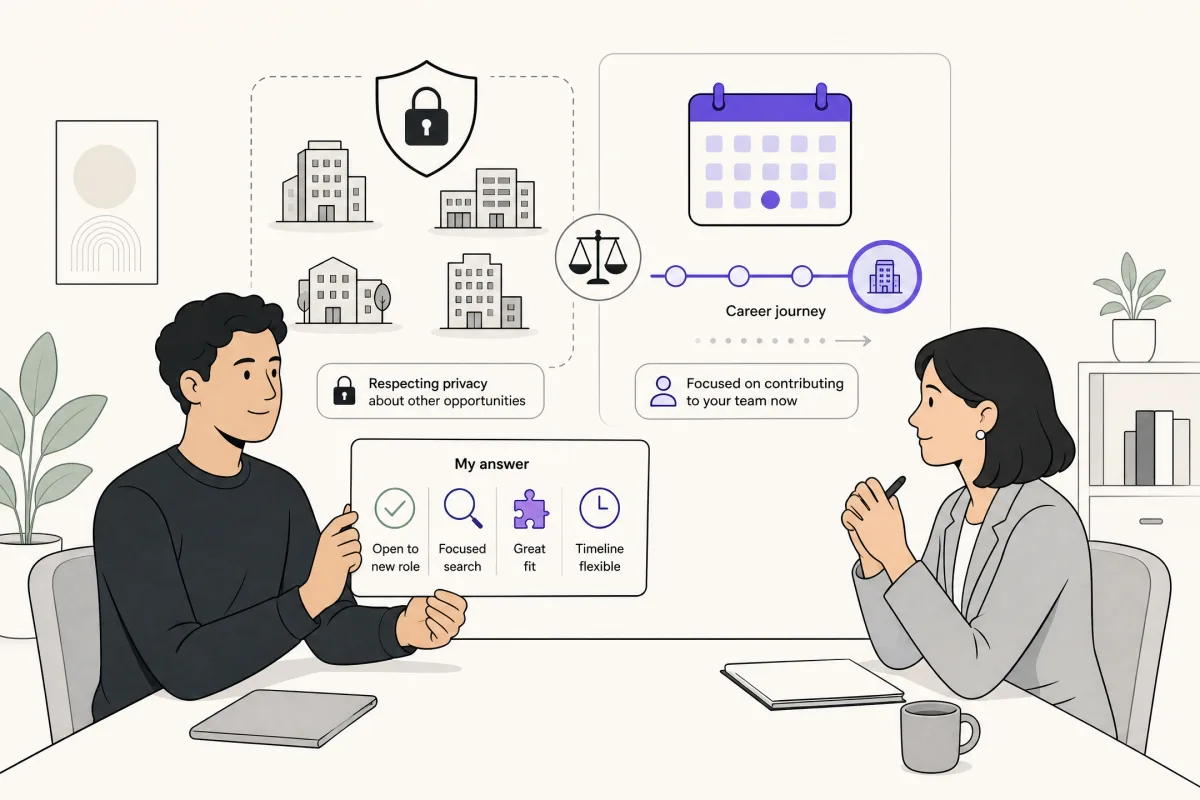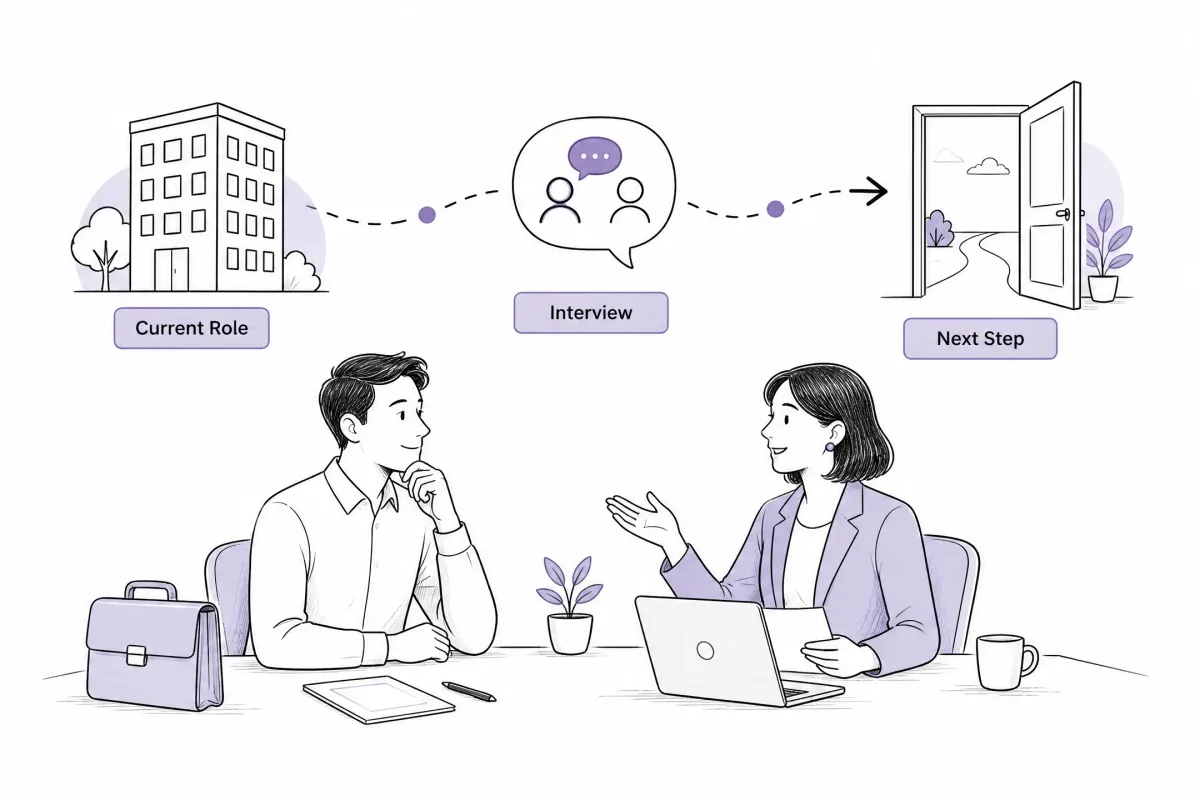


At the end of most interviews, you'll hear a familiar question:
"Do you have any questions for me?"
Many candidates see this as a polite way to wrap up the conversation, but it's much more than that. For interviewers, the questions you ask can reveal your level of preparation, what you value in a workplace, and whether you're genuinely interested in the role. For you, it's an opportunity to decide whether the company, the team, and the position are the right fit for your career goals and working style.
This guide isn't just a list of interview questions you can copy and paste. Instead, you'll learn why certain questions matter, when to ask them, who to ask, and how to use the answers to make a more informed career decision.
Good interview questions are questions that help you understand the role while showing the interviewer that you are prepared, curious, and serious about making the right career move.
Why Asking Questions Matters
From the interviewer's perspective
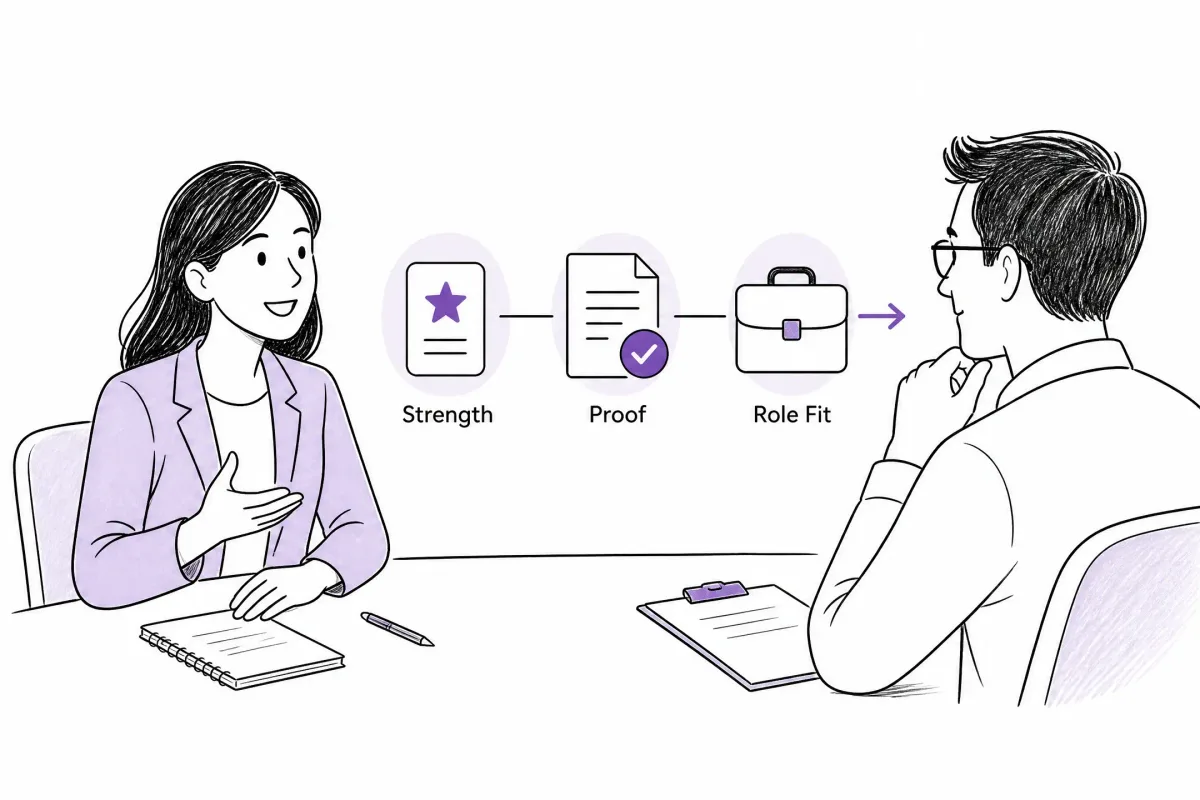
An interview isn't a standard Q&A session; it's more like an audition. Both you and the interviewer are trying to decide whether you're the right fit for each other's next chapter.
Your questions are part of that audition. They show whether you've done your homework, what you care about in a workplace, and how you think through important decisions. At the same time, the answers you receive help you determine whether the role, the team, and the company are a good match for your own goals and working style.
From the candidate's perspective
For candidates, the interview is also a chance to gather the information you need to make an informed decision. The answers you receive can help you evaluate whether the role is the right fit, uncover expectations that aren't mentioned in the job description, and identify potential red flags. If you're considering multiple job offers, asking thoughtful questions also makes it much easier to compare opportunities beyond salary and benefits.
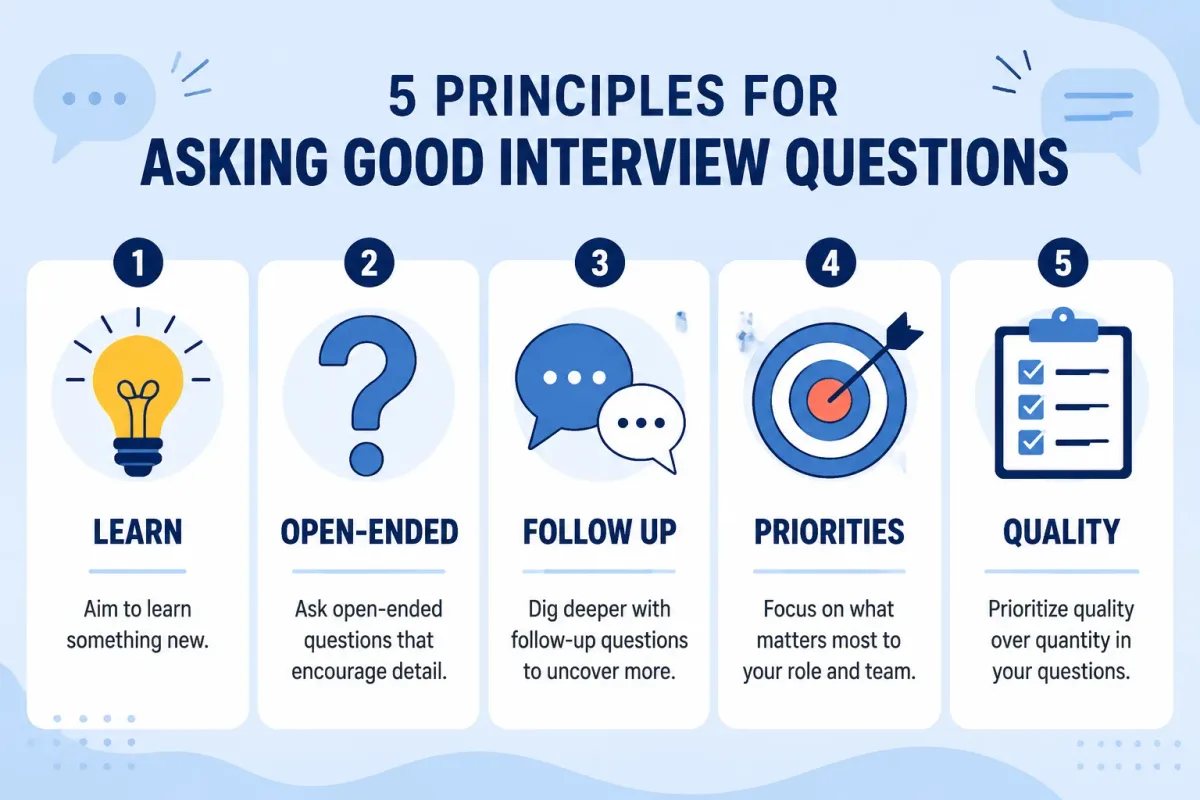
5 Principles of Asking Good Interview Questions
Great questions help both sides make a better decision. Many interview advice lists tell candidates what to ask, but fewer explain the principles behind strong questions. The five principles below will help you choose questions that feel natural, reveal useful information, and make the conversation more productive.
Ask to learn, not to impress
One of the biggest misconceptions is that you need an "impressive" question to stand out. In reality, experienced interviewers often say they care much more about whether your questions are genuine, relevant, and connected to the conversation than whether they sound clever. Questions that feel rehearsed or overly complicated can sometimes have the opposite effect.
Ask open-ended questions
Open-ended questions help turn an interview into a genuine conversation rather than a simple question-and-answer session. Instead of leading to a quick "yes" or "no," they encourage interviewers to share examples, explain their reasoning, and provide details you wouldn't otherwise hear.
Choosing not to ask any questions can also leave the wrong impression. While it doesn't automatically mean you're uninterested or already know everything about the role, interviewers may wonder whether you're genuinely curious. After all, it's difficult to fully understand a position, a team, or a company in a one-hour interview. There are almost always thoughtful follow-up questions worth asking. Remember a good interview question shouldn't test the interviewer; it should invite them to tell a story.
Build on the conversation
This is arguably the most important principle of all. An interview is a conversation, not a checklist. Instead of asking every question you've prepared, pay close attention to what the interviewer says and let the discussion guide your next question.
For example, if the interviewer mentions, "We've recently reorganized the engineering team," a natural follow-up might be, "What prompted the reorganization?" Questions like this show that you're actively listening rather than simply working through a memorized list.
It's still a good idea to prepare a few questions in advance, but don't feel obligated to ask every one of them. During the interview, some of your questions may already be answered, while others may no longer be relevant because the conversation has taken a different direction. The best candidates don't just ask good questions; they ask the right questions at the right time.
Asking thoughtful follow-up questions also helps you stand out. It demonstrates curiosity, active listening, and the ability to think on your feet, qualities that many interviewers value just as much as technical skills.
Focus on priorities, not perks
It's completely normal to care about salary, vacation time, and other benefits. After all, they are part of your decision on why you need a job. However, they shouldn't be the first topics you bring up in an interview, especially in the early stages.
Instead, spend more time understanding the role itself. Ask about how success is measured, what challenges the team is facing, and what the interviewer expects from the person who takes the position. These answers will help you decide whether the job is a good fit. Details like salary and benefits are often discussed later in the hiring process or with HR.
Quality beats quantity
You don't need a list of 20 interview questions to make a good impression. In fact, asking too many questions can make the conversation feel forced and leave little time for meaningful discussion.
Preparing three to five thoughtful questions is usually enough. Focus on asking questions that are relevant to the conversation and genuinely help you understand the role. A few well-timed, meaningful questions will leave a much stronger impression than working through a long list of generic ones.
Who You're Talking To Changes What You Should Ask
Instead of asking the same questions to everyone, tailor your questions to the person you're speaking with. Recruiters, hiring managers, future teammates, and senior leaders all have different responsibilities, which means they can offer different insights.
A simple rule to remember is: ask the right person the right question. The more relevant your questions are, the more useful the answers will be.
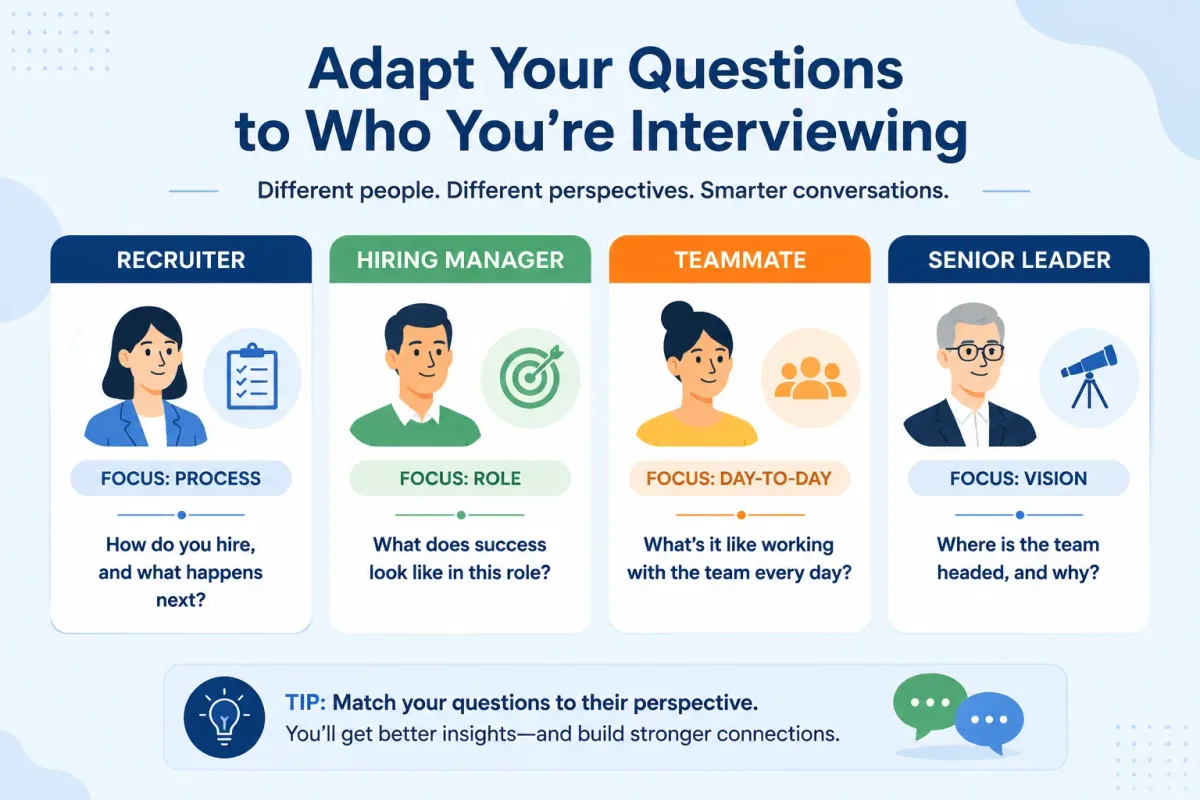
| Interviewer | Best questions to ask | What their answers reveal |
|---|---|---|
| Recruiter | Hiring timeline, benefits, compensation process, interview steps, onboarding | Logistics, expectations, and whether the process is organized |
| Hiring manager | Success metrics, role priorities, challenges, management style, feedback | What the job is really like and how performance will be judged |
| Future teammates | Collaboration, team challenges, communication, disagreements, daily workflow | Team culture, working style, and day-to-day realities |
| Senior leader or founder | Company priorities, strategy, market challenges, long-term vision | Direction, stability, leadership thinking, and business priorities |
Recruiter
Recruiters are often the first people you meet during the hiring process. They know the company's hiring timeline, benefits, and onboarding process, making them the best person to answer questions about logistics and employment policies.
1. What benefits does the company offer beyond salary?
HR can explain benefits such as health insurance, paid time off, learning budgets, retirement plans, or flexible work policies. These details are often difficult to judge from the job description alone.
2. What are the next steps in the hiring process?
This helps you understand what to expect after the interview, including the timeline, additional interview rounds, and when you can expect a decision.
3. What does the onboarding process look like for new hires?
A structured onboarding process often reflects how much the company invests in helping new employees succeed. It also gives you a better idea of what your first few weeks might look like.
Hiring Manager
Hiring managers know the role better than anyone else. They are responsible for defining success, setting expectations, and deciding what kind of person will thrive on the team. This is your opportunity to understand what the job is really like beyond the job description.
1. What does success look like in this role after the first 6-12 months?
This question helps you understand how your performance will be measured and what the manager considers most important. It also reveals whether the company has clear expectations for the role.
2. What are the biggest challenges the person in this role is expected to solve?
Job descriptions often focus on responsibilities, but not the real problems the team is trying to solve. This question helps you understand the priorities behind the hiring decision.
3. What qualities have made previous team members successful in this position?
The answer gives you insight into the manager's expectations, the team's working style, and whether your strengths align with what they're looking for.
Team Members / Future Colleagues
Future teammates can give you the clearest picture of what it's actually like to work on the team. Unlike recruiters or managers, they experience the day-to-day work firsthand, so their answers are often more practical and candid
1. What are the biggest challenges the team is currently facing?
Every team has challenges, whether it's rapid growth, changing priorities, or limited resources. Understanding what the team is working through helps you set realistic expectations and decide whether you're excited about tackling those challenges.
2. How does the team usually collaborate on projects?
This question helps you understand how the team communicates, shares responsibilities, and makes decisions. It also gives you a better sense of whether the team's working style matches your own.
3. How does the team handle disagreements or differing opinions?
Disagreements are a natural part of teamwork. The answer often reveals more about a team's culture than asking, "What's your team culture like?"
Senior Leaders / Founder
If you're interviewing with a senior leader or founder, avoid asking detailed questions about daily tasks. Instead, use the opportunity to understand the company's direction and long-term vision.
1. What are the company's biggest priorities over the next year?
This helps you understand where the business is heading and how this role contributes to those goals.
2. What do you see as the biggest opportunities or challenges for the company?
The answer provides insight into the company's strategy and the issues leadership is focused on.
3. How does this team contribute to the company's long-term vision?
This question helps you connect your potential role to the bigger picture and shows that you're interested in the company's future, not just your own responsibilities.
Key takeaway:
Don't ask every interviewer the same questions. Ask recruiters about the hiring process, hiring managers about the role, teammates about the day-to-day work, and senior leaders about the company's direction. Asking the right questions to the right people will give you a much more complete picture before making your decision.
What Makes a Question "Impressive"?
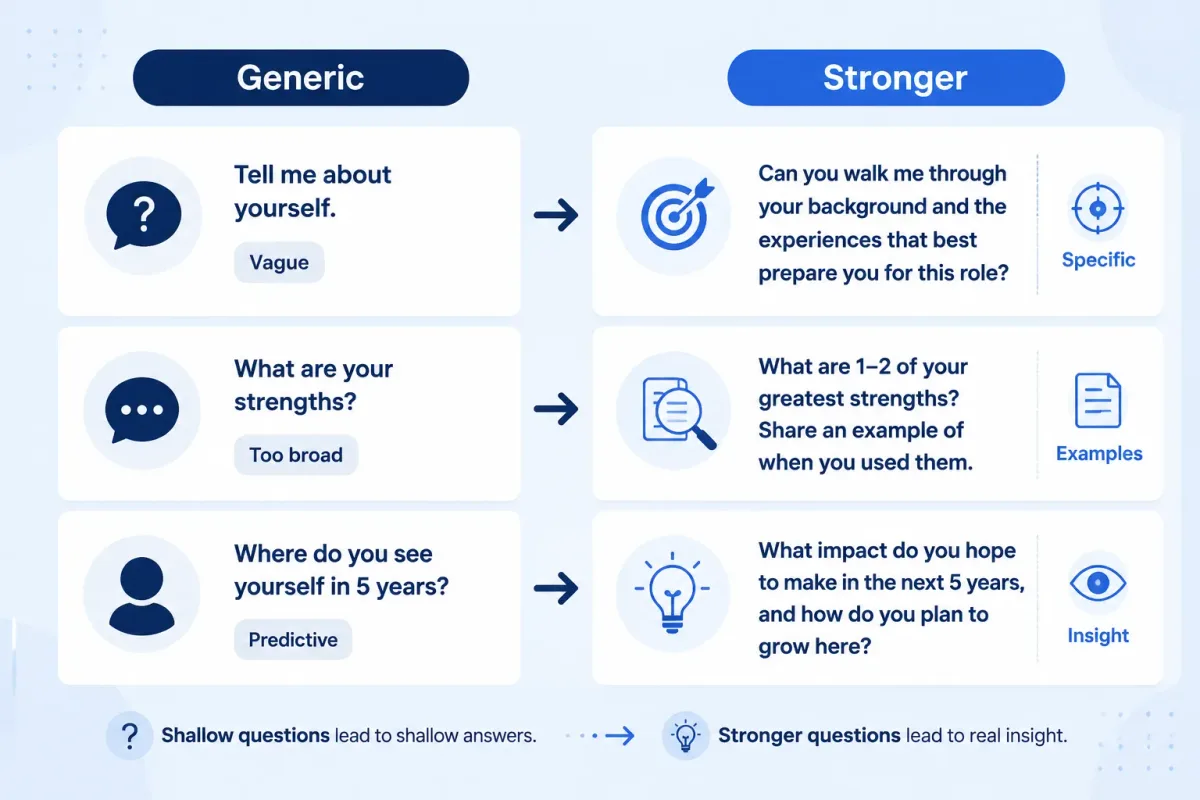
An impressive interview question is specific, relevant to the role, and designed to reveal something useful. It does not need to sound clever. In most interviews, the best questions show that you understand the role, care about the team's real priorities, and are trying to make a thoughtful career decision.
| Generic question | Stronger question | Why it works |
|---|---|---|
| What's the team culture like? | Can you tell me about someone who has been especially successful on this team? What made them successful? | Instead of asking for a general description, you're asking for a real example. The answer often reveals expectations, values, and working style more honestly. |
| Is the workload manageable? | What has been the team's biggest challenge over the past few months? | Most interviewers will simply answer "yes" when asked if the workload is manageable. Asking about recent challenges encourages them to share real situations. |
| Do people enjoy working here? | What makes people stay with the company, and why do some people choose to leave? | Every company has strengths and weaknesses. This question invites a more honest discussion about retention, career growth, and culture. |
How to Ask Questions Naturally During an Interview
Preparing questions before an interview is important, but asking them naturally is just as important. The goal isn't to work through a checklist; it's to have a genuine conversation.

Don't Save Every Question Until the End
While many interviewers will ask, "Do you have any questions for me?" at the end, you don't have to wait until then. If a question comes up naturally during the conversation, ask it. This makes the discussion feel more engaging and shows that you're actively listening.
Ask Follow-Up Questions
Some of the best questions aren't planned; they come from something the interviewer has just shared.
Follow-up questions often lead to more meaningful conversations than switching to the next question on your list.
Refer Back to Something Mentioned Earlier
Another easy way to make your questions feel natural is to connect them to something that has already been discussed. For example, earlier, you mentioned that the team is expanding. How has that changed the way people collaborate?" This shows that you've been paying attention and are genuinely interested in understanding the role.
Treat It Like a Conversation
An interview shouldn't feel like a questionnaire. Listen carefully, respond to what the interviewer says, and don't worry about asking every question you prepared. A few thoughtful questions asked at the right moment will always leave a stronger impression than a long list of scripted ones.
How to Evaluate the Interviewer's Answers
You've probably spent time preparing what to ask during an interview. But asking good questions is only half of the process. Knowing how to interpret the answers is just as important.
Remember that interviewers are also trying to present their company in the best possible light. That doesn't mean they're being dishonest, but it does mean you should pay attention not only to what they say, but also how they say it.
The goal isn't to look for a perfect answer. Instead, look for patterns that help you understand how the team works, what the company values, and whether the role matches your expectations.
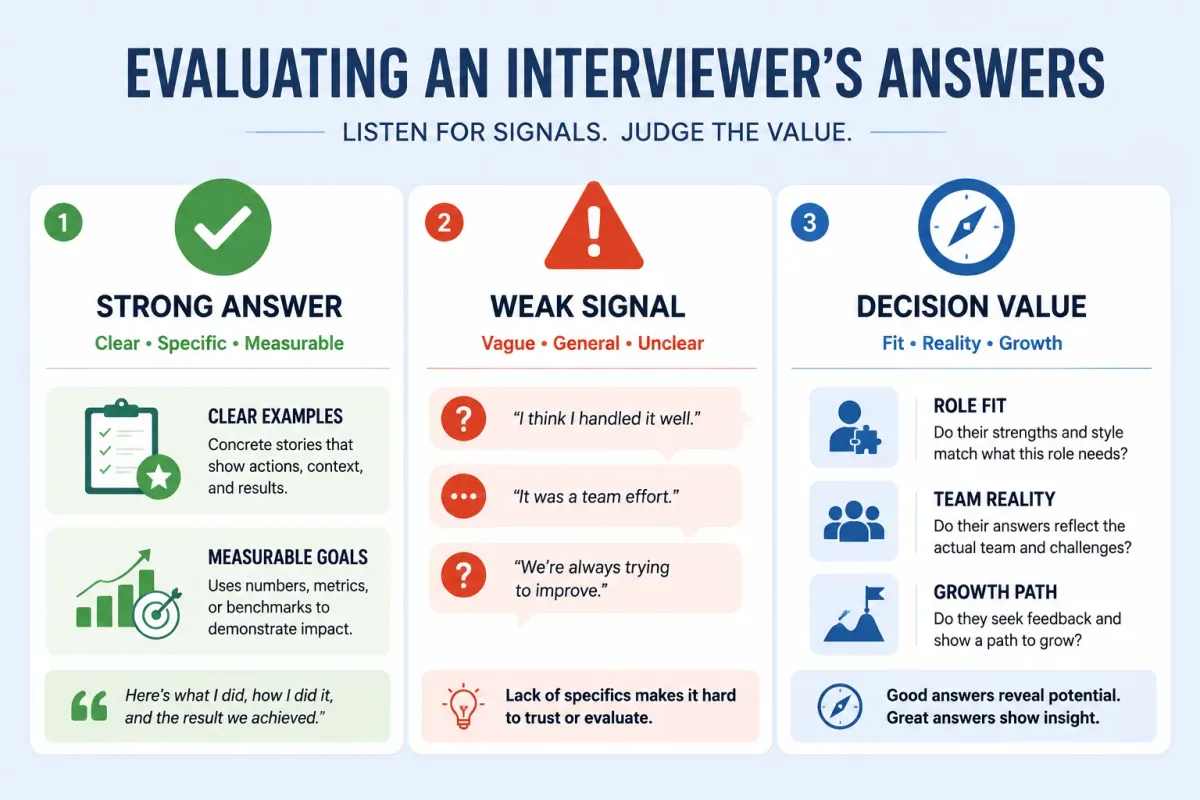
What Strong Answers Often Have in Common
Strong answers usually share several characteristics.
- Specific: They include concrete examples instead of broad statements.
- Transparent: They acknowledge both strengths and challenges rather than pretending everything is perfect.
- Consistent: Different interviewers describe the role and the team in similar ways.
- Supported by examples: Instead of saying, "We have a collaborative culture," they explain how people actually work together.
The more detailed and consistent the answers are, the easier it is to understand what working there would really be like.
What Weak Answers May Suggest
On the other hand, some answers deserve a little more attention, not because they're necessarily bad, but because they may indicate uncertainty or a lack of clarity.
Watch for answers that are:
- Very vague, with little detail or no examples.
- Contradictory, especially if different interviewers describe the role differently.
- Avoiding the question by changing the subject instead of answering directly.
- Overly generic, using phrases like "We're like a family" or "Everyone here wears many hats" without explaining what those statements actually mean.
One vague answer isn't necessarily a red flag. However, if you notice the same pattern throughout the interview, it's worth asking a few follow-up questions.
What Different Answers May Reveal
The same question can tell you very different things depending on the answer. Instead of listening for the "right" answer, think about what the response tells you about the company.
Example 1: "How is success measured in this role?"
Answer:
"We have clear goals for the first 30, 60, and 90 days, and we review progress regularly."
What it may reveal:
The team has well-defined expectations, structured onboarding, and a clear understanding of what success looks like.
Answer:
"We'll figure it out once you join."
What it may reveal:
The role may still be evolving, or expectations haven't been clearly defined. That isn't always a deal breaker, but it's worth asking more questions before accepting the offer.
Example 2: "Why is this position open?"
Answer:
"The team is growing because we've expanded into new markets."
What it may reveal:
The company is investing in growth, and the position exists because of increased business demand.
Answer:
"The previous employee left a few months ago."
What it may reveal:
This isn't necessarily a red flag. A natural follow-up question like "What prompted their decision?" or "What did you learn from that transition?" can provide valuable context. People leave jobs for many reasons, from promotions to career changes, so it's important to understand the story behind the vacancy rather than making assumptions.
Example 3: "What are the biggest challenges the team is facing right now?"
Answer:
"We're growing quickly, so we're improving our processes while onboarding new team members."
What it may reveal:
Leaders understand the team's challenges and are actively working to address them.
Answer:
"Nothing really. Everything is going well."
What it may reveal:
Every team faces challenges. An answer that suggests there are none may indicate a lack of transparency or simply avoid discussing difficult topics.
Look for Patterns, Not Perfect Answers
No company is perfect, and no single answer should determine your decision. Instead of judging one response in isolation, consider the interview as a whole.
Ask yourself:
- Were different interviewers consistent in their answers?
- Did they provide examples when explaining their points?
- Were they honest about challenges as well as successes?
- Did their answers make you more confident about the role, or leave you with more unanswered questions?
The best interview questions don't just help you impress the interviewer. They help you gather enough evidence to decide whether this is a company where you'll be able to succeed.
Common Mistakes When Asking Interview Questions
Avoid these common mistakes when asking questions in an interview.
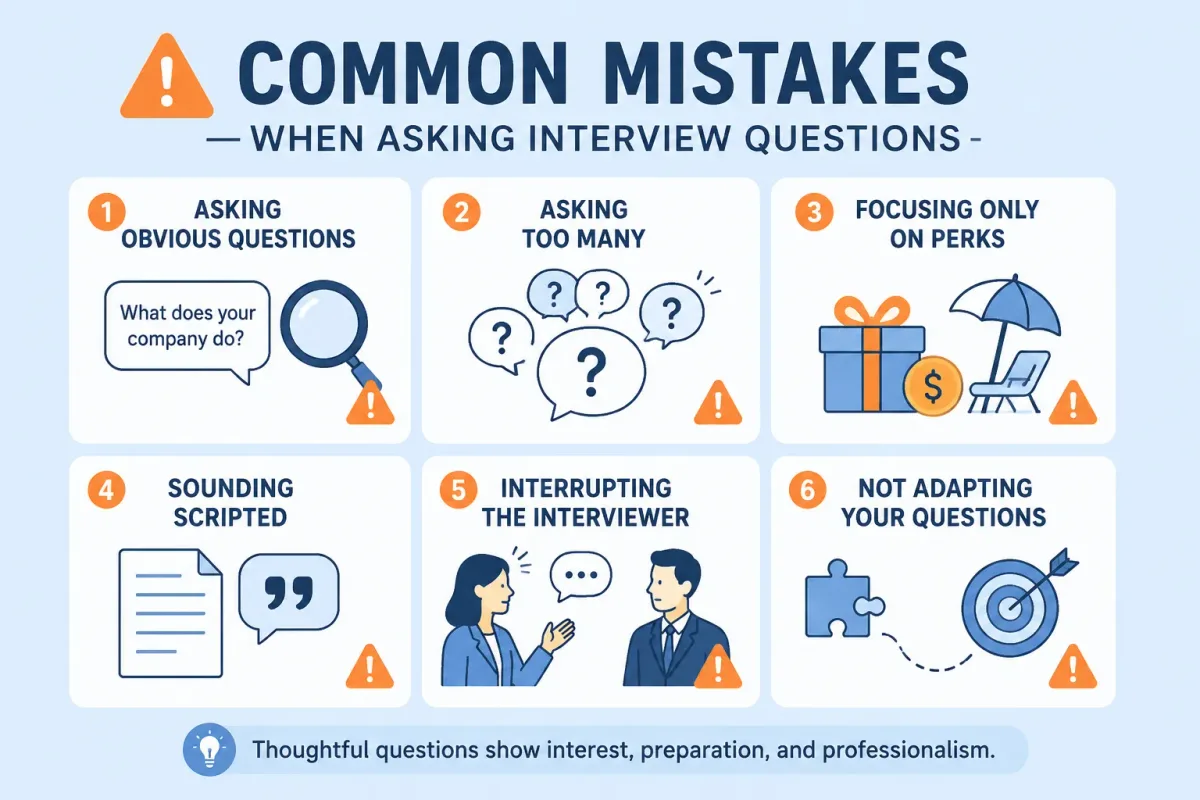
- Asking questions that are already answered on the company website or job description
- Asking too many questions without leaving room for conversation
- Only asking about salary, benefits, vacation, or perks
- Asking scripted questions without listening to the interviewer's previous answers
- Interrupting the interviewer or changing topics too abruptly
- Forgetting to adapt your questions to the interview stage and the person you are speaking with
15 Smart Questions to Ask in an Interview
Here are 15 questions you can ask during an interview. Choose the ones that best match your goals.
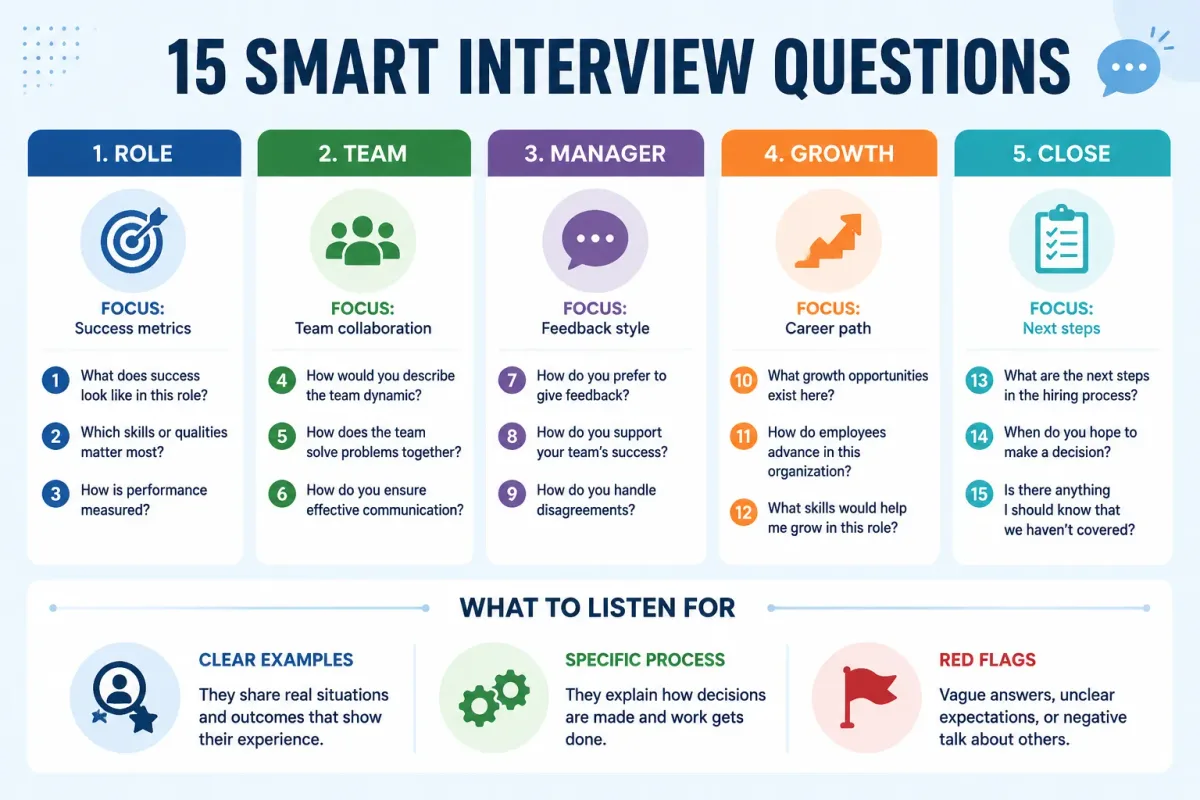
For Understanding the Role
1. What does success look like in this role after the first 6-12 months?
Why ask it?
To understand how your performance will be measured and what the manager expects from a successful employee.
A strong answer might include:
Clear goals, measurable outcomes, and examples of what success looks like.
Watch out for:
Vague expectations or answers like "We'll figure it out as we go."
2. What are the biggest challenges someone in this role is expected to solve?
Why ask it?
To understand the real priorities behind the position.
A strong answer might include:
Specific business challenges and how this role contributes to solving them.
Watch out for:
Generic descriptions that simply repeat the job description.
3. What would a typical first 90 days look like?
Why ask it?
To learn how you'll be onboarded and what you'll be expected to accomplish early on.
A strong answer might include:
A structured onboarding plan, clear milestones, and support from the team.
Watch out for:
No onboarding plan or unclear expectations.
For Understanding the Team
4. What are the biggest challenges the team is currently facing?
Why ask it?
To understand the team's current priorities and whether those challenges excite you.
A strong answer might include:
Honest discussion of current issues along with plans to address them.
Watch out for:
Answers suggesting the team has no significant challenges.
5. How does the team usually collaborate on projects?
Why ask it?
To understand how people communicate, share responsibilities, and make decisions.
A strong answer might include:
Examples of collaboration, communication tools, and decision-making processes.
Watch out for:
Unclear ownership or inconsistent ways of working.
6. How does the team handle disagreements or differing opinions?
Why ask it?
To understand the team's communication style and psychological safety.
A strong answer might include:
Respectful discussions, open feedback, and examples of resolving disagreements.
Watch out for:
Claims that disagreements rarely happen or avoidance of the question.
For Understanding the Manager
7. What qualities have made previous team members successful in this role?
Why ask it?
To understand what your manager values most.
A strong answer might include:
Specific behaviors, skills, and real examples.
Watch out for:
Only generic personality traits without examples.
8. How do you usually give feedback to your team?
Why ask it?
To understand the manager's coaching and communication style.
A strong answer might include:
Regular one-on-one meetings, continuous feedback, and clear expectations.
Watch out for:
Feedback only during performance reviews or when problems arise.
9. What's your management style?
Why ask it?
To decide whether your preferred way of working matches the manager's approach.
A strong answer might include:
Specific examples of how they support, coach, and communicate with their team.
Watch out for:
Very broad statements without explaining how they manage people.
For Understanding Growth Opportunities
10. What opportunities are available for professional development?
Why ask it?
To understand how the company supports continuous learning.
A strong answer might include:
Learning budgets, mentorship programs, conferences, or training opportunities.
Watch out for:
No clear investment in employee development.
11. How have people in this role grown within the company?
Why ask it?
To see whether career progression actually happens in practice.
A strong answer might include:
Real examples of promotions or internal career moves.
Watch out for:
No examples despite claiming there are plenty of growth opportunities.
12. What skills would help someone move to the next level?
Why ask it?
To understand what's expected for long-term success.
A strong answer might include:
Clear promotion criteria and examples of successful employees.
Watch out for:
Unclear expectations or no defined career path.
For Ending the Interview Professionally
13. Is there anything about my background that you'd like me to clarify?
Why ask it?
To address any concerns before the interview ends.
A strong answer might include:
Constructive feedback or confirmation that you've covered the key points.
Watch out for:
There's no real red flag here; this is simply an opportunity to strengthen your candidacy.
14. What are the next steps in the hiring process?
Why ask it?
To understand the timeline and what to expect after the interview.
A strong answer might include:
A clear hiring process and expected timeline.
Watch out for:
No indication of what happens next.
15. Is there anything else I can provide to help with your decision?
Why ask it?
To demonstrate initiative and professionalism.
A strong answer might include:
Suggestions for additional information, references, or work samples if needed.
Watch out for:
Again, there isn't really a red flag; this question simply leaves the conversation on a positive and proactive note.
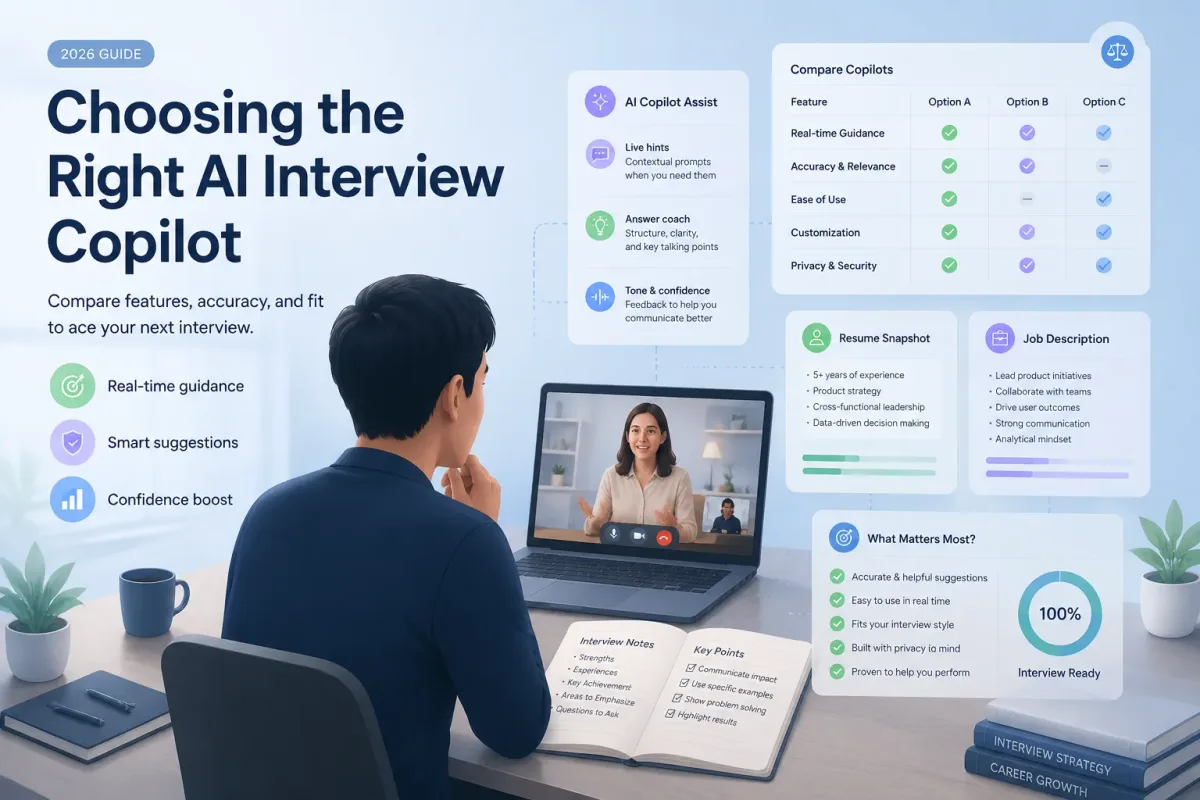
For additional preparation, compare AI interview copilot tools before your next interview.
Conclusion
The best interview questions aren't designed to impress the interviewer; they're designed to help both of you make a better decision.
Instead of focusing on asking the "perfect" question, focus on understanding the role, the team, the manager, and the company behind the job description. Ask with genuine curiosity, listen carefully to the answers, and don't be afraid to ask thoughtful follow-up questions when something catches your attention.
Remember, a successful interview isn't measured by how many questions you ask. It's measured by how much you learn. The more clearly you understand the opportunity, and the more clearly the interviewer understands you, the more confident both of you can be in making the right decision.