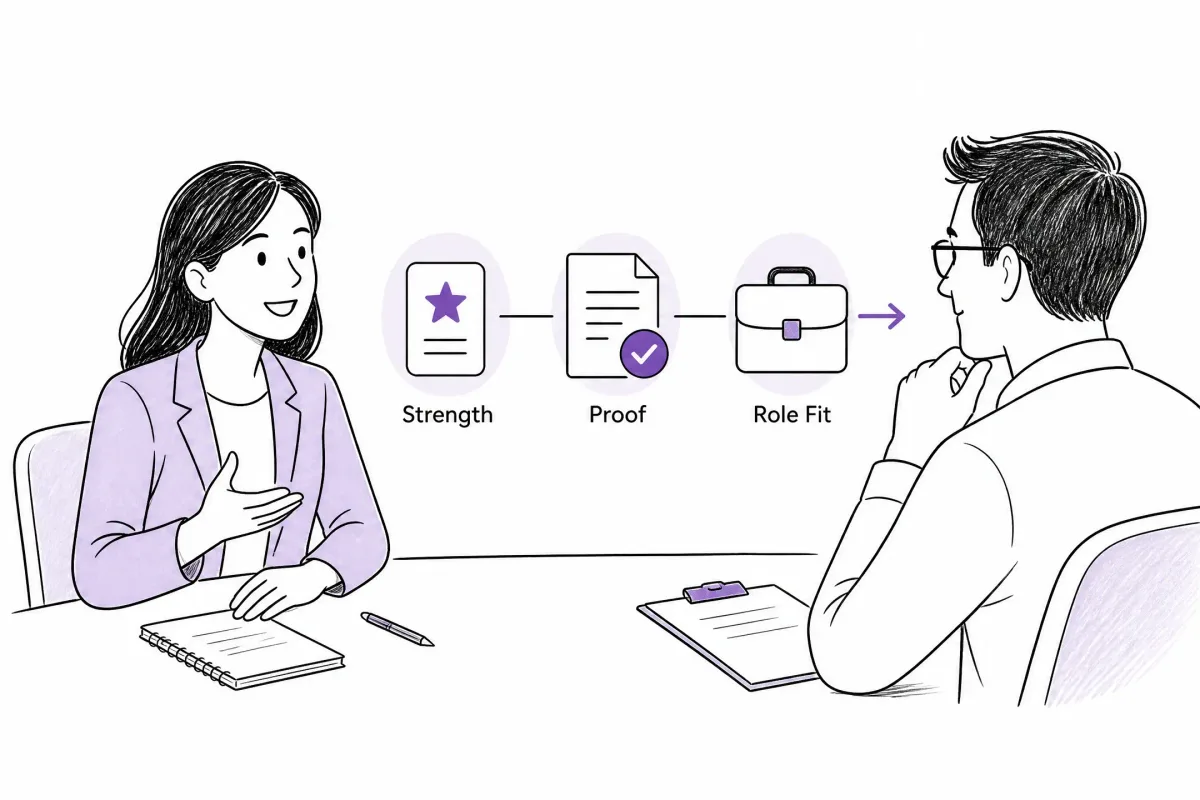

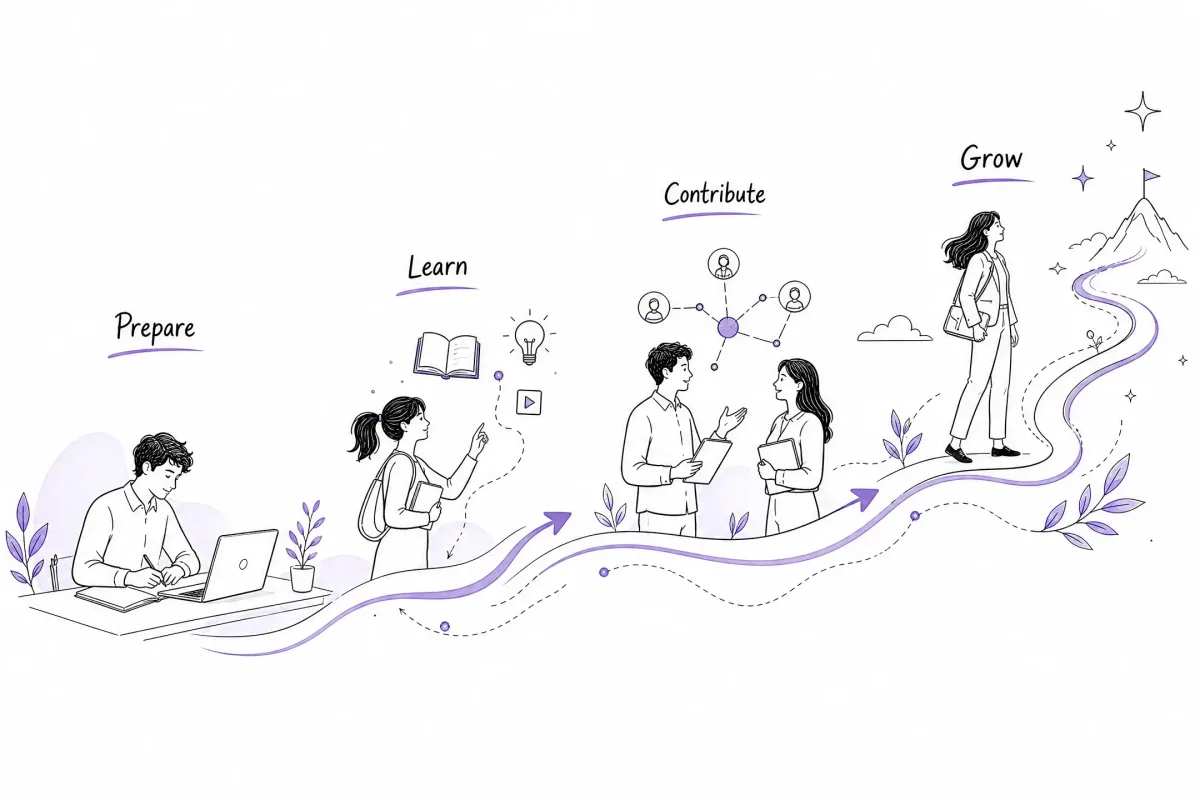
Few things combine excitement and nerves like the first few weeks of an internship. You want to learn quickly, contribute meaningful work, and leave with relationships and experience that help you take the next step.
The good news is that success as an intern usually does not depend on knowing everything on day one. It depends on building repeatable habits: understand the team’s priorities, ask focused questions, deliver accurate work, communicate early, respond well to feedback, and make your contribution visible.
To succeed as an intern, learn the team’s priorities, ask focused questions, take notes, deliver accurate work on time, communicate progress, request feedback early, and build genuine relationships. Treat every assignment—even a small one—as evidence of reliability, then track your results so you can explain your impact at the end of the internship.
Here are the seven habits behind the 17 practical tips in this guide:
- Prepare before day one.
- Learn the team’s priorities and norms.
- Ask researched, specific questions.
- Deliver small tasks accurately and on time.
- Communicate progress and blockers early.
- Request feedback and act on it.
- Document your results and stay in touch.
Internship success comes down to four areas: reliability, learning, communication, and relationships. The sections below turn each area into specific actions, example scripts, and simple tools you can use throughout your internship.
Still interviewing? GreatOffer’s real-time AI interview copilot can support interview preparation and live interview practice. Use any interview assistance tool only when the employer, school, and interview platform permit it, and never treat it as a substitute for honest preparation or your own answers.
Before Day One: Prepare to Learn Fast
The work that shapes your internship often starts before your first day. A small amount of preparation can help you arrive with fewer avoidable questions and a clearer understanding of what you are there to learn.
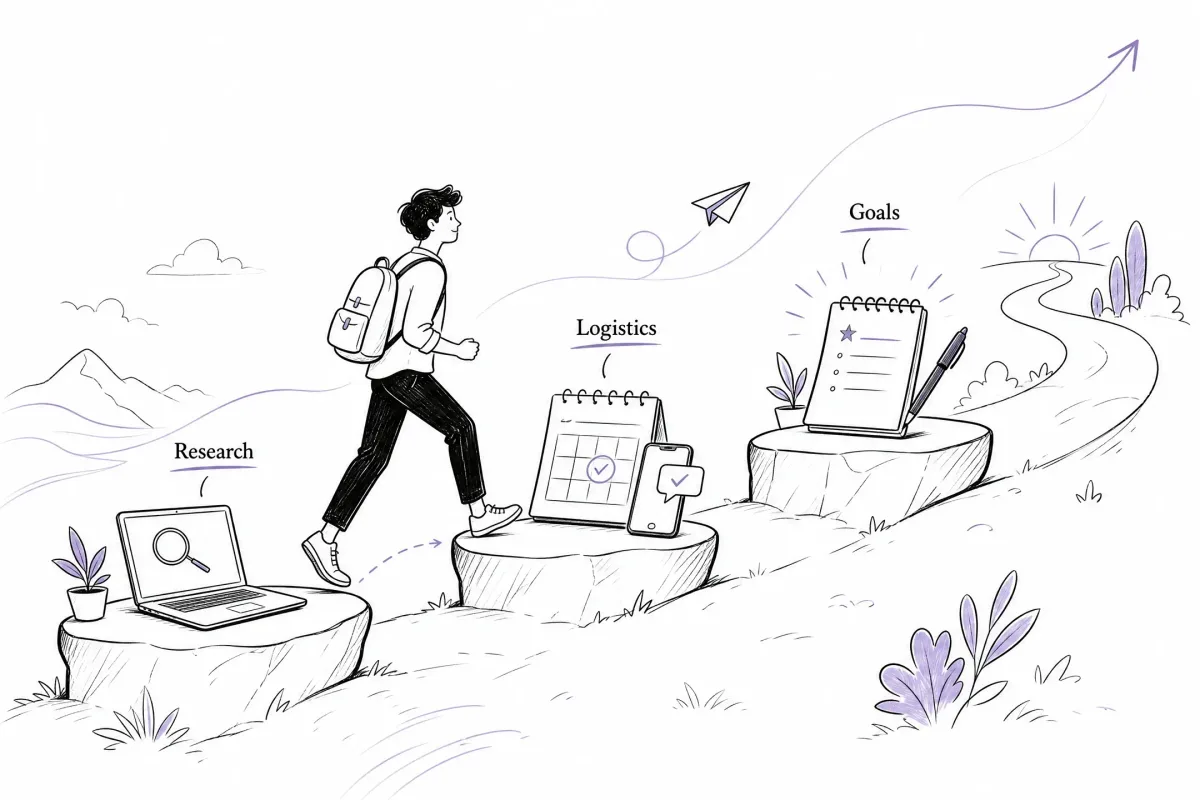
1. Research the Company, Team, and Role
You do not need to become an expert before your internship starts. You do need enough context to understand what the company does, who it serves, and how your team contributes.
Set aside a short, focused research session and review:
- The company’s main products or services.
- The customers or users it serves.
- Your team’s role in the broader business.
- The three most important words in your job description.
- Any company or industry terms you do not understand.
Write down two or three questions before you start. For example:
- What does this team measure most closely?
- Which projects are most important this quarter?
- What does a strong intern deliver by the end of the program?
The goal is not to impress people by repeating facts from the company website. The goal is to understand enough context to learn faster and ask better questions.
2. Confirm Logistics and Expectations
Before your first day, confirm the practical details that could otherwise create unnecessary stress.
Depending on what your employer has already shared, you may want to confirm:
- Arrival time or virtual meeting time.
- Office location or video platform.
- Dress expectations.
- Equipment and system access.
- Your first-day contact person.
- Anything you should review in advance.
- The expected schedule for your first week.
A short message is usually enough:
Hi [Name],
I’m looking forward to starting on [day]. Could you confirm the arrival time, dress expectations, and whether there is anything you would like me to review before my first day?
Thank you, [Your Name]
This message does not need to be elaborate. It shows that you are thinking ahead and gives your manager a chance to correct missing information.
3. Set Three Learning Goals
A useful internship goal is specific enough to guide your choices but flexible enough to adapt as your role changes.
Set one goal in each of these categories:
| Goal type | Example |
|---|---|
| Skill | Become comfortable using the team’s analytics or project-management tool |
| Relationship | Build working relationships with several teammates and one potential mentor |
| Outcome | Contribute to or present one meaningful deliverable by a defined point in the internship |
These are examples, not universal requirements. Your actual goals should match your role, time frame, and manager’s expectations.
At the end of each week, ask yourself:
- What did I learn?
- Who did I work with?
- What did I contribute?
- What should I do differently next week?
That simple review turns an internship from something that merely happens to you into an experience you actively shape.
Your First Week: Learn the People, Priorities, and Process
Your first week may feel like a test, but it is also an orientation period. You are learning how the team works, how decisions are made, and what “good work” means in that environment.
4. Learn Names, Roles, and Workflows
Create a simple team map as you meet people. For each person, record:
- Name.
- Role.
- How their work connects to yours.
- Whether they assign, review, approve, or support your work.
- What types of questions they are best positioned to answer.
Start with your manager, assignment owners, reviewers, project experts, and fellow interns. You do not need a long conversation with everyone immediately. You need enough context to know where to go when you need help.
This also helps you avoid sending every question to the same person. Understanding the workflow makes collaboration easier and reduces unnecessary interruptions.
5. Ask Smarter Questions
Many interns worry that asking questions will make them look unprepared. The better approach is not to ask fewer questions. It is to ask questions that show what you already tried and what you need to decide.
Use this structure:
I checked [source] and tried [action], but I’m still unsure about [specific issue]. Should I [option A] or [option B]?
For example:
I reviewed the project brief and compared the last two reports, but I’m still unsure whether this section should focus on monthly or quarterly results. Which direction would you prefer?
A focused question gives the other person enough context to answer efficiently.
Ask sooner when the issue involves:
- Security or permissions.
- Customer or confidential data.
- Legal or compliance requirements.
- An approaching deadline.
- An action that cannot easily be reversed.
- Conflicting instructions.
Do not spend an hour researching a basic issue if a quick clarification would prevent a major mistake.
6. Build a Note-Taking and Task System
Memory is not a reliable task-management system, especially during your first weeks.
For every assignment, record:
- Who assigned it.
- What needs to be delivered.
- The deadline.
- What “done” looks like.
- Questions that remain open.
- The next action.
- Any dependencies or blockers.
You can use a notebook, document, spreadsheet, or project-management tool. The specific tool matters less than using it consistently.
A simple task record might look like this:
| Field | Example |
|---|---|
| Task | Prepare first draft of competitor summary |
| Owner | Marketing manager |
| Deadline | Thursday afternoon |
| Expected output | Two-page summary with sources |
| Open question | Should the comparison include pricing? |
| Next step | Confirm scope before research begins |
This system gives you material for progress updates and makes it easier to prepare a final summary of your work.
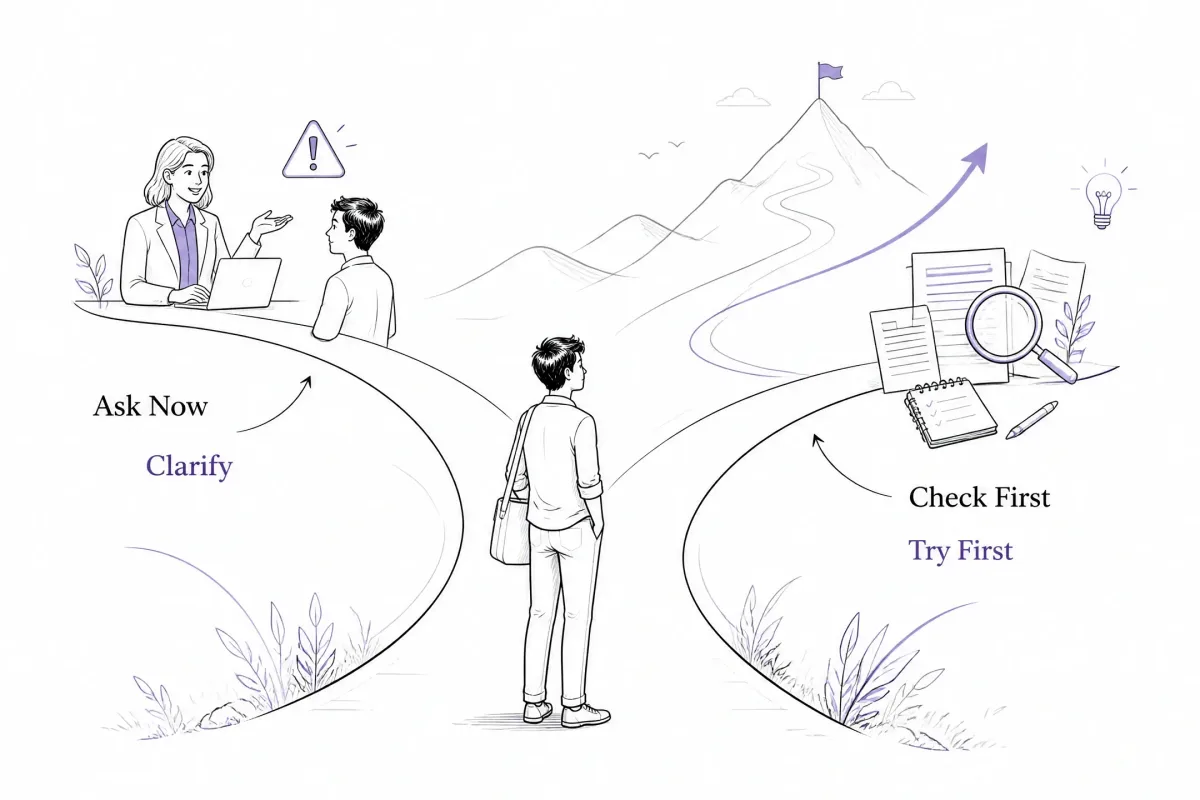
Should You Ask Now or Research First?
Use this quick decision tool:
- Ask immediately if the issue involves permissions, security, sensitive data, legal requirements, or an irreversible action.
- Clarify soon if the deadline, priority, or expected output is unclear.
- Check internal resources first if the company already has documentation about the process.
- Try first if the question is basic and you can verify the answer quickly.
- Ask with context if you tried something and still cannot move forward.
The goal is not to avoid asking questions. The goal is to avoid both careless guessing and unnecessary dependency.
Daily Work Habits That Build Trust
Trust is built through small, repeatable actions. You do not need to create a dramatic success every day. You need to become someone people can rely on.
7. Be Punctual, Prepared, and Consistent
Arrive on time or join virtual meetings a few minutes early. Before a meeting:
- Review the agenda.
- Check your notes.
- Know what you need to report.
- Prepare any questions.
- Confirm your next step before the meeting ends.
If you work remotely, check your microphone, camera, meeting link, and files before important meetings.
Consistency matters more than making a strong impression once. A dependable routine helps your manager understand what they can expect from you.
8. Treat Small Assignments Like Real Deliverables
Small tasks are still visible evidence of how you work.
Before submitting a deliverable, check:
- Names and labels.
- Numbers and calculations.
- Links and attachments.
- Formatting and file structure.
- File name and version.
If the assignment is unclear, confirm the expected level of detail before spending hours on it. If it is repetitive, look for ways to improve the process only after you understand the existing workflow.
Do not dismiss basic work as unimportant. A carefully completed small assignment can make it easier for someone to trust you with a more complex one.
9. Communicate Progress Before You Are Asked
Your manager should not have to guess whether your work is on track.
A short update can use this format:
Done: [What you completed] Next: [What you will do next] Blocked by: [What you need or what is slowing you down] Expected timing: [When you expect the next milestone]
For example:
Done: Completed the first five competitor profiles. Next: I’ll standardize the comparison table. Blocked by: I still need confirmation on whether pricing should be included. Expected timing: I can finish the draft by Thursday once the scope is confirmed.
Use the communication rhythm your manager prefers. Some teams want daily updates, while others prefer weekly summaries or updates at key milestones.
10. Use Downtime Productively
At some point, you will finish a task before a new one is assigned. That is normal.
Work through this sequence:
- Check whether any existing task needs a final review.
- Update your notes and task tracker.
- Read internal documentation related to your work.
- Ask your manager or teammate whether there is a useful task you can help with.
- Learn a skill that directly supports your role.
You can send a simple message:
I’ve finished the current task and checked the deliverable. Is there anything on the team’s list I can help with, or would it be useful for me to review the documentation on [topic]?
Do not assume that being busy is the same as being valuable. Use downtime to improve your understanding, support the team, or prepare for the next assignment.
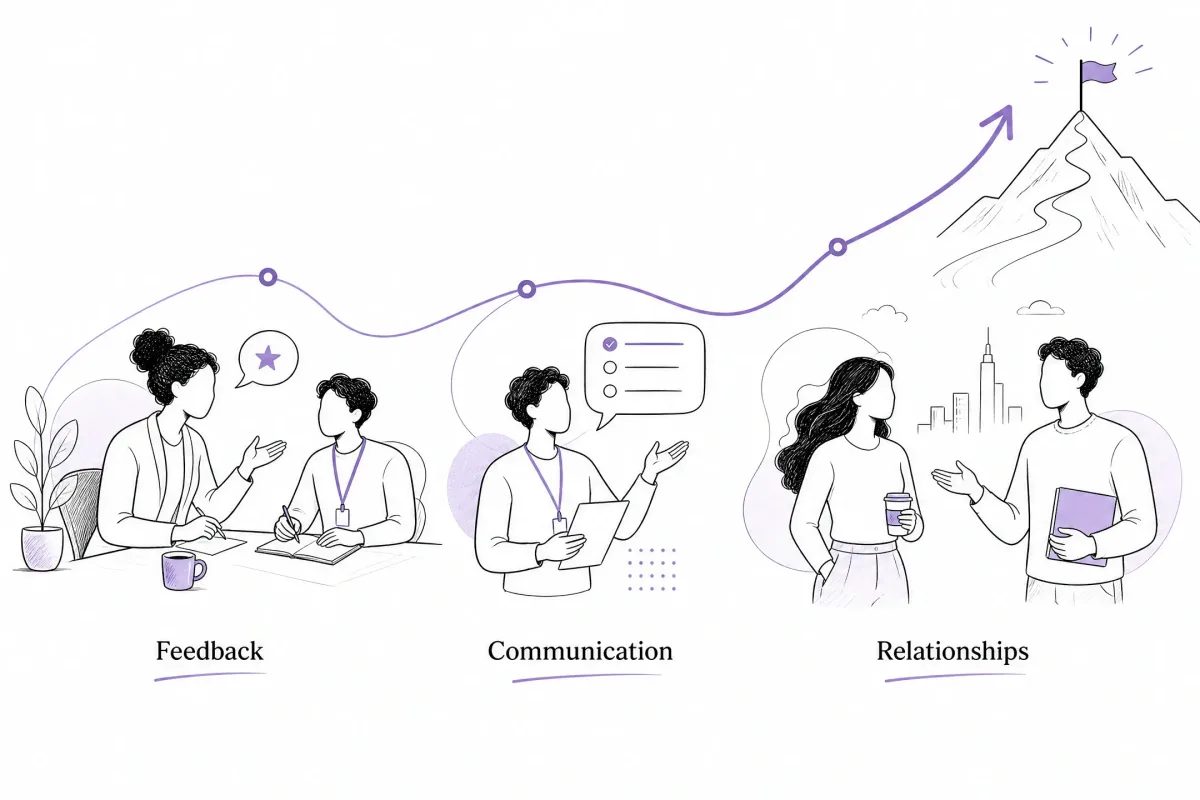
Communicate, Get Feedback, and Build Real Relationships
Your work matters, but so does the way you collaborate. The goal is not to force friendships or network with everyone. It is to become someone people enjoy working with and remember for the right reasons.
11. Ask for Feedback Before the Midpoint
Do not wait until the final review to find out how you are doing.
At an appropriate point in the internship, ask:
What is one thing I should keep doing and one thing I should change?
If the feedback is vague, ask for a specific example:
Could you give me an example of where I could apply that change?
Then act on the feedback. In a later conversation, you can briefly mention what you changed:
I’ve been applying your suggestion by sending a short progress update before each milestone. Is that making the status easier to follow?
Feedback becomes valuable when it changes your behavior, not when it remains a one-time conversation.
12. Adapt to the Team’s Communication Norms
Different teams use chat, email, documents, and meetings differently. Ask how people prefer to communicate:
How does the team usually handle quick questions versus topics that need a longer discussion?
As a general starting point:
- Use chat for short, time-sensitive questions.
- Use email for formal decisions or longer explanations.
- Use shared documents for collaborative work.
- Use meetings for issues that require back-and-forth discussion.
The most important rule is to observe and confirm. Do not assume that your previous workplace, school, or internship used the same conventions.
13. Build Genuine Relationships
Good professional relationships grow from shared work and sincere curiosity.
Try:
- Joining a team lunch or informal conversation when appropriate.
- Asking how someone entered the field.
- Thanking people who help you.
- Following up on advice they gave you.
- Connecting on LinkedIn when the relationship is genuine.
A useful question might be:
What has been the most useful skill in your role that you did not expect to use when you started?
You do not need to collect dozens of contacts. A few thoughtful relationships are more useful than a long list of people who barely remember meeting you.
How to Stand Out Without Overstepping
Standing out is not about claiming attention or changing the team’s processes before understanding them. It is about making useful contributions while respecting context and ownership.
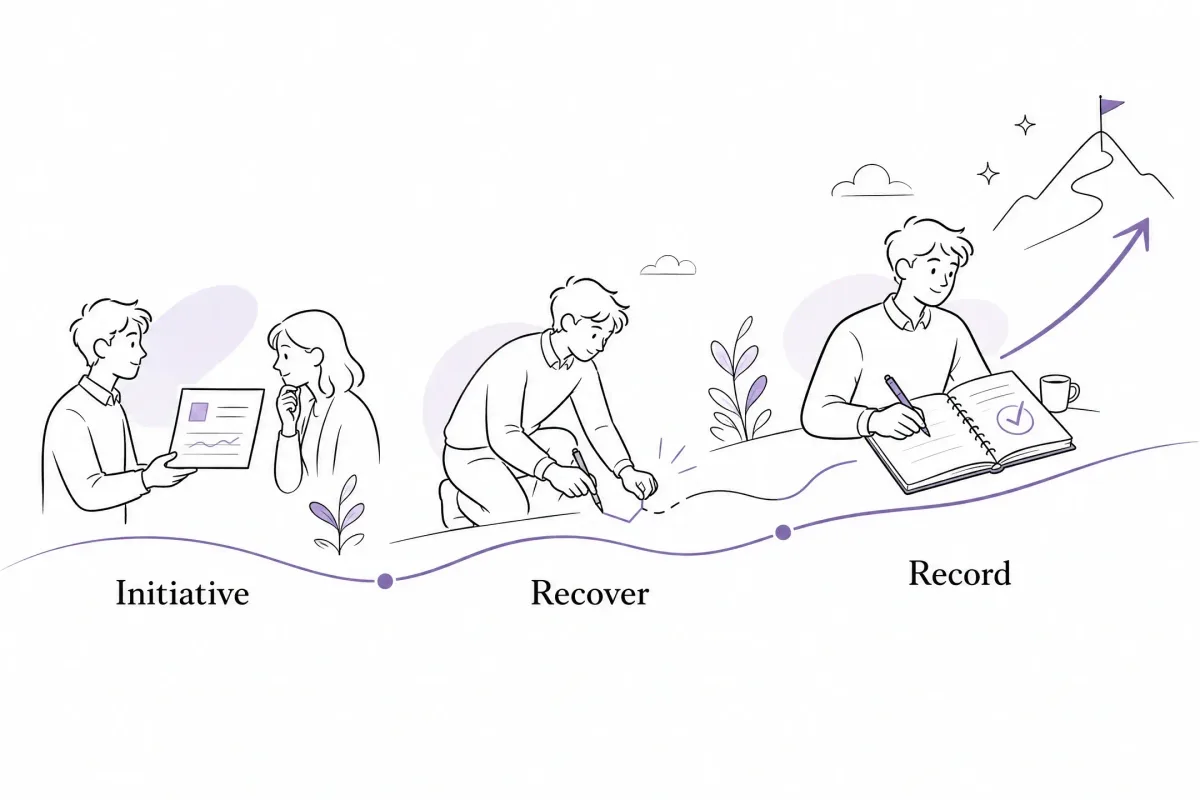
14. Take Initiative Without Overstepping
Start with small, reversible improvements.
A safe way to propose an idea is:
I noticed [specific issue]. Would it help if I drafted [small solution] for you to review?
This approach gives the other person a chance to guide the work before you invest too much time.
Examples of low-risk initiative include:
- Organizing notes from a meeting.
- Drafting a first version of a recurring report.
- Creating a checklist for a process you now understand.
- Summarizing customer or competitor research.
- Identifying a small repeated task that could be simplified.
Avoid criticizing an established process before you understand why it exists. A process that looks inefficient from the outside may reflect security, privacy, compliance, or customer requirements you have not yet seen.
15. Own Mistakes and Recover Quickly
Mistakes happen. Hiding one usually creates a larger problem than reporting it early.
Use this four-part structure:
I made [specific mistake]. The impact is [what changed or what is at risk]. I’ve corrected [what you fixed]. I’ll use [new check or process] to reduce the chance of repeating it.
For example:
I used the wrong date range in the first version of the report. The totals were affected, so I re-ran the analysis and marked the corrected figures. I’ll add a date-range check to my review process before sending the next version.
Be honest, focus on the fix, and explain what you learned. The goal is not to appear perfect. It is to show that you can respond responsibly when something goes wrong.
16. Keep an Accomplishment Log
Do not wait until the end of your internship to remember what you did.
For each meaningful task, record:
- The problem or assignment.
- The action you took.
- The result.
- Feedback you received.
- Evidence you can safely reference.
- Skills you used or developed.
For confidential work, record only information that is safe to share. You can describe the type of work and your contribution without including private client or company details.
This log can later support:
- Your resume.
- Your final presentation.
- A performance conversation.
- A recommendation letter.
- A future interview answer.
A useful format is:
Situation: What needed to be done? Action: What did you personally do? Result: What changed, improved, or became easier? Learning: What would you repeat or change next time?
How to Handle Common Internship Problems
Not every internship runs perfectly. When something goes wrong, start with the smallest professional action that can clarify or improve the situation.
What If Instructions Are Unclear or Conflict?
Do not guess if two tasks have competing priorities.
Ask:
To make sure I prioritize correctly, should I finish X before starting Y?
If two people give you different instructions, speak with the person who owns the project or has final responsibility for the deliverable. Explain the conflict without blaming either person.
For example:
I received two requests that may affect the order of work. I want to confirm the priority before I proceed. Should I complete X first, or should I move to Y?
A short clarification can prevent a much larger rework problem.
How Can Remote and Hybrid Interns Stay Visible?
Remote and hybrid interns may have fewer spontaneous conversations, so written communication becomes especially important.
Use a clear rhythm:
- Send concise status updates.
- Keep your task tracker current.
- Participate when you have something useful to add.
- Schedule occasional short conversations with teammates.
- Share completed work and next steps without overselling yourself.
- Ask how your manager prefers to stay informed.
Being visible does not mean sending constant messages. It means making your work, progress, and questions easy to understand.
What If the Internship Is Not a Good Fit?
First, identify the specific gap:
- Is the work different from the job description?
- Do you need more guidance?
- Are you not receiving enough substantive work?
- Is the team’s communication style difficult to understand?
- Is there a serious conduct, safety, or policy issue?
Then make one clear request. For example:
I’ve completed the initial assignments and would like to take on a project that gives me more experience with [skill]. Is there an appropriate task I could support?
If the issue continues, document what you tried and speak with the relevant program coordinator, manager, HR contact, or school representative.
If you experience discrimination, harassment, an unsafe situation, or a request that violates policy, raise the concern promptly through the appropriate channel. You do not need to remain silent in order to appear professional.

Finish Strong and Turn the Internship Into Future Opportunities
The final weeks are a chance to make your contribution easy to understand and to clarify what comes next.
Turn Your Work Into a One-Page Impact Summary
Prepare a short summary with:
- Three to five meaningful contributions.
- The skills you used.
- Feedback you received.
- Changes you made after receiving feedback.
- Results or improvements you can safely describe.
- Suggestions for future work.
For confidential projects, anonymize sensitive details and focus on your role and transferable skills.
This summary can help you prepare for a final meeting and gives your manager specific material to reference if they write a recommendation.
17. Close Strong and Ask About Next Steps
If you are interested in returning, communicate that interest directly without treating it as an entitlement.
You could say:
I’ve enjoyed contributing to [project or team]. Are there opportunities to return, and what would strengthen my candidacy?
This question gives the other person room to explain the process and provide useful feedback.
If you have a strong working relationship and visible results, you can ask for a recommendation before the internship ends:
I’ve appreciated your guidance during the internship. Would you feel comfortable writing a recommendation based on the work we completed together? I can send my resume and a short summary of my contributions to make the process easier.
Ask early enough for the person to write a thoughtful recommendation. Not every internship leads to a return offer, so treat the conversation as a request for information and guidance, not a guaranteed outcome.
Stay in Touch Without Being Awkward
Send a specific thank-you message within a reasonable time after the internship ends. Mention:
- Something concrete the person helped you learn.
- A project or experience you valued.
- What you plan to do next.
- Your interest in staying connected.
Continue the relationship around meaningful updates, such as a completed course, new role, relevant project, or future opportunity. One thoughtful message is more useful than repeated messages with no clear reason.
A Simple Intern Action Plan: Day 0 to the Final Week
Use this checklist to turn the advice into a simple routine.
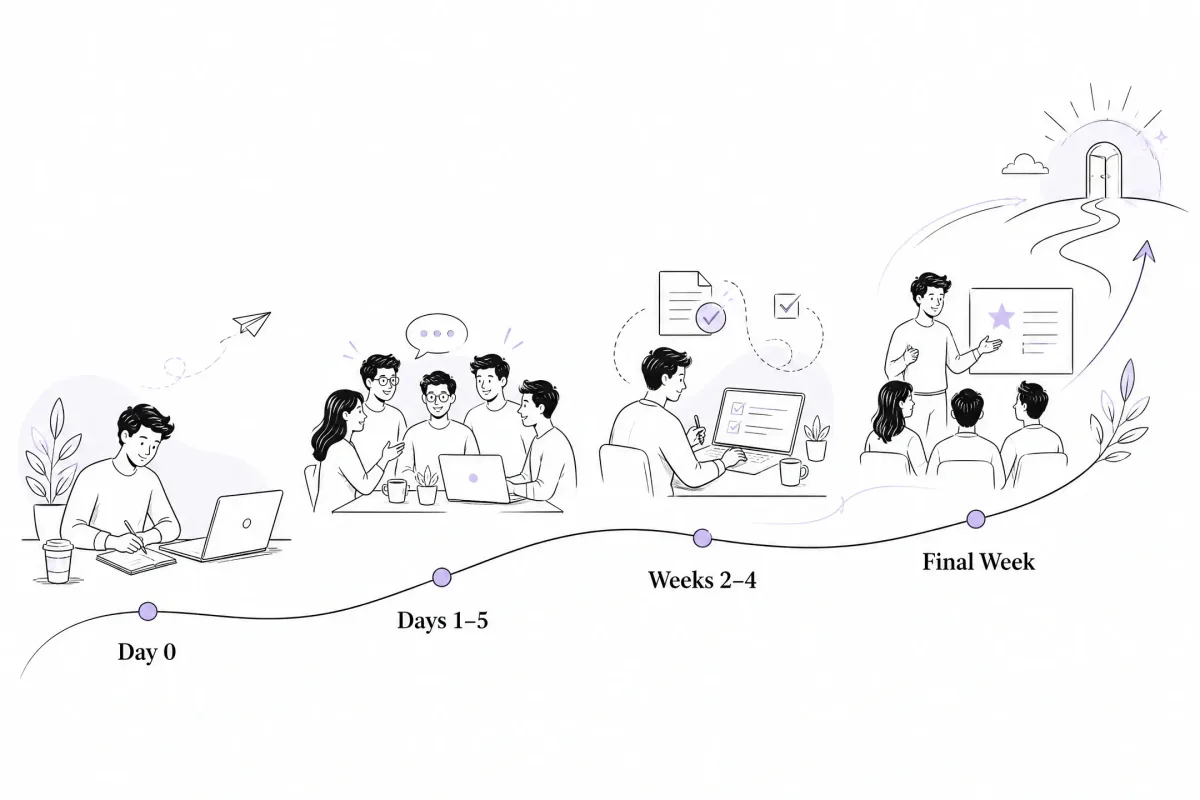
Before Day One
- Confirm arrival time, dress expectations, equipment, and contact person.
- Review the company, team, and role.
- Write one skill goal, one relationship goal, and one outcome goal.
- Send a short pre-start confirmation message.
- Prepare two or three thoughtful questions.
Days 1–5
- Map names, roles, and responsibilities.
- Set up a note-taking and task-tracking system.
- Ask about team priorities and communication norms.
- Confirm what “done” means for your first assignment.
- Introduce yourself to the people you will work with most often.
Weeks 2–4
- Review every deliverable before submitting it.
- Send progress updates in your manager’s preferred format.
- Ask for early feedback.
- Take on a small stretch task when appropriate.
- Start your accomplishment log.
Midpoint and Final Week
- Ask what to keep doing and what to change.
- Prepare a one-page impact summary.
- Ask about return opportunities and next steps.
- Request a recommendation if appropriate.
- Send a specific thank-you message and stay in touch around meaningful updates.
Make Reliability Your Competitive Advantage
If you remember only one idea from these tips for interns, remember this: make your work easy to trust.
Prepare before you start. Learn how the team works. Ask focused questions. Deliver careful work. Communicate before problems become surprises. Accept feedback and show what changed. Keep a record of your contributions so you can explain them clearly later.
You do not need to be perfect to have a successful internship. You need to be prepared, curious, honest, and willing to make the team’s work easier.
Start with one action today: confirm your first-day logistics, create your task tracker, or write down your first learning goal.