
Three Weakness Interview Examples You Can Adapt
Each example below includes the condition that makes it usable, the situations that make it risky, a fill-in structure, and a sample answer. The samples are illustrative composites—use them to see what a complete answer sounds like, then replace every detail with your own experience. Do not claim an outcome, habit, or piece of feedback that you cannot support.
1. Waiting Too Long to Ask for Input
What the weakness means: You sometimes spend too long trying to solve a problem independently before asking for guidance or raising a concern.
Why it may work: It is an actual execution problem rather than a disguised strength. It also gives you a clear way to show better judgment through escalation rules, checkpoints, or earlier communication.
Do not use it when: Early escalation is central to the role. That includes many safety-sensitive jobs, incident-response work, clinical environments, and roles where delays can create immediate customer or operational harm.
Evidence to prepare: Think of a situation in which waiting affected speed, alignment, or rework. Then identify the trigger you now use to ask for help. The trigger might be based on time, risk, a project milestone, or the number of unsuccessful attempts.
Build your version:
“I have noticed that I sometimes [specific behavior] when I am trying to solve a problem independently. In [situation], that affected [what it affected]. I now use [your escalation trigger or checkpoint], which has helped me [observable change you can support].”
What a complete answer sounds like:
“I sometimes spend too long trying to solve a problem on my own before asking for help. Last year I spent almost three days debugging a data pipeline issue that a teammate had already solved on a previous project—one message would have saved me two of those days. Since then I have set myself a rule: if I am stuck on the same blocker for more than half a day, I post what I have tried in the team channel and ask for input. My lead has commented that problems now surface earlier, and my turnaround on blocked tasks has dropped noticeably.”
2. Over-Refining Work Before Getting Feedback
What the weakness means: You sometimes invest too much effort in an early draft before confirming the direction, criteria, or priorities with the right people.
Why it may work: It is more credible than simply saying, “I am a perfectionist,” because it names an actual workflow problem: getting feedback too late.
Do not use it when: The role depends on extremely fast iteration and you cannot show that the behavior is now controlled. It may also create concern if your example suggests repeated missed deadlines or an inability to follow priorities.
Evidence to prepare: Identify an example of unnecessary rework, delayed alignment, or misplaced effort. Then explain the control you use now, such as sending an outline first, timeboxing early polish, or scheduling a direction check before deep work.
Build your version:
“Earlier in my career, I sometimes refined work before confirming the direction. In [situation], that led to [what it affected]. I now [the control you use], and I check progress through [feedback or delivery evidence].”
What a complete answer sounds like:
“Earlier in my career I tended to polish work before confirming the direction. When I built my first quarterly report, I spent a week refining the charts and layout, then learned in the review that the finance team needed a different breakdown entirely—most of that week was wasted. Now I send a one-page outline within the first day and ask for a direction check before doing any deep work. Over the past year, none of my major deliverables has needed a full rework.”
3. Holding Back in Large, Unfamiliar Groups
What the weakness means: You may be slower to contribute when a group is large and you do not yet understand the people or meeting dynamics.
Why it may work: It is narrower and more believable than saying you have poor communication skills. It also leaves room to show how preparation and repeated exposure have changed your behavior.
Do not use it when: Speaking confidently to unfamiliar groups is a core requirement. This may include sales, training, senior leadership, public relations, facilitation, and other presentation-heavy roles.
Evidence to prepare: Use a meeting, presentation, or group setting from your own experience. Explain what you now do differently, such as preparing a point in advance, volunteering to present a section, or contributing earlier in the discussion.
Build your version:
“In large groups where I do not know the participants well, I used to [specific behavior]. That sometimes meant [what it affected]. I now [preparation or participation habit], and I have seen progress through [an observation or feedback you received].”
What a complete answer sounds like:
“In large meetings with people I do not know well, I used to stay quiet unless someone asked me a question directly. In one cross-team kickoff, a concern I had noticed about the timeline never got raised, and it resurfaced as a problem two weeks later. Now I prepare one point or question before any large meeting and make myself raise it in the first half. In my last review, my manager specifically noted that I had become more visible in cross-team discussions.”
What Interviewers Are Trying to Learn
There is no single weakness that every interviewer wants to hear. The question is commonly used to explore four areas:
- Self-awareness: Can you identify a genuine development area?
- Judgment: Can you distinguish a manageable weakness from a core job requirement?
- Ownership: Can you discuss your role in the problem without blaming other people?
- Improvement: Can you explain what you do differently now?
In our experience, the most common failure mode is not picking the “wrong” weakness. It is picking a perfectly reasonable weakness and then having nothing to say when the interviewer follows up with “Can you give me an example?”
Drexel University’s Steinbright Career Development Center recommends avoiding clichés, not presenting a core job function as a weakness, and explaining how you are improving. Harvard’s Mignone Center for Career Success similarly advises candidates to be honest, focus on behaviors rather than personality labels, and discuss concrete ways they are working on an area of weakness.
The question can still feel vague or overly rehearsed. Your best response is not to search for a “correct” weakness. It is to show that you can recognize a professional risk and manage it responsibly.
Build a Three-Weakness Portfolio
One weakness is enough when the interviewer asks for one. A three-weakness portfolio prepares you for plural questions, follow-ups, and different job requirements without forcing the same answer into every interview.
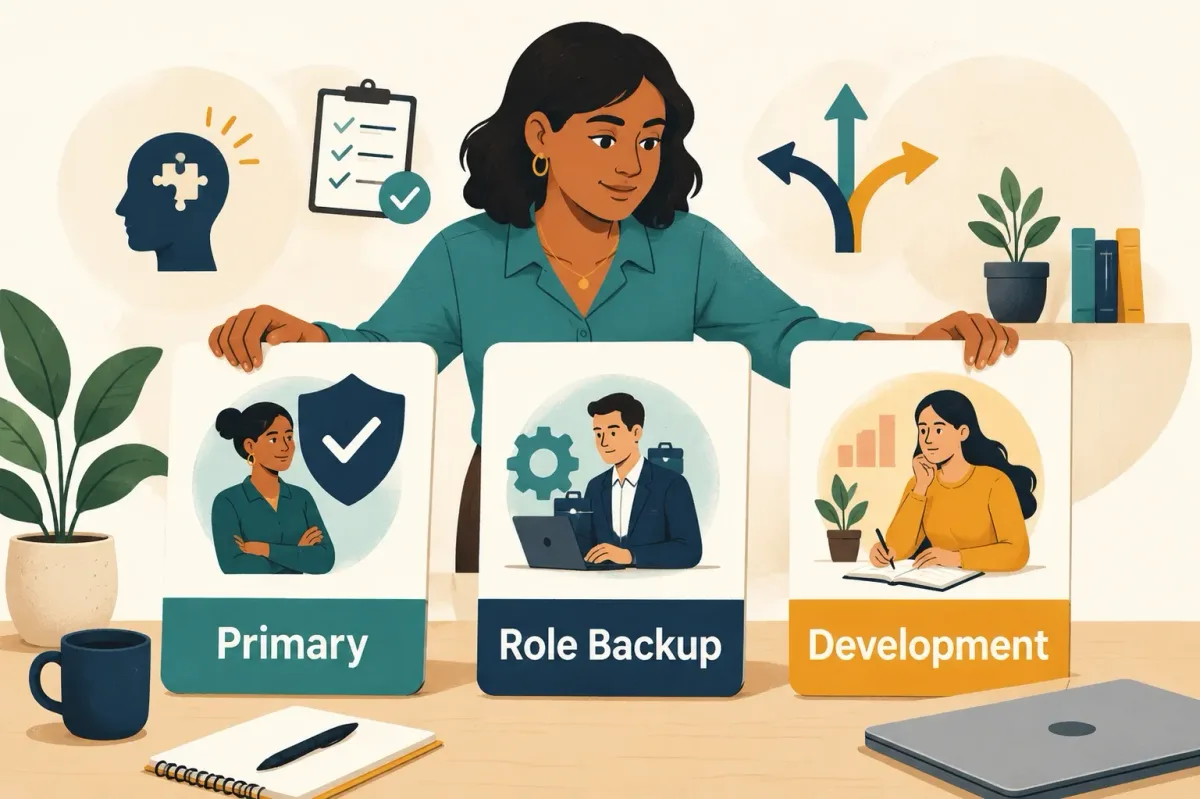
Weakness 1: Your Primary Answer
Use this when the interviewer asks, “What is your greatest weakness?” It should be:
- true and easy for you to explain;
- supported by a work, school, volunteer, or project example;
- associated with a manageable impact;
- backed by your strongest improvement evidence; and
- unrelated to the role’s most important requirement.
Weakness 2: A Role-Specific Backup
Use a secondary requirement from the job description, not the role’s central output. For example, limited experience with a non-core tool may be reasonable if you can show related experience and a credible learning plan. It is not reasonable if the tool is essential from the first day and the employer has clearly stated that proficiency is required.
Weakness 3: A Context-Dependent Development Area
Choose a different category from the first two. Possible directions include prioritization, delegation, presentation confidence, feedback timing, or another work habit that you can back up with an example.
Do not use three versions of the same problem. “I overthink,” “I focus too much on details,” and “I can be a perfectionist” will usually sound like one weakness repeated three times.
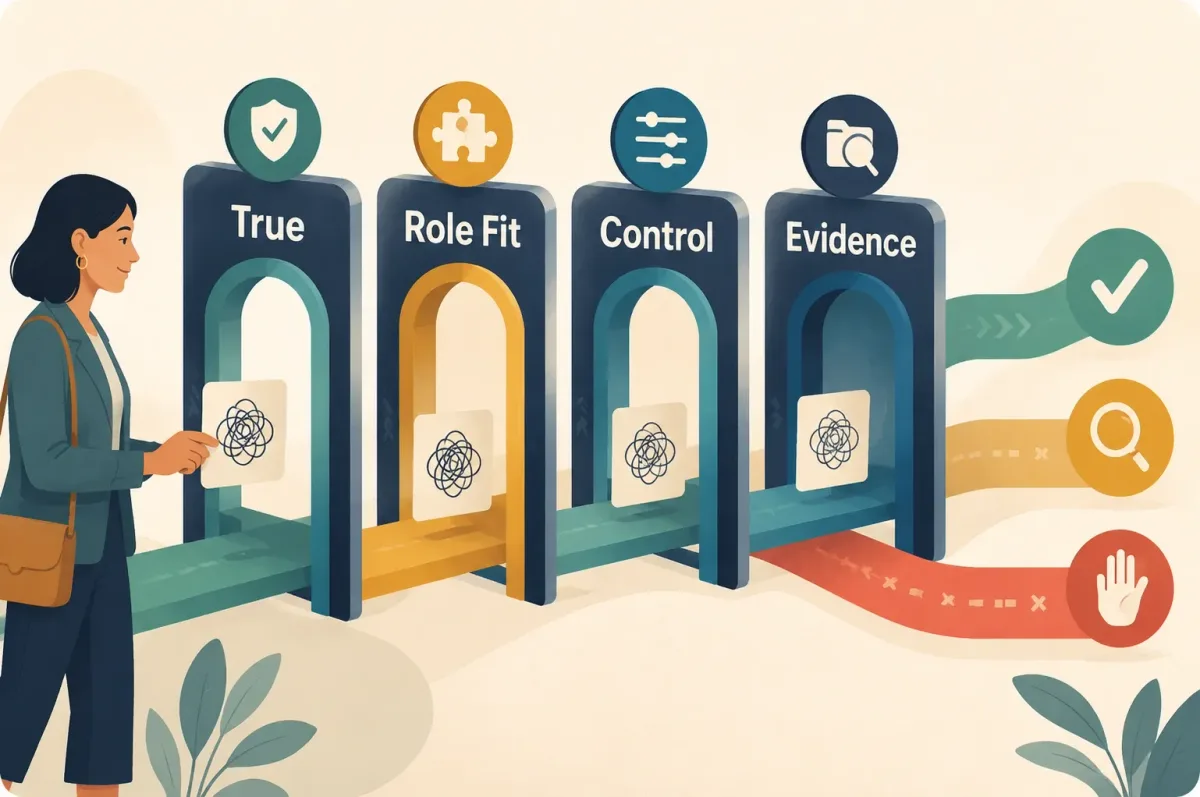
Use the Role Safety Test Before Choosing an Answer
Run each proposed weakness through these questions:
- Is it true? Would a former teammate, classmate, or manager recognize the behavior?
- Is it job-critical? Does the job description treat this skill as a core requirement?
- What did it affect? Can you name an actual impact on time, quality, communication, or alignment?
- What controls it now? Do you use a repeatable habit, checkpoint, rule, or process?
- Can you show progress? Do you have feedback, changed behavior, or a recent example?
- Can you handle follow-up questions? Can you explain the situation without inventing details or blaming others?
Use the result as a decision guide:
- Lower risk: The weakness is true, non-critical to the role, controlled, and supported by evidence.
- Needs stronger evidence: The weakness overlaps with part of the job or your improvement is still difficult to demonstrate.
- Choose another answer: The weakness conflicts with a core duty, raises integrity or safety concerns, or is still uncontrolled.
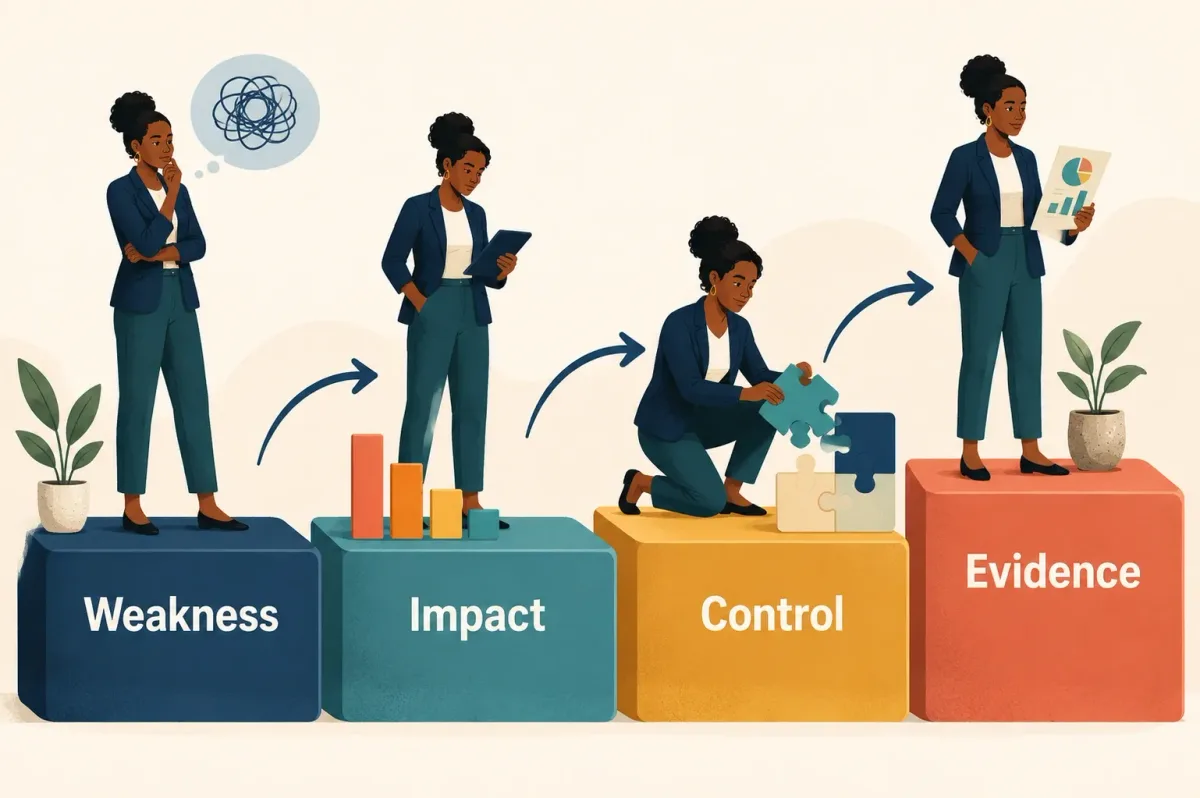
Turn a Real Weakness Into a Credible Answer
A concise answer needs four parts:
| Part | What to say | What to avoid |
|---|---|---|
| Weakness | Name one specific behavior | A vague label such as “perfectionism” |
| Impact | Explain what it affected | Pretending the weakness has no downside |
| Control | Describe what you do differently | Saying only that you “try harder” |
| Evidence | Show a genuine sign of progress | Claiming the weakness has disappeared |
Use this fill-in structure:
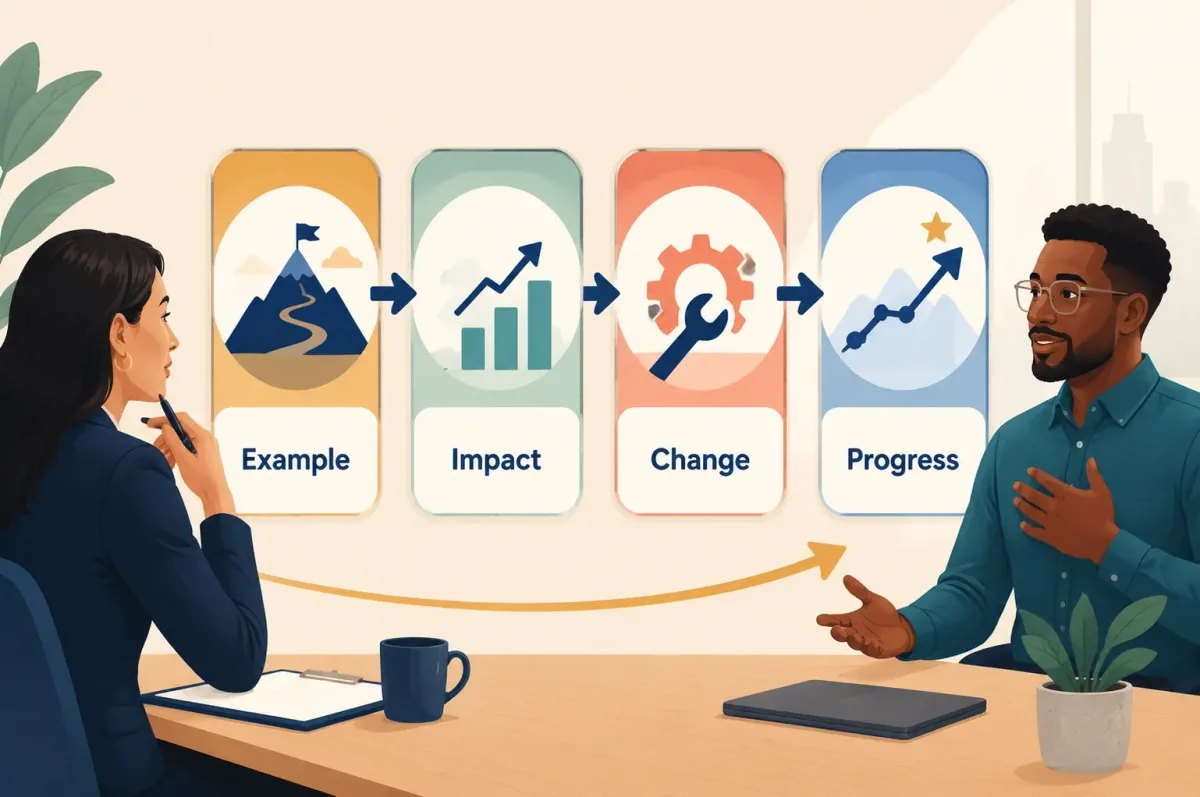
“One area I have been working on is [the weakness]. In [situation], it affected [what it affected]. I now use [control or habit]. I know I am improving because [feedback, changed behavior, or an observable result].”
Keep the structure, but do not memorize every word. The interviewer may ask the question as:
- “What is your greatest weakness?”
- “What are you currently working to improve?”
- “What feedback would your manager give you?”
- “What part of this role would require the most development?”
A memorized script often breaks when the wording changes. A clear structure and honest evidence are easier to adapt. The same principle applies when preparing your opening response; use this framework for answering “Tell me about yourself” without sounding scripted.
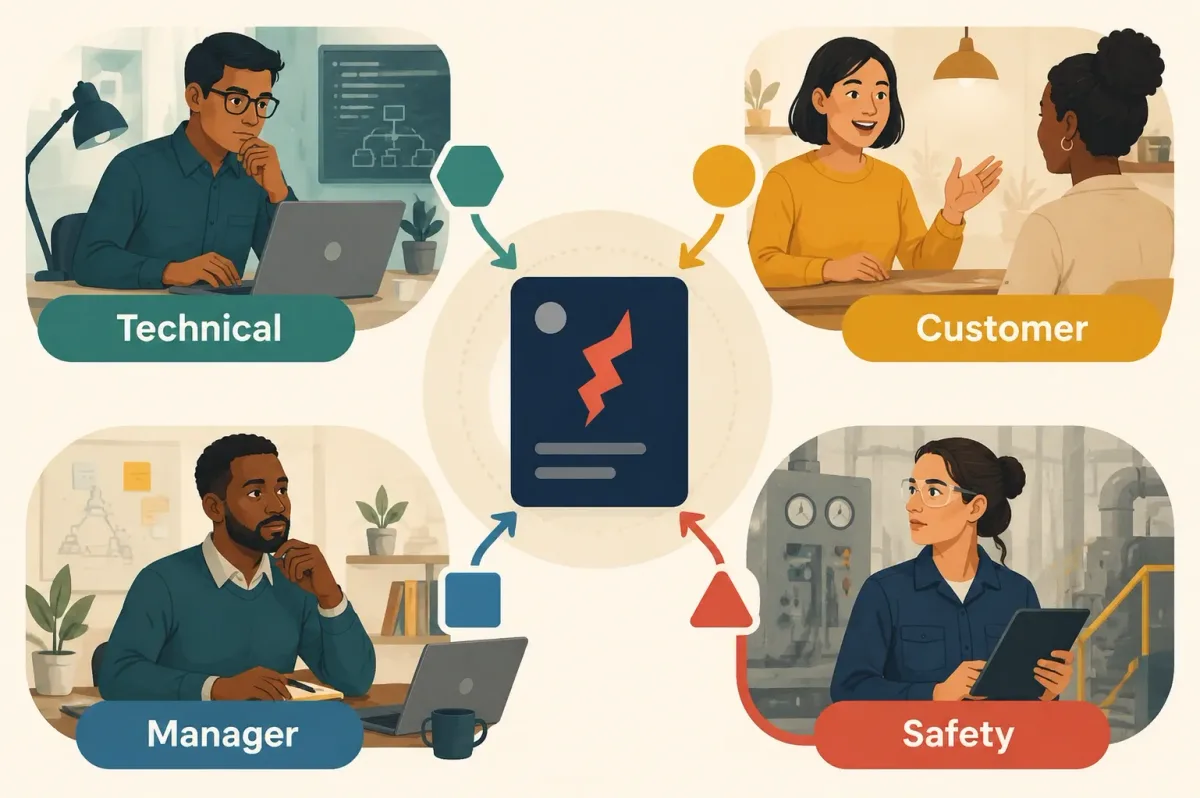
Match the Weakness to the Role
Use the job description as the main test.
| Role type | Potentially lower-risk direction | Higher-risk direction | Evidence to prepare |
|---|---|---|---|
| Technical roles | Earlier stakeholder alignment or feedback timing | Core technical reasoning, accuracy, or willingness to learn | A project review, iteration, or changed workflow |
| Customer-facing roles | Internal documentation or non-customer process | Empathy, clear communication, or handling customer concerns | A service, communication, or resolution example |
| People managers | Delegation or prioritization that is actively improving | Avoiding feedback, conflict, or accountability | A team habit, decision, or follow-through example |
| New graduates | Limited exposure to a non-core tool or context | Reliability, teamwork, or basic willingness to learn | Coursework, projects, internships, volunteering, or feedback |
| Safety-sensitive roles | A non-critical presentation or administrative skill | Safety judgment, escalation, or following procedure | Verified training, procedure use, or observed behavior |
The middle column identifies directions that are usually easier to explain when they are not central to the role. If the job description makes the skill essential, choose another weakness.
What to Do When the Interviewer Asks for Three Weaknesses
Follow the wording instead of forcing the same response every time:
- If asked for one weakness: Give one complete answer with impact, control, and evidence.
- If asked for weaknesses without a number: Give your primary answer, add a shorter second example if appropriate, and pause.
- If asked for exactly three: Give three distinct weaknesses and one improvement sentence for each. Be ready to expand on any of them.
A concise three-answer structure is:
- Primary weakness + current control.
- Role-specific backup + learning or improvement action.
- Context-dependent weakness + evidence of practice.
You can close with: “I can give you a specific example of any of those if that would be useful.”
If the interviewer unexpectedly asks for more, pause rather than adding a serious flaw just to reach a number. Use a prepared answer only when it is true and appropriate for the job.
Pressure-Test the Answer Against Follow-Up Questions
Before the interview, answer these questions out loud. You can incorporate them into a broader job interview preparation checklist:
- Can you give me a specific example?
- What did the weakness affect?
- What feedback did you receive?
- What did you personally change?
- How do you know the change is working?
- Would a former manager or teammate agree?
- Is this still a weakness today?
Your answer is ready when you can:
- describe one situation from your own experience without inventing details;
- admit a meaningful but manageable impact;
- explain your own actions rather than the team’s actions;
- identify a current control or habit;
- show an observable sign of progress; and
- answer the same question in different words without sounding rehearsed.
If one of these elements is missing, improve the evidence or choose a weakness you can support more honestly.
Weakness Answers That Usually Create More Risk
The following choices may create unnecessary concern:
- a weakness that directly conflicts with the role’s core duties;
- unresolved problems involving honesty, reliability, safety, or basic professionalism;
- a weakness with no current improvement action;
- a disguised strength such as “I work too hard” or “I care too much”;
- saying that you have no weaknesses;
- blaming a manager, company, customer, or teammate;
- sharing private information that is not necessary to answer the job-related question; or
- reciting a polished story that is not based on your experience.
A weakness that is manageable in one job may be central to another, so re-check your answers against each new job description rather than reusing them automatically.
Practice a 30-Second and a 60-Second Version
Prepare two versions of your primary answer:
- 30-second version: Name the weakness, its impact, and the control you use now.
- 60-second version: Add one situation from your experience and one piece of improvement evidence.
Write bullet points rather than a word-for-word script. Record yourself, listen for vague phrases, and practice with the follow-up questions above.
If you do not yet have evidence that a weakness is improving, say what you have started doing and avoid claiming results that have not happened.
Get Real-Time Help During an Interview
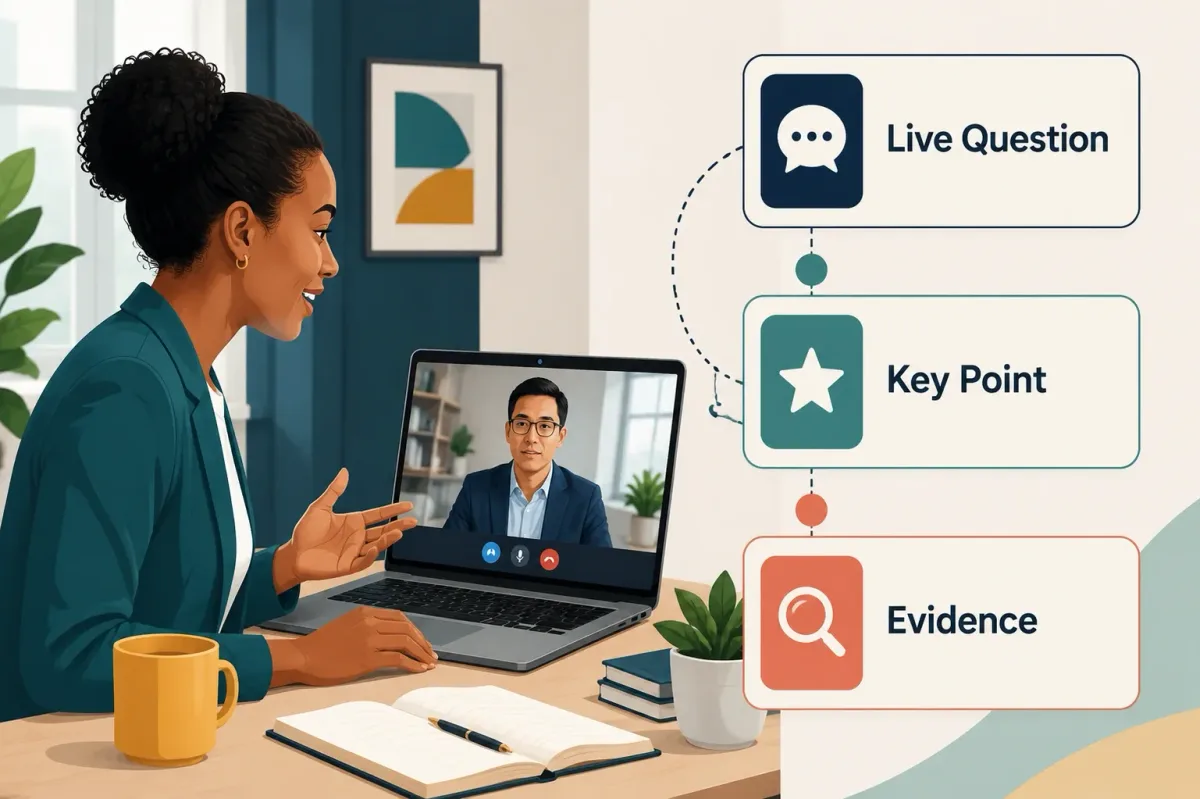
Most of the work in this guide happens before the interview. Where GreatOffer.ai fits is the interview itself: if the employer, interviewer, and interview platform rules allow real-time assistance, it can provide live guidance when a question is reworded, when the interviewer asks for another weakness, or when you need to keep the response structured.
Treat it as support for your preparation and judgment, not a replacement. Confirm the rules before using any real-time assistance, avoid sharing confidential employer information or personal data you are not authorized to share, and review the GreatOffer.ai privacy policy before use.
Editorial Note and Sources
This guide synthesizes public career-center guidance into a three-answer selection framework. The quoted answer formats are fill-in templates, and the sample answers are illustrative composites rather than accounts of real candidates or claims about hiring outcomes. Readers should replace all bracketed fields with truthful information from their own experience.
Sources consulted:
- Drexel University Steinbright Career Development Center: Decoding Interview Questions
- Harvard FAS Mignone Center for Career Success: Interviewing
Leave With Three Answers You Can Defend
Choose weaknesses from your own experience, test them against the job’s core requirements, and prepare evidence of how you manage them now. Three well-prepared answers give you enough flexibility to respond honestly when the interviewer asks for more. Then prepare several questions to ask the interviewer so you can finish the conversation with the same level of thoughtfulness.