
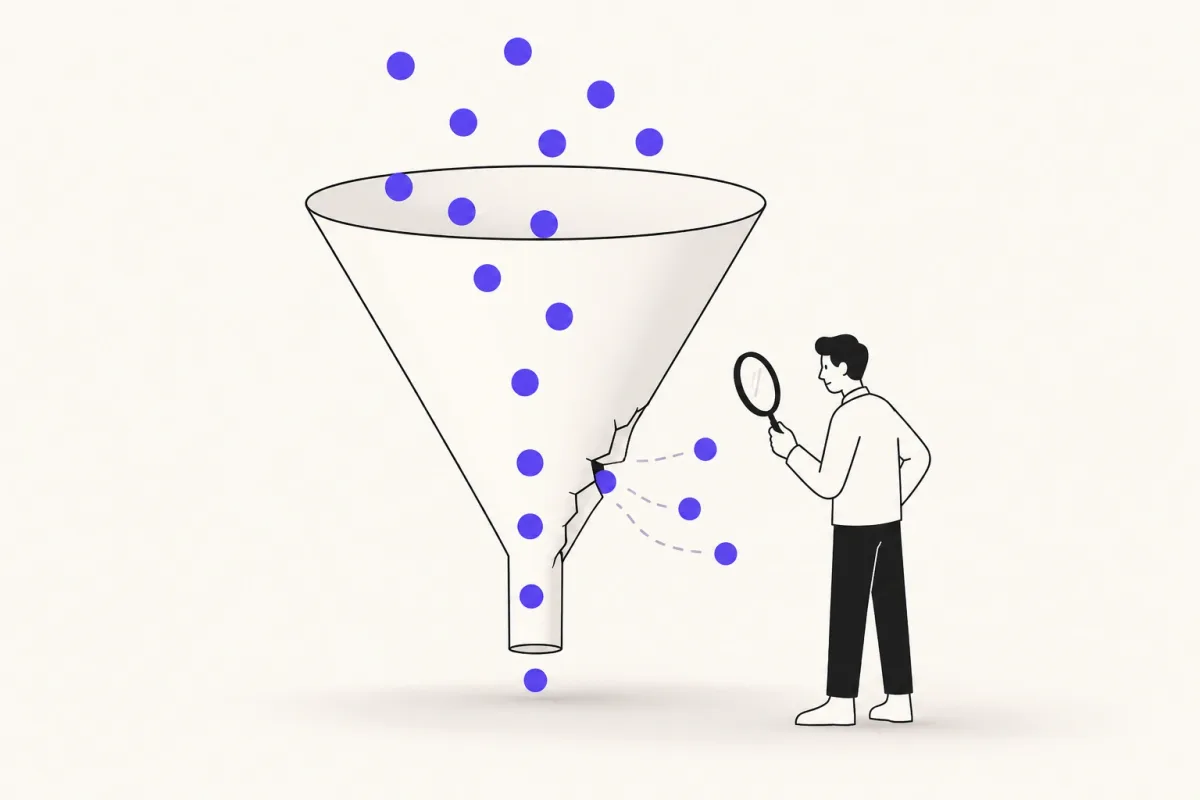
Getting interviews without reaching an offer is a frustrating middle ground: your application is opening doors, but the hiring process is not yet giving you a clear reason for the repeated stops. That uncertainty often leads candidates to change everything at once—resume, target roles, interview style, and preparation—so they lose the ability to tell which change helped. A better approach is to treat each company process as evidence, locate the earliest repeated exit, and improve one part of the funnel at a time.
A job seeker on Reddit recently posted their numbers after a long search: 49 companies, 119 total interview sessions, two offers. On the surface that reads like 119 chances that mostly failed. It is not. Treating every meeting as an independent shot at an offer misreads how hiring works, and it is the reason so many candidates cannot locate their own problem.
One caveat before we use those numbers. This is one person's search log, not an industry benchmark, and we have no stage data from it. Nobody can tell you from 119 sessions alone which round was the leak. The math below is useful for showing how the denominator works, not for diagnosing that particular candidate.
Stop Counting Interview Rounds as Separate Opportunities
The most common analytical mistake behind why do I keep getting interviews but no offers is counting the wrong thing. A company invites you to a screen, a hiring manager chat, a technical task, and a final panel. That is not four chances at an offer. That is one funnel with four gates, and failing any gate ends all of them.
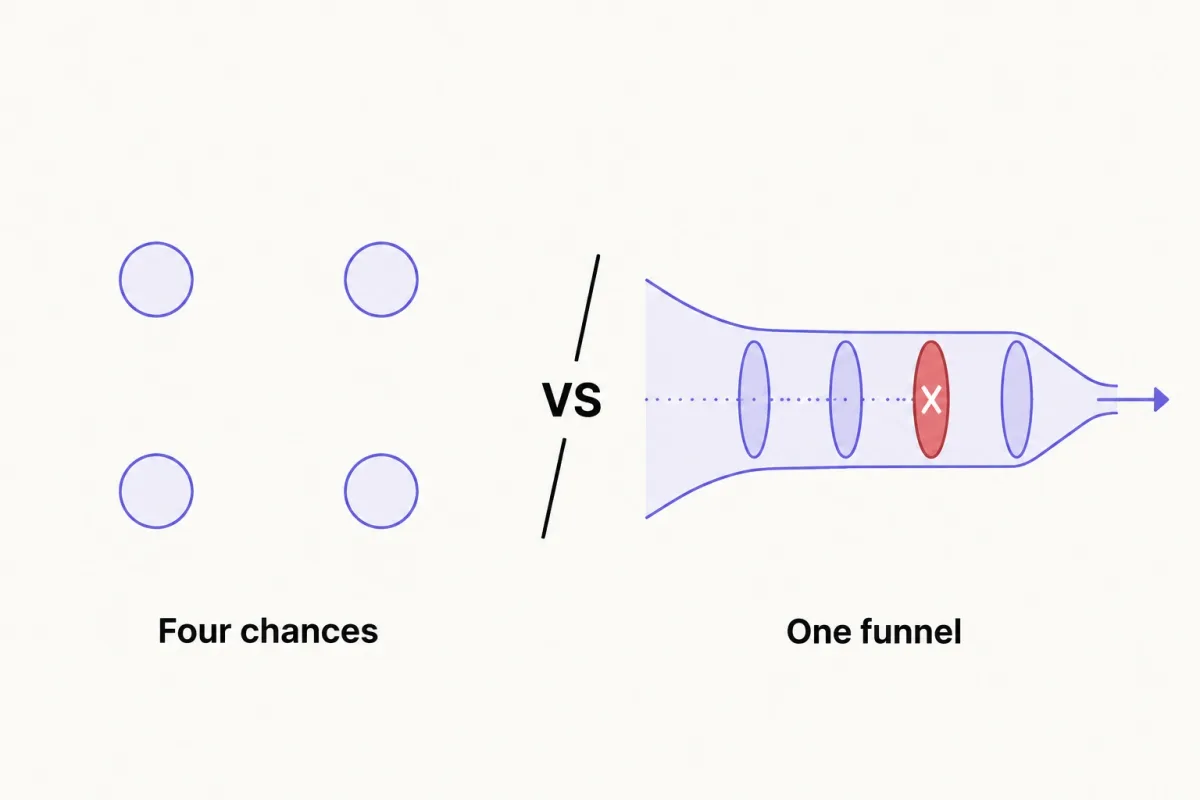
What the 49-Company, 119-Interview Example Actually Shows
Run the math four ways and you get four different stories:
- Sessions per company process:
119 ÷ 49 = 2.43 - Company-process-to-offer rate:
2 ÷ 49 = 4.08%of started processes produced an offer - Session effort per offer:
119 ÷ 2 = 59.5meetings per offer - Surface session-to-offer ratio:
2 ÷ 119 = 1.68%
Only the second one is a conversion rate. The 2 ÷ 119 figure measures effort, not probability, because the 119 sessions were never independent. Fail the recruiter screen at company 12 and you never see that company's remaining three rounds. Group every meeting for one opening into one process, and you can finally calculate a real interview to offer conversion rate.
The Three Conversion Rates Candidates Should Track
Rather than lumping every meeting into a single percentage, track three specific conversion metrics across your search:
Stage conversion rate
= Company processes advanced from a stage
÷ Company processes entering that stage

Interview-process-to-offer rate
= Offers
÷ Companies that began interviewing

Final-round conversion rate
= Offers
÷ Completed final-round processes
Those three metrics isolate the leak between them:
- High application-to-interview rate but low recruiter-to-hiring-manager rate means your resume promises something your verbal summary does not deliver.
- Strong hiring-manager-to-technical rate but low final-round rate means you clear the competence bar and lose on differentiation against equal finalists.
Track Exit Reasons, Not Only Rejections
Filing every unsuccessful process under "rejected" destroys the data you need. Each time a process ends without an offer, record which of these seven actually happened:
- Rejected: The employer explicitly decided not to advance you after an interview stage.
- Candidate withdrew: You proactively withdrew due to salary mismatch, culture fit, or another offer.
- Role closed: The company eliminated or paused the open headcount before making a hire.
- Role frozen: Budget or macroeconomic shifts halted hiring across the team.
- Internal candidate selected: An existing employee or pre-identified internal transfer filled the position.
- Ghosted / No decision: The employer stopped communicating after an interview without providing a resolution.
- Offer: The process resulted in a formal job offer.
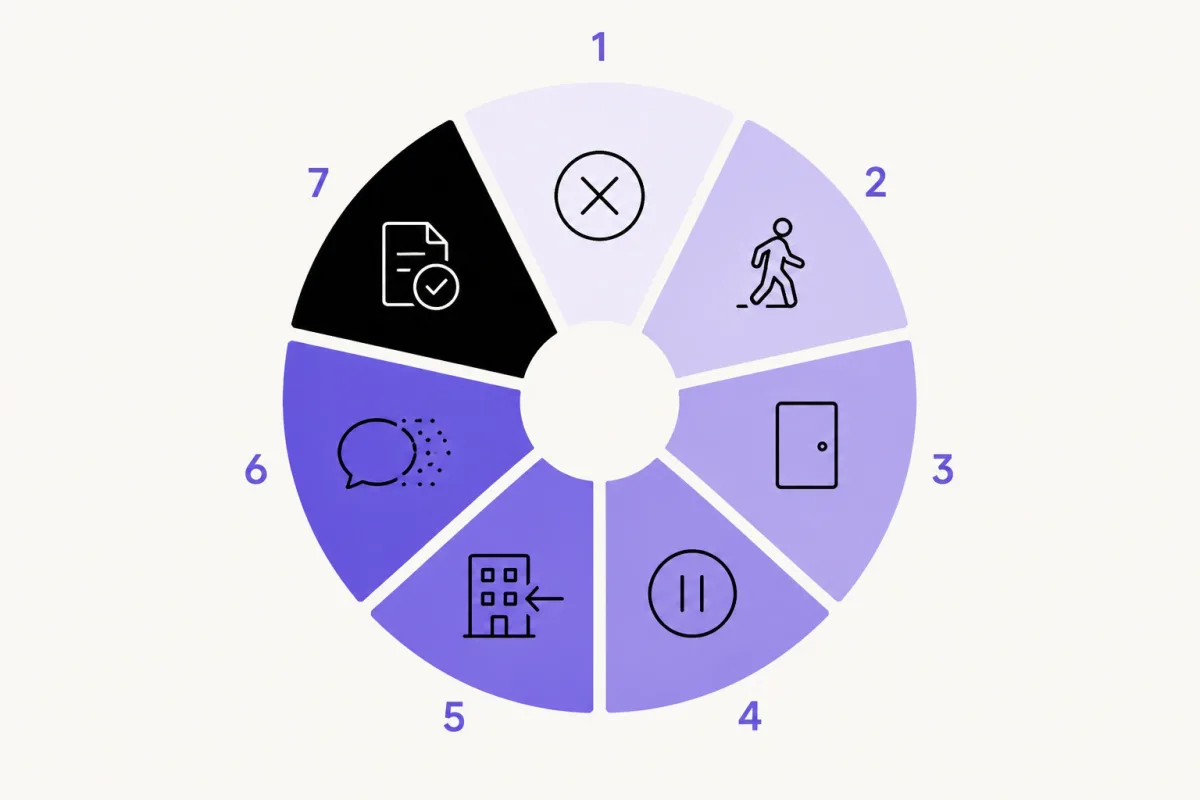
If 40% of your stopped processes were role closures, budget freezes, or internal hires, you are performing better than your offer count suggests. That is not a consolation prize. It is a different diagnosis, and it points at your targeting rather than your interviewing.
What Is a Good Interview-to-Offer Conversion Rate?
Candidates asking how many interviews before a job offer want one number to check themselves against. There isn't one. Employer-side rates swing hard depending on role type, sourcing channel, seniority, and how the company designed its process.
Use External Benchmarks as Investigation Triggers, Not Grades
Two Ashby reports are worth knowing about, and they are not the same study. Keep them separate when you compare yourself to either.
From Ashby's 2026 Talent Trends Report (109M+ applications across 247K jobs, January 2021 to March 2026):
| Metric | Q1 2026 reference | Denominator |
|---|---|---|
| Application → Interview (business roles) | 4.7% | Applications |
| Application → Interview (technical roles) | 3.6% | Applications |
| Interviewed candidate → Offer (business roles) | 10.4% | Candidates who reached interview |
| Interviewed candidate → Offer (technical roles) | 7.3% | Candidates who reached interview |
From Ashby's referrals analysis, published May 2025 with a different and smaller sample (38M applications across 93K jobs, January 2021 to December 2024):
| Metric | Reference | Denominator and caveat |
|---|---|---|
| Referred candidate interview → Offer | 16% | Referred candidates who were interviewed |
| Internal candidate interview → Offer | 32% | Internal candidates who were interviewed. Ashby notes some internal applicants are hired without a formal interview, which inflates this figure |
| Agency candidate interview → Offer | 8% | Agency candidates who were interviewed |
One more data point, from a different vendor entirely. Gem's 2023 Recruiting Benchmarks reported onsite-to-offer rates split by gender rather than as a single blended number: 41% for women and 35% for men. Gem has not published a combined figure publicly, and its "onsite" stage is not every company's final round.
External benchmarks tell you whether a pattern is worth investigating. Your own stage-by-stage data tells you what to change.
Practical reading: if your interviewed-candidate-to-offer rate sits near 7% on technical roles, you are roughly where Ashby's aggregate sits and the problem may not be your interviewing at all. If you are under 2% across 15 or more company processes, something specific is leaking. That 2% threshold is our editorial rule of thumb, not an industry standard.
Find the First Stage Where You Repeatedly Stop Advancing
When rejections stack up and candidates ask why do I keep failing interviews, the usual response is to change everything at once: new resume, new pitch, a dozen fresh stories. That guarantees you learn nothing. The principle is narrower. Find the earliest stage where comparable processes repeatedly stop, and work only there.
| Repeated Exit Stage | What the Employer Is Usually Evaluating | Likely Candidate-Side Issues | Common External Factors | Next Experiment |
|---|---|---|---|---|
| Recruiter Screen | Basic qualifications, compensation fit, work authorization, communication clarity, motivation | Unfocused elevator pitch, salary misalignment, rambling career narrative | Misaligned job posting, strict visa requirements, compensation mismatch | Test a 45-second positioning statement with target role proof |
| Hiring Manager | Problem-solving approach, ownership, project scope, team fit, level calibration | Describing team duties ("we") instead of personal choices ("I"), execution vs. strategy mismatch | Mismatched internal scope expectations, changing team priorities | End project examples with one sentence linking experience to team needs |
| Technical / Case | Correctness, reasoning, requirement clarification, testing, trade-offs under follow-up | Diving into code/case before clarifying assumptions, lacking edge cases | Unrealistic task time limits, vague prompt requirements | Apply fixed closing sequence: assumptions, solution, tests, edge cases |
| Behavioral / Leadership | Ownership, influence, handling conflict, level-appropriate judgment, reflection | Long context setup, missing measurable results, blaming others in conflict stories | Inconsistent interviewer scoring rubrics, biased evaluation | Deliver result and direction in first 20 seconds, then provide proof |
| Final / Executive | Stakeholder confidence, consistency across rounds, differentiation, retention risk | Appearing qualified but undifferentiated, changing story positioning | Internal candidates, sudden budget freezes, executive disagreements | Present finalist case: team need, unique proof, addressed risk, 90-day plan |
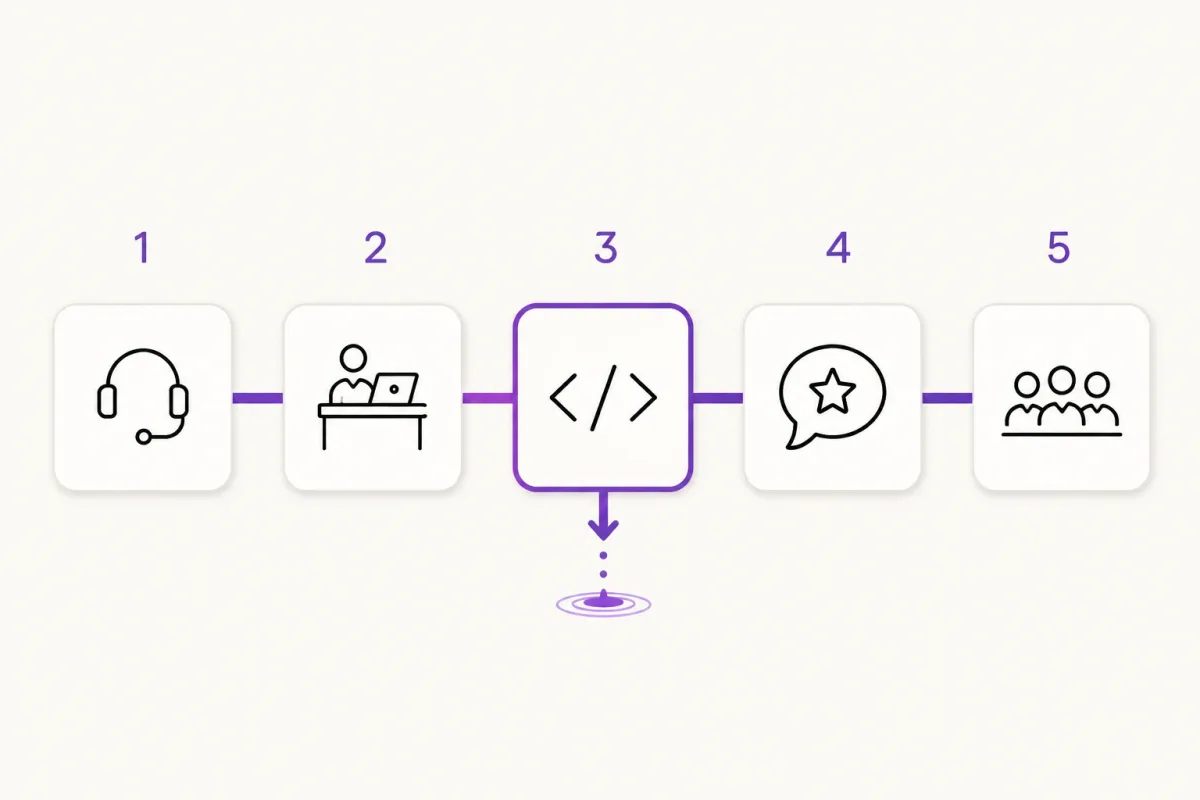
Recruiter Screen Failures
Fifteen to thirty minutes, and the recruiter is running a risk check: do you clear the basic bar, fit the band, have authorization, speak clearly, and actually want this job.
What usually goes wrong here:
- A five-minute career history where a 45-second summary was expected.
- Applying across inconsistent roles, which makes the pitch shapeless.
- Fumbling the compensation or availability question.
- Saying something that contradicts the positioning on your own resume.
Next experiment: Build one 45-second positioning statement. Title, two concrete achievements, one specific reason for this company. Test it on the next three screens without deviating.
Hiring Manager Interview Failures
Now someone is asking whether you can solve their actual problems, own the outcome, and operate at the level they are hiring for.
What usually goes wrong here:
- "We built" with no clarification of what you personally decided.
- Listing responsibilities instead of trade-offs, decisions, and impact.
- Bringing execution-level examples to a senior or strategic role.
- Never establishing why your background lowers their hiring risk.
Next experiment: End every major project answer with one bridge sentence: "This is relevant to your team because my work on [X] maps directly onto the [Y] problem you mentioned."
Technical, Case, or Work-Sample Failures
Technical rounds measure depth, requirement clarification, and how your reasoning holds up when someone pushes on it.
Why technical interview rejection happens repeatedly:
- Writing code or crunching numbers before confirming inputs, constraints, and edge cases.
- Delivering a working answer with no discussion of trade-offs, testing, or failure modes.
- Leaning on memorized or AI-polished solutions that fall apart under follow-up.
- Overengineering a simple task, or missing the core requirement while polishing the edges.
Next experiment: Fix a closing sequence and use it every time: assumptions, core logic, tests and edge cases, known limitations, next optimization. Say it out loud even when nobody asks.
Behavioral or Leadership Interview Failures
Behavioral rounds use past behavior as a predictor, probing ownership, collaboration, influence without authority, and conflict handling.
Common behavioral interview mistakes:
- Spending 70% of the answer on setup and 30% on what you did and what resulted.
- Conflict stories where you are blameless and every colleague is incompetent.
- Recycling one project for every competency question.
- Proving you completed a task when the question was about influence.
Next experiment: Invert STAR. Lead with the result and the takeaway in the first 20 seconds, then supply only the context needed to make that result credible. Stop talking and let them probe.
Final or Executive Round Failures
The final round, usually a VP, an executive, or a panel, is a comparison. Several qualified people are left and the question is who carries the most confidence and the least risk.
Why a final round interview but no offer keeps happening:
- Fully qualified, entirely undifferentiated from the other two finalists.
- Taking too long to reach the point with people who have 30 minutes.
- Shifting your positioning between rounds, which reads as inconsistency in the debrief.
- Leaving obvious risks unaddressed: overqualification, relocation, compensation.
Next experiment: Walk in with a finalist case. Their core need, your unique proof, one risk you name before they do, and a specific first-90-days contribution. Sixty seconds, delivered once, near the end.
Common Problems That Can Affect Every Interview Stage
Some problems do not live at one gate. They follow you through every round. When you are asking why am I not getting job offers after interviews, check these too:
- Unclear positioning: If you cannot say what you are good at in one sentence, the interviewer has nothing to anchor to.
- Answers that run long: Past three minutes without a landmark, attention is gone and you cannot get it back.
- Surface-level company research: Reciting the homepage proves you visited the website. It proves nothing else.
- Weak motivation signals: Treating the conversation as practice reads as retention risk, and interviewers do notice.
- Inconsistent level targeting: Interviewing for Manager and Director simultaneously dilutes both stories.
- No numbers: Activities without results leave the debrief with nothing objective to defend you with.
- Thin questions at the end: Asking about PTO policy when you could have asked about the team's hardest current problem.
Spot any of these in your notes, then trace them back to the stage where they first showed up. Before your next call, our guide on how to prepare for a job interview covers the fundamentals worth locking down.
Use a 15-Minute Post-Interview Review
Memory is not a reliable witness here. Within an hour of an interview, relief or disappointment has already rewritten what you think you said. A disciplined post-interview review, done immediately, captures the data before your mood edits it.
+-----------------------------------------------------------------------+
|                 15-MINUTE POST-INTERVIEW AUDIT TIMELINE              |
+-----------------------------------------------------------------------+
|  [00:00 - 02:00]  MINUTES 0-2: Record Hard Facts & Admin Details       |
|  [02:00 - 05:00]  MINUTES 2-5: Reconstruct Questions & Follow-ups       |
|  [05:00 - 08:00]  MINUTES 5-8: Score Answers Across 5 Core Metrics      |
|  [08:00 - 11:00]  MINUTES 8-11: Tag & Identify Potential Risk Signals   |
|  [11:00 - 13:00]  MINUTES 11-13: Record Interviewer Behavioral Cues    |
|  [13:00 - 15:00]  MINUTES 13-15: Select ONE Controlled Experiment     |
+-----------------------------------------------------------------------+
Minutes 0-2: Record the Facts
Admin first, while it is still boring and accurate:
- Company, role title, and level.
- Which stage this was (HM screen, technical deep dive, system design, final panel).
- Every interviewer's name, title, and function.
- What next step they stated, and by when.
Minutes 2-5: Reconstruct Questions and Follow-Ups
Now the questions, before your memory smooths them out:
- The primary prompt, verbatim if you can manage it.
- Every follow-up probe ("Why PostgreSQL over DynamoDB there?").
- What you actually said, in three or four bullets. Not what you wish you had said.
- Where they interrupted or asked you to clarify. Those points matter more than they feel like at the time.
Minutes 5-8: Score the Answer
Five dimensions, 1 to 5, one sentence of reasoning each. Be honest; nobody else reads this.
- Relevance: Did you answer the question they asked?
- Evidence: Were there numbers, metrics, or artifacts, or just adjectives?
- Structure: Could a stranger follow it?
- Level signal: Did your language match the scope of the target level?
- Brevity: Did it land in 90 to 120 seconds?
Minutes 8-11: Mark Possible Risks
Tag what a debrief might flag. Use consistent labels so patterns surface across interviews:
- Motivation and retention
- Technical depth
- Personal ownership
- Quantified impact
- Conflict handling
- Cross-functional leadership
- Compensation or title alignment
- Location or work authorization
- Overqualification signals
Minutes 11-13: Record Interviewer Behavior Without Overinterpreting It
Write down what happened, not what you think it meant:
- Where they interrupted and where they changed topic.
- How much time they left for your questions.
- Where they leaned in or started taking notes.
Label all of it observations. A person taking notes might be impressed or might be recording a concern. You cannot tell, and guessing is how candidates talk themselves into false conclusions.
Minutes 13-15: Select One Next Experiment
Look at your scores and tags, then pick exactly one thing to change next time. One.
Copy-Ready Post-Interview Review Template
Copy and paste this template into your job search tracking tool after every interview:
Company / Role / Target Level:
Interview Stage:
Interviewer Name(s) & Title(s):
Stated Next Steps & Decision Date:

--- RECONSTRUCTED QUESTIONS & ANSWERS ---
Question 1:
- Follow-ups asked:
- Key points in my answer:
- Interruption / clarification points:

Question 2:
- Follow-ups asked:
- Key points in my answer:
- Interruption / clarification points:

--- SCORECARD (1-5 SCALE) ---
1. Relevance Score [1-5]:    Reason:
2. Evidence Score [1-5]:     Reason:
3. Structure Score [1-5]:    Reason:
4. Level Signal Score [1-5]: Reason:
5. Brevity Score [1-5]:      Reason:

--- EVIDENCE & RISK CATEGORIZATION ---
- Confirmed Feedback (Recruiter/HM statement):
- Strong Pattern Inference (3+ similar occurrences):
- Weak Inference (Single feeling or guess):
- External / Unknown Factors (Headcount, internal candidate):

--- ONE CONTROLLED EXPERIMENT TO TEST NEXT ---
Target change for next similar session:
Separate Evidence From Anxiety
Rejection makes people bad at reading evidence. One cold rejection becomes proof your skills are obsolete; one warm conversation becomes a near-certain offer. Neither is true, and both distort what you change next. Sort every piece of interview feedback by how much it actually proves.
Evidence Confidence Ladder
Categorize every observation according to its confidence level:
    [LEVEL 1: CONFIRMED]
    Explicit written or verbal feedback directly from recruiter / HM.
    -----------------------------------------------------------------
        [LEVEL 2: STRONG INFERENCE]
        Same exit stage & risk signal repeated across 3+ companies.
        -------------------------------------------------------------
            [LEVEL 3: WEAK INFERENCE]
            Single-interview feelings, tone, or body language.
            ---------------------------------------------------------
                [LEVEL 4: EXTERNAL UNKNOWNS]
                Budget freezes, internal hires, headcount loss.
- Confirmed (highest confidence): Something a recruiter or hiring manager actually said, such as "The team felt your system design experience was tailored to monoliths rather than distributed systems." Rare, and worth more than everything below it combined.
- Strong pattern inference: The same stage fails across three independent processes with similar questions or probes. Three is the threshold where coincidence stops being the best explanation.
- Weak inference: One interview's vibe. Facial expressions, tone, a pause you have replayed forty times. Nearly worthless as evidence.
- External or unknown: Role cancelled, budget frozen, internal transfer, reorg. Nothing to do with you.
Do not build a complete self-diagnosis from one unexplained rejection, and do not ignore the same stage failing across three comparable processes.
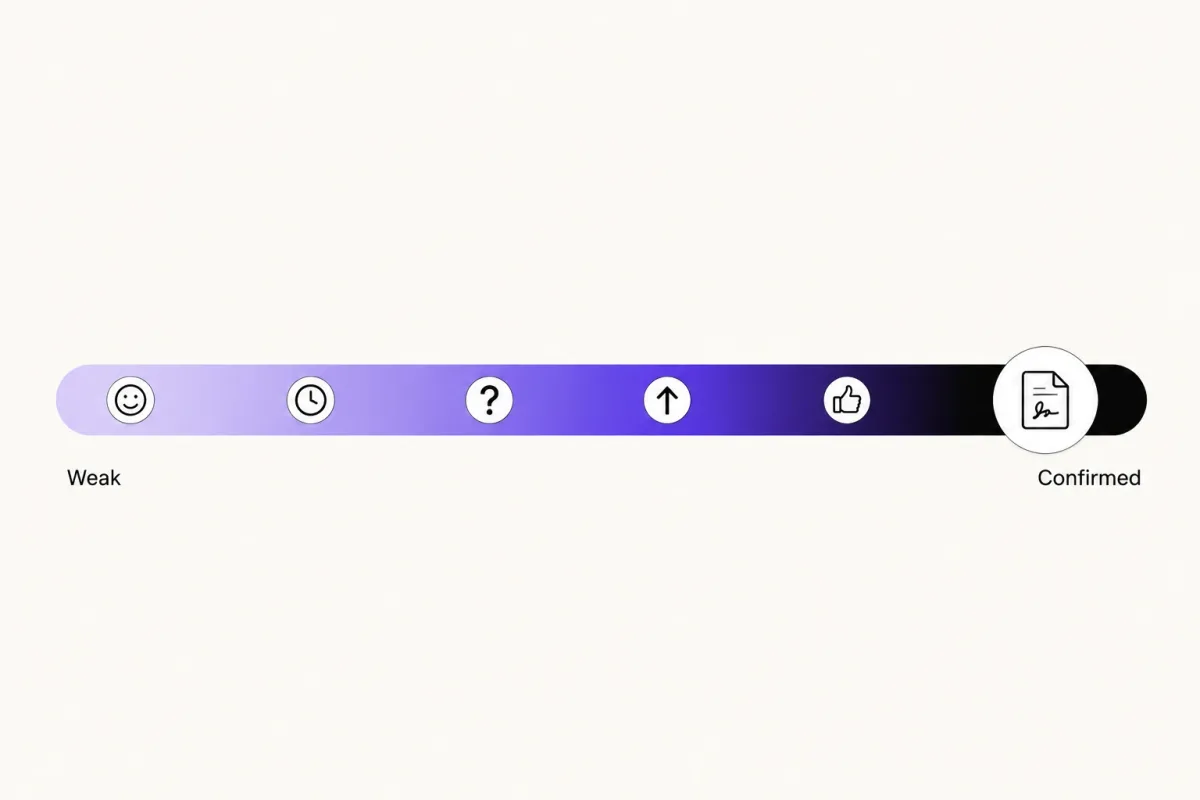
Positive Interview Signals Are Not Offer Signals
Most disappointment in a job search comes from mistaking rapport for consensus. The interviewer liked you. That was never the question being decided.
| Observed Signal | Evidence Strength | What It Actually Means |
|---|---|---|
| Friendly interviewer or enthusiastic praise | Weak | Demonstrates good interpersonal etiquette; does not reflect comparative candidate scoring against finalists. |
| Interview session runs 10-15 minutes over time | Weak to Moderate | Signals engagement or poor time management; does not guarantee positive evaluation scores in debriefs. |
| Detailed, probing follow-up questions | Moderate | Indicates the interviewer is testing your depth; shows active evaluation, not a passed gate. |
| Formal invitation to the next interview round | Strong Advancement Signal | Confirms you met the cutoff for that specific stage; provides zero guarantee of a final offer. |
| Verbal enthusiasm ("You'd be a great fit here") | Non-binding Encouragement | Reflects individual interviewer impression; subject to override in final candidate calibration debriefs. |
| Written job offer with compensation details | Confirmed Outcome | The only definitive signal that the company has selected you for the role. |
Run a Three-Interview Experiment Sprint
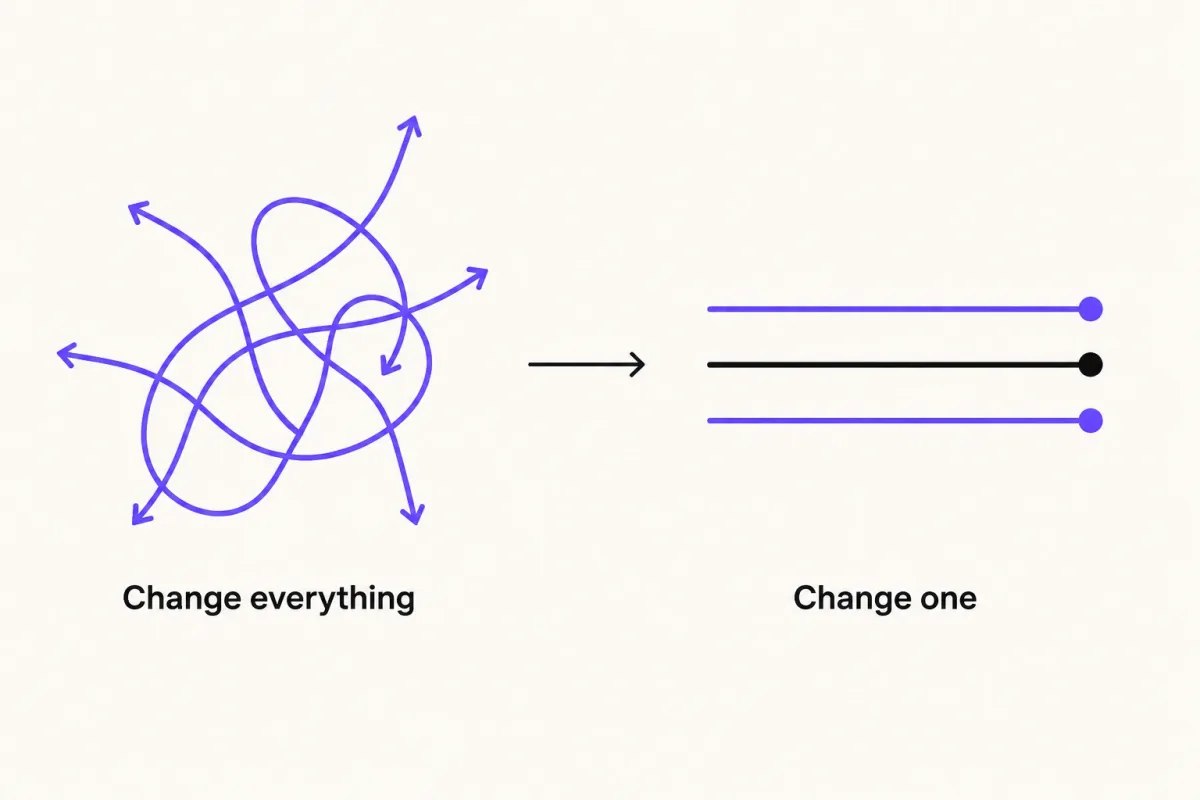
Once you have a suspected leak, resist fixing everything. Change your pitch, your technical framing, your salary answer, and your stories all at once, and whatever happens next teaches you nothing. Run a Three-Interview Experiment Sprint instead.
Required Process
1. SELECT STAGE     --> Identify 3 upcoming interviews at the same pipeline stage.
2. ISOLATE VARIABLE --> Choose ONE specific behavior to modify (e.g., answer length).
3. DEFINE METRIC   --> Establish success criteria before calls begin.
4. RECORD DATA      --> Complete 15-minute scorecard immediately after each call.
5. EVALUATE SPRINT  --> Keep, refine, or discard change after 3 data points.
- Pick three comparable sessions: Same seniority, same role type, same pipeline stage. Comparing a recruiter screen to a final panel tells you nothing.
- Change one variable: Exactly one. Everything else stays where it was.
- Define success before the first call: Write down what improvement would look like, or you will rationalize whatever happens.
- Score all three identically: The 15-minute review, immediately, every time.
- Decide after the third: Keep it, adjust it, or drop it.
Example Controlled Experiments
- Behavioral brevity: Cap STAR answers at 90 seconds. Result in the first 20, then stop and let them ask.
- Ownership positioning: Swap "our team accomplished" for "my responsibility was [X], and I decided [Y]."
- Technical sequence: Spend the first three minutes of any coding or case round clarifying inputs, scale, and edge cases before writing anything.
- Final-round differentiation: Close executive calls with a 60-second summary: their need, your proof, the risk you are naming, your first 90 days.
Three interviews is not a statistically valid sample, and this is not formal experimentation. It is a disciplined learning loop, which is considerably better than changing things at random and hoping.
How AI Can Help Diagnose and Improve Interview Performance
AI is useful here for one specific reason: it reads your notes without the emotional distortion you bring to them. It scores structure, spots missing evidence, and does not flinch.
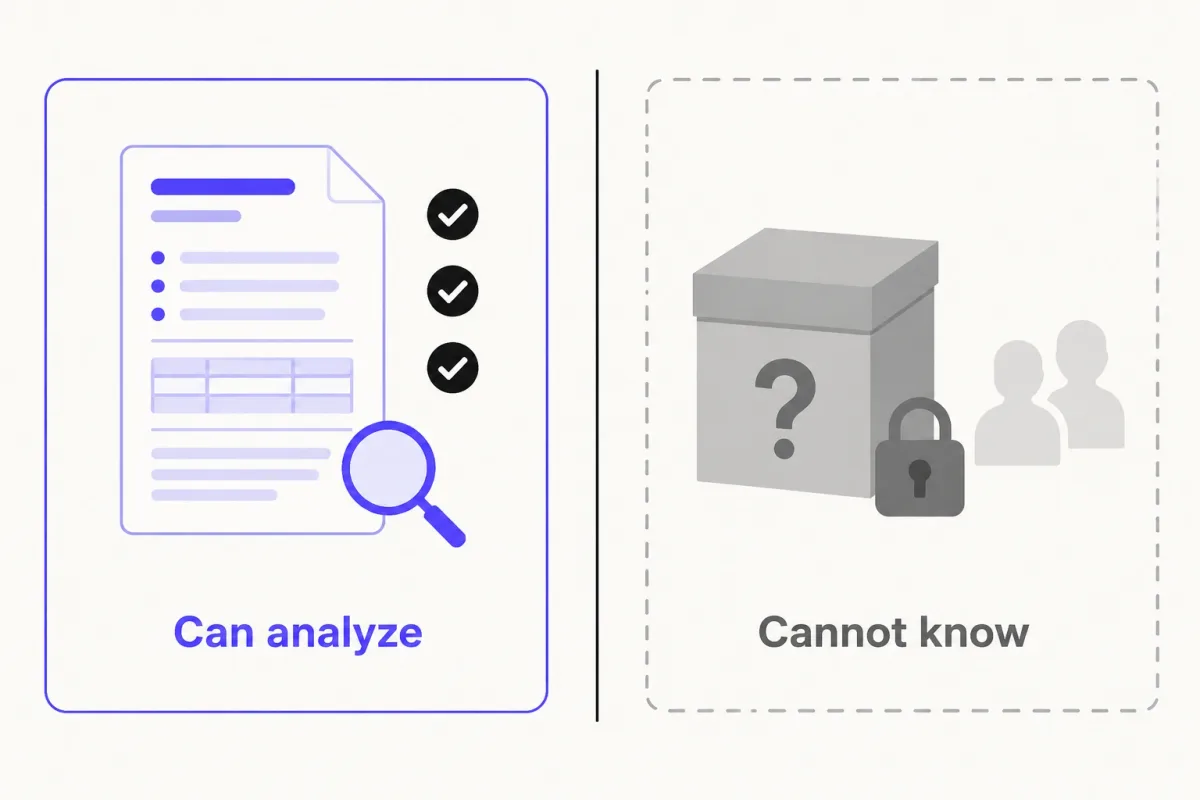
What AI Can Analyze
Give it detailed post-interview notes and it can:
- Classify each question into a competency category.
- Flag answers where you rambled or never addressed what was asked.
- Catch responses missing quantified results or clear ownership.
- Check whether your language matches the scope expected at senior or lead level.
- Generate the follow-up questions an interviewer would plausibly ask next.
- Surface structural weaknesses repeating across multiple scorecards.
- Propose a single-variable experiment for your next sprint.
What AI Cannot Know
Be equally clear about the boundary:
- It cannot read an interviewer's private thoughts or the company's internal politics.
- It cannot tell you the one unstated reason a specific employer passed.
- It cannot assess how the other finalists performed.
- It cannot verify whether a role closed because of an internal candidate or a budget cut.
- It cannot invent achievements, metrics, or depth you do not have. Anything it fabricates will collapse on the first follow-up question.
Copy-Ready AI Diagnostic Prompt
Copy and paste this exact prompt into an AI tool alongside your post-interview notes to receive an objective performance audit:
You are diagnosing my interview performance, not inventing a better
history for me. Use only the evidence I provide.

For each question and answer:

1. Identify what competency was being evaluated.
2. Score relevance, evidence, structure, seniority signal, and brevity
   from 1-5.
3. Identify unsupported claims or missing results.
4. List likely follow-up questions.
5. Recommend one change I can test in my next three comparable interviews.

Separate confirmed feedback, pattern-based inference, weak inference,
and external unknowns.
Where Live Tools Fit
Post-interview analysis fixes structural patterns over weeks. It does nothing for you at 2pm on Thursday when you are trying to organize a system design answer in real time.
That is a different problem, and if you are evaluating AI interview copilot tools for it, GreatOffer.ai runs as a desktop application on your own device with real-time answer structuring, coding assistance, and voice guidance under a second. Its Focus Mode displays guidance only on your screen and does not appear in screen shares on Zoom, Google Meet, or Microsoft Teams.
Two conditions on that. Check the employer's rules first, because a tool being private is not the same as a tool being permitted, and our guide on using AI in job applications covers where those lines usually sit. Second, use it to keep your real experience organized under pressure. It cannot supply technical depth you do not have, and the interviewer will find the gap.
Senior Candidates Need a Different Conversion Audit
Senior, Lead, Principal, and Director candidates fail for different reasons than mid-level ones. At this level, almost nobody gets rejected for lacking baseline competence. They get rejected on scope misalignment, executive communication, or perceived organizational risk.
+------------------------------------------------------------------------+
|                     SENIOR CANDIDATE AUDIT CHECKLIST                   |
+------------------------------------------------------------------------+
| [ ] EXECUTIVE COMMUNICATION: Do you lead with the outcome in 30 sec?   |
| [ ] INFLUENCE SCALE: Do examples show cross-functional alignment?      |
| [ ] SCOPE CALIBRATION: Are project examples scaled to target level?    |
| [ ] RISK ADDRESSMENT: Have you proactively addressed overqualification? |
| [ ] LEVEL POSITIONING: Is your story aligned with IC vs Manager focus? |
+------------------------------------------------------------------------+
When conducting a senior-level conversion audit, evaluate these critical indicators:
- Executive Communication Pacing: Do you lead with high-level business metrics and strategic conclusions before diving into implementation details?
- Scale of Organizational Influence: Do your examples demonstrate cross-functional leadership and budget accountability, rather than single-project execution?
- Manager vs. Individual Contributor Positioning: Is your narrative aligned with the specific expectations of the role?
- Proactive Risk Mitigation: Have you directly addressed potential employer concerns regarding overqualification or compensation expectations?
- Strategic Motivation: Can you explain why you want this specific level and scope without sounding overqualified?
Do not lower your target job level after one or two senior-level rejections. Reconsider role level only when comparable processes repeatedly produce the same scope or seniority calibration signal across 5+ companies.
Sometimes the Interview Funnel Is Broken on the Employer Side
Auditing your own performance matters. So does knowing when the problem was never yours. Hiring funnels break internally more often than candidates assume, and no amount of interview preparation touches any of it.
Common ways a process dies without you doing anything wrong:
- Headcount or budget freeze: The requisition gets paused mid-process for reasons decided several levels above your interviewer.
- Internal candidate appears: Someone already inside applies late, and internal hires carry lower perceived risk.
- Panel disagreement: Two interviewers hold incompatible views of what the role actually requires.
- Role redesign: Halfway through interviewing, the hiring manager decides the team needs a different skill set entirely.
- Process fatigue and ghosting: A decision-maker goes on leave, coordination collapses, and nobody closes the loop.
Slow communication, ghosting, and shifting criteria come up constantly in job seeker communities. We are describing what candidates report, not citing a survey, and neither should you when you explain a gap in your search.
A good review process asks two questions at the same time: What can I improve, and what evidence suggests this outcome was outside my control?
Conclusion: Better Stage Data Beats More Random Practice
Repeated interview rejection is exhausting, and the exhaustion is not a character flaw. It is what happens when you keep investing real effort into a process that returns no information. But getting interviews at all means employers value your background, which is the harder half.
What you need now is not more self-blame or more unstructured practice. Track company processes instead of individual meetings. Run the 15-minute review after every interview while the details are still accurate. Change one variable across three comparable interviews and see what moves.
You do not need more shame or more random interview practice. You need better stage data, stronger evidence, and one controlled change at a time.