

Disclaimer: The questions and sample answers below are preparation templates, not guaranteed interview questions or scripts. Replace every bracketed detail with truthful information from your own experience, follow the target school’s policies, and never disclose personally identifiable student information.
The 10 Most Common Teacher Interview Questions
The most common teacher interview questions focus on motivation, school fit, instruction, classroom management, differentiation, assessment, relationships, and professional reflection. Use this list as a priority checklist, then personalize the answer templates in the sections that follow.
- Tell me about yourself. Focus on your professional identity, relevant experience, teaching strengths, and fit for the role.
- Why do you want to be a teacher? Connect a genuine motivation to a realistic understanding of teaching and student growth.
- Why do you want to teach at this school? Reference specific school priorities and explain what you can contribute.
- What is your teaching philosophy? Show how your beliefs shape your planning, instruction, feedback, and classroom culture.
- What is your classroom management style? Explain how you teach routines, prevent problems, respond calmly, and follow up.
- How do you differentiate instruction? Describe how you identify needs, adjust support, and check whether the adjustment worked.
- How do you assess student learning? Explain how you collect evidence, identify misconceptions, and adapt instruction.
- How do you keep students engaged? Focus on active thinking, relevance, participation, pacing, and responsive teaching.
- How do you communicate with parents and caregivers? Emphasize proactive contact, objective information, listening, and follow-up.
- Describe a challenging teaching situation. Use a concise example that highlights your actions, the outcome, and your reflection.
How to Structure a Strong Teacher Interview Answer
A framework can keep you from spending too long on background information or forgetting the evidence that makes your answer credible. Treat the frameworks below as speaking guides, not rigid formulas.
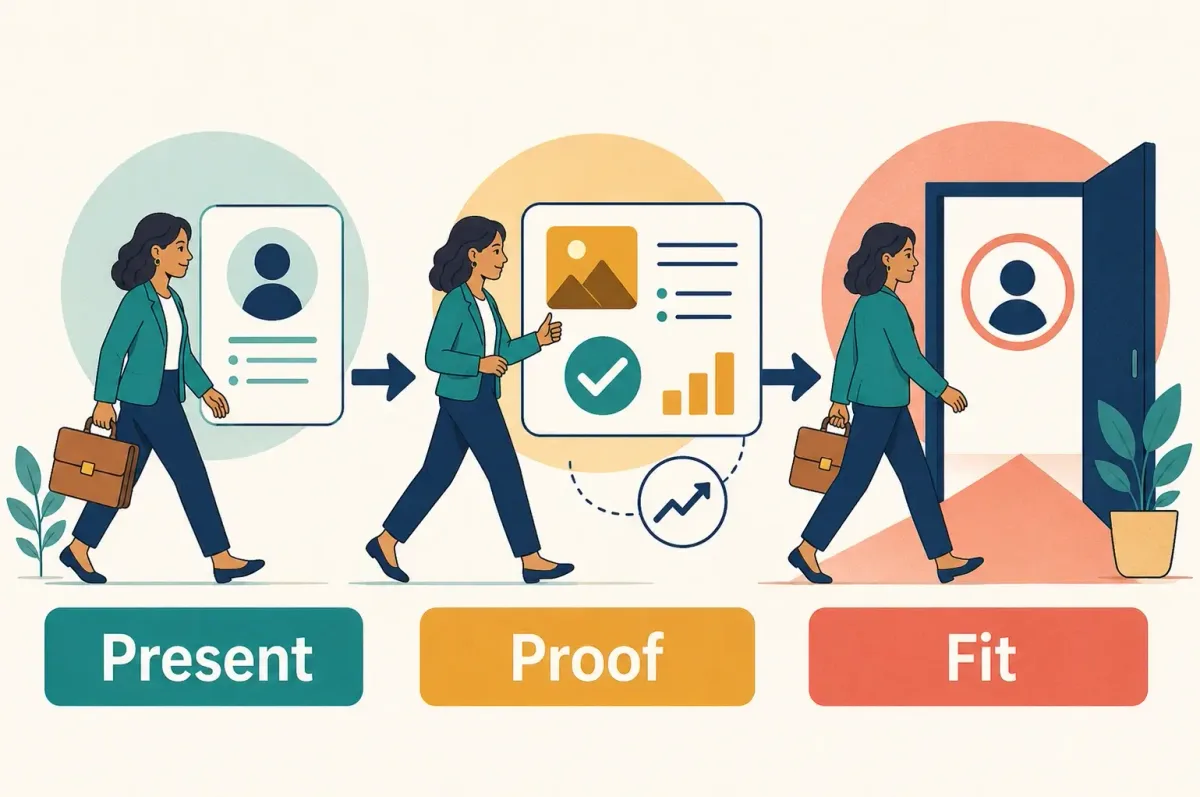
Use Point–Proof–Impact–Fit for General Questions
Use this structure for questions about your motivation, strengths, philosophy, or interest in a school:
- Point: Answer the question in your first sentence.
- Proof: Give one relevant example from your experience.
- Impact: Explain the verified result or observable effect.
- Fit: Connect your approach to the position or school.

For example, an answer to “Why this school?” should identify a real school priority, connect it to something you have actually done, and explain how you could contribute. Do not invent a program, outcome, or school need to make the connection sound stronger.
Use STAR-L for Behavioral Questions
Use STAR-L when the panel asks about a past challenge, collaboration, conflict, mistake, or piece of feedback:
| Step | What to explain |
|---|---|
| Situation | The context the listener needs to understand the example |
| Task | Your responsibility or the problem you needed to address |
| Action | The specific decisions and actions you took |
| Result | A verified result or an observable change |
| Learning | What the experience changed about your practice |
Keep the setup brief. The panel learns more from your decisions and reflection than from a long description of the problem.
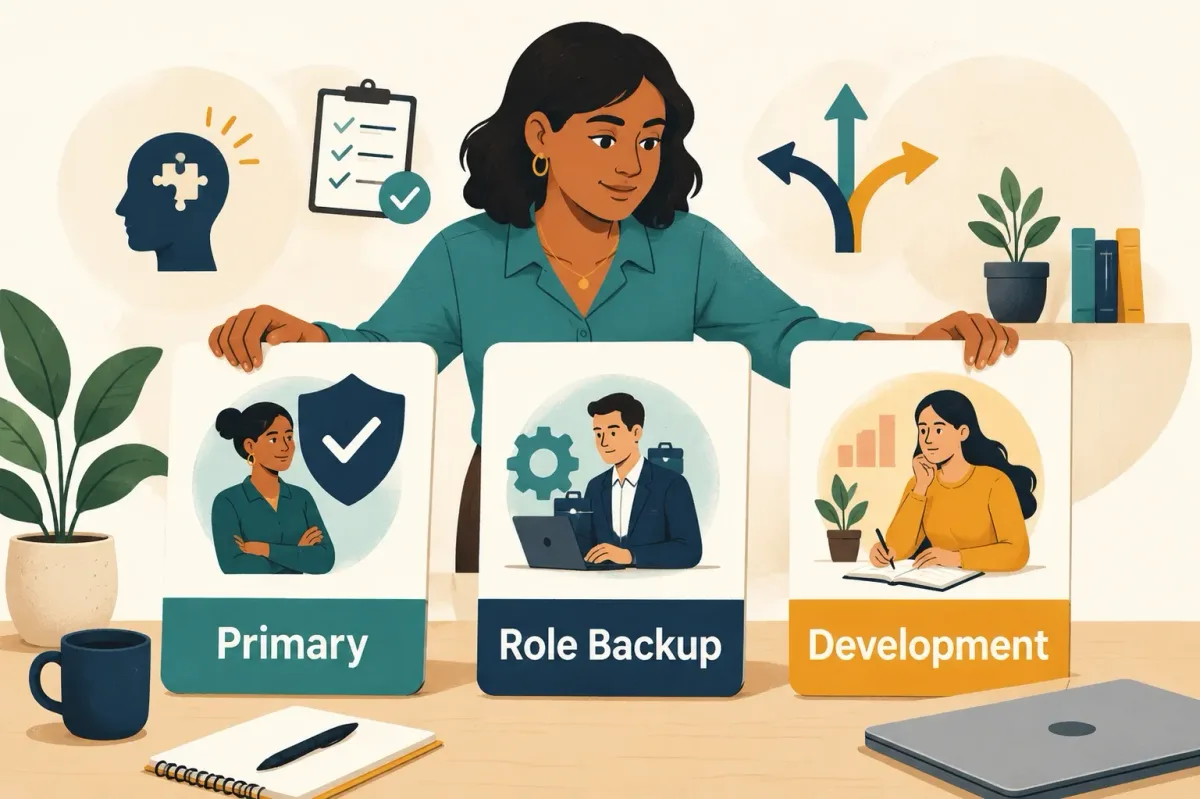
Build a Six-Story Evidence Bank
Before the interview, prepare six truthful examples that you can adapt to several questions:
| Story to prepare | Possible evidence | Questions it can support |
|---|---|---|
| Student learning or growth | De-identified work, assessment patterns, observation notes | Assessment, differentiation, engagement |
| Classroom routines or behavior | Routine taught, response used, follow-up completed | Management, difficult scenario, relationships |
| Support for different learning needs | Scaffold, grouping decision, required support | Differentiation, lesson planning, inclusion |
| Family communication | Positive contact, concern discussed, agreed next step | Caregiver communication, conflict, student support |
| Team collaboration | Shared planning, resource created, decision reached | Teamwork, school fit, professional culture |
| Feedback or adaptation | Feedback received, change made, evidence reviewed | Growth area, observation, failed lesson |

If you cannot verify a number, use an observable outcome instead. “More students completed the independent task after the directions were revised” is more trustworthy than an invented percentage.
General and School-Fit Teacher Interview Questions

1. Tell Me About Yourself.
What the panel is assessing: Can you summarize your professional background clearly and connect it to the opening?
How to answer: Briefly cover your current status, relevant grade or subject experience, one teaching strength, and why the role interests you. Do not retell your entire resume. For a detailed opening-answer framework, see how to answer "Tell me about yourself".
Adaptable sample answer:
“I’m a [credential or role] with experience in [grade, subject, student teaching, tutoring, or related setting]. In that work, I’ve focused on [relevant strength], particularly [specific practice]. One example is [brief, truthful example and verified or observable outcome]. I’m interested in this position because [school-specific reason], and I would bring [relevant contribution] to the team.”
Adapt it: First-year teachers can use student teaching, tutoring, substitute teaching, paraprofessional work, or another relevant setting. Experienced teachers should choose one example that matches the new role rather than summarizing every position.
Avoid: Personal history that does not help the panel understand your readiness for the job.
2. Why Do You Want to Be a Teacher?
What the panel is assessing: Is your motivation genuine, sustainable, and grounded in the realities of teaching?
How to answer: Identify a real experience that made teaching meaningful to you. Connect that experience to the work you want to continue doing with students.
Adaptable sample answer:
“My interest in teaching became concrete when [truthful experience]. I saw that [what you learned about instruction or student support]. What continues to motivate me is [specific part of the work], especially when students [observable learning or confidence outcome]. Teaching gives me the opportunity to combine [relevant strength] with a long-term commitment to helping students [specific goal].”
Avoid: Relying only on “I love children,” inspiration from a former teacher, school holidays, or job stability. A personal motivation becomes stronger when you connect it to the actual work of teaching.
3. Why Do You Want to Teach at This School?
What the panel is assessing: Did you research the school, and can you explain a meaningful fit?
How to answer: Choose one or two real details from the school or district website, job posting, improvement priorities, curriculum information, or community programs. Explain why those details matter to you and how your experience relates.
Adaptable sample answer:
“I was interested in this role because of your focus on [verified school priority, program, or student need]. In [my current role/student teaching/related experience], I [relevant action or responsibility], which helped me develop [relevant skill]. I would be excited to contribute that experience to [specific team or responsibility] while learning more about how your staff approaches [relevant school priority].”
Adapt it: A first-year candidate can connect university preparation or student teaching to the school’s priorities. An experienced candidate should select a directly relevant responsibility, initiative, or result.
Avoid: Praise that could apply to any school, repeating the mission statement without interpretation, or focusing mainly on commute and schedule.
4. What Are Your Greatest Strength and One Area for Growth?
What the panel is assessing: Do you understand your current capabilities and take responsibility for professional growth?
How to answer: Support one relevant strength with evidence. For the growth area, name a genuine skill you are actively improving, describe the action you are taking, and explain how you will evaluate progress.
Adaptable strength answer:
“One of my strengths is [specific instructional or professional skill]. For example, I [truthful action or routine]. I know it is effective because [verified result, feedback, or observable change]. That strength would be useful in this role because [connection to the position].”
Adaptable growth answer:
“I’m continuing to improve [realistic growth area]. I have started [course, coaching, planning routine, feedback process, or other action], and I am monitoring my progress through [appropriate evidence]. My next step is [specific improvement action].”
Avoid: A disguised strength such as “I’m a perfectionist,” a claim that you have no weaknesses, or a growth area that suggests you cannot meet a core safety or professional responsibility.
Teaching, Instruction, and Assessment Questions
5. What Is Your Teaching Philosophy?
What the panel is assessing: Can you connect your educational beliefs to concrete classroom decisions?
How to answer: State two or three principles, explain what they look like in practice, and describe how you know whether they support learning.
Adaptable sample answer:
“My teaching philosophy is that students learn best when expectations are clear, support is responsive, and they have meaningful opportunities to think and participate. In practice, I [specific routine or instructional approach], use [method for checking understanding], and adjust support when [type of evidence]. I also [relationship or feedback practice] so students understand both the learning goal and how to improve.”
Avoid: A string of terms such as “student-centered,” “inclusive,” or “engaging” without explaining what you actually do.
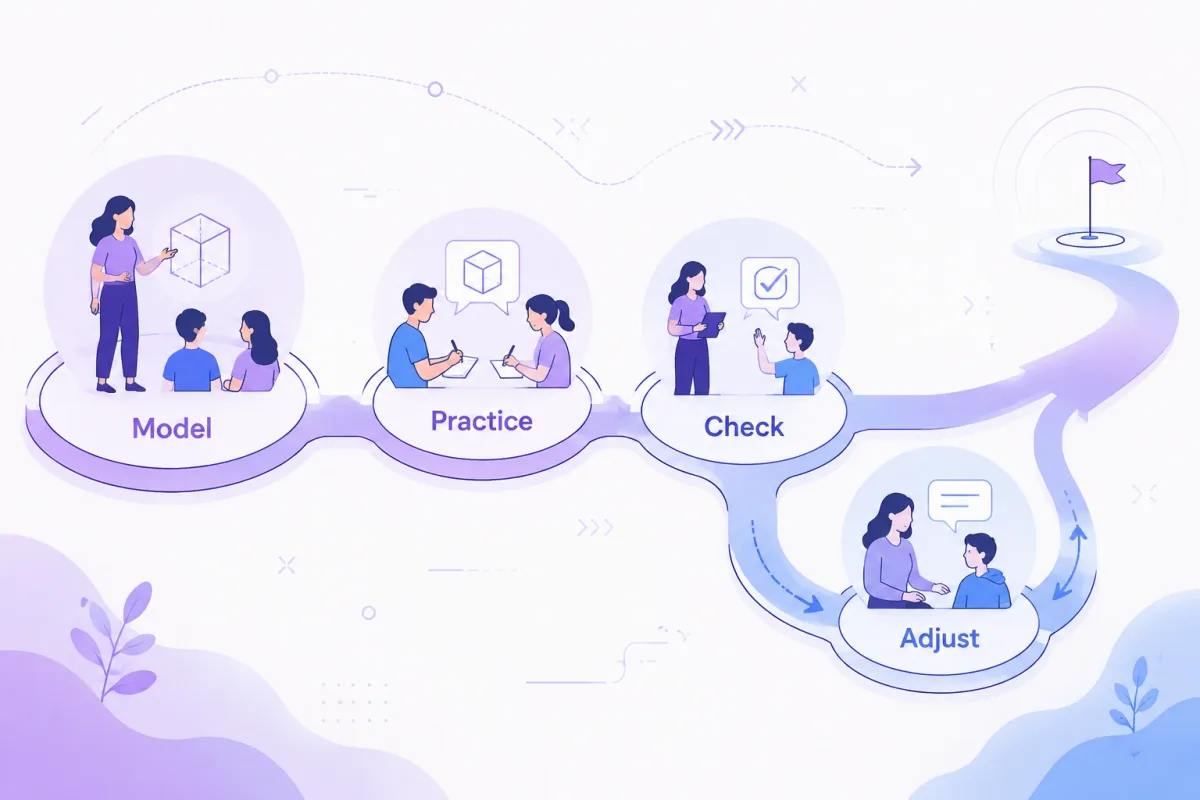
6. Walk Us Through a Typical Lesson.
What the panel is assessing: Can you plan a coherent lesson, monitor learning, and adjust when students need something different?
How to answer: Choose one real lesson or a representative structure. Include the objective, connection to prior learning, modeling, guided practice, active student work, a check for understanding, and closure or next steps.
Adaptable sample answer:
“I begin by making the learning goal clear and connecting it to [prior learning or relevant context]. I then model [skill or process] and move into guided practice so I can listen for misconceptions. Students apply the learning through [discussion, problem-solving, writing, investigation, or other task] while I check progress. I close with [specific check for understanding], which helps me decide whether the next lesson should include reteaching, additional practice, or extension.”
Technology or AI should appear in the answer only when it serves a clear instructional purpose and complies with the school’s accessibility, privacy, and acceptable-use expectations.
Avoid: Listing timed activities without explaining why they are sequenced that way or how you know students learned the objective.
7. How Do You Differentiate Instruction?
What the panel is assessing: Can you maintain meaningful learning goals while responding to different levels of readiness and required student supports?
How to answer: Explain how you identify a need, select an appropriate adjustment, and check whether it helped. Examples may include scaffolds, flexible grouping, models, vocabulary support, adjusted entry points, or extension.
Adaptable sample answer:
“I start differentiation with evidence rather than assumptions. When [assessment, observation, or student work] shows that students need different levels of support, I keep the learning goal consistent and adjust [access, process, grouping, or response option]. For example, I used [truthful scaffold or extension] during [lesson or unit]. I then reviewed [appropriate evidence] to decide whether to continue, reduce, or change the support.”
If a student has an IEP, 504 plan, or other required support, the answer should make clear that you follow the plan and collaborate with the appropriate staff. The U.S. Department of Education’s IDEA resources and the CAST Universal Design for Learning Guidelines provide useful background for reviewing this section.
Avoid: Describing differentiation as a separate low-expectation lesson for each struggling student or assuming a strategy will work because of a broad learner label.
8. How Do You Assess Learning and Adjust Instruction?
What the panel is assessing: Do you use evidence of learning to make instructional decisions?
How to answer: Describe the evidence you collect during and after instruction, how you identify patterns, what you change, and how you check again.
Adaptable sample answer:
“I use assessment as an ongoing cycle. During instruction, I collect evidence through [questioning, observation, student responses, or work samples]. If the evidence shows [specific misunderstanding], I adjust by [reteaching approach, regrouping, additional model, or extension]. I then use [follow-up check] to see whether the adjustment worked. When I discuss results, I use only verified and appropriately de-identified information.”
Avoid: Talking only about end-of-unit tests or collecting data without explaining what changed in response.
Classroom Management and Relationship Questions
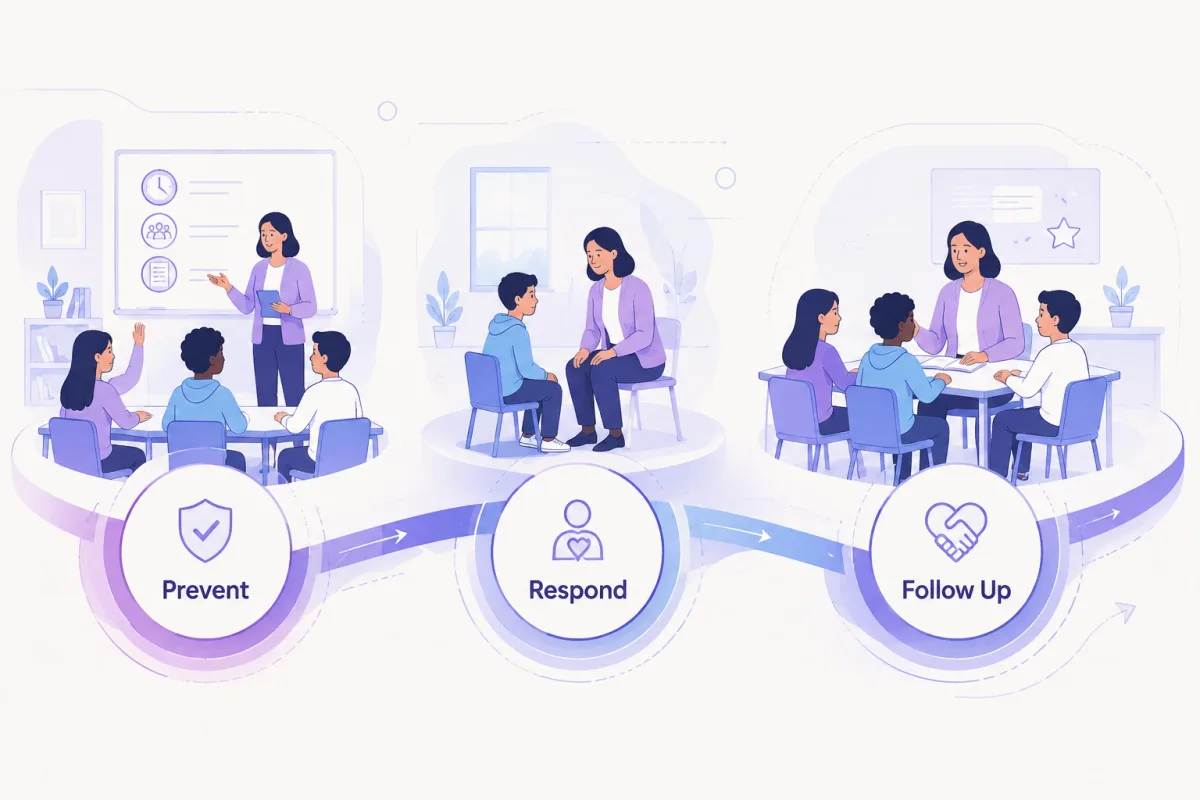
9. What Is Your Classroom Management Style?
What the panel is assessing: Can you establish predictable routines, maintain a respectful environment, and respond consistently?
How to answer: Begin with prevention. Explain how you teach expectations, reinforce routines, respond to minor problems, and follow up when a pattern continues.
Adaptable sample answer:
“My classroom management approach is proactive, consistent, and relationship-based. I explicitly teach and practice routines for [relevant classroom processes], explain why expectations matter, and reinforce them consistently. When a minor disruption occurs, I use [low-profile response] to keep instruction moving. If the behavior continues, I speak with the student privately, identify what may be contributing, restate the expectation, and follow the school’s process for documentation and additional support.”
Avoid: Defining yourself only as strict or easygoing, promising that behavior problems will never happen, or treating office referral as the first response to every minor issue.
10. How Would You Handle a Disruptive or Unmotivated Student?
What the panel is assessing: Can you remain calm, protect learning, investigate the problem, and use appropriate support or escalation?
How to answer: Explain what you would do in the moment, how you would speak with the student privately, what information you would gather, and when you would involve family, support staff, or administration.
Adaptable sample answer:
“I would first protect the learning environment and avoid a public power struggle. I would use [brief, low-profile prompt or choice] and check in privately when possible. I would clarify whether the student is confused, overwhelmed, disengaged, or choosing not to follow an expectation. From there, I would [appropriate support and clear next step], document a repeated pattern, communicate with the relevant adults, and follow school policy if the behavior created a safety concern or required additional intervention.”
Avoid: Calling the student lazy, defiant, or a troublemaker; assuming motivation is the only issue; or ignoring a situation that requires immediate safety procedures.
11. How Do You Keep Students Engaged?
What the panel is assessing: Can you design lessons that require active thinking and respond when participation drops?
How to answer: Focus on purposeful participation, relevance, appropriate challenge, varied response methods, and real-time checks for understanding.
Adaptable sample answer:
“I plan for engagement by asking what students will be thinking, saying, writing, or creating during each part of the lesson. I use [discussion structure, problem, investigation, written response, or other method] so participation is not limited to a few volunteers. I also monitor [specific evidence of engagement or understanding] and adjust the pace, directions, grouping, or level of support when students are not productively involved.”
Avoid: Treating quiet compliance as proof of learning, relying on games without a learning purpose, or assuming technology automatically creates engagement.
12. How Do You Communicate With Parents and Caregivers?
What the panel is assessing: Can you communicate professionally, listen carefully, and build a working partnership around student needs?
How to answer: Discuss proactive contact, objective observations, family input, an agreed action, and follow-up.
Adaptable sample answer:
“I try to establish communication before a problem occurs through [appropriate welcome or positive contact]. When I need to discuss a concern, I share specific observations rather than labels, ask for the caregiver’s perspective, and work toward one or two practical next steps. I confirm how and when we will follow up, document communication according to school procedures, and keep the conversation focused on supporting the student.”
Avoid: Contacting families only when something is wrong, using accusatory language, or sharing conclusions that are not supported by evidence.
Behavioral Teacher Interview Questions

13. Describe a Challenging Teaching Situation and How You Handled It.
What the panel is assessing: How do you respond when the original plan does not work?
How to answer: Use STAR-L. Choose a real challenge with enough complexity to show judgment, but do not spend most of the answer blaming circumstances.
Adaptable sample answer:
“During [truthful situation], I was responsible for [specific task]. I initially noticed [relevant problem or evidence]. I responded by [two or three concrete actions], including [communication or collaboration if relevant]. The result was [verified result or observable change]. The experience taught me [specific lesson], and I now [change in current practice].”
Avoid: Inventing a perfect outcome, presenting yourself as the only competent person in the situation, or selecting a story in which you took no meaningful action.
14. Tell Us About a Time You Worked With a Team to Solve a Problem.
What the panel is assessing: Can you contribute to shared work, listen to others, and support a collective decision?
How to answer: Identify a shared problem, your specific contribution, how the team worked through different information or ideas, and what changed.
Adaptable sample answer:
“Our [grade-level team, department, support team, or placement team] identified [specific shared problem]. My role was to [your contribution], while colleagues contributed [relevant contributions]. Together, we decided to [shared action]. We reviewed [appropriate evidence or feedback] and found [verified or observable result]. I learned that effective collaboration depends on [specific reflection about communication, shared tools, or follow-through].”
Avoid: Taking sole credit, describing meetings without a decision, or criticizing colleagues who had a different view.
15. How Do You Respond to Feedback or Classroom Observations?
What the panel is assessing: Are you coachable, reflective, and able to translate feedback into action?
How to answer: Choose a real piece of feedback. Explain how you clarified it, changed your practice, and reviewed whether the change helped.
Adaptable sample answer:
“During [observation or coaching context], I received feedback that [specific, truthful feedback]. I asked [clarifying question or requested example] so I understood the concern. I then changed [specific practice] and monitored [relevant evidence]. During [follow-up review], I noticed [verified or observable change]. The experience helped me become more deliberate about [professional learning].”
Avoid: Claiming you have never received constructive feedback, becoming defensive, or describing a change without explaining how you evaluated it.
Five More Teacher Interview Questions to Prepare For
| Question | What the panel is assessing | What to include | What to avoid |
|---|---|---|---|
| 16. Why should we hire you? | Your value relative to the role’s needs | Two relevant strengths, truthful evidence, and a clear contribution | Generic self-praise or comparison with other candidates |
| 17. What did you learn from student teaching? | Readiness and reflection | One skill, one challenge, feedback received, and how you will apply it | Presenting yourself as solely responsible for the mentor teacher’s class |
| 18. Why are you leaving your current school? | Professionalism and motivation | A positive reason for growth and a connection to the new role | Criticizing students, families, colleagues, leadership, or the community |
| 19. What would you do during your first week? | Relationship-building and operational planning | Learn students’ needs, teach routines, establish communication, and begin low-stakes assessment | Starting with heavy testing or content before establishing expectations |
| 20. Where do you see yourself in five years? | Direction and professional commitment | Growth in teaching, contribution to a team, and realistic professional goals | A promise you cannot make or a rehearsed answer disconnected from the role |
Questions to Ask at the End of a Teacher Interview
Prepare a short list, then ask only the questions that have not already been answered. Good questions should help you understand the role as well as demonstrate your preparation. For more adaptable prompts, review these questions to ask in an interview.

About Students and Instruction
- “What are the most important instructional priorities for this role during the coming school year?” This reveals what the new teacher will be expected to address first.
- “What student needs would you most like the person in this role to support?” This helps you understand the day-to-day reality of the position.
About Teacher Support and Collaboration
- “How do teachers at this grade level or in this department plan and collaborate?” This provides insight into shared planning and team culture.
- “What support is available for teachers who are new to the school or district?” This may clarify mentoring, coaching, and professional learning.
About Success and Next Steps
- “What would success look like during the first semester in this role?” This clarifies the panel’s priorities and expectations.
- “What are the next steps in the interview process?” This confirms whether there may be another interview, demonstration lesson, or requested material.
Teacher Interview Preparation Checklist
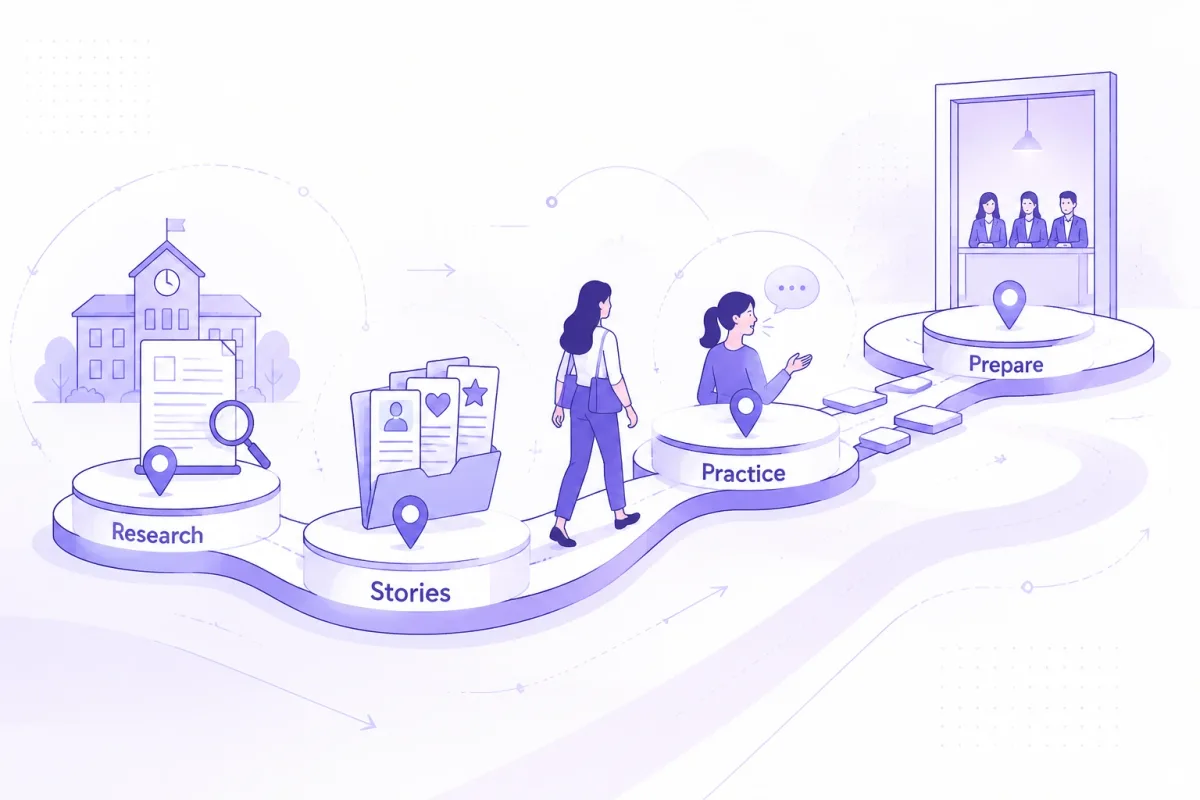
Use this checklist with our complete guide on how to prepare for a job interview to plan the process from research through interview day.
Before the Interview
- Read the job posting and identify the responsibilities that appear most important.
- Research the school’s official website, curriculum information, programs, and stated priorities.
- Build your Six-Story Evidence Bank using only truthful, de-identified examples.
- Map each story to several questions in this guide.
- Personalize your answer to “Why this school?”
- Select two or three questions to ask the panel.
- Confirm whether the interview includes a demonstration lesson, portfolio review, or additional materials.
During Practice
- Rehearse aloud from keywords rather than reading a full script.
- Ask a mentor or colleague to interrupt with follow-up questions.
- Remove unnecessary background from behavioral examples.
- Replace every bracketed part of the templates with your own information.
- Check that any result you mention is accurate and appropriately de-identified.
- Practice saying, “Could you clarify what you mean by…?” when a question is ambiguous.
On the Interview Day
- Listen to the complete question before answering.
- Pause briefly when you need to organize your thoughts.
- If you do not know a policy, explain the professional principle you would follow and how you would seek accurate guidance.
- In a panel interview, respond to the questioner while including the rest of the group naturally.
- Thank the panel and confirm the next step.
If you want additional speaking practice, rehearse with a mentor, colleague, or an interview practice tool such as GreatOffer.ai. Use feedback to improve clarity and specificity, not to manufacture experiences or memorize a script.
Conclusion: Practice the Evidence, Not the Script
Effective teacher interview preparation is not about memorizing perfect answers. Select six truthful examples, connect them to the questions above, and practice explaining your decisions, evidence, and reflection in your own words. Then adapt your answers to the actual school, position, and students you hope to serve.
Sources and Further Reading
- U.S. Department of Education: Family Educational Rights and Privacy Act (FERPA)
- U.S. Department of Education: About the Individuals with Disabilities Education Act
- CAST: Universal Design for Learning Guidelines
- UC Davis School of Education: Job Interview Tips for Teachers
- Valdosta State University Career Services: Interview Packet for Teacher Candidates