
AI is now common in research, writing, analysis, and coding, so interviewers increasingly ask candidates where it fits in their work. The question is rarely about whether you know a particular tool. It is about judgment, ownership, verification, and whether you can still perform independently. A concise answer should make those boundaries clear from the start:
30-Second Model Answer: "I use AI for clearly defined parts of a task, such as organizing an initial set of ideas or identifying questions I may have missed. I still set the goal, decide what is relevant, check important claims against original sources, and rewrite the output for the actual audience. I have rejected AI suggestions when they lacked context or support. The final decision and quality check remain mine, and I can use the same research and review process manually if the tool is unavailable."
When an interviewer asks how you use AI, they are checking whether you use technology to amplify your judgment or to replace your thinking. If your answer sounds like a product demo, they start wondering whether you can perform when data is confidential or a tool hallucinates. The rest of this guide helps you build a truthful version of that answer from your own experience.
What Interviewers Are Actually Testing When They Ask About AI
Listing tool names does not prove AI literacy. Naming software is easy; demonstrating professional discretion is what sets you apart.
In ten years of coaching candidates through this question, the ones who land it almost never lead with a tool name. They lead with a problem they owned.
| What the interviewer listens for | Strong signal | Red flag |
|---|---|---|
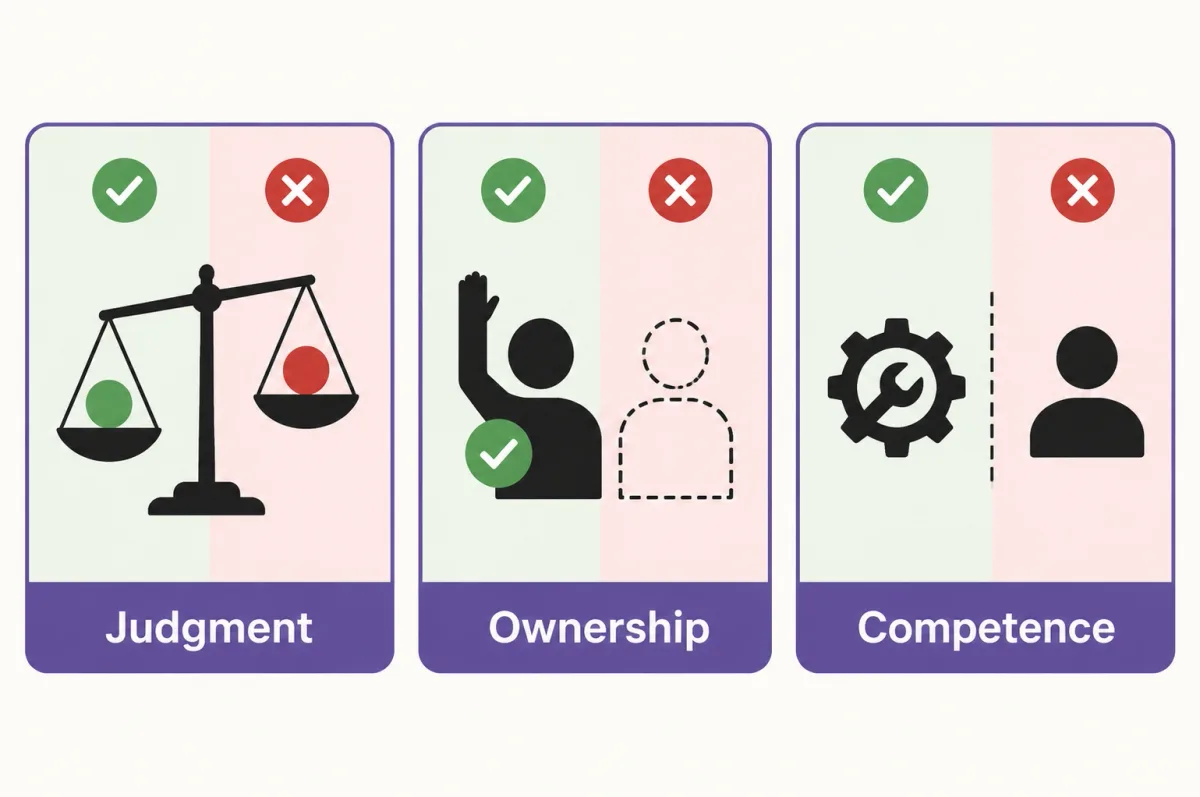
| Judgment and boundaries | Explains why AI was appropriate for a specific sub-task and when it fails | Uses AI for every task without considering risk or policy |
| Personal ownership | Highlights manual revisions, source checks, and final accountability | Claims credit for unverified, raw generated text or code |
| Independent competence | Describes how the core work is completed if AI is unavailable | Cannot explain the logic or step behind the final output |
Judgment, Not Tool Familiarity
Hiring teams evaluate whether you pick the right tool for the right job. Anyone can type a prompt. The candidate who stands out explains why they chose AI for a specific step, what constraints they applied, and why they did the analysis manually somewhere else.
Interviewers also listen for restraint. Explaining that you kept proprietary financial data or personnel records out of a public tool proves risk awareness and compliance thinking.
Ownership, Verification, and Role Relevance
Pitt Career Central's AI interview guidance makes the point directly: effective answers separate the machine's initial contribution from the candidate's final decision. Interviewers want proof that you set the criteria, audited the facts, and refined the output.
Your example must also match the seniority of the target role. A senior candidate should address prompt governance and risk mitigation. An entry-level candidate should show core execution and source checking.
How to Talk About AI in Job Interviews: The AI Ownership Framework
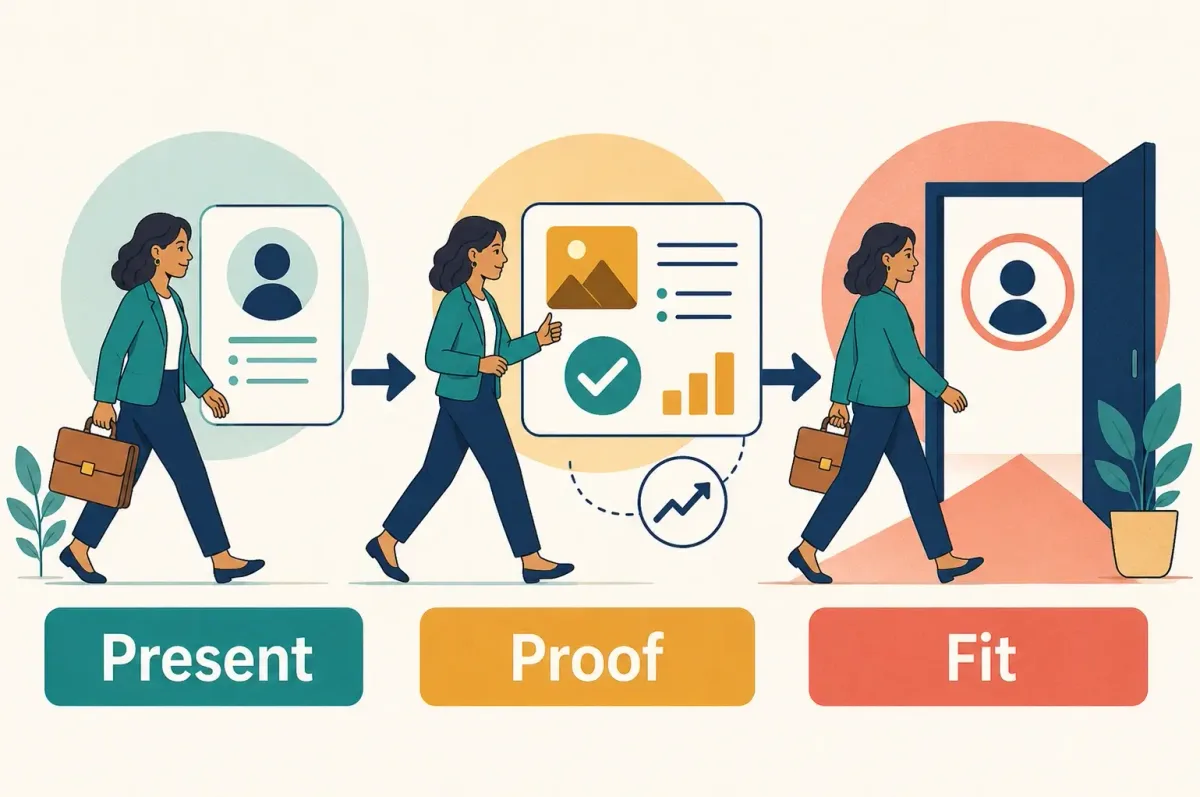
Structure your response around human responsibility. The AI Ownership Framework breaks your answer into five phases. Think of it as a preparation worksheet: fill it in with real details from one actual task before the interview, and you will not need to improvise.
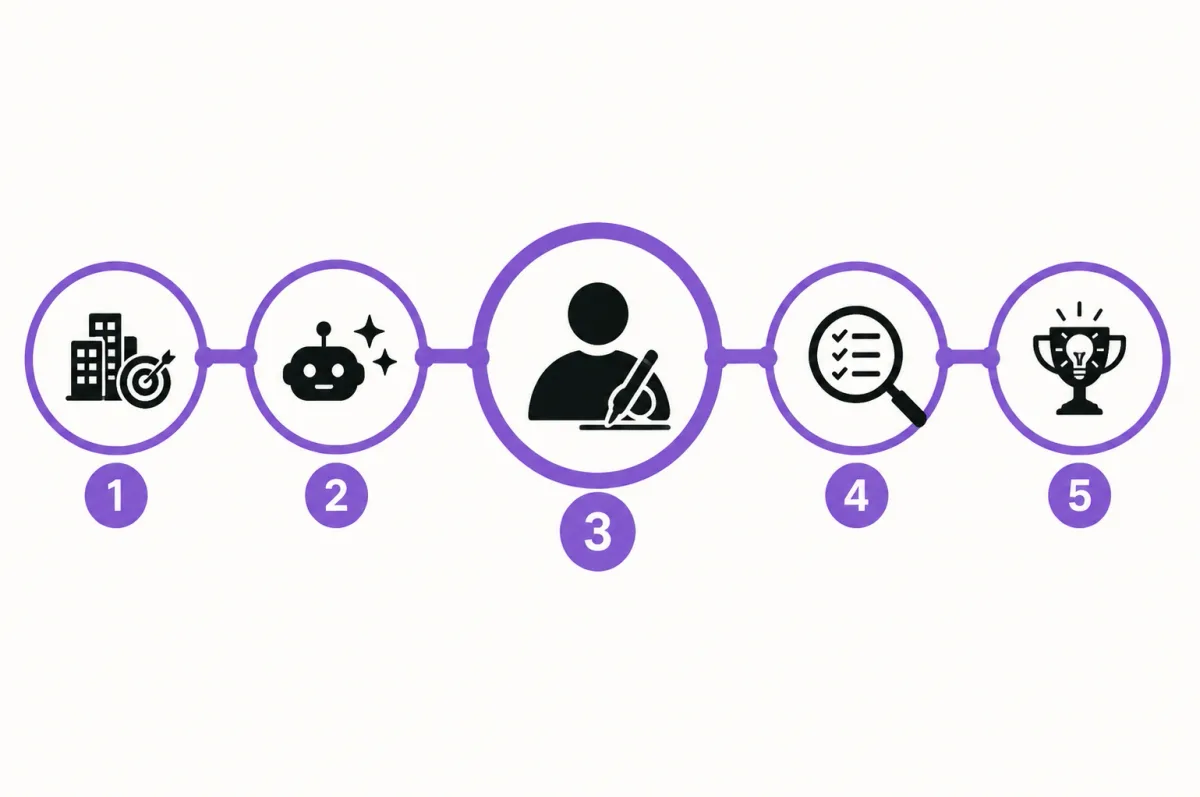
1. Business context
Establish the business problem, deadline, or objective before mentioning technology.
- What specific task or decision were you accountable for delivering?
- Why did you consider AI for a portion of this workflow?
- What operational constraints existed: tight deadline, missing source files, regulatory compliance, data privacy?
2. AI contribution
Describe the precise task assigned to the tool. Avoid broad claims like "AI wrote the report."
- Name the specific assistance: drafting an initial outline, generating alternative test cases, summarizing unstructured notes, or reformatting raw data tables.
- Mention the tool only if it adds necessary context to the story.
- The tool handled a preliminary or repetitive step, not the strategic core.
3. Human ownership
This is the most important part of your answer. Shift focus immediately back to your personal decisions, revisions, and choices.
- What key decisions, edits, or structural changes did you personally make?
- Which suggestions did you reject, and why were they inadequate?
- How did you inject company-specific context, brand tone, or technical nuance the tool missed?
4. Verification and safeguards
Explain the specific quality checks you ran before sharing or publishing the work.
- How did you fact-check claims against primary sources?
- What tests, code reviews, logic audits, or reconciliation checks did you perform?
- How did you ensure confidential or proprietary data stayed protected?
5. Outcome and learning
Conclude with the result and what the experience taught you about the tool's limits.
- What was the qualitative or verified business outcome?
- What limitation did you notice, and how did it change your workflow?
- What core skill did this experience reinforce?
Fill-in template: "In [business context], I was responsible for [core goal]. I used [approved tool or capability] to handle [bounded task]. I stayed in control of [strategic human decisions]. I verified the output by [specific check], and I rejected [specific weak or incorrect suggestion]. The final result was [verified outcome], and the process confirmed that while AI saves time on initial drafting, [core skill] remains entirely my responsibility."
Add an Independence Proof So You Do Not Sound Dependent
Saying "AI is just an assistant" does not prove independence. Interviewers hear candidates call it a tool every day while describing workflows that rely on software for every single thought. The word "assistant" does nothing. To close the overreliance concern, build an explicit Independence Proof into your answer.
An independence proof is a clear statement of how you complete the same core task when AI is unavailable, restricted, or wrong.
Ask yourself three questions before the interview:
- The Core Skill Check: What fundamental analysis, writing, or problem-solving step can you perform without the tool?
- The Fallback Check: If the tool went offline or was banned tomorrow, what manual process would you use?
- The Value-Add Check: Did AI create new insight, or did it compress time while you provided the subject-matter expertise?
Independence proof add-on: "If the tool were unavailable, I would handle the research and drafting manually using [established process or primary source search]. AI compresses my initial setup time; it does not replace my underlying ability to analyze data, structure arguments, or evaluate risk."
The fallback must be real. If an interviewer asks you to walk through that manual process on a whiteboard, you need to be ready.
A Complete Strong Answer, With the Ownership Signals Labeled
Here is how the framework and the independence proof sound in a real conversation. This example describes preparing an internal operational brief.
"Last quarter, I was tasked with drafting an internal summary of updated industry data privacy standards for our product team [Context]. To speed up the initial setup, I used a generative AI tool to extract a first-pass bulleted summary from three public regulatory PDFs [AI Contribution].

The tool missed two critical state-level compliance exceptions and produced a misleading summary of the implementation timeline [Human Ownership]. I audited every bullet against the official state legislative texts, corrected the timeline, and wrote the final recommendation based on our specific software architecture [Verification].

The brief was distributed to product managers and used to scope our Q3 roadmap [Outcome]. If AI tools were unavailable, I would run the same document review using manual keyword extraction and legal tracking tables. AI saved roughly an hour of initial formatting; it did not change my responsibility for accuracy [Independence Proof]."
Breakdown of labeled signals:
- Context: Establishes a concrete business objective and target audience.
- AI Contribution: Bounds tool use to raw information extraction from public documents.
- Human Ownership: Identifies hallucinated or missing context that required manual correction.
- Verification: Cites primary legal texts rather than trusting generated summaries.
- Outcome: Connects the finished work product to an internal business decision.
- Independence Proof: Confirms manual competence and willingness to execute without the tool.
How to Adapt the Answer to Your Role
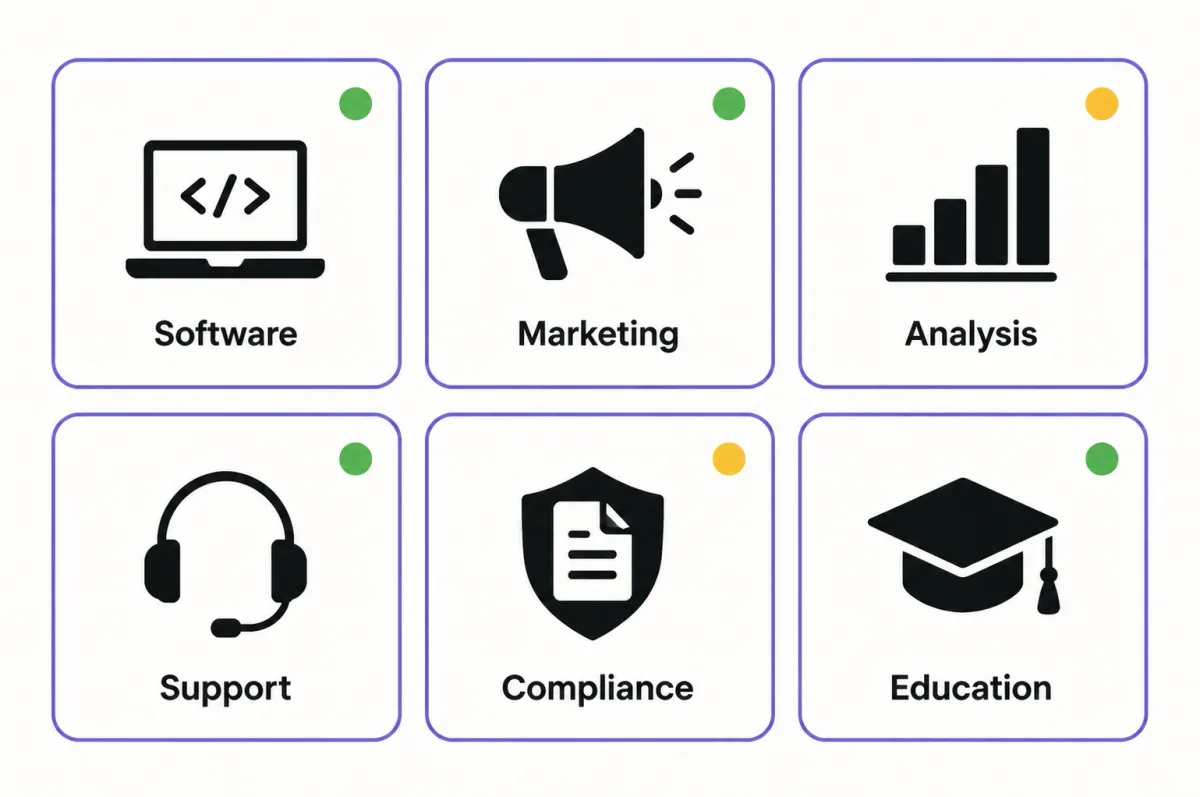
A strong example demonstrates the risks and standards of the target role. An answer that satisfies a marketer might raise concerns for a software engineer.
| Role family | Useful AI contribution to discuss | Human evidence to emphasize | Risk or red flag to address |
|---|---|---|---|
| Software and data | Test case generation, boilerplate refactoring, SQL syntax checks | Architecture, code review, security, manual debugging logic | Accepting unverified code; inability to explain algorithmic complexity |
| Marketing and writing | Ideation, outline generation, headline variations, research organization | Original thesis, brand voice, source verification, positioning | Generic prose, factual errors, unverified statistics |
| Analysis and operations | Summarizing raw notes, scenario modeling, data reformatting | Input validation, assumptions, cross-table reconciliation | Confidential data exposure; unverified financial figures |
| Customer support and sales | Draft response ideas, call summaries, meeting prep notes | Customer empathy, escalation, nuance, policy compliance | Hallucinated product policies; customer PII exposure |
| Regulated roles | Initial literature scanning on public documents inside policy | Compliance, primary source verification, expert review, audit trail | Protected data, unauthorized advice, unexplained output |
| Early-career candidates | Structuring study notes, learning unfamiliar syntax, practice | Fundamentals, ability to execute basic tasks without tools | Exaggerated expertise, inability to explain basics |
Software or data
Technical interviewers probe harder than most. The focus is architecture, code review, edge cases, and security. Never imply a copilot wrote your production logic.
"I occasionally use coding assistants to generate boilerplate unit tests or check unfamiliar syntax. I never accept generated code without running local test suites and reviewing memory usage. On a recent project, an AI tool suggested a database query that worked on small datasets but caused a major lock under load. I refactored the query manually to ensure proper indexing. System design, performance, and security remain entirely my responsibility."
If you are preparing for technical rounds, our guide on Amazon interview questions and STAR stories covers how to align technical examples with behavioral bar-raiser expectations.
Marketing or writing
Brand voice and source verification are the two things interviewers most want to see candidates own. Generic output and unverified statistics are the two fastest ways to lose credibility in creative roles.
"I use generative tools during early brainstorming to test different messaging angles. First-pass AI content is almost always generic and lacks brand personality. For our last product campaign, I used AI to organize user feedback categories, but I wrote the campaign narrative, core positioning, and customer stories myself. Every statistic was verified against our analytics database before publication."
Analysis or operations
What interviewers in these roles usually probe: did you validate the inputs, or did you just trust the output? Highlight input validation, modeling assumptions, and data confidentiality.
"I use AI to format unstructured meeting notes or brainstorm scenario variables for operational models. Before inputting any data, I confirm no proprietary metrics or customer details are included. I verify all financial logic manually in Excel using cross-reconciliation tables. The tool speeds up raw text cleanup; data integrity and decision recommendations are mine."
Customer-facing work
Customer context and approved product information are non-negotiable here. Empathy and escalation are yours alone; no tool substitutes for them.
"I use AI to review meeting transcripts and generate initial follow-up summaries. Before sending anything to a client, I rewrite the draft to ensure the tone is personal, accurate, and aligned with our commitments. AI handles post-call admin faster so I can spend more time on the actual customer problem."
Legal, finance, healthcare, HR, or other regulated work
Use conditional language. Emphasize approved systems, data privacy, and the cases where you would not use AI.
"In HR and compliance, data privacy is non-negotiable. I never input employee information, personnel records, or draft policy documents into public AI tools. I have used enterprise-approved internal search tools to locate policy references, but every legal and policy interpretation is verified against primary statutory guidelines and reviewed with internal counsel."
Early-career candidates
Do not exaggerate. An interviewer can destroy an inflated AI claim in thirty seconds of follow-up. Show learning agility, academic integrity, and what you can actually defend.
"As a recent graduate, I use AI as a learning tool to understand new frameworks or test my coding logic. During my capstone project, I used AI to generate practice questions on statistical concepts. All core calculations and written analyses were mine, because I needed to know I could defend the work."
When introducing yourself at the start of an interview, keep your background crisp and grounded. Our guide on answering "Tell Me About Yourself" covers the structure.
Explain How You Verify AI Output and Protect Sensitive Information
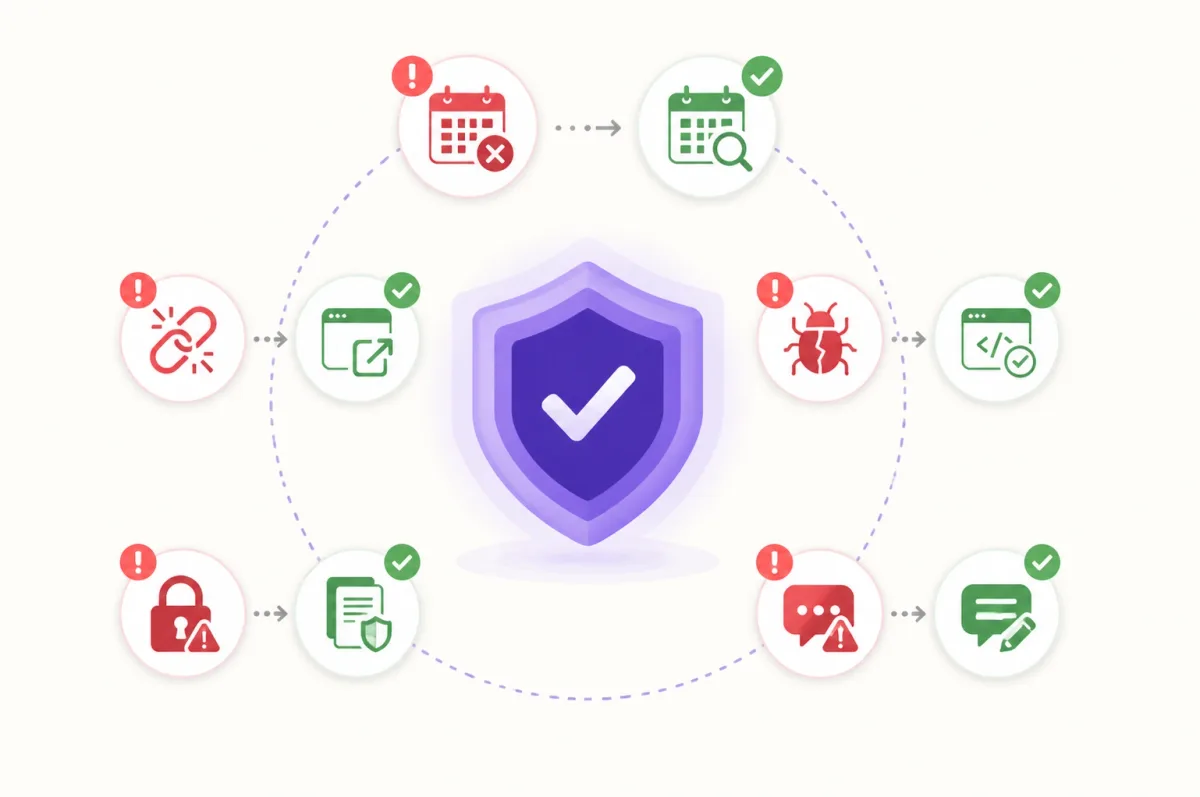
"I always double-check it" is not an answer. Name the failure mode, then name the check.
| Specific risk | Verification method or safeguard |
|---|---|
| Factual error or outdated claim | Check every statement, date, or figure against the original, current, authoritative source. Never quote a generated claim without a source. |
| Fabricated citation | Open every cited URL; verify the referenced paper actually contains the claimed finding. |
| Buggy, insecure, or inefficient code | Run automated test suites, inspect edge cases manually, check memory usage, and perform security scans before pushing to staging. |
| Tone, bias, or context-blind language | Review phrasing for brand alignment, affected groups, and subtle bias; rewrite robotic or inappropriate phrasing. |
| Confidential or personal data | Strip all PII, client names, financial credentials, and proprietary code before using any external tool. |
| Policy or compliance risk | Follow employer, client, and platform AI governance rules; seek explicit approval from legal or compliance when unclear. |
When interviewers ask about quality control, name the specific failure mode you anticipate and the exact step you take to prevent it.
Separate Work Use, Interview Preparation, and Live Interview Use
Confusion often comes from treating these three situations as if the same rules apply. They do not.
Using AI at work during an assessment that could determine your livelihood is a nerve-wracking grey area for most candidates. That anxiety is understandable. What matters is that you follow the rules of the specific situation, not the most lenient interpretation you can find.
| Situation | Default guidance | What to say or do |
|---|---|---|
| AI used in normal work | Use approved tools within policy, protect confidential details, verify output, retain ownership | Describe the workflow without revealing restricted prompts, client data, or proprietary material |
| AI used to prepare for an interview | Standard practice: generate questions, rehearse answers, identify gaps | Rewrite in your own voice, verify factual claims, practice answering without reading generated text |
| AI during a live interview or assessment | Rules vary by employer, platform, and task. Never assume permission | Follow explicit instructions; ask when unclear; never hide or disguise assistance |
Three points to keep in mind:
- Permission to use AI at work does not automatically mean it is allowed during an assessment.
- A take-home task that allows tools is different from a closed-book or explicitly unaided evaluation.
- When AI is allowed, be ready to explain, defend, modify, and reproduce the work on the spot.
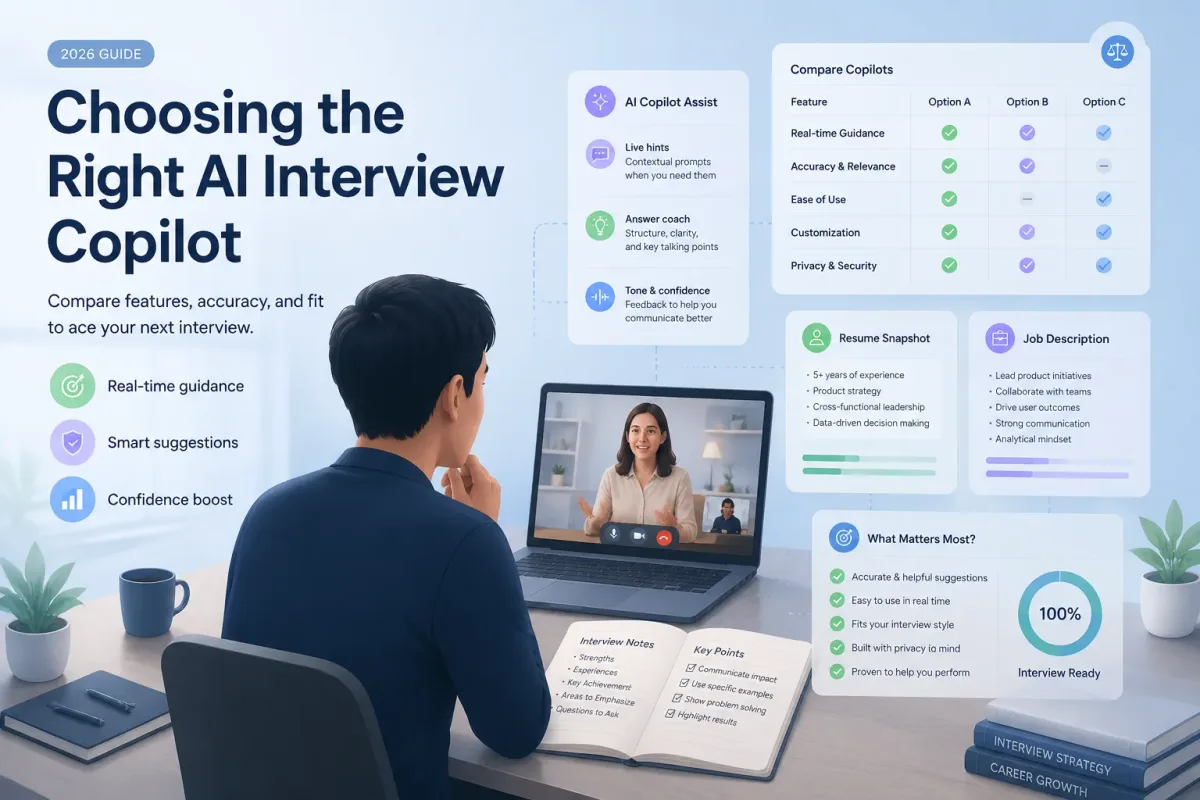
When the employer's interview rules explicitly allow real-time assistance: Great Offer AI runs alongside online interview platforms including Zoom, Google Meet, Microsoft Teams, HireVue, HackerRank, and CodeSignal. It analyzes questions and keeps personalized prompts on your own screen, so guidance stays with you rather than appearing in the shared view. For technical interviews, the coding assistant can analyze a selected screen area and surface problem-solving guidance. The candidate still needs to understand, evaluate, adapt, and deliver every response. Check the employer's, assessment provider's, and platform's AI policy before using it.
For a detailed comparison of real-time guidance tools across features and privacy controls, see our AI interview copilot comparison guide.
Stress-Test Your Answer Before the Interviewer Does
A polished first answer is not enough. Interviewers use follow-ups to separate real experience from a rehearsed description. I watch candidates pass the first question and stumble on the second every week. Test your story against these ten probes before you walk in:
- "What specifically did the AI get wrong or miss?" Tests whether you actually reviewed the output or accepted it.
- "Which prompt did you use, and how did you iterate on it?" Tests hands-on tool experience versus abstract claims.
- "How did you verify the primary sources were accurate?" Tests research discipline and quality standards.
- "What sensitive information did you withhold from the prompt?" Tests data privacy awareness and compliance thinking.
- "Walk me through how you would complete this entire task without AI." Tests underlying technical or analytical competence.
- "What would you do if our policy prohibited generative tools?" Tests adaptability and commitment to company rules.
- "How do you know the final output was better, not just faster?" Tests focus on quality and business value over raw speed.
- "Which sentence or line of code in the final draft was 100% yours?" Tests personal intellectual ownership.
- "How did you adjust the tool's tone to match your team's voice?" Tests communication judgment and audience awareness.
- "What did this teach you about when not to use AI?" Tests maturity, self-reflection, and risk management.
Self-check rule: If you cannot answer two or more of these with specific, real details from your experience, pick a different example or go back and investigate the workflow more carefully.
Rewrite Answers That Make You Sound Overreliant
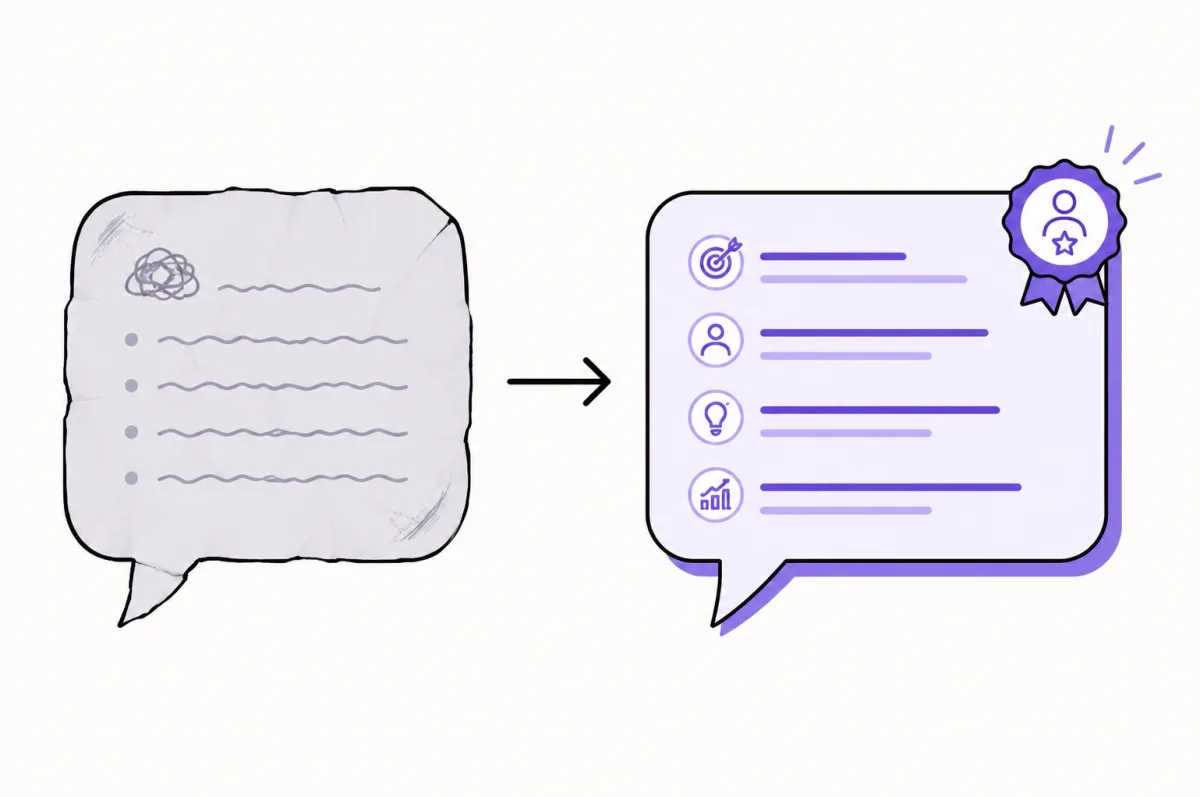
Small shifts in wording turn red-flag statements into ownership-driven answers. Most candidates recognize their own weak version in the left column. That recognition is the point. Here is the fix:
| Weak answer | Why it raises concern | Stronger version |
|---|---|---|
| "I use ChatGPT for everything now; it saves me hours every day." | Sounds completely dependent; no personal boundaries or skill visible | "I use AI selectively for initial brainstorming so I can focus on the core strategic analysis." |
| "AI wrote the initial draft for our quarterly report." | Removes human agency; the candidate is a copy-paste relay | "I used AI to generate a structural outline, but I wrote the analysis and verified all metrics manually." |
| "I trust the tool because it is usually accurate." | Blind trust; ignores hallucination risk | "I treat generated outputs as unverified drafts until I check them against primary database metrics." |
| "I don't really know how it works, but it gives me great code." | Signals carelessness about security, privacy, and logic | "I focus on prompt structure and rigorous test-suite validation before any code is considered ready." |
| "I never touch AI because using it is basically cheating." | Rigid inflexibility; signals unwillingness to learn current tools | "I am cautious with AI because of data privacy, but I use approved tools for low-risk research tasks." |
| "Using AI boosted my team's productivity by 80 percent." (unsubstantiated) | Sounds fabricated; no source, no context | "AI reduced initial draft setup time, leaving more time for client review and refinement." |
| "I know Python, SQL, ChatGPT, Claude, Midjourney, and Prompt Engineering." | Tool dumping with no task, judgment, or result | "I apply Python and SQL for analysis, using LLMs to speed up test-case generation under my review." |
Phrases to use carefully
- Replace "always" or "everything" with "for specific, low-risk sub-tasks."
- Replace "fully automated" with "assisted with initial data organization."
- Replace "the AI generated the answer" with "I used the tool to explore alternative perspectives, then selected and verified the final approach."
- Replace unverified percentages with qualitative descriptions of focus and quality.
What to Say If You Are Skeptical of AI or Have Limited Experience
You do not need to fake enthusiasm or hide genuine professional caution. Both positions can produce a strong answer.
If you are skeptical
Thoughtful skepticism works when it comes with a specific risk and a standard, not a blanket refusal. The answer below names both.
"I approach AI tools carefully, particularly around data privacy, factual accuracy, and brand voice. In my previous role, I chose not to use public AI tools for client reports because protecting confidential data and maintaining exact accuracy were the priorities. I do see the efficiency gains for low-risk tasks like summarizing public documentation, and I am open to using enterprise-approved tools where clear human review processes are in place."
If you have limited experience
Be honest. Do not round a personal experiment up to production experience. Highlight your core analytical skills and your ability to pick up new tools.
"I haven't integrated generative AI heavily into my daily production workflow yet. My focus has been on mastering [core skill] through established manual processes. I have experimented with tools on my own time to understand how they generate outlines and test cases. I learn new software quickly and look forward to adopting your team's approved workflow and quality standards."
Questions to Ask the Employer About AI
Pick two or three questions that fit the conversation. Running through all six at once looks like a checklist, not curiosity.
- "What tools or platforms has the team officially approved for this role?" Shows interest in technology stack and compliance.
- "How does the team balance speed with quality review and human oversight?" Shows focus on craftsmanship and risk.
- "Are there categories of data, projects, or client work that are off-limits for AI tools?" Shows data governance awareness.
- "How have expectations for output in this role evolved with AI adoption?" Shows practical focus on performance.
- "What training does the company provide on responsible AI use and data privacy?" Shows commitment to learning and policy adherence.
- "What policy governs tool usage during technical assessments or take-home assignments?" Shows direct respect for assessment integrity.
Conclusion
The goal is not to hide AI use or to pretend you never touch it. It is to show what AI contributed and what remained distinctly yours.
Before your next interview: draft one truthful example using the five-part AI Ownership Framework, attach a one-sentence independence proof, and run the story through the follow-up stress test. If two or more questions expose a gap, find a better example or investigate the workflow more deeply.
For online interviews, Great Offer AI runs alongside Zoom, Google Meet, Microsoft Teams, HireVue, and major coding platforms to provide low-latency question analysis and personalized prompts on your own screen. Try the real-time Interview Copilot after confirming that its use complies with the employer's, assessment provider's, and platform's policies.