
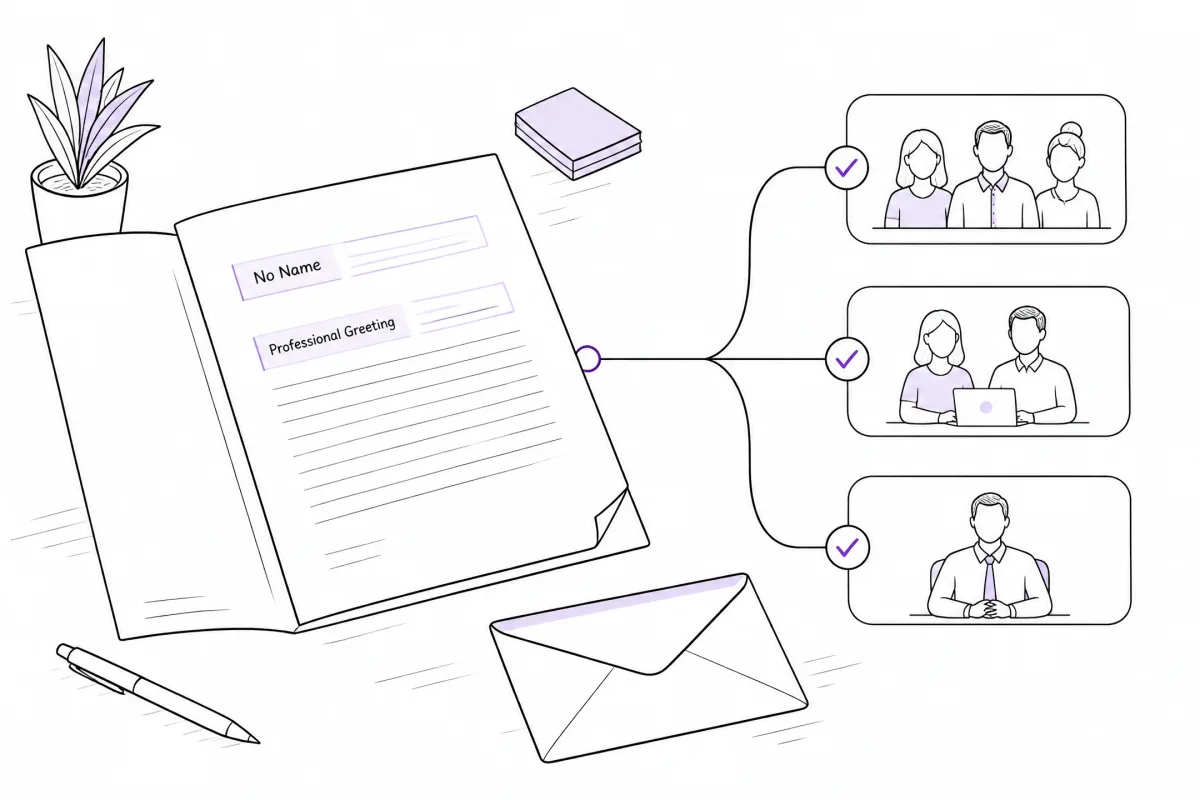
Try to Find the Name—Without Guessing
Finding a verified contact can make a cover letter more specific, but searching should have a limit. Use these checks before choosing a general greeting.
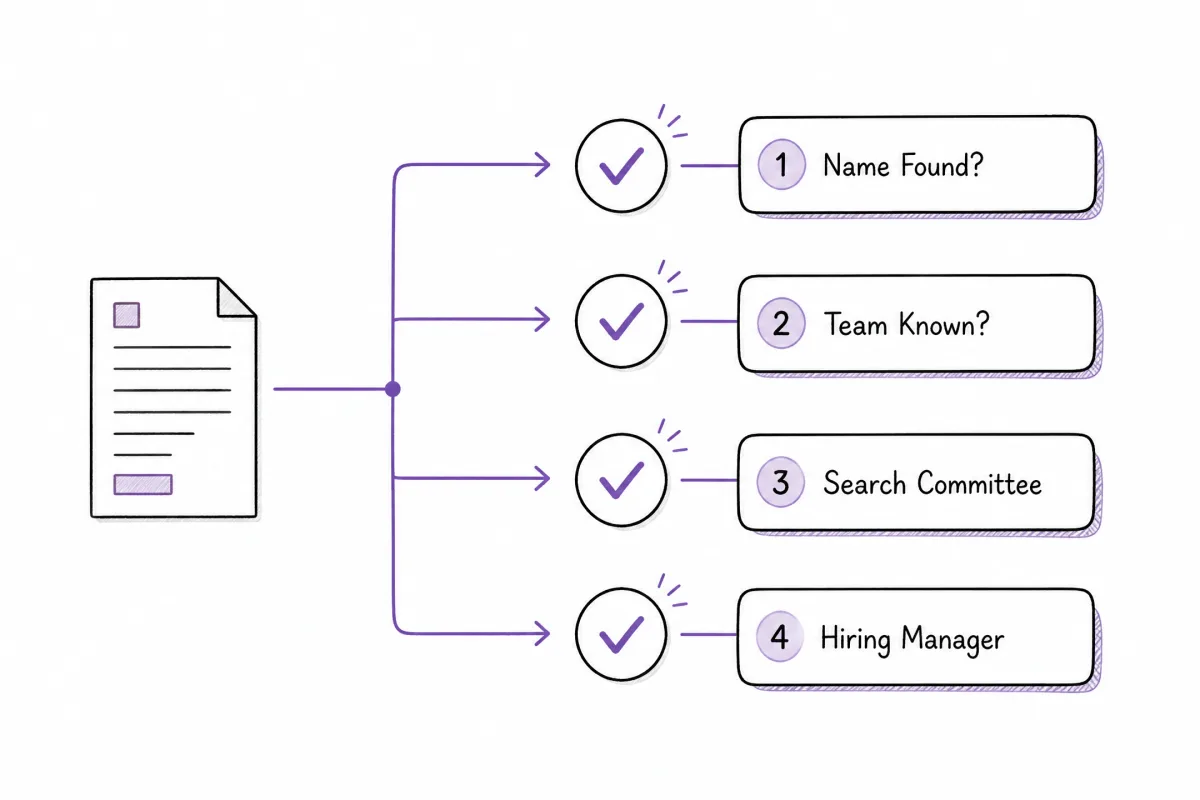
Check the Job Posting and Company Website
Read the full job description, including the contact information and application instructions. Look for a recruiter’s email, the name of the person who posted the position, a reporting line, or the department responsible for the role.
Then check the company’s Careers, Team, Leadership, or About pages. A department head may be relevant, but do not assume that the most senior person is managing this vacancy. Use a personal name only when a reliable source connects that person to the role or hiring process.
Search LinkedIn and Your Network
Search the company, department, and role together. Useful searches include:
[Company] talent acquisition[Company] recruiting [Department][Company] head of [Department][Job title] [Company]
If someone you genuinely know works at the organization, you can ask who is managing the hiring process. Ask for confirmation rather than guessing from a job title or requesting an introduction from a weak connection.
Ask Once, Then Use a Team-Based Greeting
For a small or midsize organization, you may call the main office or send a brief message such as:
“Could you tell me who is managing the hiring process for the [Role] position?”
If the job posting, company website, and LinkedIn do not reveal a verifiable name, stop searching. Use a team-based greeting or “Dear Hiring Manager,” instead. A correct general greeting is more professional than a confidently addressed letter to the wrong person.
If you do find a verified name, follow the organization’s level of formality. Use the person’s full name when you are unsure whether an honorific is appropriate, and use a professional title such as Dr. or Professor only when it is clearly relevant and confirmed.
Best Cover Letter Salutations When the Name Is Unknown
Choose the greeting that matches the information you actually have. Do not select a more specific option merely because it sounds more personalized.
| What you know | Recommended salutation | Why it works | Avoid when |
|---|---|---|---|
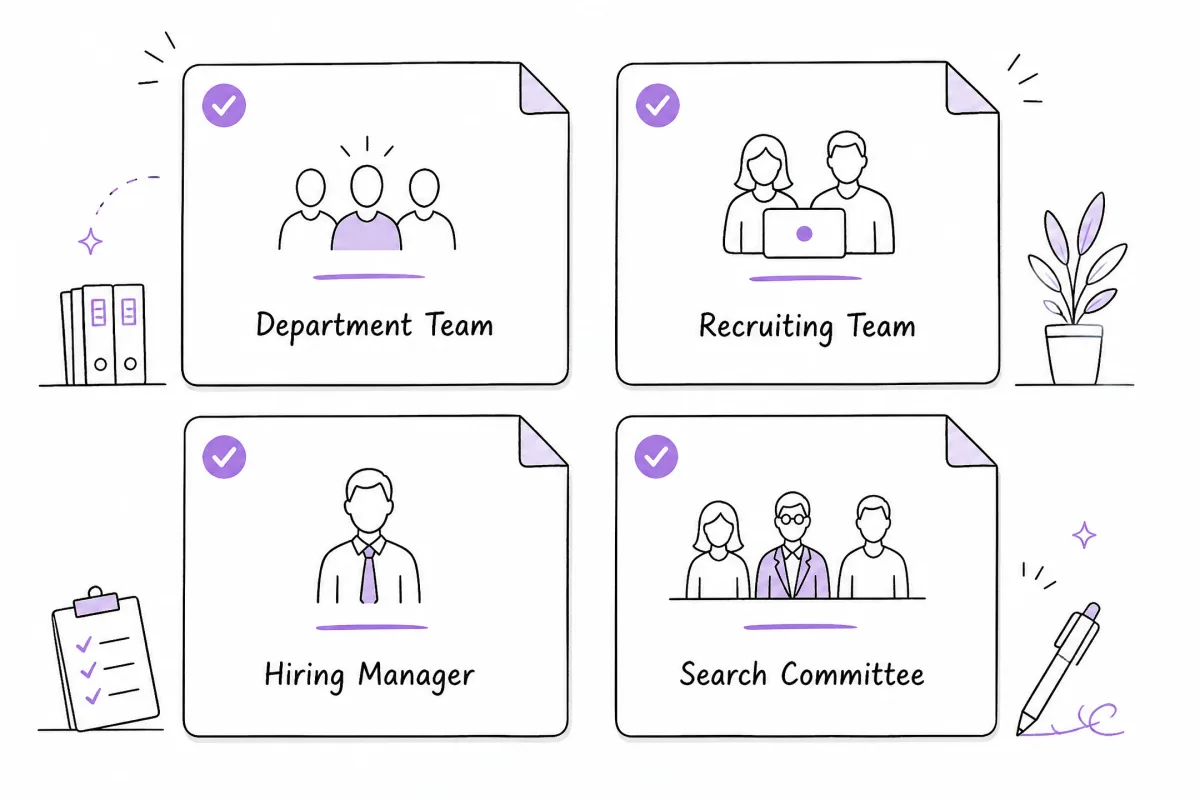
| The hiring department | Dear [Department] Team, | Specific without guessing an individual | The department is only an assumption |
| The company uses centralized recruiting | Dear [Company] Recruiting Team, | Names both the organization and recruiting function | You know a more relevant department or committee |
| A panel or committee reviews applications | Dear [Role] Search Committee, or Dear Hiring Committee, | Reflects a group decision process | The company uses a single hiring manager |
| You know only the role | Dear [Role] Hiring Team, | More tailored than a completely generic greeting | The wording becomes awkward or unusually long |
| You have no reliable recipient details | Dear Hiring Manager, | Professional and broadly understood | You can verify a more specific team or committee |
| You are already in an informal email exchange | Hello, followed by the message | Can match an established conversational tone | You are uploading a formal cover letter document |
Dear [Department] Team
Use a department-based greeting when the posting clearly identifies the team that owns the role.
Examples include:
Dear Product Design Team,Dear Finance Hiring Team,Dear Customer Success Team,
Adding “Hiring Team” can make the purpose clearer, but keep the greeting natural. “Dear Senior Enterprise Customer Success Manager Hiring Team” is too cumbersome. In that case, use “Dear Customer Success Hiring Team,” instead.
Dear [Company] Recruiting Team
This greeting works well for a large company with a centralized talent acquisition or recruiting department:
Dear Acme Recruiting Team,
It is more personalized than “Dear Hiring Manager,” without pretending that you know which individual will review the application. If the company uses a different name for the function, such as “Talent Acquisition,” mirror that wording instead of inventing “Recruiting Team.”
Dear Hiring Manager
“Dear Hiring Manager,” is a reasonable fallback when you cannot identify a person, team, or committee. It is clear, formal, and unlikely to misidentify the recipient.
Use it as a fallback—not as an automatic first choice when the job posting already gives you more specific information.
Dear [Role] Search Committee or Dear Hiring Committee
Committee-based greetings are useful for academic, education, nonprofit, government, and executive searches.
Examples include:
Dear Assistant Professor Search Committee,Dear Elementary Teacher Hiring Committee,Dear Executive Director Search Committee,
If several people will review every application but the committee has no formal name, “Dear Hiring Committee,” is concise and professional.
When “Hello” or No Salutation Can Work
You may use “Hello” or begin directly with the message when you are replying inside an existing, clearly informal email conversation. A formal cover letter uploaded as a PDF or Word document should normally include a professional salutation.
When the communication style is unclear, use “Dear” rather than “Hey” or “Hi there.” Follow any employer instructions on punctuation and formatting. If no instructions are provided, choose one style and use it consistently.
Examples of How to Address a Cover Letter to an Unknown Person
The examples below are fictional templates showing how a greeting and opening sentence can work together. Replace every company, role, and performance detail with information that is accurate for your own application.
Example for a Large Company
Dear Northstar Recruiting Team,
I am applying for the Financial Analyst position and would bring three years of experience turning operational data into forecasts used by senior leadership.
Why it works: The company is known, but the reviewing department is not. The opening quickly identifies the role and a relevant qualification.
Example for an Internship
Dear Marketing Internship Hiring Team,
As a communications student who increased event registrations by 28% during a campus campaign, I am excited to apply for the Summer Marketing Intern position.
Why it works: The greeting targets the internship team, while the opening provides evidence beyond coursework alone.
Example for a Teaching or School District Position
Dear Middle School Science Teacher Search Committee,
I am applying for the Grade 7 Science Teacher position with experience designing inquiry-based lessons that increased student participation across mixed-ability classrooms.
Why it works: Schools and districts commonly use committees, and the first sentence immediately establishes classroom relevance.
Example for a Staffing Agency or Confidential Employer
Dear Technology Recruiting Team,
I am interested in the confidential Senior Systems Analyst search and offer eight years of experience modernizing infrastructure in regulated organizations.
Why it works: The candidate does not invent an employer name. The greeting addresses the agency function that is known, and the opening references the advertised role.
If a staffing recruiter has contacted you directly and signed their message, use that verified name instead.
Example for Multiple Recipients
Dear Hiring Committee,
I am applying for the Operations Director position with a record of reducing fulfillment delays while leading cross-functional teams through rapid growth.
Why it works: The greeting addresses the group without listing several names that may be incomplete or incorrect.
Cover Letter Greetings to Avoid
An accurate general greeting is usually less risky than a guessed, outdated, or careless greeting.
| Avoid | Use instead |
|---|---|
To Whom It May Concern |
Dear Hiring Manager, or a verified team name |
Dear Sir or Madam |
A gender-neutral department, committee, or role-based greeting |
A guessed Mr., Ms., or Mrs. |
The person’s verified full name without an assumed honorific, or a team greeting |
Dear Recruiter when no recruiter is involved |
Dear Hiring Manager, or the appropriate department |
Hey or Hi there in a formal document |
Dear [Team], or Dear Hiring Manager, |
Dear [Hiring Manager Name] |
A fully completed greeting with no template placeholders |
“To Whom It May Concern”
“To Whom It May Concern” is not grammatically wrong, but it generally sounds distant in a job application. A department or hiring-team greeting signals that the letter was prepared for an employment decision rather than for an unidentified general audience.
Some organizations may still provide their own instructions or templates. Follow the employer’s stated preference when one is available.
Gendered or Guessed Titles
Do not infer gender or marital status from a first name, photograph, job title, or online profile. Even if you locate the correct person, verify how their name and professional title are presented. If you cannot do that confidently, use the full name without an honorific or address the team.
“Dear Recruiter” Without Evidence
A recruiter may source candidates and coordinate interviews, while the hiring manager usually owns the role and final team decision. Some companies combine these functions, but they are not automatically the same. Use “Dear Recruiter” only when you know a recruiter is receiving the letter.
Overly Casual Greetings and Placeholders
“Hey” can feel careless in a formal attachment, while an unreplaced placeholder reveals that the letter was not checked. Before submitting, search the document for brackets, generic company names, old job titles, and copied text from previous applications.
Make the First Sentence Stronger Than the Salutation
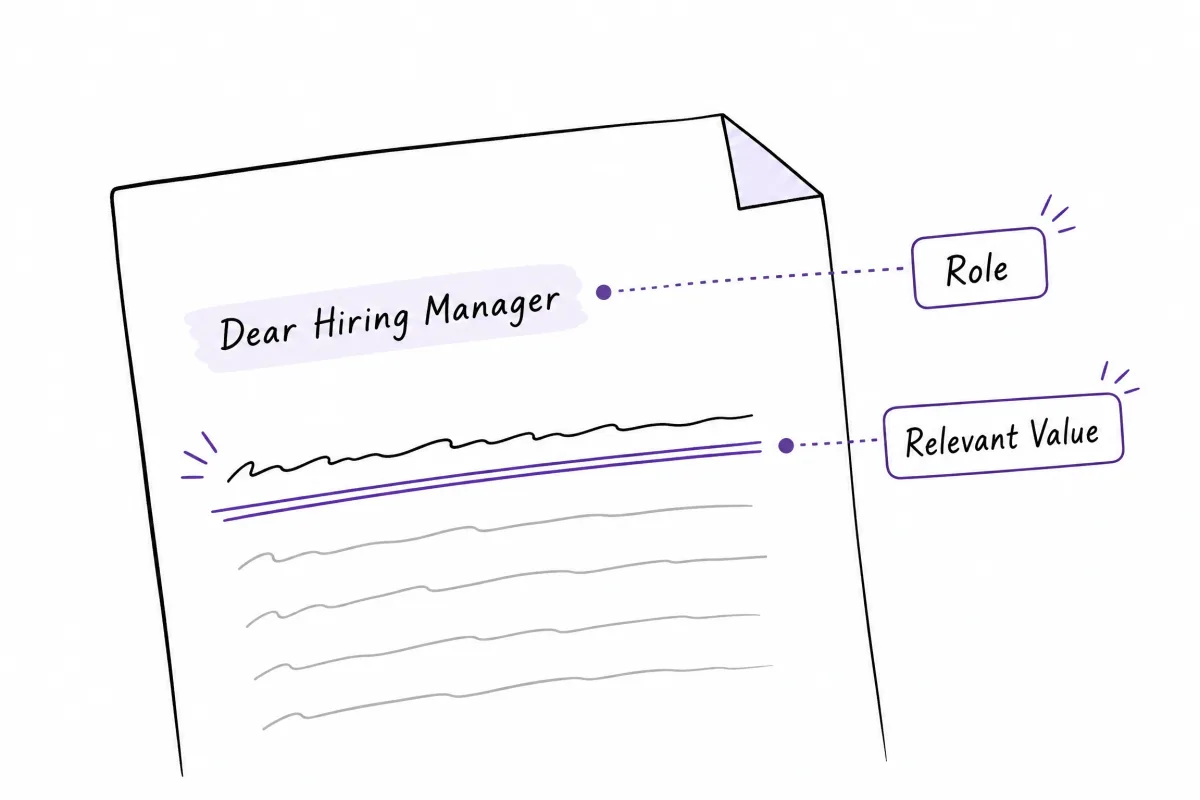
Once you have chosen a professional greeting, move directly to your fit for the position. The first sentence should usually identify the role and one relevant reason the employer should continue reading.
Weak:
Dear Hiring Manager,
I am writing to apply for the position I saw online and hope you will consider my application.
Stronger:
Dear Hiring Manager,
I am applying for the Customer Success Manager position with five years of experience improving enterprise onboarding and reducing early-stage customer churn.
The stronger version does not waste space explaining that the candidate is writing a letter. It establishes the target role and relevant value immediately.
Do not write, “I was unable to find the hiring manager’s name.” The recipient does not need an explanation for your greeting. Use that space to demonstrate interest, experience, or understanding of the company’s needs.
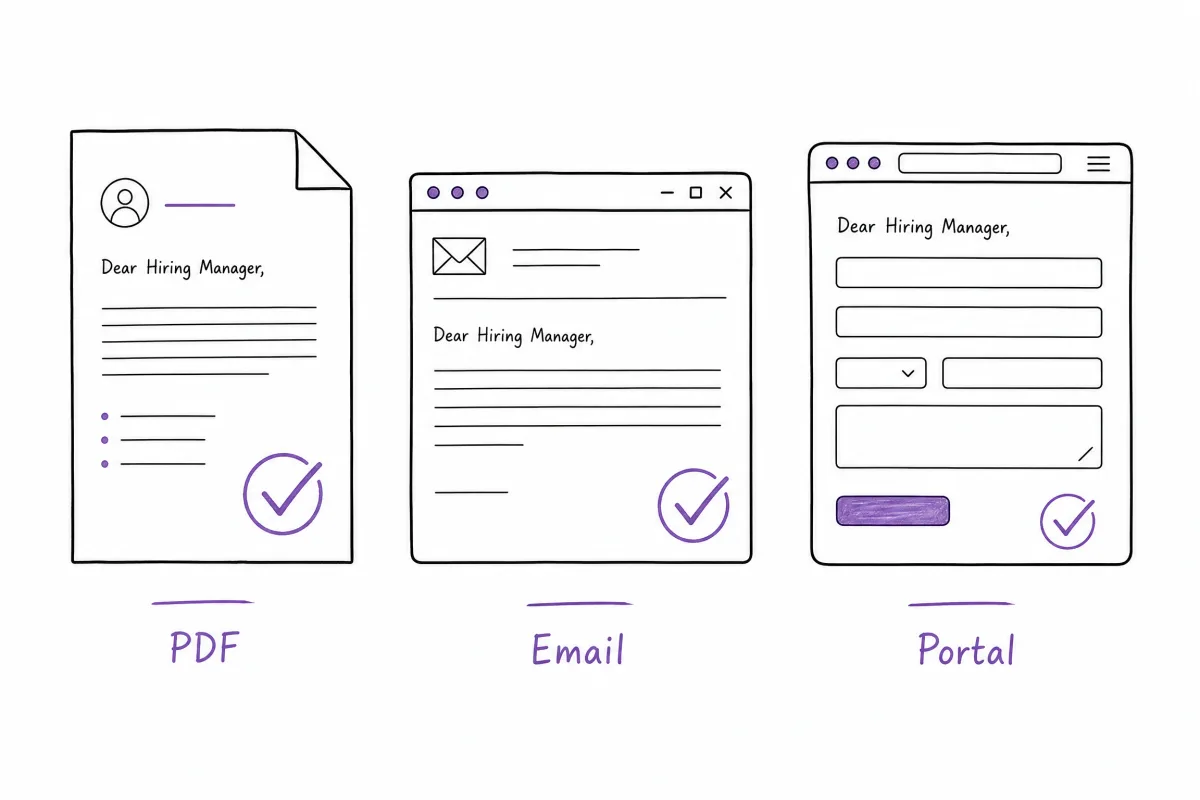
Match the Greeting to the Application Channel
The same recipient decision can look slightly different depending on how you submit the application.
Formal PDF or Word Attachment
Use a conventional salutation and keep the letter’s header, company name, role, and closing consistent. If the employer or school provides a formal format, follow it. Do not add a guessed street address or contact block simply to make the page look longer.
Email Body
If the email itself is serving as the cover letter, begin with a professional salutation and move into the role-specific opening. When you are replying to a named recruiter, use that verified name. When the email is being sent to a general address, use the department or hiring manager fallback.
Application Portal
Follow the portal’s instructions before applying general conventions. If the listing says “address your cover letter to Hiring Manager,” do that even if you might otherwise choose a team-based greeting. If the portal provides a contact name, copy the spelling exactly.
60-Second Pre-Send Checklist
Before uploading or sending your cover letter, confirm that you have:
- Used the most specific recipient information you can verify.
- Avoided guessing a name, honorific, gender, or marital status.
- Matched the greeting to the department, company, role, or committee.
- Removed every template placeholder.
- Used consistent punctuation after the salutation.
- Named the correct company and position in the opening.
- Added a first sentence that communicates relevant value.
- Saved the document with a professional file name.
Choose the Most Specific Greeting You Can Verify
You do not need a recipient’s name to write a professional cover letter. Use a verified person when possible, a department or committee when appropriate, and “Dear Hiring Manager,” when no more specific information is available. Never trade accuracy for superficial personalization.
Editorial note: The examples in this article are illustrative templates. Replace all names, roles, and metrics with verified information from your own application, and use any live interview assistance only where the employer or interview rules permit.
Once your application leads to an interview, GreatOffer.ai’s real-time AI interview copilot can help you practice and structure stronger answers.
Sources and Further Reading
- University of Michigan University Career Center: Cover Letter Resources
- Harvard FAS Mignone Center for Career Success: Cover Letter Guidelines
- Harvard FAS Mignone Center for Career Success: GSAS CV & Cover Letter Guide
- Michigan State University Career Services Network: 7 Ways to Address Your Cover Letter