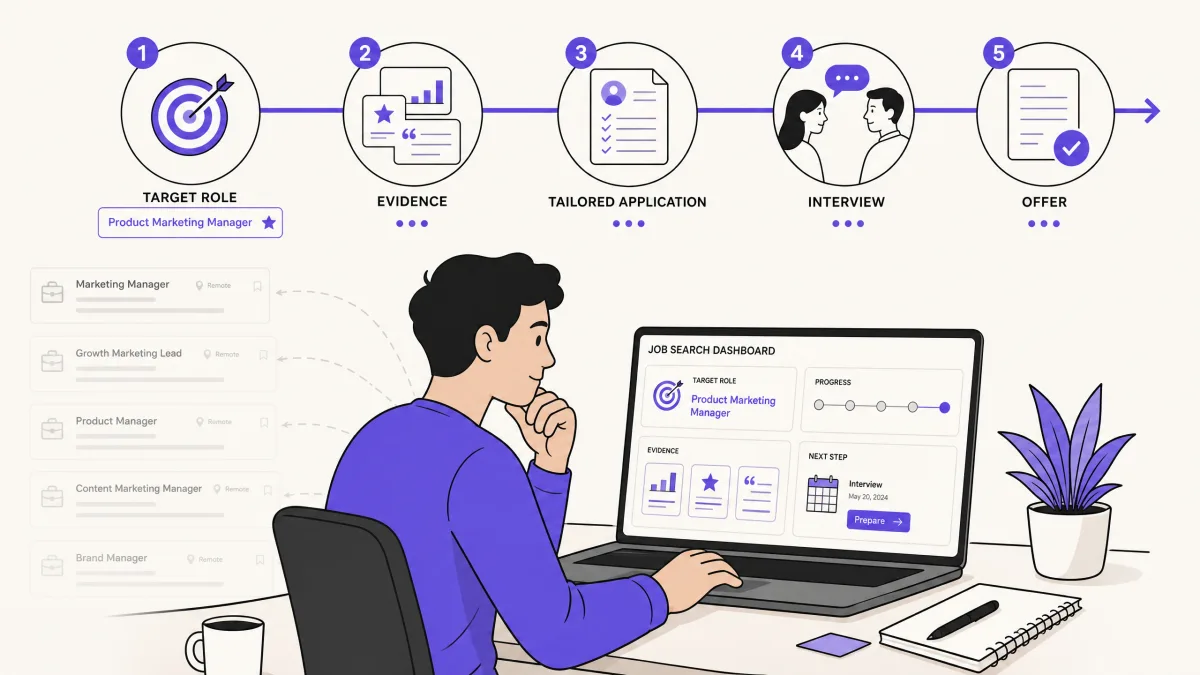


If your employer gives you a choice between a performance improvement plan and a severance package, the meeting itself is the worst place to make the decision. The useful comparison is on paper: what each path pays, what it requires, what it preserves, and what it puts at risk.
The answer is rarely “always stay” or “always leave.” A measurable PIP with real support may be worth attempting. A vague plan paired with a workable severance package may make the exit the more rational choice. If the documents are incomplete, clarify before you commit.
This is general U.S. career information, not legal, tax, unemployment, immigration, or benefits advice. State law, contracts, benefit plans, and the facts of your case can change the answer. A release of claims deserves careful review, especially when discrimination, retaliation, leave, accommodation, age, or immigration issues may be involved.
What Is the PIP vs Severance Decision?
The PIP vs severance decision is a comparison between staying employed under a formal performance process and accepting a defined exit in exchange for the written benefits and obligations in a severance agreement.
Five Things to Do Before You Choose
You may have only a few days. That is still enough time to stop, collect the facts, and protect your options.
- Get both options in writing. Ask for the full PIP, the severance agreement or term sheet, the decision deadline, and the stated consequence of each choice.
- Separate receipt from agreement. A PIP signature may acknowledge receipt, or it may include additional statements. Ask what your signature means. Do not sign a severance release on the spot.
- Build a neutral timeline. Record the dates of prior reviews, feedback, changed priorities, support requests, the PIP meeting, and every response deadline.
- Preserve only records you are allowed to keep. Save permitted copies of your own reviews and non-confidential employment records. Do not forward company files, customer data, source code, internal messages, or other confidential material to a personal account.
- Flag issues that need professional review. Move quickly if the timing overlaps with FMLA leave, a disability accommodation, a complaint about discrimination or safety, protected organizing activity, an employment contract, or a visa deadline.
Key takeaway: Do not let the word "PIP" make the decision for you. Get the documents, find the missing terms, and compare what each option actually gives up and preserves.
PIP vs Severance at a Glance
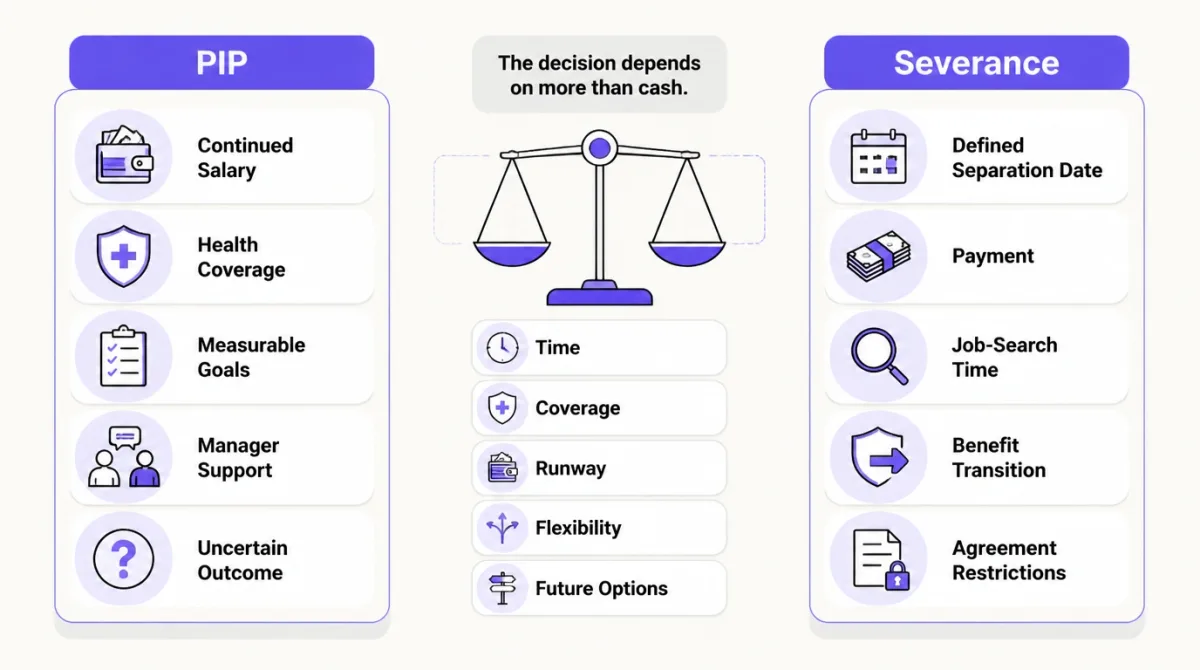
Neither option is automatically safer. A PIP offers continued employment with an uncertain outcome. Severance offers a defined exit, but the money is usually tied to a release and other obligations.
| Dimension | Stay on the PIP | Take the severance |
|---|---|---|
| Employment | You remain employed while trying to meet the plan | Employment ends on the date stated in the agreement |
| Pay | Salary and benefits continue while you remain employed | You receive the payment described in the agreement |
| Upside | You may meet the plan and keep the job | You gain a defined exit date and dedicated search time |
| Main uncertainty | Whether the goals are achievable and who decides the outcome | What you release, what restrictions remain, and when payment arrives |
| Benefits | Employer coverage generally continues while you remain eligible | Coverage may end; eligible workers may be able to elect COBRA or another option |
| Records | The PIP becomes part of the employer's internal documentation | The agreement may address reference language and rehire eligibility |
| Best fit | The plan is measurable, supported, and worth attempting | The package provides enough certainty and runway to justify leaving |
The choice is not only about money. It is also about time, health coverage, job-search capacity, future restrictions, and whether staying gives you a realistic path forward.
What a PIP Is, and What It Does Not Prove
A performance improvement plan is a formal document that identifies alleged performance gaps and sets expectations for improvement. A well-designed plan should give you enough detail to understand the problem, the required result, the deadline, the support available, and the consequence of missing the standard. SHRM's guidance on effective PIPs emphasizes specific examples, controllable objectives, a time frame, consequences, and documented check-ins.
A usable PIP usually covers:
- the performance concern, with dated examples;
- the standard or result you are expected to meet;
- measurable goals and the evidence used to assess them;
- milestones, check-ins, and a final review date;
- the manager, training, tools, or resources available to you;
- the person who makes the final decision;
- the possible consequence if the goals are not met.
Plans often use 30-, 60-, or 90-day periods, but those are practice examples, not universal legal standards. A shorter plan is not automatically unfair, and a longer one is not automatically genuine. The work, dependencies, and measurement method matter more than the round number.
A PIP also does not prove that termination is inevitable. SHRM's discussion of when PIPs are appropriate describes a PIP as a process that should provide a genuine opportunity to improve. The document alone does not tell you whether your employer is following that model. You have to test the plan in front of you.
Three PIP Patterns to Test Against the Evidence
These patterns are a decision framework, not a verdict about your employer's motive. Look for evidence, then keep the unknowns visible.
1. A genuine improvement opportunity
The goals map to your actual job, the examples are concrete, and the success standard can be measured. Your manager schedules check-ins, identifies available support, and is willing to resolve dependencies or changing priorities in writing.
That does not guarantee you will pass. It does mean you can see a credible route to passing. If the role is still worth keeping, this version may justify a serious attempt.
2. A documentation or pre-decided exit process
The plan reads more like a record than a roadmap. The examples are vague, the baseline is missing, the targets depend on work you do not control, or the standard shifts after you meet it. Support is promised verbally but never assigned.
Those are warning signs, not proof. Your next move is to ask for the missing specifics. If the employer will not clarify how success will be measured, you should value the PIP as a much less certain option.
3. An organizational selection or quota-style process
Sometimes an employee is told that a team had to place someone on a PIP, that leadership made the call, or that the manager did not choose the process. You cannot verify a company-wide policy from one conversation. You can ask whether the standards are individual, who approved the plan, and whether the final decision rests with your manager, HR, or another leader.
Do not spend your limited review period trying to read your manager's mind. Ask what is measurable, who owns each dependency, and what document controls the decision.

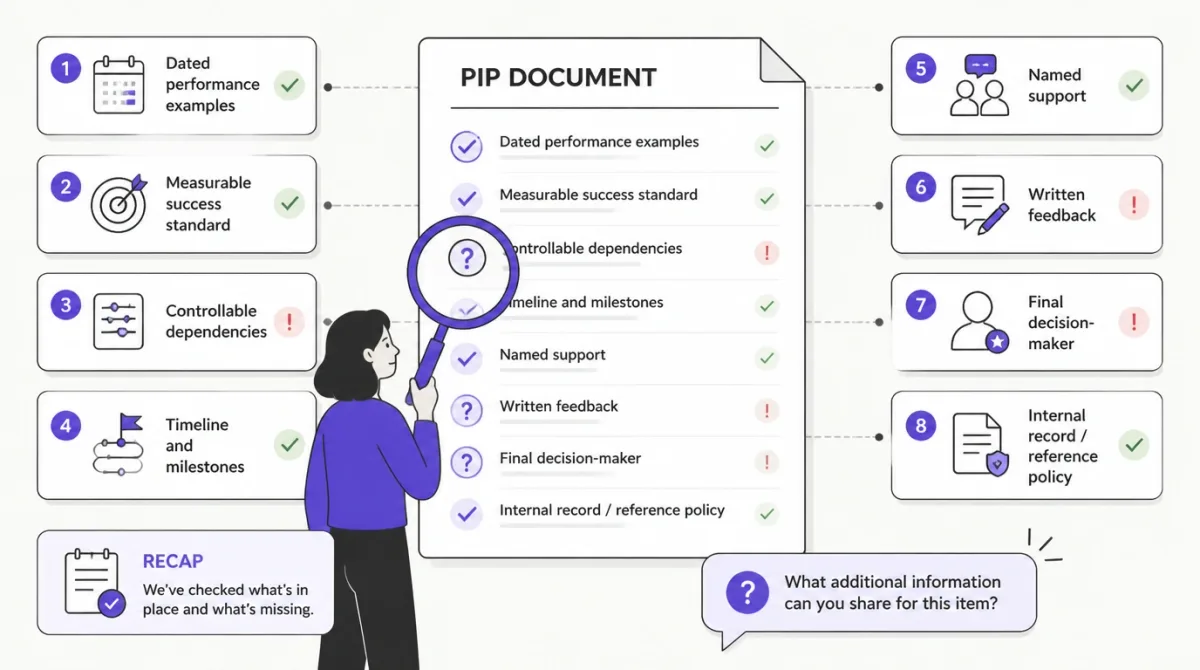
Audit the Written PIP Before You Decide
Do not accept "show improvement" as a measurable goal. You need a plan you can work and document.
| Audit item | What a useful written answer looks like | What to ask if it is missing |
|---|---|---|
| Performance examples | Dates, deliverables, expected standard, and impact | "Which specific examples establish the current baseline?" |
| Success measures | A result, metric, quality standard, or observable behavior | "What evidence will show that I have met this goal?" |
| Control | Dependencies and owners are named | "How will delays or priority changes outside my control be handled?" |
| Timeline | Start date, milestones, check-ins, and final review date | "What will be reviewed at each checkpoint?" |
| Support | Named manager, training, access, staffing, or tools | "Who provides each resource, and by what date?" |
| Feedback | Regular meetings followed by written summaries | "Who will document progress and required corrections after each check-in?" |
| Final decision | Decision-maker, evidence considered, and stated consequence | "Who determines the outcome, and which criteria control that decision?" |
| Internal record | Who can access the document and what reference policy applies | "What information is provided in employment verification, and how is rehire eligibility handled?" |
After each check-in, send a short recap: what was reviewed, what was completed, what remains, and which dependency changed. Keep it factual. You are building an operating record, not writing a closing argument.
One question matters after you finish the audit: Can I meet this plan? A separate question matters just as much: Even if I meet it, do I still want to stay? Passing a PIP does not repair trust, role fit, or a damaged working relationship by itself.
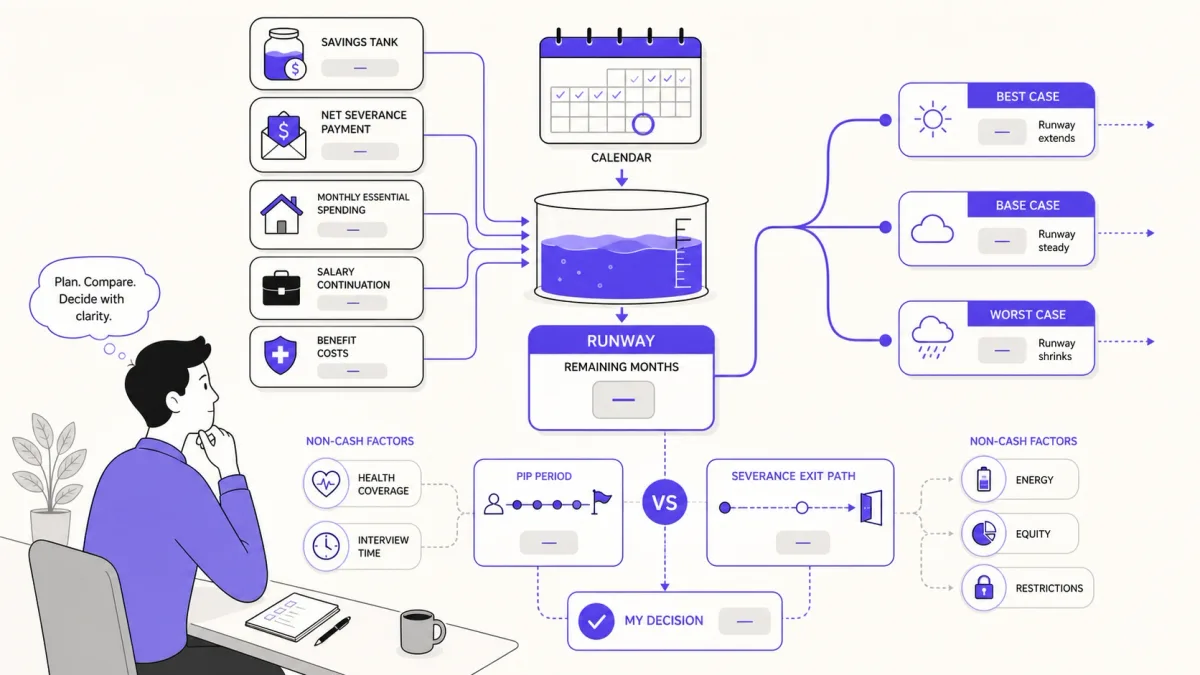
Compare PIP and Severance With a Runway Model
This is where the decision stops being a debate about pride and becomes a planning problem.
Step 1: List the guaranteed terms
For the PIP path, record salary through the review date, benefit coverage, the review date, and what the document says happens if you do not meet the plan. Do not count a possible post-PIP severance unless it is written.
For the exit path, record the separation date, payment amount, payment date, estimated tax withholding, benefit end date, PTO treatment, bonus or commission treatment, equity impact, and every condition attached to payment.
Step 2: Calculate usable runway
Use after-tax estimates where possible:
Runway in months = (liquid savings + estimated net guaranteed payments) / essential monthly spending
Run three scenarios:
- Best case: You meet the PIP and remain employed, or you leave and find a job quickly.
- Base case: The search takes your current realistic estimate.
- Worst case: The PIP ends in termination, no unwritten package appears, or the search takes longer than expected.
Suppose you have $18,000 in liquid savings, essential monthly spending of $4,500, and an estimated $12,000 in net severance. The exit path provides about 6.7 months of runway: $30,000 divided by $4,500. If staying on a 60-day PIP lets you cover expenses from current pay and leave savings untouched, it may delay the point when that runway starts. If the PIP consumes all your search time and ends without severance, the apparent advantage may disappear.
Those numbers are fictional. Replace them with your own. Gross severance is not spendable cash, and the tax treatment of payments, equity, and benefits can be complicated.
Step 3: Price the terms that are not cash
A package with less money may still be stronger if it includes paid job-search time, health premium support, a later equity vesting date, an agreed reference, or fewer restrictions. A larger number may be weaker if payment is delayed, subject to a clawback, or tied to broad obligations.
Do the same on the PIP side. Continued health coverage, salary, and a chance to preserve the job have value. So do your time, energy, and ability to interview. Put each item in the comparison instead of pretending the lump sum is the whole deal.
Choose Among Four Action Paths
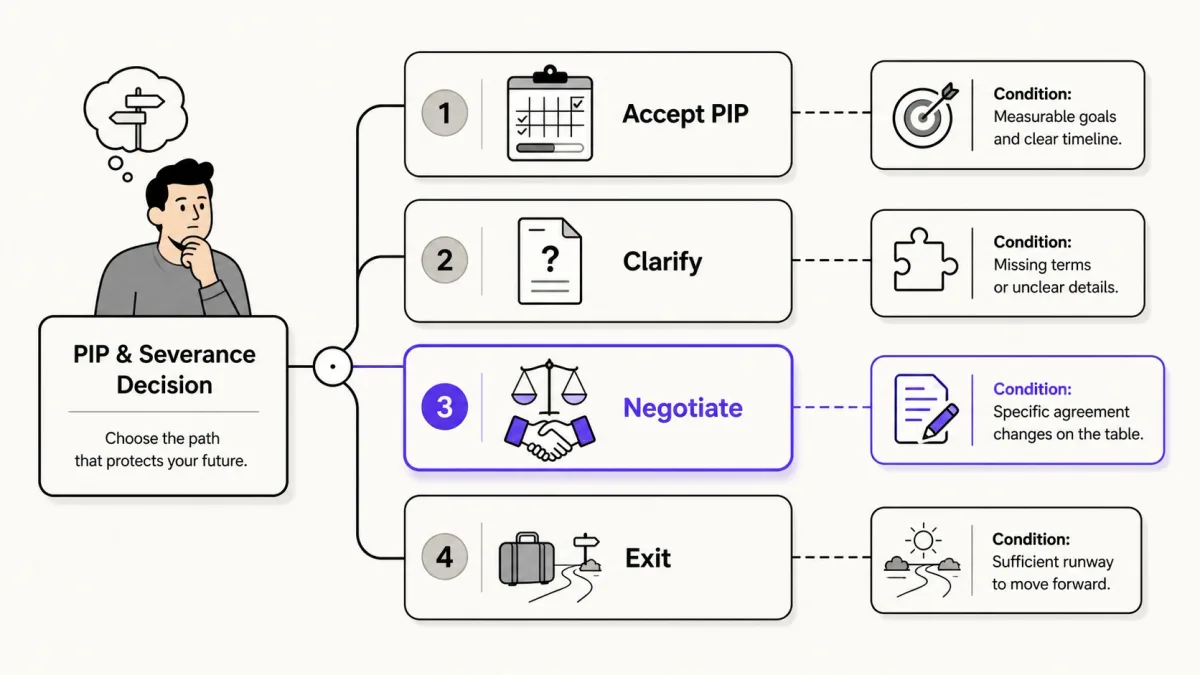
You are not limited to "accept immediately" or "walk away." There are four practical paths.
Accept the PIP
Choose this path when the goals are specific, most of the result is within your control, support is real, and continued employment is worth the risk. Treat the plan like a high-visibility project. Track every deliverable, send concise recaps, and raise blockers before a deadline passes.
Keep your job search alive. That is not disloyal; it is basic risk management. These job-search tips while you are still employed can help you protect time for both.
Clarify before committing
Choose this when the documents are incomplete, the decision deadline is unclear, or the written plan conflicts with what your manager said. Ask for the full terms and a reasonable review period. Confirm that you have received the documents without saying you agree to either option.
If the employer clarifies the standard, you can make a better decision. If it does not, the uncertainty belongs in your runway model.
Negotiate the exit
You can ask for changes. The employer can refuse. Keep the request specific and connect it to a term you are being asked to accept.
Reasonable items to review include:
- severance amount and payment timing;
- salary continuation or paid job-search time;
- health coverage or COBRA premium support;
- bonus, commission, PTO, and equity treatment;
- reference language and rehire eligibility;
- release, confidentiality, non-disparagement, cooperation, and clawback terms;
- the review deadline and separation date.
Do not assume that changing the label on the separation guarantees unemployment benefits or a better background check. Ask what the agreement will say, then verify the consequences with the relevant state agency or adviser.
Take the exit
Choose this when the PIP cannot be measured, the relationship is no longer worth repairing, or the written package gives you enough runway and flexibility to make a clean transition. Taking severance is not an admission that every performance allegation is correct. It is a contract decision.
Do not resign first and hope the package follows. Confirm the separation date, payment, benefits, release, and reference terms in the signed agreement.
How to Review a Severance Agreement Before You Sign
A severance agreement commonly exchanges money or benefits for a release of claims and other promises. The EEOC's guidance on waivers in severance agreements explains that valid waivers require consideration, meaning something of value beyond what the employee is already entitled to receive.
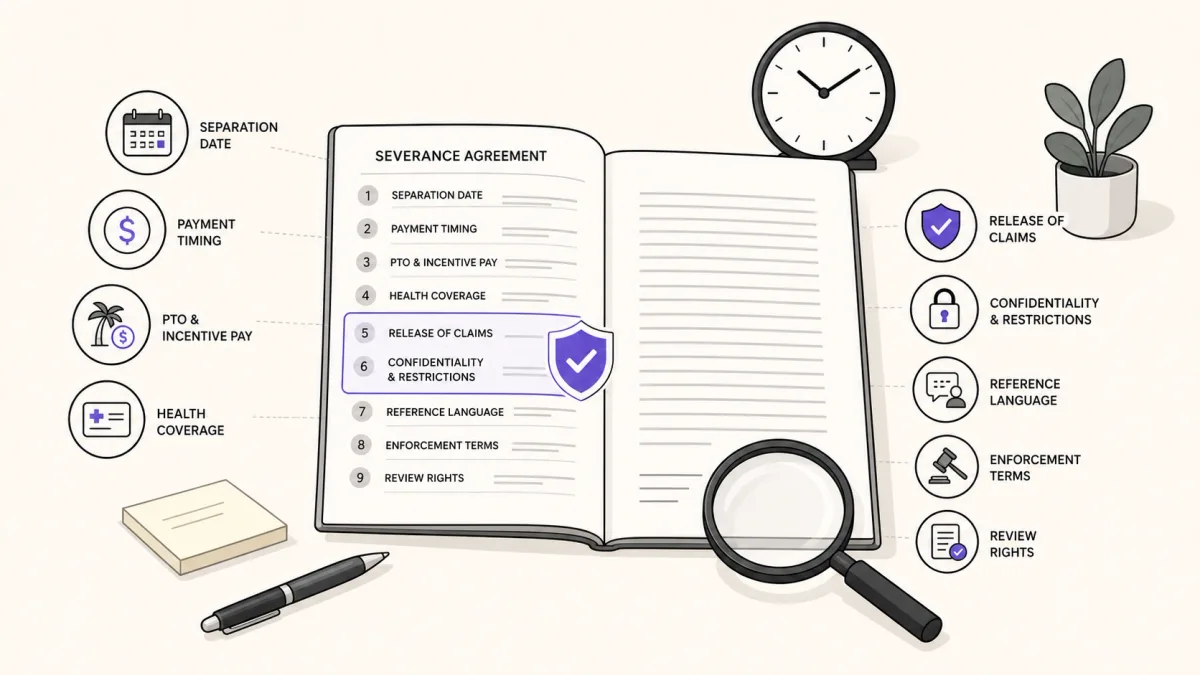
Read these terms line by line:
| Term | What to confirm |
|---|---|
| Separation date | Your last working day, last day as an employee, and whether you remain available during paid notice |
| Payment | Gross amount, estimated withholding, payment date, installments, and conditions that can delay or stop payment |
| Amount already owed | Wages, approved expenses, PTO where applicable, and other amounts owed under applicable law, contract, or policy |
| Incentive pay | Bonus, commission, equity vesting, option exercise deadlines, and any clawback |
| Health coverage | Employer coverage end date, COBRA notice, election timing, and any premium subsidy |
| Release of claims | Which federal, state, and local claims are covered, and whether the language reaches unknown or future claims |
| Restrictions | Confidentiality, non-disparagement, non-solicit, non-compete, cooperation, and return-of-property duties |
| Enforcement | Arbitration, governing law, legal fees, repayment, or liquidated-damages language |
| Employment record | Reference wording, employment verification, departure description, and rehire eligibility |
| Review rights | Deadline to consider, right to consult counsel, and any revocation period |
Federal law does not create a general right to severance pay under the Fair Labor Standards Act. The U.S. Department of Labor's severance pay guidance describes severance as a matter of agreement between an employer and employee or the employee's representative. An employer plan, contract, collective bargaining agreement, or state law may add rights that a general article cannot determine.
If a term matters, put it in the agreement. A manager's promise about a reference or payment date is not a substitute for contract language.
U.S. Legal and Benefits Guardrails
This section tells you what to verify. It cannot decide eligibility or the legality of your employer's conduct.
Age-discrimination waivers have specific federal rules
If you are 40 or older and the agreement asks you to waive claims under the Age Discrimination in Employment Act, the Older Workers Benefit Protection Act (OWBPA) sets specific conditions. According to the EEOC guidance linked above, an individual waiver must generally give you at least 21 days to consider the final offer and 7 days to revoke after signing. A qualifying group termination or exit program generally requires at least 45 days and additional disclosures.
Those windows do not apply to every severance agreement. They apply to specific waivers of age-discrimination claims. The agreement must also advise you in writing to consult an attorney and name the ADEA. You still need individual advice about the rest of the document.
Unemployment is decided under state law
The Department of Labor's termination guidance explains that each state administers its own unemployment program. Eligibility depends on state law and the facts of the separation. Severance amount, payment timing, and the reason reported for separation may matter, but there is no reliable national yes-or-no answer.
Do not budget unemployment benefits until you have checked the agency for the state where you worked and understood how it treats your payment structure.
COBRA can preserve coverage, but it can be expensive
The Department of Labor's COBRA guidance says eligible workers and family members may be able to continue group health coverage temporarily after voluntary or involuntary job loss. COBRA generally applies to group health plans sponsored by employers with 20 or more employees in the prior year. Qualified individuals may have to pay the entire premium, up to 102% of the plan's cost.
Ask for the exact coverage end date, election notice, monthly premium, first payment deadline, and any employer subsidy. Compare COBRA with a spouse's plan, a Marketplace plan, or another available option before pricing the package.
Protected rights and contracts need individual review
Timing alone does not prove wrongful termination. It does justify faster review when a PIP or exit offer follows protected leave, a disability accommodation request, a discrimination complaint, a wage or safety report, or another protected action. USAGov's wrongful termination guide summarizes several illegal reasons for termination and directs workers to the appropriate agencies.
The same caution applies to public-sector employment, union agreements, executive contracts, and immigration deadlines. Get advice before the response deadline, not after the document is signed.
Three Emails That Buy You Clarity
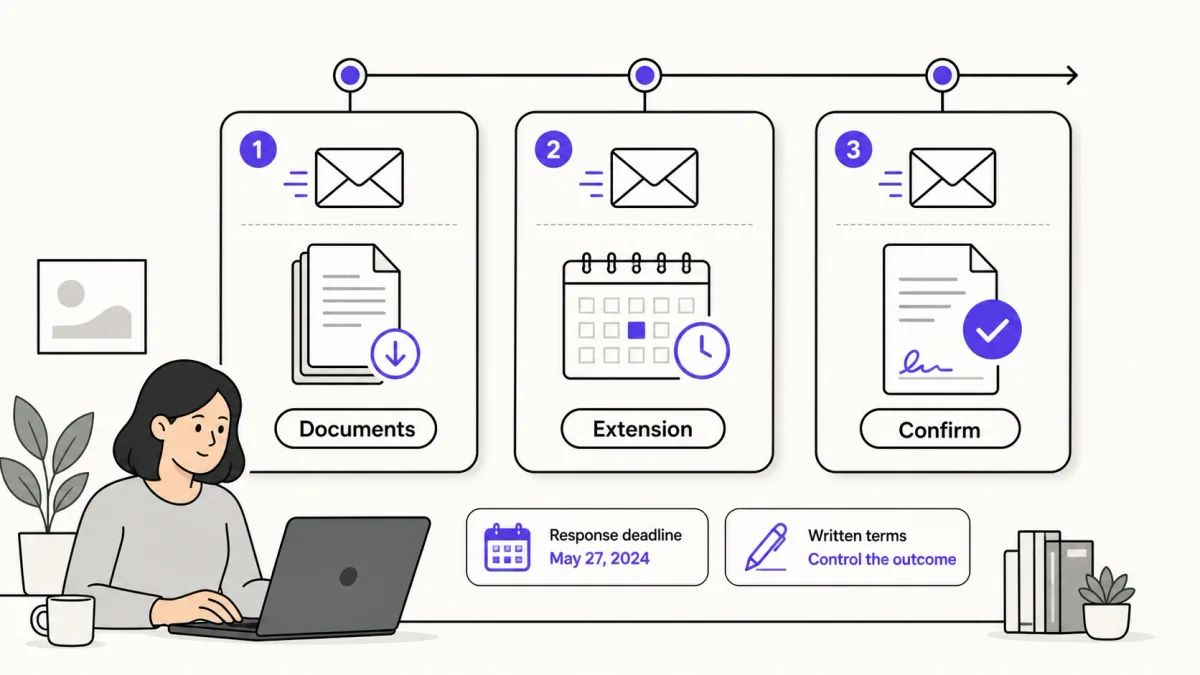
Keep these messages short. You are requesting terms, not litigating the case by email.
Request the complete documents
Subject: Request for written PIP and separation terms

Hi [Name],

Thank you for explaining the options today. Before I respond, please send me the complete written PIP, the written separation terms, the benefits information, and the deadline for choosing between them.

Please also confirm the consequence of each option and whether acknowledging receipt of the documents indicates agreement.

Thank you,
[Your name]
Ask for a reasonable review extension
Subject: Request to extend the review deadline

Hi [Name],

I received the final written materials on [date]. I am reviewing the performance, compensation, benefits, and release terms and would like to request an extension of the response deadline from [current date] to [requested date].

This request is to allow a careful review. I am not accepting or declining either option in this email.

Thank you,
[Your name]
Confirm your decision and the controlling terms
Subject: Confirmation of my selection

Hi [Name],

I am selecting [the PIP / the separation arrangement] based on the final written documents dated [date]. Please confirm receipt and that the controlling terms include [separation date, payment date, benefits end date, or PIP review dates].

If any of those terms differ from the final documents, please let me know in writing before the selection becomes effective.

Thank you,
[Your name]
Do not add accusations, legal conclusions, or a long defense of your performance to these messages. Save the debate for the right setting and the right adviser.
How to Explain the Outcome in Your Next Interview
Your next employer usually needs a clear, credible transition story, not a courtroom transcript. Answer the question asked, stay truthful, and move forward.
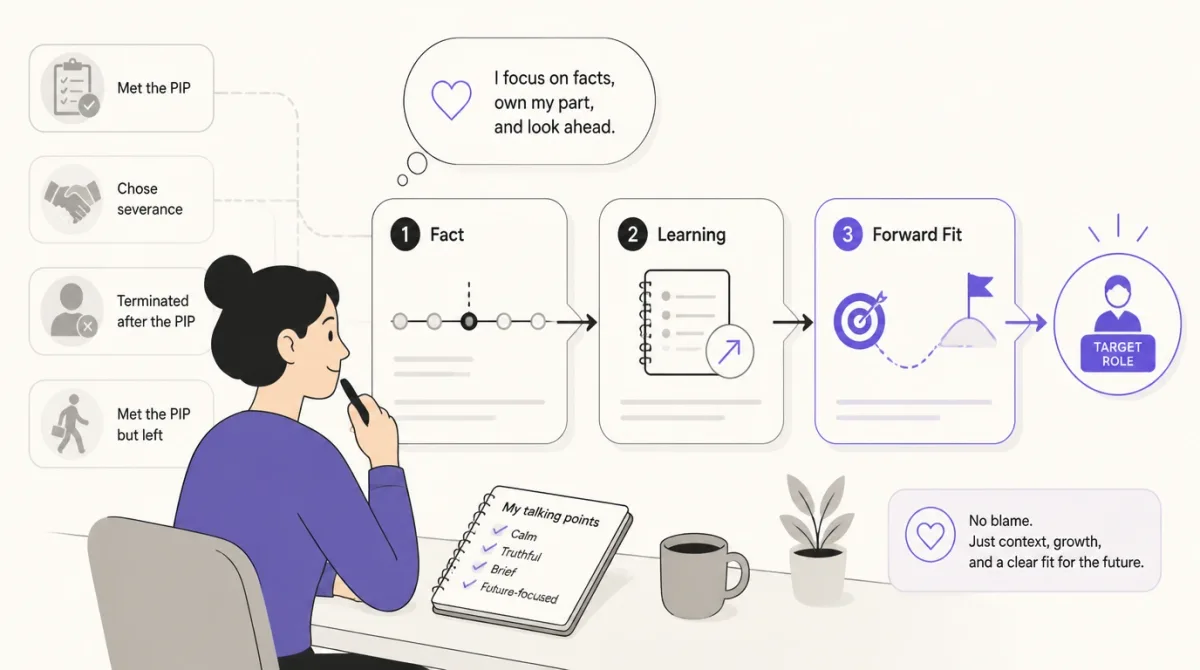
Use three beats:
- Fact: State what happened in one sentence.
- Ownership or learning: Name what you changed, clarified, or learned.
- Forward fit: Explain why the new role is a better match.
Keep the explanation honest, brief, and constructive. You do not need to volunteer every internal document. If an interviewer asks directly about a PIP or termination, do not lie.
You accepted the PIP and met the goals
"The company put a formal improvement plan in place. I worked against the written goals, met the required outcomes, and learned that I do my best work when priorities and ownership are explicit. I am now looking for a role where that operating style matches the team from the start."
You chose the separation package
"The company raised concerns about the role fit and offered a defined transition arrangement. I chose the separation package and used the time to focus on roles where my strengths in [relevant strength] match the work more closely."
The PIP ended in termination
"My employment ended after a performance process. The clearest lesson was [specific, truthful lesson], and I have since changed how I [relevant behavior]. This role appeals to me because [specific forward fit]."
You met the PIP but still chose to leave
"I met the plan's written objectives, but the process also made it clear that the role was not the right long-term fit. I am looking for [scope, team, or work environment] where I can contribute more consistently."
Never call the separation a restructuring or mutual agreement unless that is true. Practice the version you can defend calmly. These guides on preparing for a job interview and answering why you are looking for a new job can help you tighten the rest of the conversation.
One-Page PIP vs Severance Worksheet
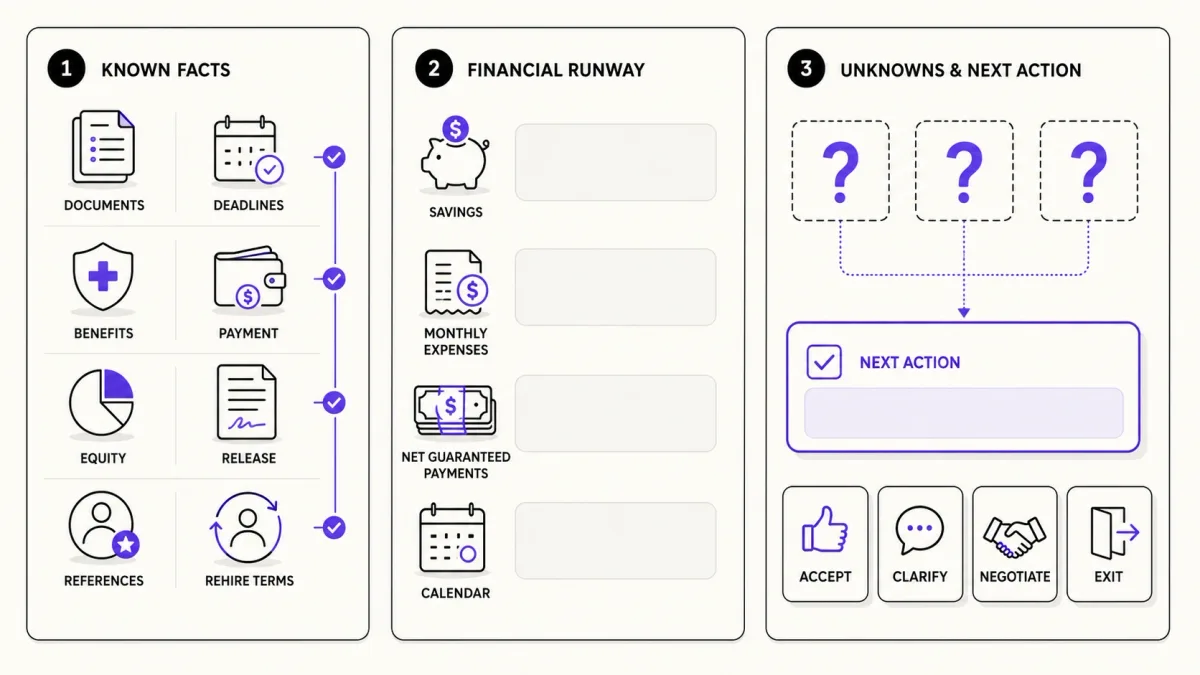
Fill this out before you respond.
Known facts
- Final PIP received on:
- Final severance agreement received on:
- Decision deadline:
- PIP goals, milestones, and final reviewer:
- Separation date and payment date:
- Health coverage end date and COBRA cost:
- Bonus, commission, PTO, and equity treatment:
- Release and restrictive terms:
- Reference and rehire terms:
Runway
- Liquid savings:
- Estimated net guaranteed payments:
- Essential monthly spending:
- Runway if I take severance:
- What happens to savings during the PIP period:
- Worst case if the PIP ends without an additional package:
Unknowns to resolve
Next action
- I will send this question by:
- I will verify benefits or legal issues with:
- I choose: accept / clarify / negotiate / exit
- The written facts supporting that choice are:
Make the Decision You Can Explain to Yourself
The right PIP vs severance decision is not the one that sounds toughest in the meeting. It is the one supported by the written goals, the written package, your actual runway, and the risk you can carry.
Get the terms. Price both paths. Protect the story you will tell next. When you are ready to interview, you can practice your transition explanation with an interview copilot until it sounds clear rather than defensive.
General U.S. career information; not legal, tax, unemployment, immigration, or benefits advice. Verify state-specific rules and seek qualified advice before acting. Last reviewed August 26, 2026.