

Updated August 31, 2026. Latest available BLS wage data: May 2025.
Radiologic technologists and technicians earned a median $80,110 per year, or $38.52 per hour, in May 2025, according to the U.S. Bureau of Labor Statistics. That is the national midpoint: half earned more and half earned less. It is not a guaranteed starting salary or a prediction of what every employer will offer.
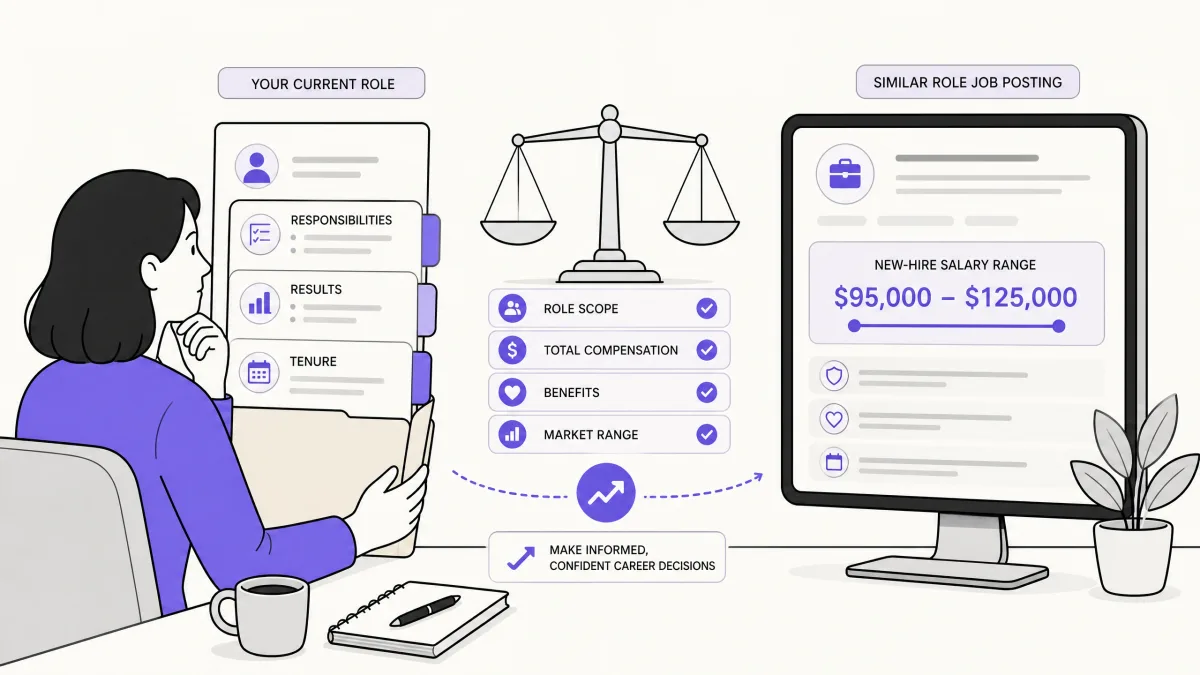
Your actual rad tech salary depends on your location, experience, credentials, work setting, schedule and employment type. Use the national figure as a reference point, then compare it with current positions for the same role in your local market.
Data note: This is a 2026 guide using the latest official wage data available at publication. The wage estimates describe May 2025, not projected 2026 earnings.
Rad Tech Salary at a Glance
The national wage distribution provides more context than a single median:
| National pay level | Annual wage | How to interpret it |
|---|---|---|
| 10th percentile | $55,980 or less | Lower end of the national distribution; not a formal entry-level rate |
| 25th percentile | $64,810 | One-quarter earned less and three-quarters earned more |
| Median | $80,110 | National midpoint |
| 75th percentile | $98,750 | Upper quarter of the national distribution |
| 90th percentile | $118,660 or more | Upper end, often associated with experienced workers or higher-paying markets |
These are nationwide estimates across experience levels, employers and locations. A new graduate should not treat the 10th percentile as an automatic starting salary, just as an experienced technologist should not assume the 90th percentile is available in every market.
Why Salary Websites Show Different Numbers
Salary pages may use completely different inputs:
| Source type | What it measures | Best use |
|---|---|---|
| BLS median | The midpoint of an occupational wage distribution | National and state benchmarking |
| BLS percentile | Position within the national wage distribution | Understanding the wider pay range |
| Job posting rate | What an employer advertises for a specific opening | Evaluating a current local market |
| Self-reported salary | Compensation submitted by workers | Supplemental context, not a standalone benchmark |
| Travel package | Taxable wages plus possible stipends and other components | Comparing individual travel contracts |
Before relying on any salary number, identify the occupation, location, data period and pay definition. A Los Angeles posting, a national median and a travel package do not answer the same question.

Rad Tech Salary by State
Location produces some of the largest wage differences. The following markets had the highest reported median annual wages for radiologic technologists and technicians in the May 2025 data:
| Location | Median annual wage |
|---|---|
| California | $121,260 |
| Massachusetts | $103,620 |
| District of Columbia | $102,770 |
| Oregon | $102,290 |
| Washington | $102,090 |
| U.S. national median (benchmark) | $80,110 |
The District of Columbia is included as a labor market rather than a state. These figures are nominal wages and have not been adjusted for housing, taxes, transportation or other living costs.
How to Compare Locations Fairly
A higher state median does not automatically make a location financially better. Before moving, compare:
- The wage range for your exact city and role.
- Your likely base rate rather than the statewide median alone.
- Housing, commuting and state or local tax costs.
- Available shifts, overtime and on-call requirements.
- The number of employers hiring for your current or desired modality.
Use the BLS state and area data as the official benchmark, then review several current employer postings. If a posting does not show pay, ask for the approved pay band before advancing too far in the interview process.

What Affects a Rad Tech's Pay?
Two technologists in the same city may receive different offers because their responsibilities and working conditions differ.
The table below shows the main factors to review before deciding whether a salary is competitive. It also shows where each factor is examined in more detail later in this guide.
| Factor | How it can affect pay | What to verify | Where explained |
|---|---|---|---|
| Location and local demand | Wage bands can differ by state, metro area and the number of employers competing for qualified staff | Local pay range, open positions, housing and commuting costs | Rad Tech Salary by State |
| Experience | Employers may place experienced technologists higher within an established pay band | How prior experience is credited and whether specialty experience changes placement | Experience and Responsibilities |
| Credentials and modality | Additional credentials may qualify you for different roles or pay classifications | Whether the credential is required, locally in demand and tied to a documented pay change | Credentials and Cross-Training and Pay by Imaging Modality |
| Employer and work setting | Hospitals, outpatient centers, physician offices and government facilities may use different compensation structures | Base-pay range, benefits, staffing model and advancement structure | Work Setting and Schedule |
| Shift and schedule | Nights, weekends and holidays may qualify for differentials when an employer offers them | Exact differential, eligible hours and whether it applies during overtime | Work Setting and Schedule and Questions to Ask During the Interview |
| On-call, callback and overtime | Additional required or optional hours can change annual cash compensation | Standby rate, callback minimum, overtime rules and how often the hours realistically occur | Build a Total Compensation Worksheet |
| Union contract or formal pay scale | A contract or step system may determine starting placement, increases and differentials | Current agreement, step-credit rules, progression dates and applicable job classification | How to Compare a Rad Tech Job Offer |
| Employment type | Staff, PRN and travel roles package hours, benefits and other compensation differently | Guaranteed hours, benefit eligibility, contract gaps and stipend rules | Staff, PRN and Travel Rad Tech Pay |
| Scope and leadership duties | Lead, education, quality or supervisory work may fall into a different classification | Written responsibilities, title, authority and corresponding pay band | Experience and Responsibilities and Advanced Career |
| Benefits and bonus terms | Health coverage, retirement, paid leave and bonuses can materially change total compensation | Employer contribution, vesting, repayment clauses and eligibility dates | Build a Total Compensation Worksheet |
Experience and Responsibilities
Experience can affect the level at which an employer places you within its pay band. Relevant factors may include:
- Ability to work independently
- Trauma, operating room or emergency department experience
- Fluoroscopy or mobile imaging responsibilities
- Willingness to take call
- Experience training students or new employees
- Lead, quality or supervisory responsibilities
There is no reliable national rule stating that every additional year of experience produces a fixed raise. Compare the employer's written pay scale and current local positions instead.
Credentials and Cross-Training
Additional credentials can qualify you for roles with different responsibilities, but certification does not automatically guarantee a raise. The financial value depends on whether local employers need that credential and whether the role falls into a higher pay band.
Before paying for additional training, check:
- How many nearby employers are hiring for that modality
- Whether the credential is required or merely preferred
- Whether the employer provides clinical training
- Whether a pay increase is documented after certification
- How long it may take to recover tuition and examination costs
Work Setting and Schedule
Hospitals, outpatient imaging centers, physician offices and government facilities may use different pay structures. Schedule-related compensation may include night, weekend, holiday, standby, callback or overtime pay.
Do not assume these amounts are included in an advertised range. Ask the employer to separate the base rate from every differential and explain how each component is calculated.

Pay by Imaging Modality
"Rad tech" is often used informally for several imaging careers, but the BLS tracks some of them as separate occupations. Comparing them without explaining the classification can produce a misleading salary claim.
| Career path | BLS occupation | May 2025 median |
|---|---|---|
| Radiologic technologists and technicians | 29-2034 | $80,110 |
| MRI technologists | 29-2035 | $95,480 |
| Nuclear medicine technologists | 29-2033 | $101,370 |
| CT or mammography technologists | Included within broader occupational reporting | No separate national median in the cited table |
MRI and nuclear medicine figures should not be presented as the normal salary for a general X-ray technologist. They represent different occupational classifications, training requirements and labor markets.
X-Ray, CT and Mammography
CT and mammography are common post-primary paths for radiologic technologists, but the national BLS table does not provide a separate median for each one. Use current local postings, employer pay scales and professional salary surveys to estimate the value of these credentials.
The strongest opportunity is not necessarily the modality with the highest national number. It is the one that combines local demand, an achievable training path and working conditions you are prepared to accept.
Staff, PRN and Travel Rad Tech Pay
Employment type changes both the amount and reliability of compensation.
| Employment type | Typical structure | Questions to ask |
|---|---|---|
| Staff | Base pay, benefits and possible differentials | Are hours guaranteed? What benefits does the employer fund? |
| PRN or per diem | Potentially higher hourly rate with limited or no guaranteed hours | Is there a minimum shift commitment? Are benefits available? |
| Travel | Contract wages plus possible stipends and reimbursements | What portion is taxable? What eligibility rules apply? Are hours guaranteed? |
A travel contract's advertised weekly package is not directly comparable with a staff salary. Contract gaps, cancelled hours, insurance, retirement contributions, paid leave and stipend eligibility can materially change the result.
Do not multiply one weekly travel package by 52 and describe the result as guaranteed annual income. First determine how many paid weeks are realistic and which components you are eligible to receive.

Is Becoming a Rad Tech Worth It?
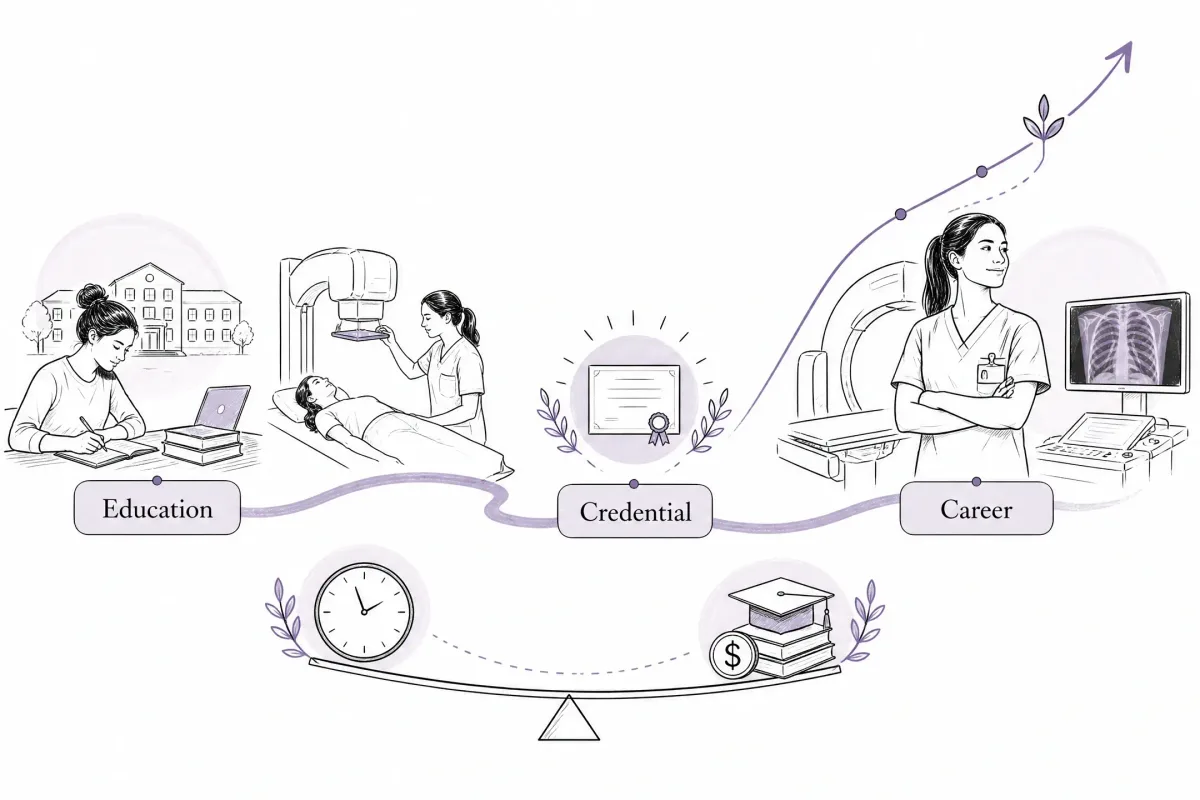
It can be a strong career choice for someone who wants a relatively direct route into medical imaging and is comfortable with patient care, technical responsibilities and variable schedules. It is not a universal fit.
Education, Certification and Licensing
The typical entry-level education is an associate degree. Under ARRT's primary eligibility pathway, candidates must earn an associate degree or higher, complete an ARRT-approved educational program, meet ethics requirements and pass the examination. State licensing is separate; ARRT reports that more than three-quarters of states have licensing laws covering radiologic technology.
Before enrolling, confirm:
- The program's ARRT eligibility status
- Total tuition, fees and clinical requirements
- Your state's licensing rules
- Local new-graduate pay bands
- Placement support and recent program outcomes
Job Outlook and Working Conditions
BLS projects employment of radiologic technologists and technicians to grow 5% from 2025 to 2035, with approximately 15,300 openings per year over the decade. Openings include growth as well as replacement needs.
The work may involve long periods of standing, positioning or assisting patients, exposure-control procedures and evening, weekend or on-call schedules. Career value should therefore be judged using salary, education cost, working conditions and long-term mobility rather than salary alone.
How to Compare a Rad Tech Job Offer
An offer becomes useful only when you convert it into comparable compensation.
Build a Total Compensation Worksheet
Complete the following table for every offer:
| Component | What to record | Where to verify it |
|---|---|---|
| Base rate | Hourly or annual base pay | Written offer |
| Guaranteed hours | Minimum paid hours per week | Contract or HR |
| Differentials | Night, weekend and holiday rules | Pay policy |
| On-call pay | Standby and callback rates | Department manager or HR |
| Overtime | Eligibility and calculation method | Pay policy |
| Bonus | Amount, payment date and repayment clause | Written offer |
| Health coverage | Employee premium and employer contribution | Benefits summary |
| Retirement | Match, vesting and eligibility | Plan document |
| Paid leave | PTO accrual and holiday policy | Benefits summary |
| Travel components | Taxable wage, stipends and eligibility | Contract and qualified tax adviser |
Use two calculations:
Comparable annual cash compensation
Base pay + guaranteed differentials + realistic call/callback pay + expected overtime + non-repayable bonus
Estimated total compensation
Comparable annual cash compensation + employer-funded benefits
Calculate a conservative version without optional overtime and a second version based on a realistic schedule. This prevents an uncertain component from making one offer look artificially stronger.

Questions to Ask During the Interview
Use the interview to uncover the terms that are missing from the posting:
- What is the approved base-pay range for this position?
- How does the employer determine placement within that range?
- Which shifts, weekends or holidays are required?
- What are the standby and callback rules?
- Are hours guaranteed for staff, PRN or travel employees?
- Does the position include a sign-on bonus or repayment agreement?
- Is there a pay review after orientation or an additional credential?
- Does the department support cross-training?
Practice the questions aloud so they sound direct rather than confrontational. Candidates who want structured rehearsal can use GreatOffer AI's real-time AI interview copilot to prepare concise answers and follow-up questions. Use any assistance during a live interview only when permitted by the employer and interview platform.
If an interviewer asks about other applications, prepare a truthful answer that preserves your leverage without creating artificial urgency. See how to discuss competing interviews.
How to Negotiate a Rad Tech Offer
A defensible counteroffer is based on the local role, not the national median alone.
- Clarify the complete offer. Confirm the base rate, schedule, call expectations and benefits.
- Choose relevant evidence. Use local postings, the employer's stated range and comparable responsibilities.
- Explain your value. Mention credentials, relevant clinical experience, independent coverage or difficult-to-fill shifts.
- Make a specific request. Ask for a base rate or placement within the existing band rather than saying only that you want more.
- Consider alternatives. If the base rate is fixed, discuss a review date, schedule, education support, bonus terms or cross-training.
A simple response can be:
Thank you for the offer. Based on the responsibilities, the posted range and my experience with [relevant qualification], I would like to discuss a base rate of [supported amount]. Is there flexibility within the approved range?
Replace the brackets with real information. Do not invent competing offers or misrepresent credentials.
How to Increase Your Rad Tech Salary
The most practical path depends on your experience and local market.
Early Career
- Build independent clinical competence
- Document trauma, operating room or mobile experience
- Learn how the employer's pay scale works
- Identify locally requested post-primary credentials
- Apply for appropriate roles even if you do not meet every preferred qualification
See how to decide whether to apply when you do not meet every listed requirement.
Mid-Career
- Compare your rate with current external postings
- Cross-train where employers have documented demand
- Consider a different shift or work setting
- Evaluate PRN work without assuming guaranteed hours
- Ask what is required for a senior or lead classification
Long-tenured employees should also watch for pay compression, where current hiring rates move faster than existing employee pay. Review how to respond when a new hire appears to make more than you.
Advanced Career
- Pursue lead, education, quality or supervisory responsibilities
- Assess whether relocation improves real purchasing power
- Compare travel contracts using annualized, conservative assumptions
- Evaluate whether another imaging occupation requires additional formal education
- Decide whether added responsibility supports the compensation offered

The Bottom Line
The national rad tech salary is a useful reference, not a complete answer. Start with the May 2025 median of $80,110, then narrow the comparison to your location, credential, work setting and schedule.
When evaluating an offer, separate base pay from differentials, overtime, bonuses and benefits. When planning your next move, choose credentials or working arrangements supported by real local demand rather than the largest number on a national salary page.
Disclaimer: This article provides general educational information. Salary, licensing, employment, contract and tax rules vary by location and individual circumstances. Verify current terms with the employer, relevant licensing authority and a qualified professional where appropriate.
Sources
- U.S. Bureau of Labor Statistics: Radiologic and MRI Technologists
- BLS Occupational Employment and Wage Statistics: State Data
- BLS Employment Projections and Occupational Characteristics
- O*NET: Radiologic Technologists and Technicians
- ARRT Primary Eligibility Requirements
- ARRT State Licensing Resources
- U.S. Bureau of Labor Statistics: Nuclear Medicine Technologists