

Usually, yes—but it depends on which requirement you are missing.
Apply when you can perform the role’s core work and the missing items are preferred, transferable, or realistically trainable. Pause when you need to build stronger evidence first. Do not assume that tailoring your resume can overcome a genuine legal, eligibility, licensing, or day-one capability requirement.
What Does “Not Meeting All the Requirements” Actually Mean?
A job description usually combines several types of requirements. They should not all be treated as equally important.
A posting may include:
- Skills and tools
- Years of experience
- Education or credentials
- Industry knowledge
- Work authorization
- Location, schedule, travel, or availability requirements
- Preferred or “nice-to-have” qualifications
Words such as required, preferred, desired, plus, and or equivalent provide useful clues. However, the practical question is what the requirement enables you to do in the role.
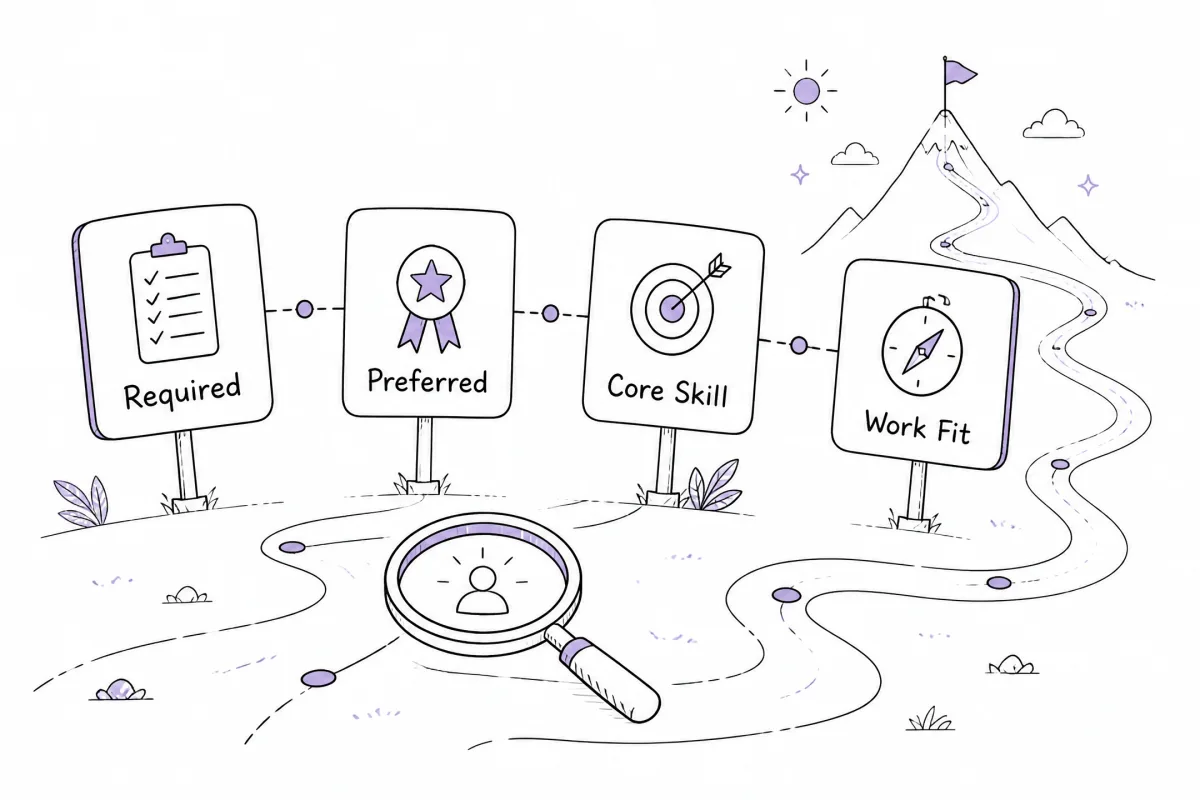
| Requirement type | What it usually means | How to approach it |
|---|---|---|
| Eligibility or legal requirement | You may not be able to work in the role without it | Verify before applying |
| Required license or credential | The job may require proof before you can start | Check the employer and official rules |
| Core day-one skill | You need to perform an important task quickly | Apply only if you have strong equivalent evidence |
| Preferred skill | It would make you a stronger candidate but may not be essential | Usually worth applying |
| Specific tool or platform | The employer prefers experience with a particular system | Show adjacent tools and a learning plan |
| Work condition | The job requires a location, shift, travel level, or schedule | Confirm the practical fit first |
Do not use the number of boxes you check as your only test. Missing one minor tool may be less important than missing one skill the role uses every day.
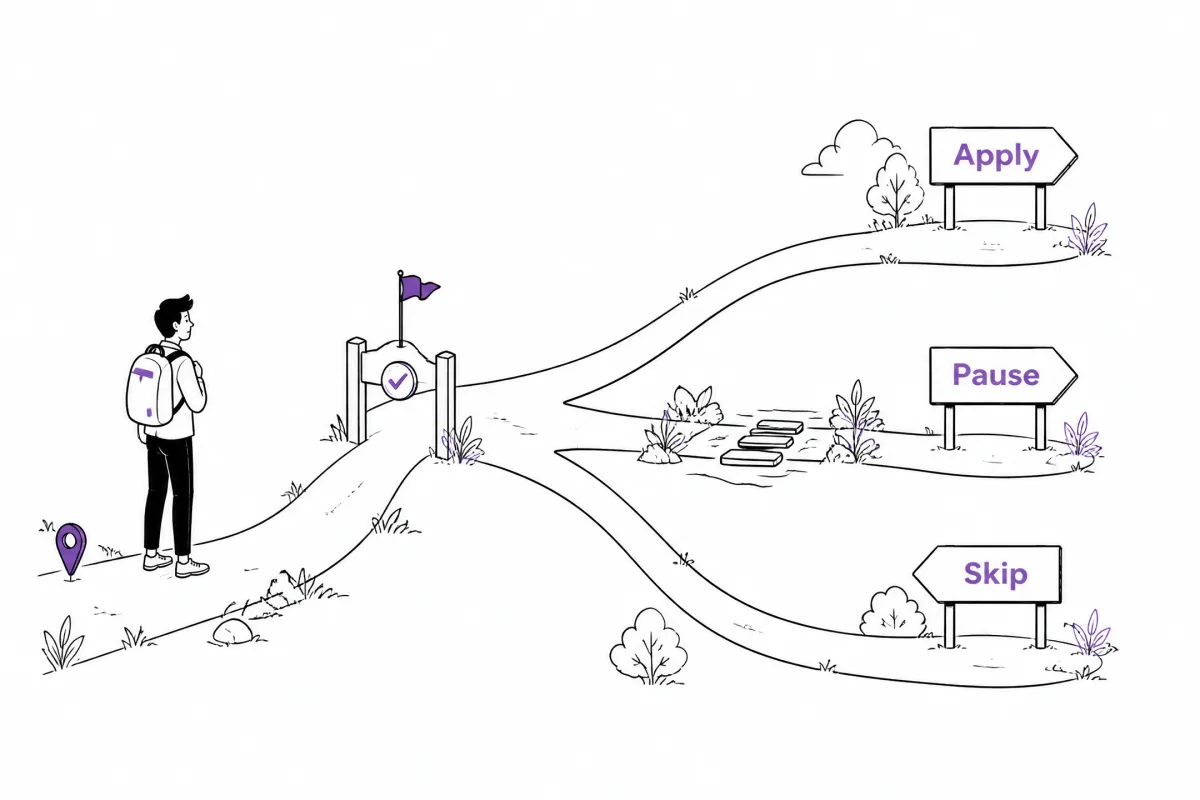
A Quick Decision Process: Apply, Pause, or Skip?
Work through these questions before you submit an application.
1. Is the missing requirement a true deal-breaker?
Start with the hardest requirements:
- A professional license
- A required credential
- A security clearance
- Work authorization
- A mandatory location or shift
- A legally required degree or qualification for a specific role
If the answer is yes, do not assume that a strong resume can replace the requirement. Confirm whether it must be completed before the first day, whether the employer can sponsor or support it, and whether an equivalent qualification is explicitly accepted.
For U.S. employment, employers generally use Form I-9 to document the identity and employment authorization of new employees. If your concern involves work authorization, check the employer’s wording and current USCIS guidance rather than relying on general career advice.
2. Can you perform the core work?
Ignore the full list temporarily and identify the three to five most important tasks in the posting.
Ask yourself:
- Could I complete the central tasks with reasonable onboarding?
- Have I done similar work before?
- Can I show a project, result, portfolio item, or work sample?
- Would the missing skill affect safety, compliance, customers, or major business decisions?
For a more objective comparison, use the role’s actual duties rather than its title. Resources such as O*NET OnLine and the Bureau of Labor Statistics Occupational Outlook Handbook can help you compare the work itself with your existing experience.
If you cannot perform the core work and have no credible evidence that you can, pause and build proof before applying broadly.
3. Do you have transferable evidence?
Transferable skills are only useful when you connect them to evidence.
For example:
- Customer service → account management
- Academic research → business analysis
- Project coordination → operations
- Teaching → customer success
- Sales → recruiting
The connection becomes credible when you explain the shared task, tool, level of responsibility, and result.
4. Can you close the gap realistically?
A gap may be manageable if you can close it through:
- A project with a clear deliverable
- A portfolio sample
- A course that produces practical work
- Practice with the required tool
- Volunteer or freelance experience
- An adjacent role
- A certificate that the employer actually recognizes
Do not claim that a short course makes you fully qualified. Use the course to produce evidence and show that you are actively building the missing capability.
5. Can you apply truthfully?
If the application would require you to exaggerate your experience, do not apply that way.
Use accurate phrases such as:
- “Project experience”
- “Working knowledge”
- “Currently building”
- “Experience with an adjacent platform”
- “Supported”
- “Coordinated”
- “Assisted with”
Do not describe a course as professional experience, turn “assisted” into “led,” or call brief exposure “expertise.”
When You Should Apply Even If You Miss Some Qualifications
You have less experience but similar scope
Suppose a role asks for five years of experience and you have three. That difference does not automatically end the discussion.
Look at:
- The complexity of your previous work
- The size of the projects you owned
- The decisions you made independently
- The stakeholders you worked with
- The results you delivered
A candidate with fewer years may still present a credible case when the scope and responsibility are closely related.
Do not write:
I only have three years of experience, but I am willing to learn.
Write something more specific:
I have three years of experience owning projects from planning through delivery, coordinating cross-functional contributors, and communicating progress to stakeholders.
The second version does not pretend to have five years. It shows why the existing experience may be relevant.
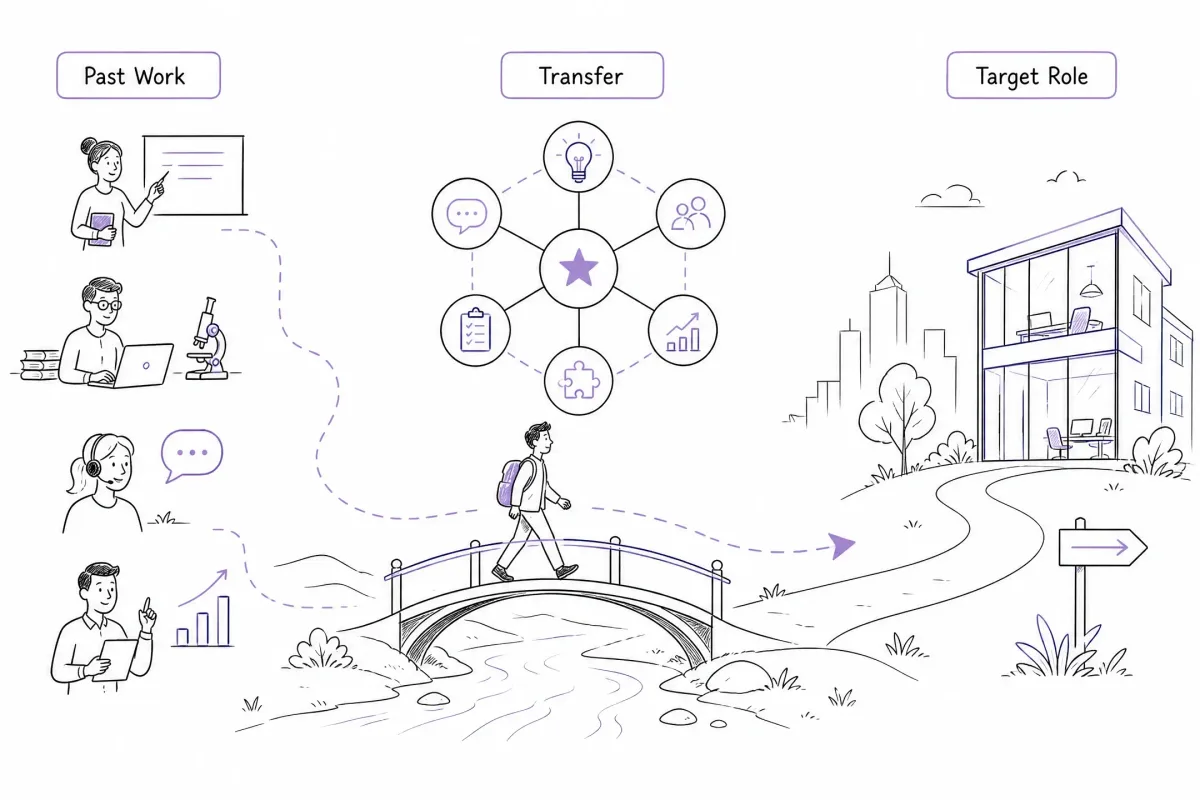
You are changing careers
A career change does not automatically mean starting from zero.
Compare your previous and target roles across:
- Tasks
- Tools
- Customers or stakeholders
- Complexity
- Outcomes
- Work environment
For example, a teacher moving into customer success may be able to show experience explaining complex information, managing relationships, handling competing priorities, and tracking progress.
The industry label may be different, but the underlying work can still overlap.
You lack a specific tool but have the underlying skill
A missing platform is different from a missing capability.
For example, if a posting asks for Salesforce and you have used HubSpot, explain:
- What process you managed
- What type of data you handled
- What outcomes you produced
- How you are learning the new platform
- What work sample you can show
Weak:
Familiar with Salesforce.
More accurate:
Managed customer pipelines in HubSpot and built follow-up workflows for account teams. I am currently learning Salesforce and can apply the same CRM principles to this role.
This does not guarantee that the employer will accept the substitute. It gives them enough information to evaluate the relevance.
The posting says “preferred,” “plus,” or “or equivalent”
These words suggest that the employer may accept more than one path to the desired capability.
Read the entire sentence. Sometimes “or equivalent” refers to a specific combination of education and experience. Sometimes it is broader. Do not assume—interpret the wording in context and ask a targeted question if the distinction matters.
When You Should Pause or Skip the Application
Pause and build proof when:
- You lack a meaningful but trainable skill.
- You have no evidence for a core task yet.
- The job level is slightly ahead of your current experience.
- You could create a relevant project or work sample soon.
- You need to clarify whether your background counts as equivalent.
“Pause” does not mean “never.” It means that a stronger application may be worth more than a rushed one.
Skip or verify first when:
- You lack a required license or credential.
- You cannot meet a true work authorization requirement.
- You cannot meet a mandatory location, shift, or travel condition.
- The role requires a core technical or safety skill you do not have.
- The seniority gap is too large to explain honestly.
- You would need to invent or exaggerate experience.
A missing qualification is not always a reason to give up. But enthusiasm, keyword matching, and a cover letter cannot replace a requirement that is genuinely necessary to perform the job or to be eligible for employment.
Disclaimer: This article provides general career information, not legal, immigration, licensing, or employment-law advice. Requirements vary by employer, occupation, location, and individual circumstances. Verify high-stakes requirements with the employer and the relevant official authority.
How to Apply When You Do Not Meet Every Requirement
If your decision is to apply, make the application evidence-led.
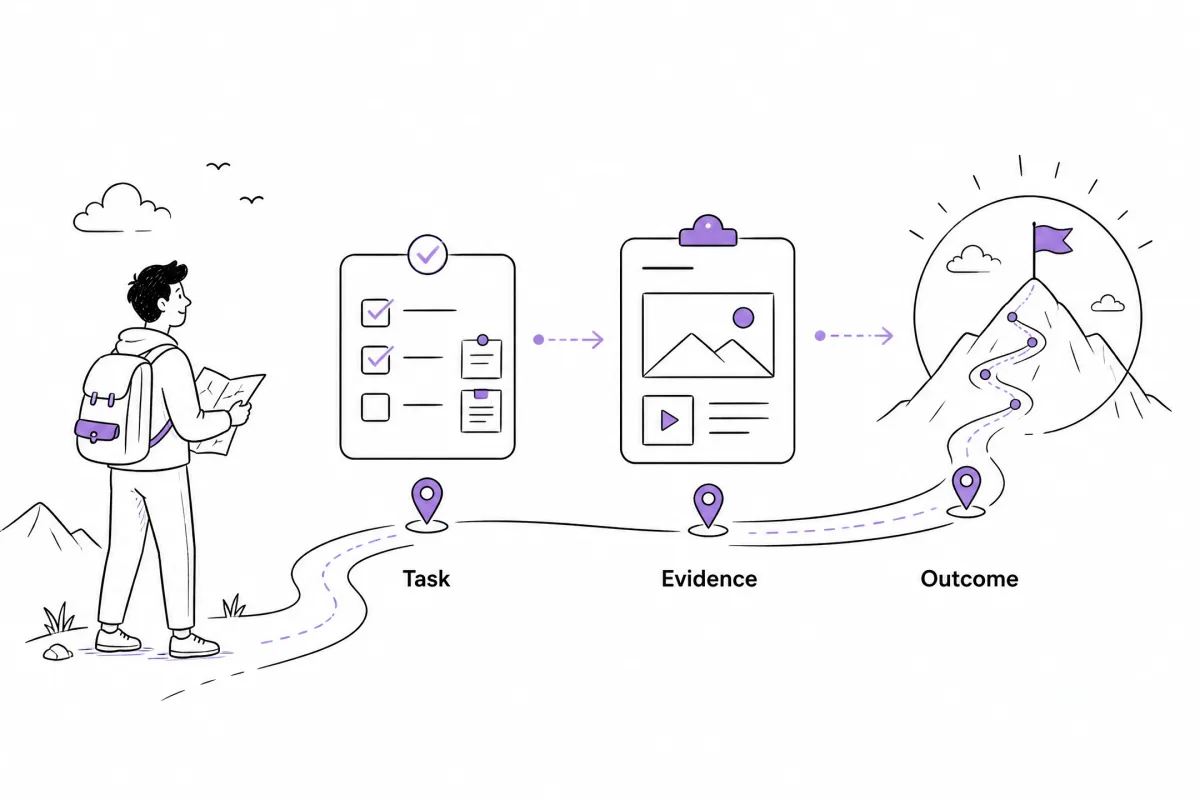
Step 1: Identify the role’s main outcomes
Do not copy every line from the job description. Identify what the person must accomplish.
Examples:
- Improve customer retention
- Manage projects from kickoff to delivery
- Produce accurate financial reports
- Support onboarding
- Build and maintain software features
Step 2: Map your evidence to those outcomes
Create a simple table:
| Role outcome | Evidence you have |
|---|---|
| Manage projects | Coordinated a six-person project and tracked delivery milestones |
| Support customers | Led onboarding sessions and resolved account issues |
| Produce reporting | Owned a weekly reporting process in a previous role |
If a major outcome has no evidence beside it, that is a signal to pause and build proof.
Step 3: Tailor your resume around evidence
Lead with what you did and what changed because of your work.
Weak:
Familiar with project management and communication.
Stronger:
Coordinated a six-person project, tracked delivery milestones, and presented the final results to internal stakeholders.
Use the structure:
Action + context + outcome
You do not need to use a number in every bullet. If a precise metric is unavailable, use an honest indicator such as scope, frequency, audience, deadline, deliverable, or responsibility.
For additional resume guidance, see how to make your resume stand out.
Step 4: Explain the most important gap briefly
You do not need to apologize for every missing qualification. Explain the one gap most likely to concern the employer.
Use this structure:
I have not used [tool or skill] in a full-time role yet, but I have used [related tool or method] to [relevant task or result]. I am currently building [specific proof], and I can apply the same underlying skill to this role.
This works because it:
- Acknowledges the gap.
- Connects it to existing experience.
- Shows current action.
- Avoids claiming more than you have done.
Step 5: Add proof of readiness
Useful proof may include:
- A portfolio project
- A completed work sample
- A case study
- A course project
- Volunteer work
- Freelance work
- A relevant internship
- A public demonstration of the skill
The proof should resemble the work the employer needs. A generic certificate is less useful than a practical example that shows how you would approach the job.
Step 6: Ask a focused question if needed
If one requirement is unclear, contact the recruiter or hiring team with a specific question.
Better question:
The posting lists [requirement] as preferred. Would experience with [adjacent skill], combined with [specific work sample or project], be considered relevant for this role?
Less useful question:
I do not meet all the requirements. Can I still apply?
The first question gives the employer something concrete to evaluate.
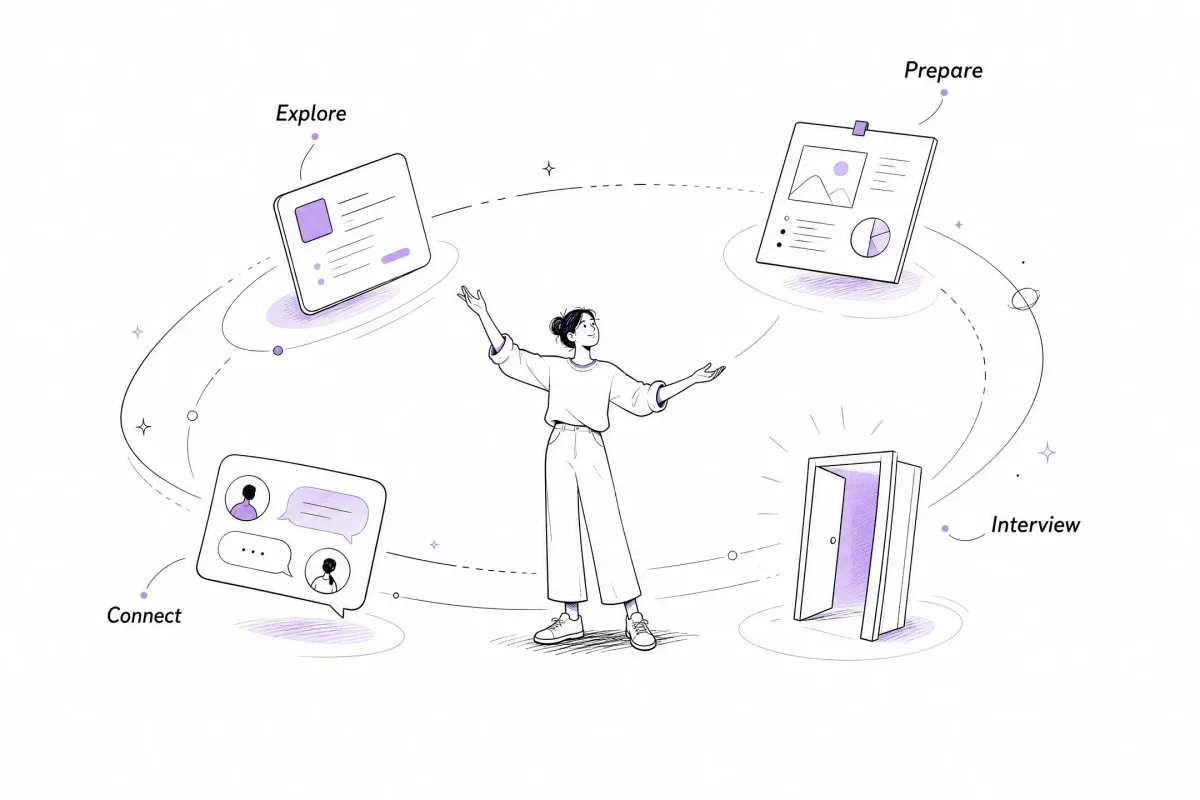
How to Explain a Missing Qualification in an Interview
If you receive an interview, prepare for the gap to come up.
Use the Acknowledge–Bridge–Proof–Plan structure:
- Acknowledge: State what you have not done.
- Bridge: Connect it to related experience.
- Proof: Give a specific example.
- Plan: Explain how you would close the remaining gap.

Example answer
I have not used [specific tool] in a full-time position yet. In my previous role, I used [related tool or process] to [relevant task], which helped me build the underlying skill this position requires. I am currently practicing [specific capability], and I would be ready to explain how I would approach the work here.
Keep the answer accurate and specific. Do not claim you can independently perform work that you have never practiced. Instead, show what you already understand, what you have demonstrated, and how you would ramp up.
Prepare for these follow-up questions:
- Why are you applying for this role?
- What is the biggest skill gap you would need to close?
- How would you approach the work during your first month?
- What have you done to build this skill?
- What support or onboarding would help you become effective?
For structured preparation, GreatOffer AI’s real-time AI interview copilot can help you rehearse difficult follow-up questions and improve the clarity of your answers. Use it as a preparation tool, and always follow the employer’s rules about interview software during a live interview.
How the Decision Changes by Job-Seeker Situation
| Situation | What is missing | Evidence to look for | Likely next step |
|---|---|---|---|
| Recent graduate | Paid experience | Internships, projects, coursework, leadership, portfolio | Apply to a realistic level and show proof |
| Career changer | Direct industry experience | Shared tasks, tools, customers, and outcomes | Apply when the core work transfers |
| Missing software | A specific platform | Adjacent systems and practical practice | Apply with a clear ramp-up plan |
| Missing license or clearance | Required credential | Eligibility timeline, sponsorship, or employer guidance | Verify before applying |
| Large seniority gap | Management scope or complexity | Ownership, team size, decisions, and outcomes | Consider an adjacent level |
These are illustrative scenarios, not promises about hiring outcomes.
Recent graduate with strong project evidence
No paid experience does not mean no relevant experience. A capstone, internship, volunteer project, student organization role, or portfolio sample can show how you approach the work.
Describe the task, your contribution, the result, and the tools you used. Avoid presenting classroom work as employment.
Career changer with transferable skills
Focus on the work rather than the job title. Show how your previous responsibilities relate to the target role’s customers, processes, decisions, and outcomes.
Candidate missing a license or clearance
This is a verify-first situation. Find out whether the credential is required before the first day, whether the employer can sponsor or support it, and whether an existing application or timeline is acceptable.
Final Application Checklist
Before submitting, confirm:
- I identified the requirements that are genuinely non-negotiable.
- I understand the three to five core tasks.
- I can show evidence for most of the core work.
- I separated required qualifications from preferred ones.
- I identified my most important gap.
- I can explain that gap honestly and briefly.
- My resume emphasizes evidence rather than unsupported keywords.
- I have a project, work sample, or other proof where useful.
- I verified location, schedule, travel, and work authorization.
- I am not exaggerating any skill, credential, or result.
How to read the checklist
- Apply when the core work is within reach and your evidence makes the match credible.
- Pause and build proof when an important gap is real but realistically trainable.
- Skip or verify first when a hard eligibility, licensing, or practical requirement is unmet.
Do not calculate a mechanical score. One unmet hard requirement can matter more than several minor missing preferences.
Conclusion: Make a Strategic Application, Not a Perfect-Match Application
You do not need to be a perfect match to apply. You do need a defensible reason to believe you can do the work.
Before you submit:
- Rule out hard eligibility and licensing gaps.
- Confirm that you can perform the core tasks.
- Prepare evidence for the requirements you do meet.
- Explain the missing qualification without exaggeration.
- Decide whether to apply now or build proof first.
The goal is not to apply for every job. It is to avoid ruling yourself out too early while also avoiding applications that depend on misrepresentation.