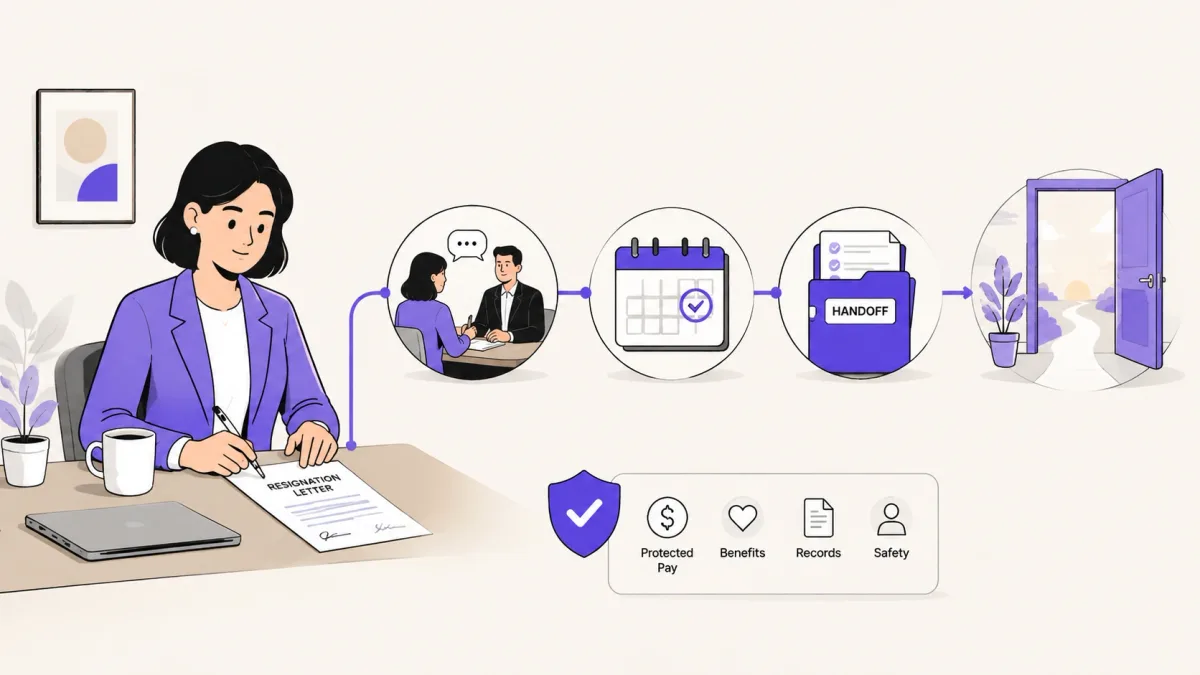

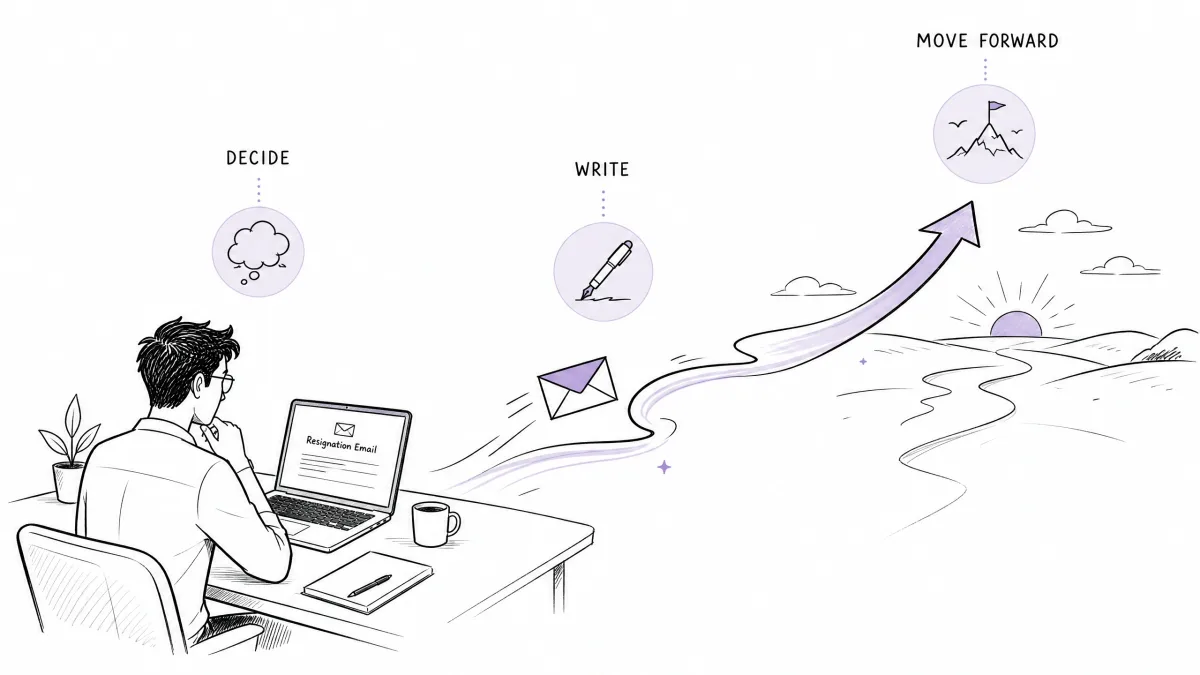
A professional resignation email should clearly state your resignation, name your final working day, thank your employer briefly, and offer reasonable transition help. Check your contract or company policy before sending, then email your manager and include HR when the process requires it.
Can You Resign by Email?
Email can be a practical way to submit resignation when you work remotely, your manager is unavailable, or you need a written record of the notice. If you can speak with your manager promptly, a short conversation followed by written confirmation may be more appropriate.
The correct process depends on your employment contract, employee handbook, and company practice. Some employers may ask for a signed resignation letter or a separate HR submission, so check those requirements before naming your final working day.
Use email when:
- You work remotely or across different locations.
- Your manager is unavailable but the notice deadline matters.
- You need to document a conversation.
- Your company's process specifically accepts written email notice.
Speak with your manager first when:
- You can arrange a conversation without delaying written notice.
- Your workplace expects direct communication.
- You want to discuss the transition before sending the formal email.
General guidance: This article covers workplace communication, not legal advice. For contract disputes, urgent safety concerns, harassment, discrimination, or other serious issues, use the appropriate internal process and seek qualified professional help.
What to Check Before Writing Your Resignation Email
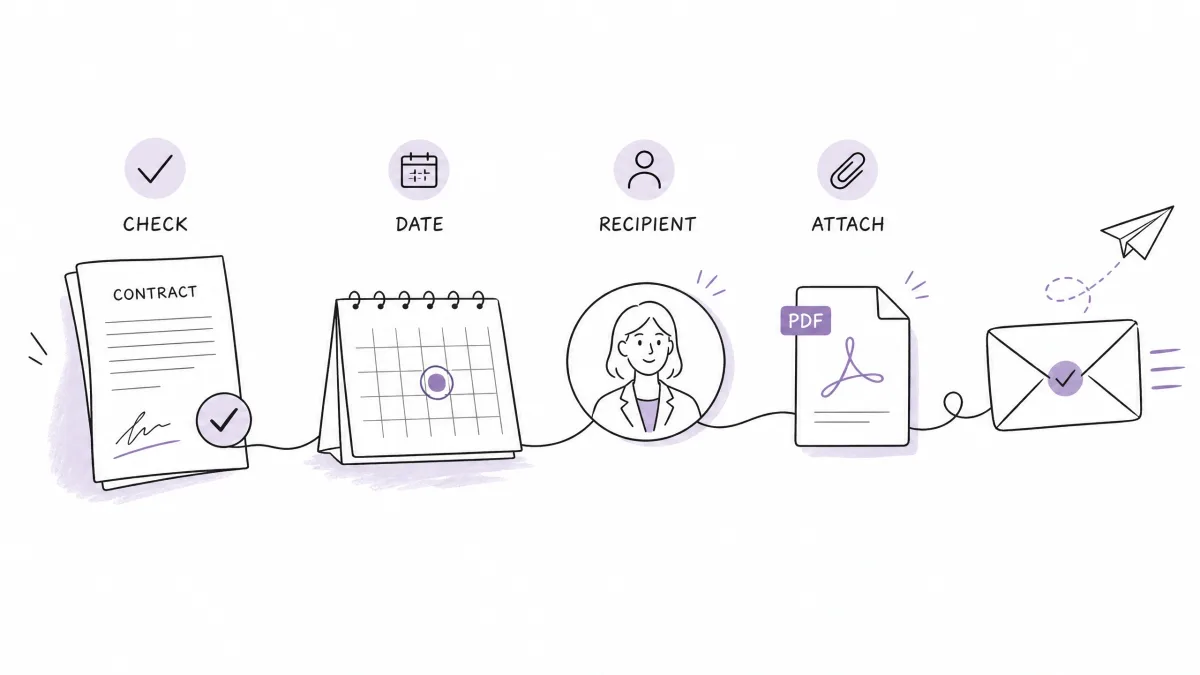
Before drafting the message, confirm the facts that will appear in the email.
1. Review Your Contract and Employee Handbook
Look for:
- Required notice period.
- How the notice period is counted.
- Whether a signed letter or PDF is required.
- Handover or exit interview requirements.
- Instructions for returning equipment and company property.
Do not assume that two weeks' notice applies to every role. Use the period stated in your agreement or confirmed by HR.
2. Confirm Your Final Working Day
Write a specific date such as:
My final working day will be [Month Day, Year].
Avoid writing only "two weeks from now." A precise date reduces confusion about payroll, access, scheduling, and handover responsibilities.
3. Decide Who Should Receive the Email
In many workplaces, the direct manager is the primary recipient. HR may need to be copied when company policy or the offboarding process requires it.
If you are unsure, check the handbook before sending. Do not copy a large group unless there is a clear business reason.
4. Decide Whether You Need a PDF Attachment
Attach a signed resignation letter only when the company requires one or when it is useful for the formal record.
Use a clear filename:
FirstName_LastName_Resignation_Letter.pdf
Make sure the date, job title, company name, and final working day match the email exactly.
5. Protect Company Information
Keep personal copies only of your own non-confidential career materials, such as your resume or a public portfolio. Do not forward company files, customer information, source code, internal reports, or proprietary documents to a personal account.
How to Write a Resignation Email in 6 Steps
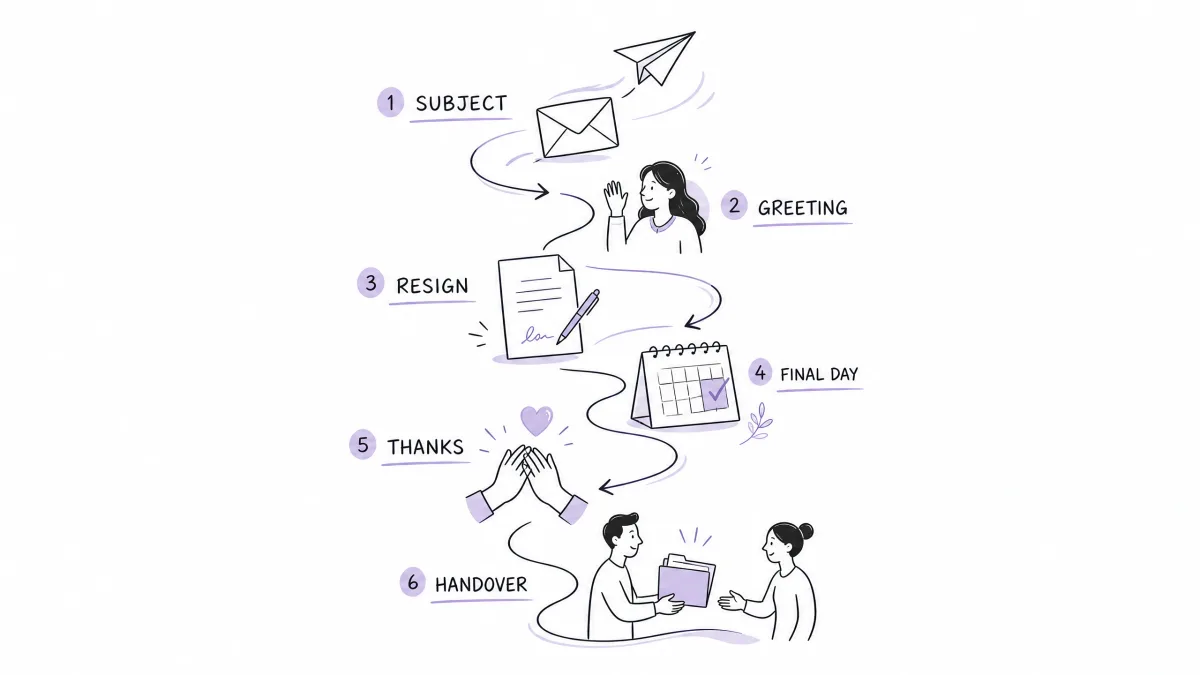
1. Choose a Clear Subject Line
Your subject line should tell the recipient exactly what the email is about.
Good options include:
Resignation Notice - [Your Full Name]Notice of Resignation - [Your Full Name]Resignation - [Your Full Name], [Job Title]Formal Resignation - [Your Full Name]Resignation Effective [Month Day, Year]
Avoid vague subjects such as Quick note, Important, or Goodbye.
2. Use a Professional Greeting
Address the person who will receive the notice.
Examples:
Dear [Manager's Name],Dear Mr. or Ms. [Last Name],Hello [Manager's First Name],
Use the level of formality that fits your workplace, but avoid slang, nicknames, or an overly casual opening.
3. State Your Resignation Directly
The first sentence should remove all ambiguity.
Use:
I am writing to formally resign from my position as [Job Title] at [Company Name].
Avoid indirect wording such as:
I think it may be time for me to move on.I might be leaving soon.I wanted to discuss a possible change.
A resignation email should make the decision clear without requiring the recipient to interpret your meaning.
4. Confirm Your Final Working Day
State the exact date in a separate sentence:
My final working day will be [Month Day, Year].
If you have already spoken with your manager, you can write:
As discussed, my final working day will be [Month Day, Year].
Only use "as discussed" if the conversation actually happened.
5. Add Brief Gratitude and an Optional Reason
You do not have to explain every detail behind your decision. A short, genuine sentence is enough:
I appreciate the opportunities and experience I have gained during my time here.
If you want to include a reason, keep it brief:
I have accepted a new opportunity.I am relocating.I am pursuing a career change.Due to personal circumstances, I have decided to step away from my role.
You do not need to name a new employer, disclose salary information, or share private medical or family details.
6. Offer Reasonable Transition Help and Sign Off
Offer help that you can realistically provide:
I am happy to document my current projects and support a smooth handover during my notice period.
Then close professionally:
Best regards,Sincerely,Regards,
Include your full name. Add a personal phone number or email address only when appropriate and permitted.
Resignation Email Templates for Common Situations
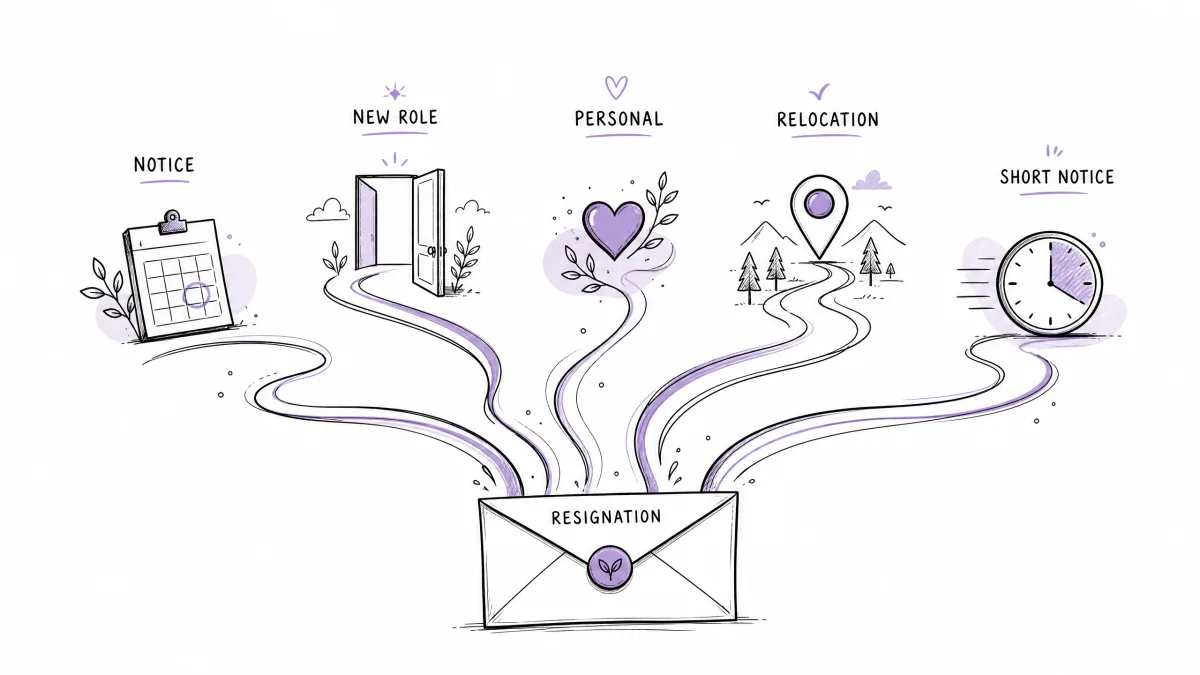
Replace every bracketed field before sending. Choose the template that matches your situation instead of combining several versions.
Standard Resignation Email: Two Weeks' Notice
Use this when your contract or company policy calls for two weeks' notice.
Subject: Resignation Notice - [Your Full Name]

Dear [Manager's Name],

I am writing to formally resign from my position as [Job Title] at [Company Name]. My final working day will be [Month Day, Year].

I appreciate the opportunities and experience I have gained during my time here. I am happy to document my current projects and support a smooth handover during my notice period.

Best regards,
[Your Full Name]
Use when: Normal notice applies and the relationship is professional.
Avoid: Vague final dates or long explanations.
Resignation Email for a New Job Opportunity
You can mention a new opportunity without naming the employer or discussing compensation.
Subject: Notice of Resignation - [Your Full Name]

Dear [Manager's Name],

I am writing to formally resign from my position as [Job Title] at [Company Name]. My final working day will be [Month Day, Year].

I have accepted a new opportunity and am grateful for the experience I have gained here. I will help organize my current work and support the transition before my final day.

Sincerely,
[Your Full Name]
Resignation Email for Personal Reasons
This version protects your privacy while still communicating the necessary information.
Subject: Resignation - [Your Full Name]

Dear [Manager's Name],

Please accept this email as formal notice of my resignation from my position as [Job Title] at [Company Name]. My final working day will be [Month Day, Year].

Due to personal circumstances, I have decided to step away from my role. I appreciate the support and opportunities I have received, and I will assist with the handover of my current responsibilities.

Best regards,
[Your Full Name]
Resignation Email for Relocation or Career Change
Use this when you want to give a simple, forward-looking explanation.
Subject: Resignation Notice - [Your Full Name]

Dear [Manager's Name],

I am writing to resign from my position as [Job Title] at [Company Name]. My final working day will be [Month Day, Year].

I am relocating and will be moving toward a new career direction. I appreciate the opportunities I have had here and will document my current projects to support a smooth transition.

Sincerely,
[Your Full Name]
Immediate or Short-Notice Resignation Email
Use this only when you cannot complete the normal notice period. Check your contract or company process before sending.
Subject: Resignation - Effective [Month Day, Year]

Dear [Manager's Name],

I am writing to resign from my position as [Job Title] at [Company Name], effective [Month Day, Year].

Due to [brief, factual reason], I am unable to complete the full notice period. I apologize for the short notice and will follow your guidance regarding handover steps, documentation, and company property.

Best regards,
[Your Full Name]
Do not present immediate resignation as an automatic right. State your requested effective date clearly and ask what process the company wants you to follow.
Minimal Resignation Email for a Difficult Relationship
You do not need to write exaggerated praise to sound professional.
Subject: Resignation - [Your Full Name]

Dear [Manager's Name],

This email confirms my resignation from my position as [Job Title] at [Company Name]. My final working day will be [Month Day, Year].

Thank you for the opportunity and experience. I will document my current work and support a basic handover before my final day.

Regards,
[Your Full Name]
Keep complaints, accusations, and detailed feedback for the appropriate formal channel rather than placing them in the resignation email.
Subject Lines, Attachments, and Sending Details
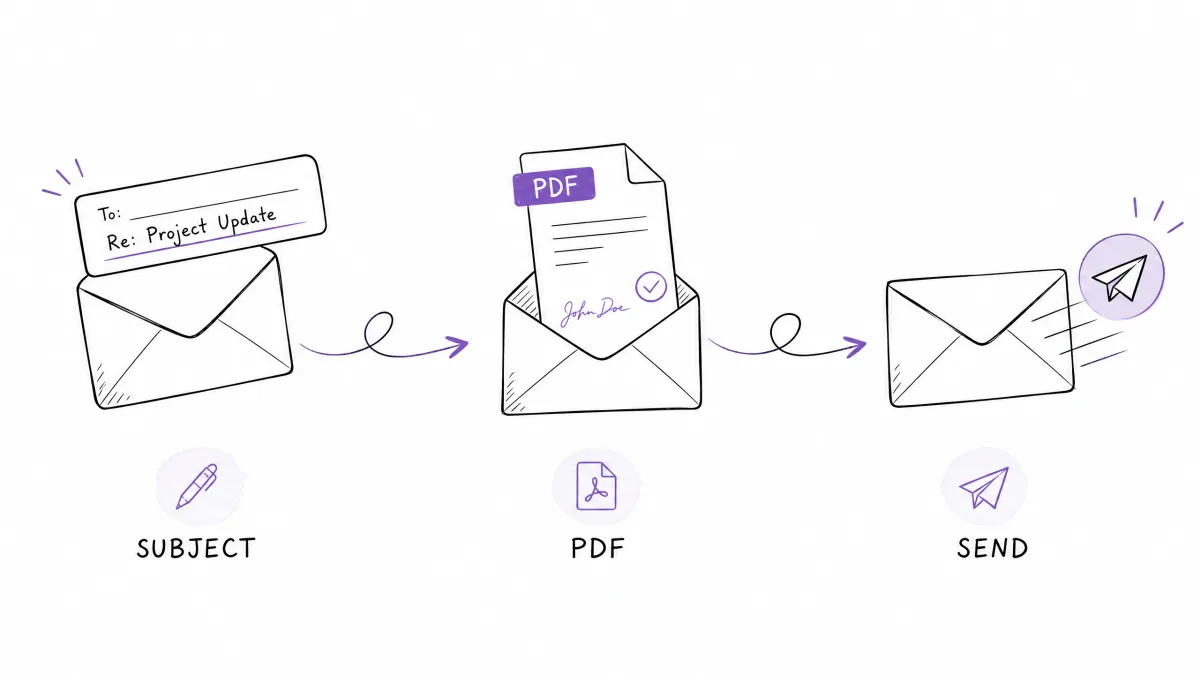
Professional Subject Line Examples
Resignation Notice - [Your Full Name]Notice of Resignation - [Your Full Name]Resignation - [Your Full Name], [Job Title]Formal Resignation - [Your Full Name]Resignation Effective [Month Day, Year]
When to Attach a Resignation Letter
Attach a PDF when:
- Your employer requests a signed letter.
- HR requires a formal document.
- Your company's process uses both email and a letter.
- You want to provide a clean record of the notice.
Before sending:
- Confirm the PDF is the correct version.
- Check the filename.
- Match the dates and job title to the email.
- Mention the attachment in the email body.
- Confirm that no confidential information is included.
Final Send Sequence
- Speak with your manager first when practical.
- Confirm the notice period and final date.
- Address the email to the correct recipient.
- Add HR only when required or appropriate.
- Attach the PDF if needed.
- Check names, dates, tone, grammar, and attachment.
- Send the email.
- Save a copy of the sent message and attachment.
What Not to Include in a Resignation Email
Do: Be Clear, Brief, and Factual
- State your resignation directly.
- Include the exact final working day.
- Keep the reason optional and concise.
- Offer transition help that you can actually provide.
- Use a neutral, respectful tone.
Don't: Vent, Threaten, or Overshare
Avoid including:
- Personal attacks.
- Sarcasm or insults.
- Long complaints about your manager or team.
- Detailed salary comparisons.
- The name of your new employer unless there is a clear reason.
- Private medical or family information.
- Threats to publish internal information.
- Promises you cannot fulfill during the notice period.
Reframe a Negative Reason Professionally
These are examples of wording changes, not descriptions of a particular person or workplace.
| Avoid writing | More professional alternative |
|---|---|
My manager is impossible. |
I am looking for a role with clearer ownership and communication. |
I am underpaid. |
I am pursuing an opportunity aligned with my responsibilities and career goals. |
I cannot stand this team. |
I have decided to move toward a different working environment. |
If you need to report harassment, discrimination, retaliation, safety risks, or other serious misconduct, use the relevant reporting channel separately. Do not assume a standard resignation email will document or resolve those issues.
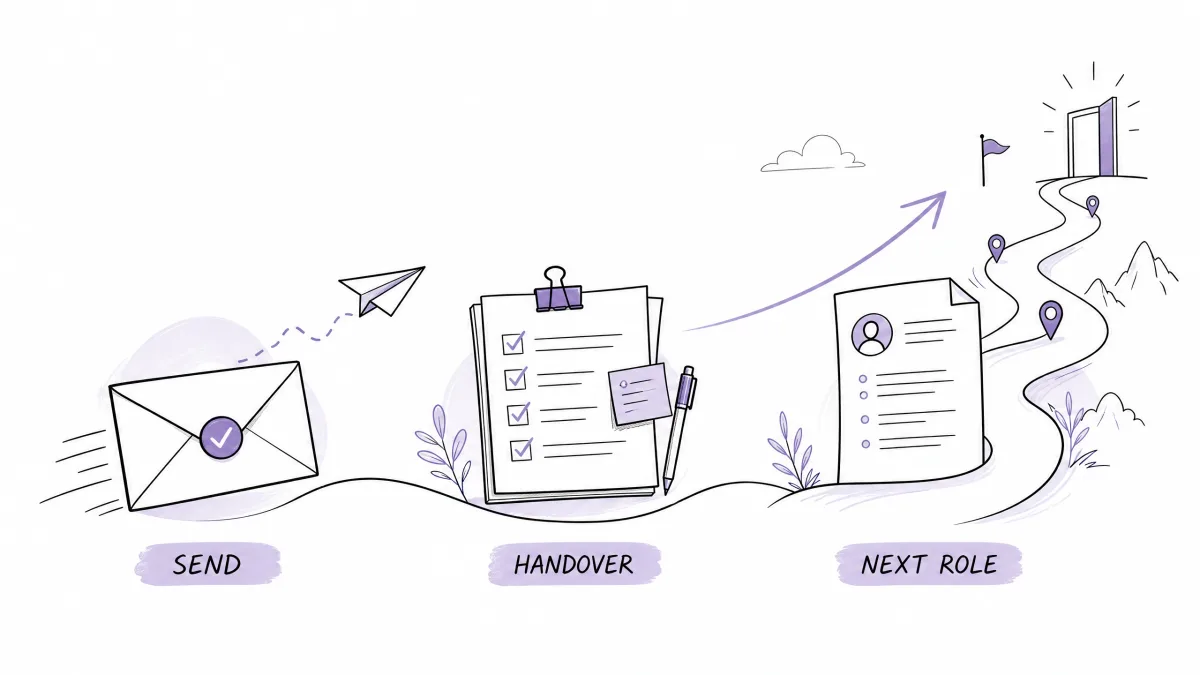
What to Do After Sending Your Resignation Email
Save Your Records
Keep:
- The sent email.
- The final PDF, if used.
- Any written confirmation of the final working day.
- Handover notes that do not contain unnecessary confidential information.
If Your Manager Does Not Reply
After a reasonable period, send a short follow-up:
Subject: Follow-Up: Resignation Notice

Hello [Manager's Name],

I am following up to confirm that you received my resignation email sent on [date]. Please let me know the next steps for confirming my final working day and handover responsibilities.

Best regards,
[Your Full Name]
If you still receive no response, follow the company's escalation process and contact HR or the appropriate manager.
If You Are Asked to Leave Immediately
Ask for written confirmation of:
- Your effective end date.
- Handover instructions.
- Equipment-return steps.
- The HR contact for remaining questions.
Do not argue about the situation in the resignation email. Keep the record factual and move detailed questions to HR or the relevant internal process.
Prepare for Your Next Job Search
Once your notice is handled, update your resume, organize non-confidential career achievements, and practice explaining your transition.
GreatOffer AI is a real-time AI interview copilot that can help you rehearse interview answers and organize your preparation. Use it as a preparation aid, and follow the rules of each employer, school, assessment provider, or interview platform when using AI support.
Conclusion
A strong resignation email is clear, brief, and specific. State that you are resigning, name your exact final working day, follow your company's process, and offer only the transition help you can realistically provide.
Before clicking send, check the recipient, dates, attachment, tone, and company policy. After sending, save the record and begin preparing for your next role.