
You applied. You waited. The portal still says "Under review." Your inbox is quiet.
If you're wondering how to follow up on a job application without hurting your chances, you're not overthinking. You're responding to a hiring system where silence is the default, not a verdict on your qualifications. One posting can pull in hundreds of applicants, and many talent teams simply don't have the bandwidth to respond to everyone.
The whole process in seven steps:
- Confirm your application actually submitted successfully.
- Identify where you are in the hiring funnel.
- Find the highest-reachability contact available.
- Choose your timing based on company size, industry, and posting age.
- Send one short, specific message.
- Wait at least one week before a second and final follow-up.
- Set an exit date and redirect your effort.
The rest of this guide expands each step: a decision rule for whether to reach out, a reachability-first strategy for who to contact, timing rules in calendar days, six templates, and an exit plan so you stop burning energy on a dead thread.
Should You Follow Up on a Job Application at All?
Here's the honest answer to "should i follow up on a job application": sometimes.
A follow-up is not a magic move in this market. In a portal-first process, a single message often changes nothing because it never reaches the person making decisions. Recruiters publicly describe receiving well over a hundred messages and connection requests a week with no capacity to answer them. Treat that as practitioner testimony, not a verified statistic, but the direction is consistent.
Employers don't even agree that they want your follow-up. Novoresume's own HR survey found that most hiring managers prefer a follow-up within one to two weeks, while 41% don't want one at all. That's the platform's own survey, so treat it as directional rather than definitive. It still tells you something useful: a follow-up is optional by design, not a required move you're failing to make.
At the same time, the risk is usually misunderstood. A single, short, professional note is very unlikely to hurt you. What hurts is the pattern that reads like pressure: repeated pings, entitlement, urgency on their behalf, or messages blasted to three people at once.
So the pragmatic stance is: follow up once if you can reach a real person, make the message easy to ignore without drama, and treat no response as information.
| What helps | What hurts |
|---|---|
| One message to one correct person | Messaging three people "just in case" |
| Clear role + date applied + one useful addition | "Just checking in" with no substance |
| A calm ask about timeline or next step | "I'd love an update ASAP" |
| Waiting the full window (calendar days) | Following up after 2-3 calendar days |
| A clean stop rule after attempt #2 | Daily nudges, LinkedIn + email + phone at once |
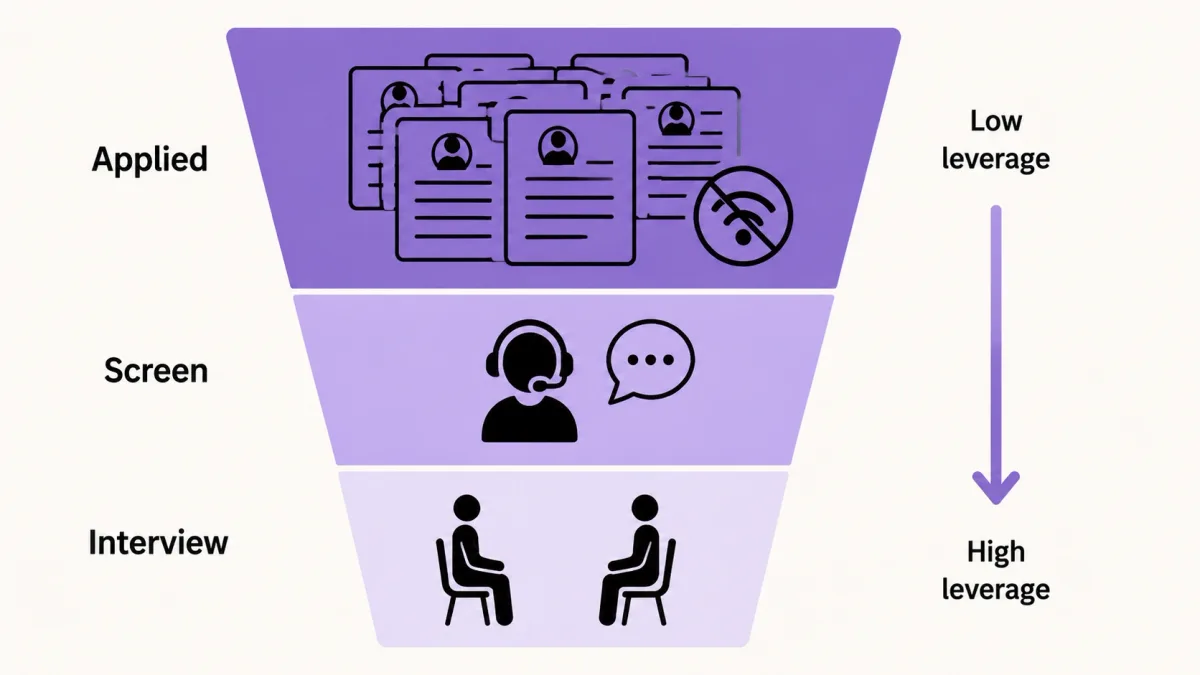
Where You Are in the Hiring Funnel Changes the Answer
A lot of the disagreement about whether follow-ups "work" comes from people talking about different stages. Recruiters and hiring managers who argue about this in public are usually both right, about different rows of this table.
Most readers of this article are in the first row. Calibrate accordingly.
| Where you are | What to realistically expect | What to do |
|---|---|---|
| Applied cold, no human contact yet | Often no reply. Outreach at this stage rarely gets a response. | Send one message only if you can reach a real person. The cost is low. Do not build hope on it. |
| After a recruiter screen | Follow-ups matter more because you have a named contact and an open conversation. | Follow up with that recruiter using the cadence they gave you, or a conservative window if they gave none. |
| Between interview rounds | Highest-value stage, but out of scope here. | Use an interview follow-up guide instead; timing and expectations are different. |
This three-stage view is this article's editorial framework, built from observed practitioner disagreement. No competing page makes the distinction, which is exactly why the advice you've read feels contradictory.
Before You Follow Up, Run Three Checks
Two minutes of checking prevents the most embarrassing outcomes.
- Confirm the application submitted. Look for a confirmation email, then log into the portal and verify your submission status. Incomplete submissions are common, and a follow-up that reveals you never actually applied is a rough first impression.
- Check the posting for explicit instructions. Some postings, especially government roles and large enterprises, state a review timeline or ask candidates not to contact the employer directly. Honor that. It's not just etiquette; it's often a screening signal.
- Check the posting's current state. Still live, taken down, or reposted? A posting staying live does not mean anyone is reviewing applications. A posting coming down does not automatically mean the role was filled. A repost can mean anything from "still hiring" to "we refreshed the listing."
If you realize your materials are the real bottleneck, fix that before re-engaging. Start with How to Make a Resume Stand Out to Recruiters and ATS or, for the basics, What Is a Resume? Definition, Purpose & Examples.
How to Follow Up on a Job Application Starts With Who You Send It To
Most advice obsesses over wording. Follow-ups fail for a simpler reason: they go to inboxes nobody monitors.
That's why this article uses one editorial framework:
Follow-Up Leverage = Reachability × Timing × Substance
This is a multiplication, not a checklist. If Reachability is zero, nothing else matters.
The pattern I see most in coaching sessions is a candidate polishing draft number five of an email that is headed for a general careers inbox. The wording was fine four drafts ago. The address is the problem. A perfectly written follow up message for job application sent to an unmonitored inbox is equivalent to sending nothing.
Your job is not to write the best email. It's to find the highest-reachability recipient you can reasonably justify.
The Reachability Ladder
Work from the top down. If you can't reach level 1, try level 2, and so on.
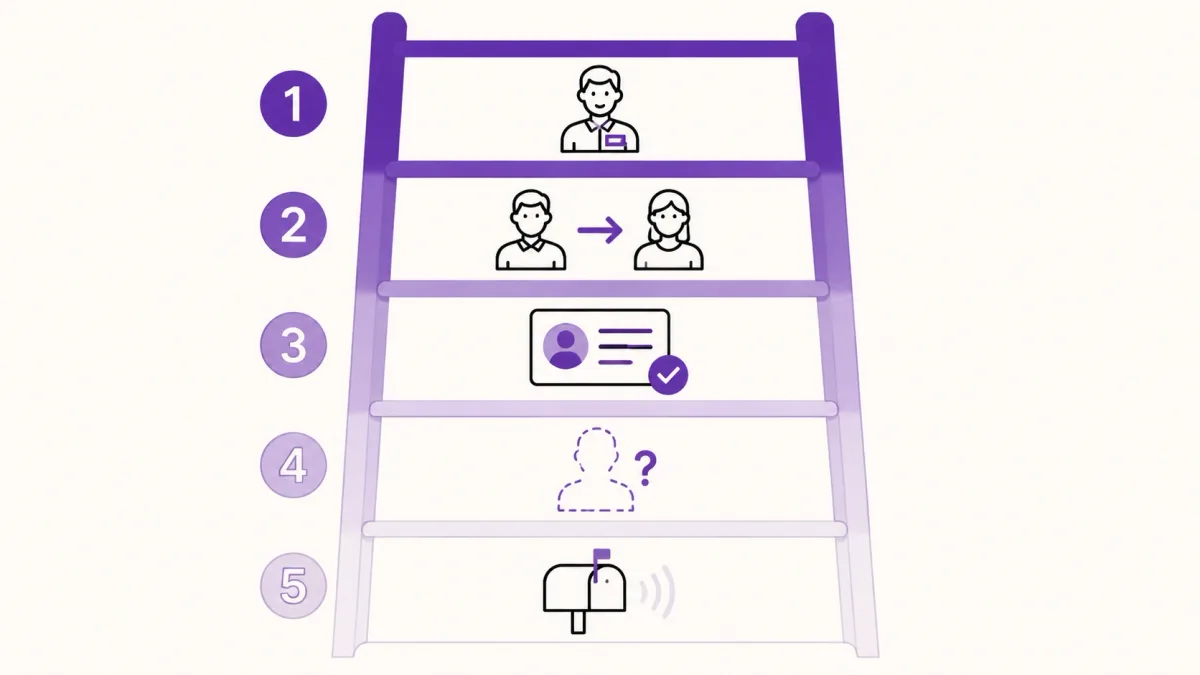
- A named person in the posting. Highest reachability. Use exactly the channel they specified. If they put their name there, they may actually read it.
- An internal referral who can forward your name. Very high, because it lands with trust attached. Ask for a forward, not a favor.
- A recruiter or hiring manager you can confirm on LinkedIn. Good when you can verify they own this requisition. Expect a short answer or no answer. Send one specific message.
- A likely hiring manager inferred from the reporting line. Moderate and speculative. Reach out only if your inference is strong.
- A general careers inbox or the portal's message form. Lowest. Often unmonitored or auto-routed. Send once if you want, then downgrade expectations rather than writing three versions.
How to Find the Right Person
No name in the posting? You're not stuck. You need a method, not luck.
- Look for a reporting line. If the post says "reports to the Director of Engineering," search that title plus the company on LinkedIn.
- Work the likely hierarchy. When the exact title is unclear, search in this order: associate, manager, director, VP.
- Ask a reachable employee who owns the role. Many people will answer "Who's recruiting for this?" even if they won't answer "Can you refer me?" Sometimes a referral follows anyway.
- Be careful with email guessing. Company email formats tend to follow predictable patterns, but a wrong-recipient message costs credibility. If you can't verify the person owns the requisition, silence is the safer outcome.
For a step-by-step system for finding the right person without spiraling, use How to Find a Job on LinkedIn in 2026: 9-Step System.
When to Follow Up on a Job Application: A Calendar-Day Rule
If you've read a few articles on this, you've noticed the problem. Some say follow up after a few business days. Others say wait two full weeks. You're not confused because you missed something. The advice genuinely conflicts.
Here's the hidden reason most pages never say out loud: some sources count business days and others count calendar days, and most never specify which. Over a two-week window, that one ambiguity shifts the recommendation by up to four days.
This article uses calendar days every time.
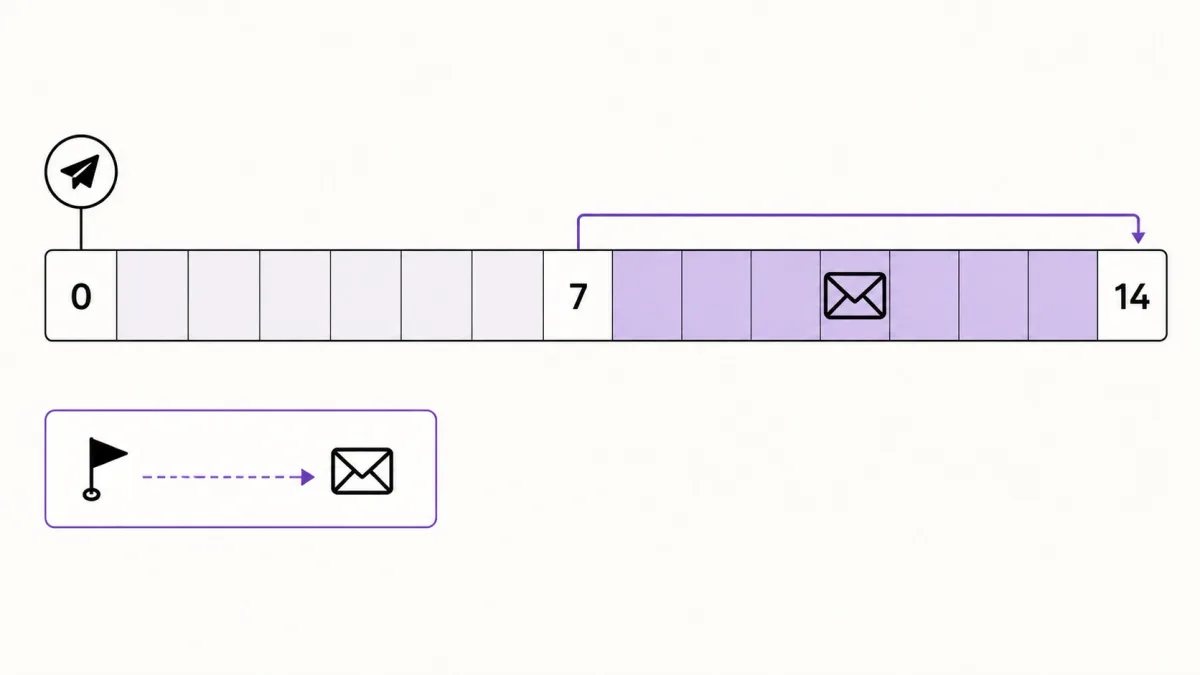
Baseline rule: wait 7 to 14 calendar days after applying before your first follow-up. The first week is typically consumed by automated screening, internal sorting, and recruiter triage. A message sent earlier lands before anyone has useful information to share.
Why the Advice You've Read Contradicts Itself
| Source type | Typical recommendation | The assumption behind it |
|---|---|---|
| Staffing firms | A few full business days | Assumes a named contact and a fast-moving commercial role |
| Career publishers and job platforms | One to two weeks | Broad default aimed at the average portal application |
| Response-time analyses | Day eight to ten | Based on when many replies arrive, so after that you're less likely to be too early |
| University career centers | A flat two weeks | Conservative and simple for students |
| Enterprise and large-tech guidance | Ten to fourteen business days | Assumes recruiters carrying dozens of open requisitions |
None of these are wrong. They're answering for different situations. Match the assumption to your situation.
For example, The Muse recommends waiting one to two weeks and notes that some postings ask candidates not to follow up at all. American University's career center suggests about two weeks and adds that you don't need to follow up on every application. A 2017 Accountemps survey of HR managers, summarized by CNBC, found timing expectations spread across multiple windows rather than one standard answer.
Adjust Your Timing to the Situation
All figures are calendar days.
| Situation | First follow-up timing |
|---|---|
| Posting states a closing date | Wait 2-3 calendar days after that date, not after you applied |
| Posting states a review timeline | Honor it, then add 2-3 calendar days |
| Startup or company under roughly 100 people | 5-7 calendar days |
| Mid-size company | 7-10 calendar days |
| Large enterprise or major tech | 10-14 calendar days; expect portal status not to move |
| Someone referred you | 3-5 calendar days |
| Posting is over 30 calendar days old or was reposted | 5-7 calendar days |
| Fast-cycle sectors (retail, hospitality) | Sooner, often within 7 calendar days |
| Slower-cycle sectors (healthcare, government) | 10-14 calendar days or longer |
Second follow-up: wait at least 7 calendar days after the first message, and never sooner than 5 calendar days.
What to Say in a Follow-Up Email
This section covers what to say to follow up on a job application. Keep the proportions honest: wording is the lowest-leverage variable of the three. Your goal is a message that is easy to read and easy to answer.
Hard limits:
- Email: under 150 words
- LinkedIn message: under 400 characters
- Voicemail: under 30 seconds
Use this five-part structure:
- Identify yourself and the role. Job title, requisition ID if available, and the calendar date you applied.
- One sentence of genuine specificity. Something real about the role, team, or product. Not "I love your company."
- One concrete piece of relevant value. A result, project, portfolio link, certification completed since applying, or a one-sentence idea tied to the role.
- A low-pressure ask. The status or the expected timeline.
- Brief thank-you and sign-off. No pressure language.
Subject line examples (boring on purpose):
- Application: [ROLE TITLE] | [YOUR NAME]
- [ROLE TITLE] application follow-up | [YOUR NAME]
- Follow-up on my [ROLE TITLE] application (submitted [DATE])
- [ROLE TITLE], Req [REQ ID] | application follow-up
A strong follow-up adds one thing the original application didn't. Most follow-up drafts I review fail on exactly this: they restate enthusiasm and ask for an update, which gives the recipient nothing to act on. "Just checking in" is not a message. It's a sigh with a subject line.
What Not to Say
- Don't imply entitlement ("I deserve an update").
- Don't ask why you weren't contacted.
- Don't restate your whole resume.
- Don't apologize excessively for reaching out.
- Don't send the same message repeatedly.
- Don't invent a competing offer to manufacture urgency. Job seekers themselves flag this as a manipulative sales tactic that's easy to see through. Mention competing timelines only when they're real.
Six Follow-Up Templates by Situation
Each template is a job application follow up email sample under 150 words. Replace placeholders in ALL CAPS.
1. Standard first follow-up, 7-14 calendar days, no response
Use this when you applied through a portal and haven't heard anything.
Subject: Application: [ROLE TITLE] | [YOUR NAME]

Hi [NAME],

I applied for the [ROLE TITLE] role on [DATE APPLIED] and wanted to follow up to confirm you received my application.

I'm interested in this role because [ONE SPECIFIC REASON RELATED TO THE ROLE OR TEAM]. Since applying, I also [ONE NEW, RELEVANT UPDATE OR RESULT].

If you're able to share the expected timeline for next steps, I'd appreciate it.

Thanks for your time,
[YOUR NAME]
[PHONE] | [LINKEDIN OR PORTFOLIO]
2. After a stated closing date has passed
The deadline itself is your reason for writing, so use it.
Subject: [ROLE TITLE] application | follow-up after closing date

Hi [NAME],

I submitted my application for [ROLE TITLE] on [DATE APPLIED]. I saw the posting listed a closing date of [CLOSING DATE], so I'm following up now that it has passed.

I'm especially interested in the role because [ONE SPECIFIC REASON]. I'd be happy to provide anything else that would be useful as you review candidates.

Is there an updated timeline for next steps?

Thank you,
[YOUR NAME]
3. Second and final follow-up
Only send this after waiting at least 7 calendar days since your first message.
Subject: [ROLE TITLE] application | final follow-up

Hi [NAME],

I'm following up once more on my [ROLE TITLE] application (submitted [DATE APPLIED]). I reached out previously on [DATE OF FIRST FOLLOW-UP] and wanted to check whether the team is still reviewing candidates.

One additional note since my last email: [ONE NEW RELEVANT DETAIL, RESULT, OR LINK].

If the role has moved forward, no response needed; I'll consider the process closed. Either way, thank you for your time.

Best,
[YOUR NAME]
4. When someone referred you
You have standing to write sooner. Confirm the referrer is comfortable being named first.
Subject: [REFERRER NAME] referred me for [ROLE TITLE]

Hi [NAME],

I applied for the [ROLE TITLE] role on [DATE APPLIED]. With their permission, I wanted to mention that [REFERRER NAME] suggested I reach out.

I'm a strong fit for this role because [ONE LINE: MOST RELEVANT MATCH]. A quick example: [ONE METRIC OR RESULT].

Would you be able to share the hiring timeline or the best next step from here?

Thank you,
[YOUR NAME]
5. When the posting was taken down or reposted
A genuinely useful question, not a nudge.
Subject: Question about [ROLE TITLE] posting status

Hi [NAME],

I applied for [ROLE TITLE] on [DATE APPLIED]. I noticed the posting was [TAKEN DOWN / REPOSTED] and wanted to ask one quick question.

Is the role still open, and should candidates who already applied take any action (or reapply) based on the updated posting?

Thank you for any guidance you can share.

Best,
[YOUR NAME]
6. When you have a real new development
The one legitimate reason to write outside the normal cadence.
Subject: Update to my [ROLE TITLE] application

Hi [NAME],

I applied for [ROLE TITLE] on [DATE APPLIED] and wanted to share a relevant update: [NEW CERTIFICATION / PROJECT / RESULT] completed on [DATE].

This connects to the role because [ONE SENTENCE CONNECTING THE UPDATE TO THE JOB REQUIREMENTS].

If the team is still reviewing candidates, I'd appreciate knowing the expected timeline for next steps.

Thanks,
[YOUR NAME]
Email, LinkedIn, or Phone?
Choose the channel that reaches a real person who owns the role. The etiquette debate matters less than reachability.
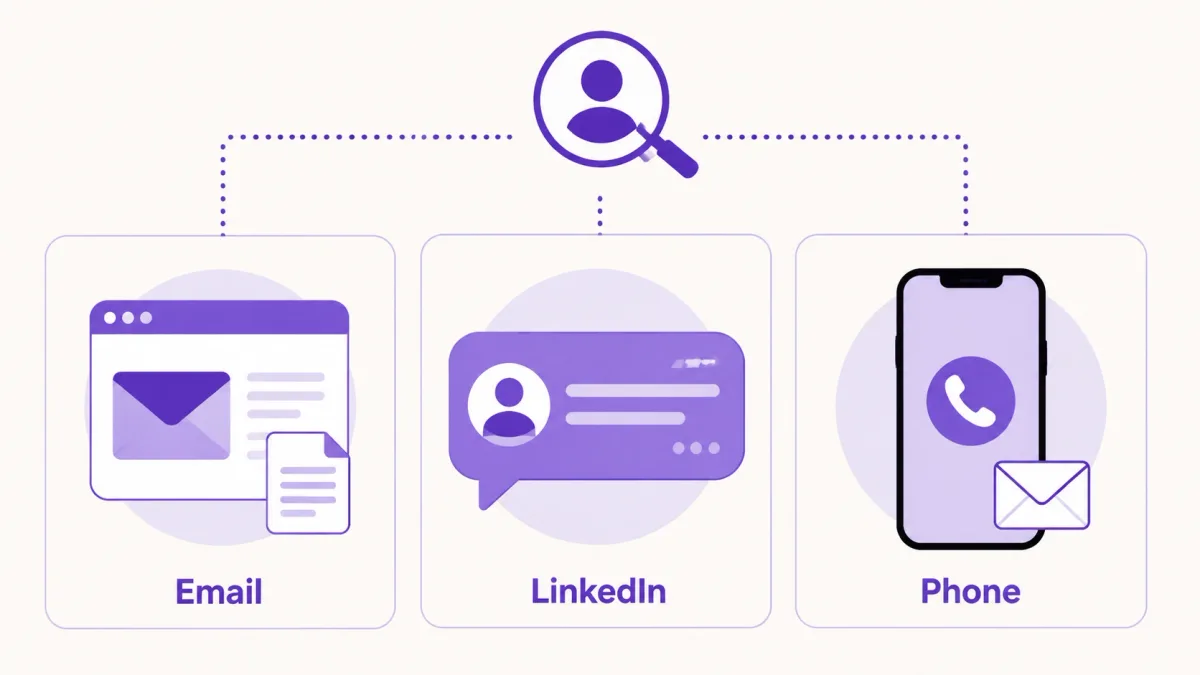
| Channel | Best when | Avoid when |
|---|---|---|
| You have a verified recruiter or hiring manager email; you want a documented, asynchronous message | You're emailing a generic careers inbox with no person attached | |
| LinkedIn message / InMail | You can verify the person is connected to the role but can't confirm email | You're tempted to blast multiple employees at once |
| Phone | The posting lists a number, the company is small, or email got no response after 7 calendar days | Large enterprises with centralized recruiting, postings that request no contact, or a general switchboard |
LinkedIn works best short and specific. Treat it as a follow up message for job application, not a cover letter.
A Phone Script That Does Not Put Anyone on the Spot
Prep note: have the role title, your application date, and one question ready before dialing.
If a person answers:
Hi, my name is [YOUR NAME]. I applied for the [ROLE TITLE] position on [DATE APPLIED]. I'm calling to confirm who is handling hiring for that role and what the best next step is. If now isn't a good time, I'm happy to call back.The core ask, kept simple:
Is this role still actively hiring, and is there a preferred way to follow up?Graceful exit if they're busy:
No problem at all. Thanks for your time. What's the best email to use, or who should I contact?If you reach voicemail (under 30 seconds):
Hi, this is [YOUR NAME]. I applied for the [ROLE TITLE] position on [DATE APPLIED]. I'm calling to confirm the hiring contact and timeline. You can reach me at [PHONE NUMBER]. Thank you.How Many Times Should You Follow Up?
Two is the ceiling.
Published advice ranges from one message to three. This article recommends two as the balance between persistence and restraint. The reasoning: after two unanswered messages, additional follow-ups carry no new information. They only change how you're perceived, and not in the direction you want.
The cadence, in calendar days:
- First message: 7-14 calendar days after applying, or 2-3 calendar days after the closing date.
- Second and final message: 7+ calendar days after the first.
- Stop.
What "Under Review" and Other Status Updates Actually Mean
Application status labels are not standardized across employers or applicant tracking systems. The same words can mean "a human looked," "a recruiter might look," or simply "your application exists in the system."
One practical point matters more than any label: internal progress does not automatically update the candidate-facing status. A static status is weak evidence of anything.
Employer-specific examples show how much these labels vary. UC Davis Health's applicant guidance, for instance, defines "Reviewed/Screen" as under review by the talent acquisition team and "Route" as sent to a hiring manager, definitions another employer's system may not share.
| Status you might see | May indicate | May not indicate |
|---|---|---|
| Submitted / Received | Your application was logged | Anyone read it |
| Under review | Someone may screen it; or it's simply queued | You're shortlisted |
| In process | The requisition is active in the ATS | You're advancing |
| Under consideration | In some systems, a shortlist | A guaranteed interview |
| Rejected / Not selected | The system marked you out | Why you were rejected |
A reasonable rule: a status unchanged for more than 14 calendar days is a trigger to follow up, not a reason to panic.
When You Never Hear Back (After No Response)
If you're searching for a follow up email for job application after no response, you're in the most common scenario there is. Being ghosted stings. It is also, in this market, the statistically ordinary outcome, and it's almost never about you.
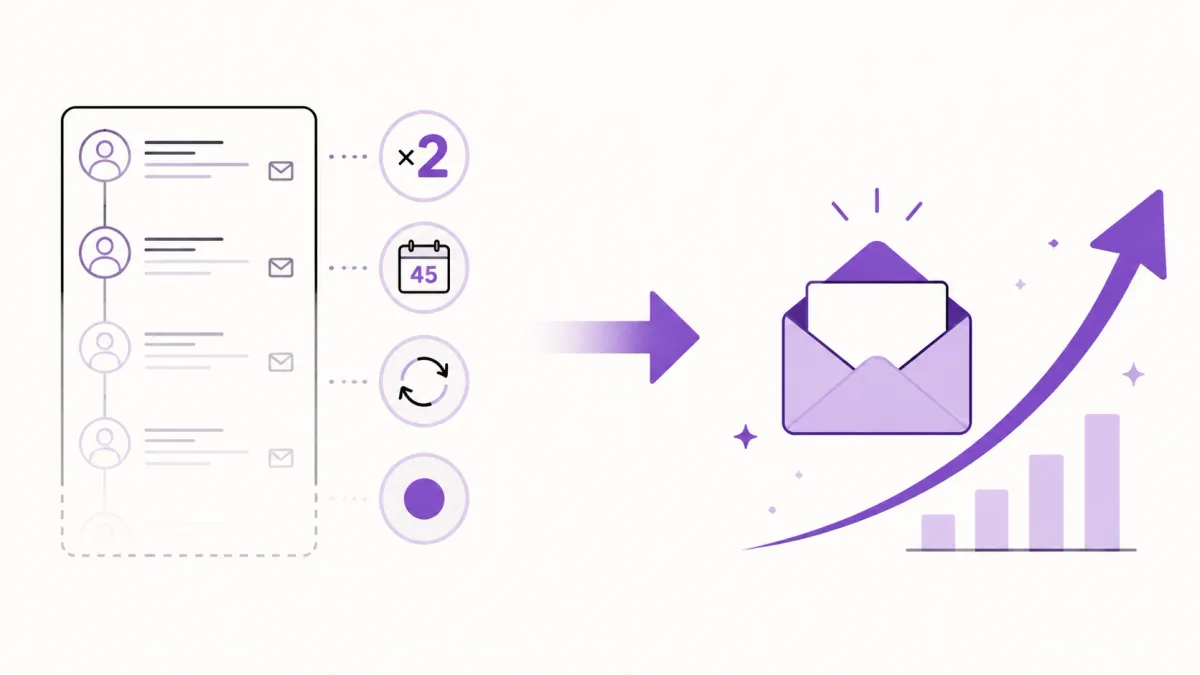
The structural reasons silence happens:
- Hundreds of applicants per posting.
- Talent teams stretched thin.
- Requisitions frozen or budgets pulled mid-process.
- An internal candidate selected before the posting closed.
- A reorganization that changed the role.
- A posting that was never backed by approved headcount, sometimes called a ghost job.
A role reposted repeatedly with no human contact is a signal to stop investing. That's different from scam listings, which have their own warning signs and their own risks.
Exit criteria (any one is enough):
- Two unanswered follow-ups.
- Roughly 45 calendar days since applying.
- Posting reposted with no contact.
- Status unchanged for 30 calendar days.
If any of these are true, archive it and redirect your effort. In ten years of coaching, I've watched candidates spend a full week's energy re-reading one silent thread. The application that deserves that energy is the next one. Upgrade the inputs that compound across your whole search: better targeting and better interview readiness. Use How to Prepare for a Job Interview: 14-Step Checklist as your next move if you're getting screens and want to convert them.
Small Questions That Stall People
Should I attach my resume to a LinkedIn message? No. Name the role and your application date. An unsolicited attachment in a direct message often goes unopened, and they already have your materials in the portal.
Can I use a first name in the subject line or greeting if we have never met? Use a normal professional greeting and their first name in the body. Keep the subject line about the role, not the person.
Can I apply to the same job twice? Generally no, unless the posting was genuinely reposted and your materials have meaningfully changed. Duplicate applications create confusing duplicate records.
Should I mention salary expectations in a follow-up? No. It shifts the conversation before there is one.
Should I connect on LinkedIn as well as email? Choose one channel. Doing both simultaneously reads as pressure.
Next Steps
If you remember one thing about how to follow up on a job application, make it this: reachability first, timing second, wording last.
Send at most two messages, spaced in calendar days, and set an exit date so you don't keep reopening the same thread. A non-response is weak evidence about you and strong evidence about how the market is operating.
Then get organized. Track each application with a simple system: date applied, who you contacted, your follow-up dates, and your stop date. And when a follow-up turns into a recruiter screen, prep for it like it matters. Great Offer AI is an AI interview coach that helps you practice answers and stay structured under pressure.