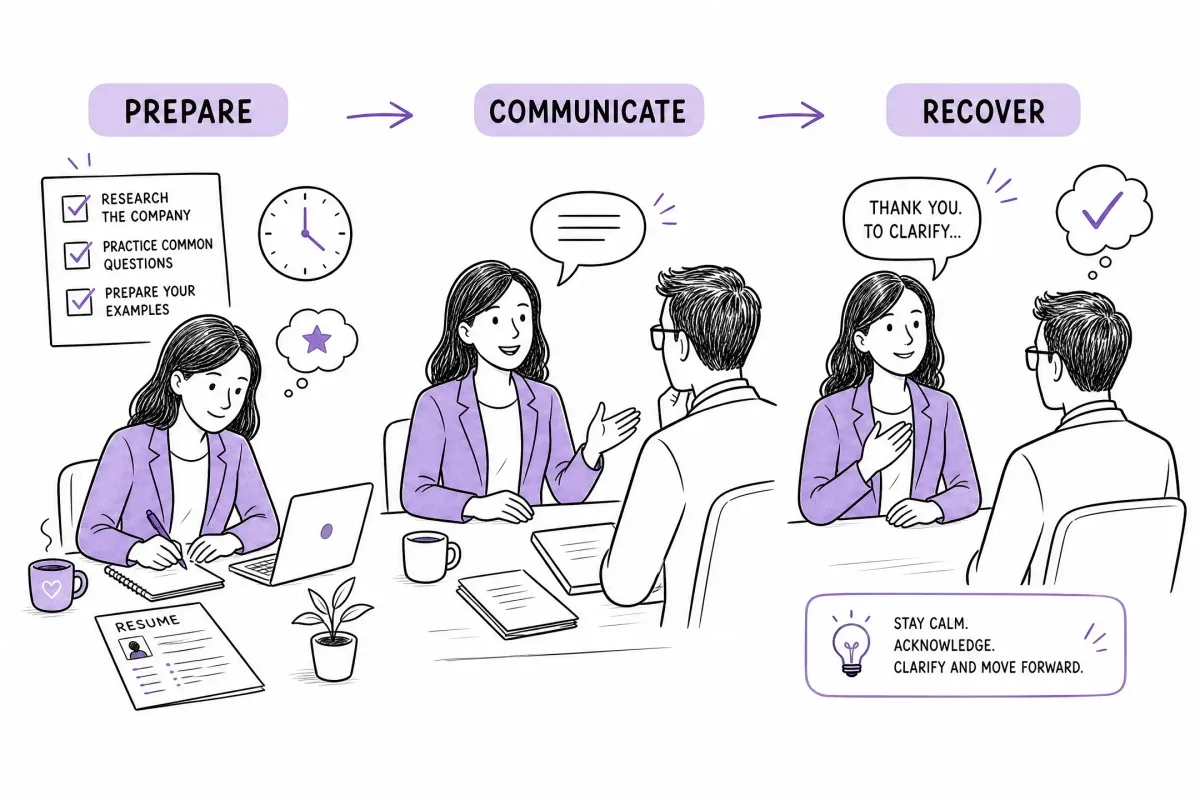

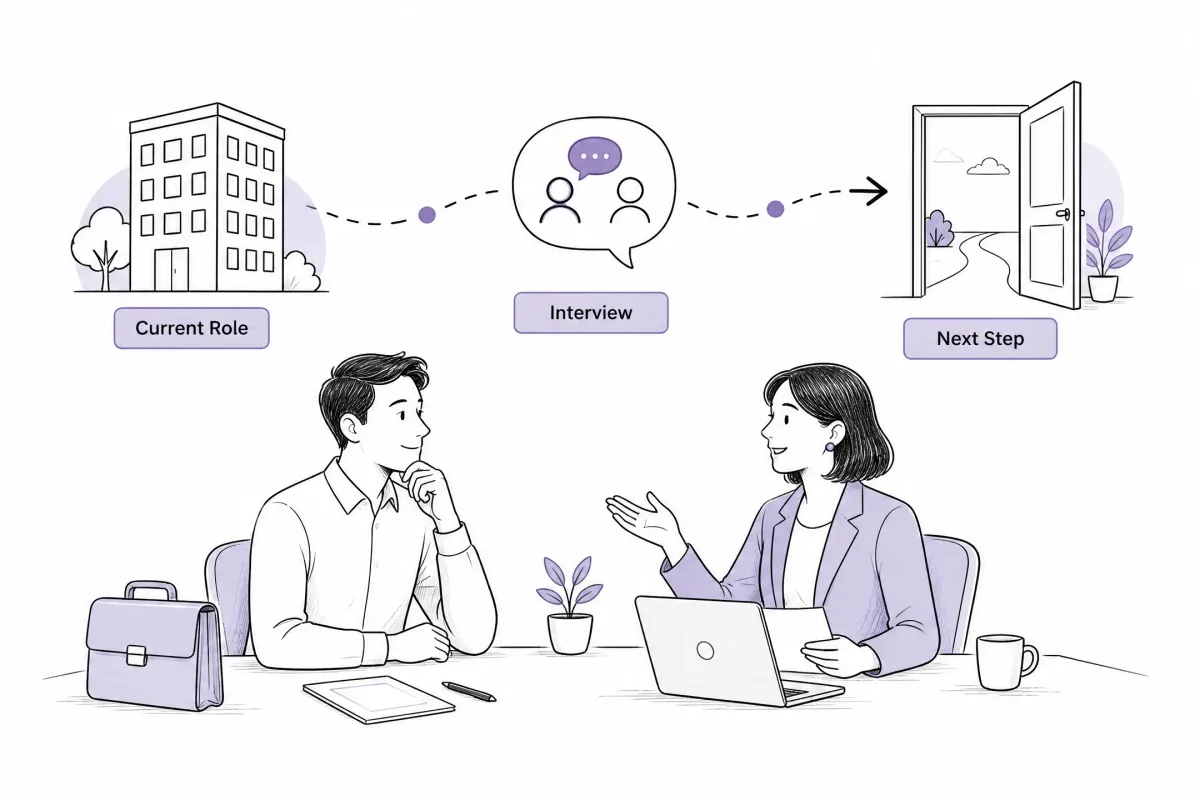
When an interviewer asks why are you leaving your current job, it is easy to feel on the spot. Whether you are seeking higher compensation, navigating a difficult manager, or recovering from a layoff, you might worry that stating your real reason will hurt your chances.
The truth is that hiring managers do not expect a dramatic story or a perfect excuse. They want to understand your motivation, assess your professional communication, and confirm that your career goals align with their open role.
You do not need to memorize a rigid script. By using a clear, professional framing strategy, you can turn a potentially awkward question into a convincing explanation of why this next move makes complete sense.
How to Answer “Why Are You Leaving Your Current Job?”
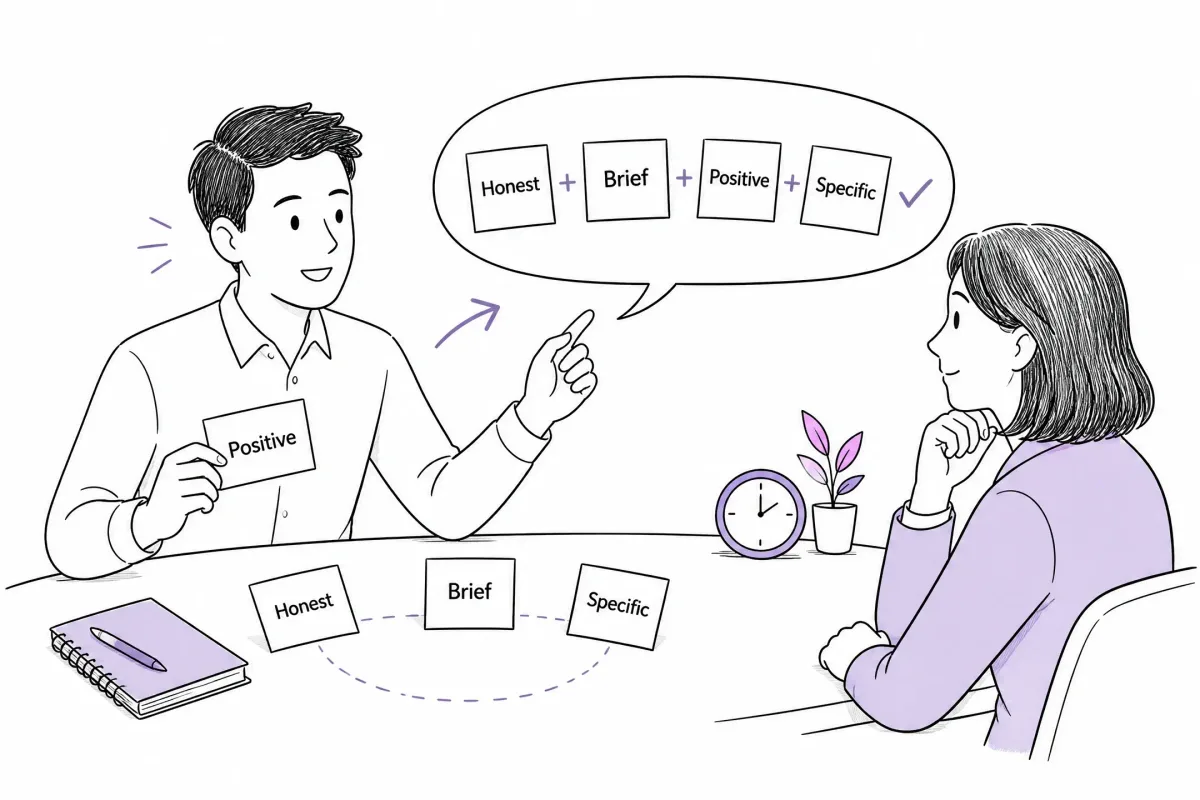
To deliver a polished response, structure your explanation around these four core principles:
- Start with what you gained from your current or previous role to set a positive, appreciative tone.
- Explain the gap or reason for moving on neutrally, focusing on missing professional alignment rather than personal frustration.
- Connect the change directly to the specific responsibilities and opportunities of the position you are pursuing.
- End with the concrete value you bring to the team, reinforcing why you are ready to contribute from day one.
Here is how those four principles come together in a universal, professional answer:
Universal Sample Answer: "I have learned a great deal in my current role, especially about managing cross-functional digital projects. However, the opportunities to take on broader project ownership are limited in our current structure. I am now looking for a position where I can use that experience to lead larger initiatives and contribute at a higher level."
Why Interviewers Ask Why You Want to Leave
Hiring teams do not ask why do you want to leave your current job to trap you or uncover office drama. Instead, they are evaluating how you handle professional transitions and whether you will thrive in their organization.
They may be trying to assess:
| What the Interviewer Is Assessing | What Your Answer Should Demonstrate |
|---|---|
| Primary Motivation | You are moving toward a compelling opportunity, not just running away from a bad situation. |
| Conflict & Stress Handling | You discuss past challenges calmly, professionally, and without personal resentment. |
| Goal Alignment | Your career trajectory and expectations match what this specific role can realistically offer. |
| Communication Maturity | You can summarize complex workplace dynamics with brevity, discretion, and self-awareness. |
When you realize that interviewers are simply checking for risk factors, your goal becomes straightforward: address any underlying concern, demonstrate self-awareness, and pivot immediately to the future.
Use the Past–Gap–Future–Proof Formula
To construct your custom answer in minutes, use the Past–Gap–Future–Proof Formula. This four-step structure helps keep your response balanced, positive, and directly linked to the target job.
[Past: Value Gained] ➔ [Gap: Neutral Driver] ➔ [Future: Target Alignment] ➔ [Proof: Concrete Evidence]
Past: Start With What You Gained
Begin by acknowledging the experience, skills, or opportunities you acquired in your current position. Starting with appreciation shows professional maturity and prevents your answer from sounding bitter or defensive.
- Example sentence starter: "I've really valued my time at [Company], particularly the chance to develop my skills in [Key Skill]..."
Gap: Explain What Is Missing Neutrally
State your reason for leaving without complaining. Frame the gap as a natural evolution in your career—such as reaching a growth ceiling, seeking a different team scale, or desiring a new technical focus.
- Example sentence starter: "However, because our team focuses primarily on [Current Focus], my opportunities to expand into [Desired Focus] have reached a natural limit..."
Future: Connect the Move to This Role
Bridge the gap by explaining exactly why the open position fits your next step. Reference a specific project type, company mission, or responsibility mentioned in the job description.
- Example sentence starter: "That is why this role caught my attention—your team's focus on [Target Role Detail] aligns perfectly with where I want to grow..."
Proof: Show Why the Move Makes Sense
Conclude with a brief piece of evidence—such as a recent project success, certification, or key metric—that proves you are prepared for this step.
- Example sentence starter: "In fact, after recently leading [Relevant Project], I am confident I can bring immediate value to your pipeline."
Fill-in-the-Blank Formula Template
You can adapt this fill-in-the-blank template to almost any situation:
Practice Template: "I have valued the opportunity to [develop skill / lead project]in my current role. I am now looking for[new growth / broader scope / specialized focus]because[neutral operational constraint or change]. This position stands out because [specific company asset or role responsibility]. My background in [relevant experience or metric] will allow me to step in and contribute quickly."

10 Sample Answers for Different Reasons for Leaving
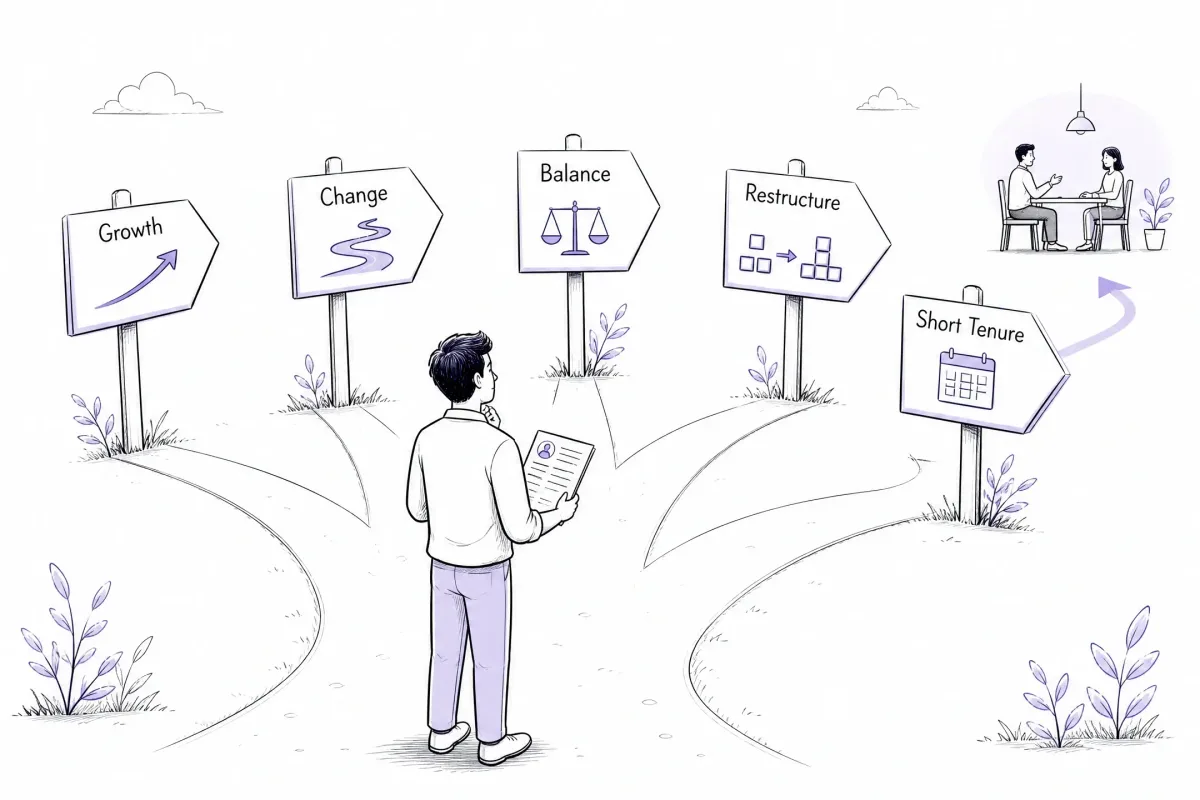
Your actual reason for leaving a job might fall into one of several categories. Below is a comprehensive decision matrix mapping 10 common scenarios, followed by detailed sample answers for each.
Reason-to-Answer Decision Matrix
| Your Situation | Professional Framing | Interviewer Concern | Likely Follow-Up Question |
|---|---|---|---|
| 1. No Room for Growth | Reached a skill ceiling; seeking larger project ownership. | Will you get bored quickly here? | "What specific growth opportunities are you seeking?" |
| 2. Career Specialization | Repositioning background toward a new domain or function. | Do you have transferable skills? | "What prompted this shift in your career focus?" |
| 3. Compensation & Benefits | Seeking market alignment alongside broader scope. | Are you only motivated by money? | "What are your total compensation expectations?" |
| 4. Work-Life Balance | Seeking sustainable working hours and schedule predictability. | Can you handle peak deadlines? | "How do you manage competing priorities under pressure?" |
| 5. Toxic Management / Culture | Seeking clearer decision-making and collaborative feedback. | Were you difficult to manage? | "What management style brings out your best work?" |
| 6. Burnout & Heavy Workload | Seeking structured processes and resource-backed execution. | Do you lack resilience? | "How do you recognize and manage stress?" |
| 7. Layoff / Restructuring | Position eliminated due to organizational realignments. | Was performance a factor in selection? | "How was the selection process structured?" |
| 8. Contract Ending | Fixed-term project reaching successful completion. | Why wasn't the contract extended? | "What major milestones did you deliver during the term?" |
| 9. Terminated / Fired | Mismatch in performance expectations; lessons applied. | Will performance issues recur? | "What did you learn from that experience?" |
| 10. Short Tenure (< 6 Months) | Misaligned role realities discovered early; quick corrective pivot. | Are you a job hopper? | "What steps did you take to resolve the mismatch?" |
Scenario 1: Career Growth and More Responsibility
When there is no clear promotion path at your present company, emphasize your readiness for a bigger challenge rather than complaining about stagnant management.
Sample Answer: "I’m proud of what I’ve accomplished in my current role, especially building our client onboarding workflow from scratch. However, our company structure is quite small, so advancement opportunities are limited. I’m looking for a position where I can take on direct team leadership and manage larger accounts, which aligns directly with this job description."
Scenario 2: A Career Change or Different Specialization
If you are transitioning into a new industry or role, show how your past achievements built transferable skills for this new path.
Sample Answer: "In my five years in corporate sales, I discovered that my strongest passion lies in analyzing customer data to improve retention. I completed a data analytics certification last year and led two internal research initiatives. I am ready to transition full-time into data analysis, where my background in client psychology will give me a unique edge."
Scenario 3: Compensation, Flexibility, or Work-Life Balance
While higher compensation and remote flexibility are valid motivators, avoid making them your sole explanation. Pair lifestyle needs with professional growth.
Sample Answer: "I have really enjoyed my work, but my current role requires 80% business travel, which is no longer sustainable for my family. I am looking for a hybrid or local role where I can dedicate consistent energy to long-term strategic projects while maintaining a healthier work-life balance."
Scenario 4: Culture, Management, or Bad Fit
Never criticize a former boss or company culture directly. Instead, translate personal friction into positive structural preferences, such as clearer ownership, better feedback, or more predictable decision-making.
Sample Answer: "My current company operates with a very fluid, decentralized structure. While I learned to be adaptable, I thrive best in environments with clear decision-making processes, transparent KPIs, and structured cross-team collaboration. This role’s focus on process rigor and clear team alignment is exactly what I am looking for."
Scenario 5: Restructuring, Layoffs, or Contract Ending
Layoffs and company realignments are common economic realities. State the facts plainly without defensiveness, highlight what you accomplished before the change, and focus on the future.
Sample Answer: "Due to a recent corporate restructuring, my department was downsized, and my position was eliminated along with 20% of the division. While I was sad to leave a great team, it gave me an opportunity to re-evaluate my career goals. I am now looking to bring my background in cloud architecture to an agile engineering team like yours."
Scenario 6: Leaving After a Short Time (Under 6 Months)
Leaving a job after a few months raises red flags about stability. Be honest about unexpected mismatches, explain the steps you took to try to adapt, and focus on why this new role is built to last.
Sample Answer: "When I joined my current company, the role was described as strategic marketing. After starting, the daily responsibilities shifted almost entirely to administrative event coordination. I attempted to adjust the scope with leadership, but the business needs required event support. I am seeking a role strictly focused on performance marketing where my quantitative skills add real value."
Scenario 7: Seeking Better Compensation
If compensation is a major reason, you can mention it without making the interview sound like a salary negotiation before the employer understands your value.
Sample Answer: "I’ve appreciated the experience I’ve gained in my current role and have taken on responsibilities beyond the scope of my original position. I’m now looking for an opportunity with broader ownership and compensation that is aligned with the level of contribution expected. This role interests me because it combines that scope with the kind of work I want to continue developing."
Use this answer only if it reflects your actual situation. Be prepared to discuss compensation expectations separately and professionally.
Scenario 8: Burnout and Heavy Workload
Burnout can be a legitimate reason to seek a more sustainable role, but the explanation should not suggest that you avoid demanding work.
Sample Answer: "I’ve learned a great deal from working in a fast-moving environment, including how to prioritize under pressure. Over time, the workload and resourcing model became difficult to sustain, so I’m looking for a team with clearer planning and realistic capacity management. I believe that structure would allow me to produce stronger, more consistent work over the long term."
Avoid sharing extensive medical or personal details in response to this question. Focus on the work conditions you need and how they support reliable performance.
Scenario 9: A Contract Has Ended
A completed contract is usually a straightforward explanation. Focus on what you delivered and what kind of work you want next.
Sample Answer: "My current contract was tied to a defined implementation project, and the project has now reached its planned completion. During the engagement, I built experience in stakeholder coordination and process improvement. I’m now looking for a longer-term role where I can apply those skills to ongoing operational and strategic work."
If the contract was not renewed, do not imply that it was extended. State what happened accurately and move to your accomplishments and next goal.
Scenario 10: Termination or Firing
If you were terminated, do not create a false explanation that may conflict with your application, references, or background information. Keep the answer factual, concise, and accountable.
Sample Answer: "Following a leadership transition, expectations shifted, and my performance was ultimately not considered a fit for the new direction. I take responsibility for the areas where I needed to communicate more clearly and align earlier with changing expectations. The experience helped me become more deliberate about clarifying priorities, measuring progress, and confirming what success looks like."
The exact wording should reflect the facts of your situation. If there were serious legal, safety, discrimination, or harassment issues, seek appropriate professional advice before deciding how much detail to disclose in an interview.
What Not to Say—and How to Reframe It
Even valid feelings can sound unprofessional if expressed without filter. Use this reframing guide to transform high-risk statements into constructive interview answers:
| What NOT to Say (Raw Reason) | How to Reframe It Professionally | Why the Reframed Version Works |
|---|---|---|
| "My boss is terrible and micromanages everything I do." | "I am looking for a role with clear autonomy where I can take full ownership of my project deliverables." | Shifts focus from interpersonal conflict to professional accountability and initiative. |
| "I am leaving because the pay is way below market average." | "I am looking for a position that offers both expanded responsibilities and market-aligned compensation." | Demonstrates self-worth while keeping scope and contribution at the center. |
| "I am completely burnt out from working 70 hours a week." | "I am seeking an environment with structured workflows and realistic resourcing so I can deliver sustainable, high-quality work." | Frames balance as a commitment to output quality rather than an avoidance of hard work. |
| "My current job is boring and I'm tired of doing the same tasks." | "I have mastered my current responsibilities and am ready for a role with greater technical complexity and new challenges." | Replaces boredom with mastery and an appetite for professional growth. |
| "I got fired because I didn't get along with the new management team." | "Following a leadership transition, expectations shifted. While I adapted, it became clear our approaches differed. I learned valuable lessons about communication alignment." | Shows accountability, self-reflection, and emotional maturity. |
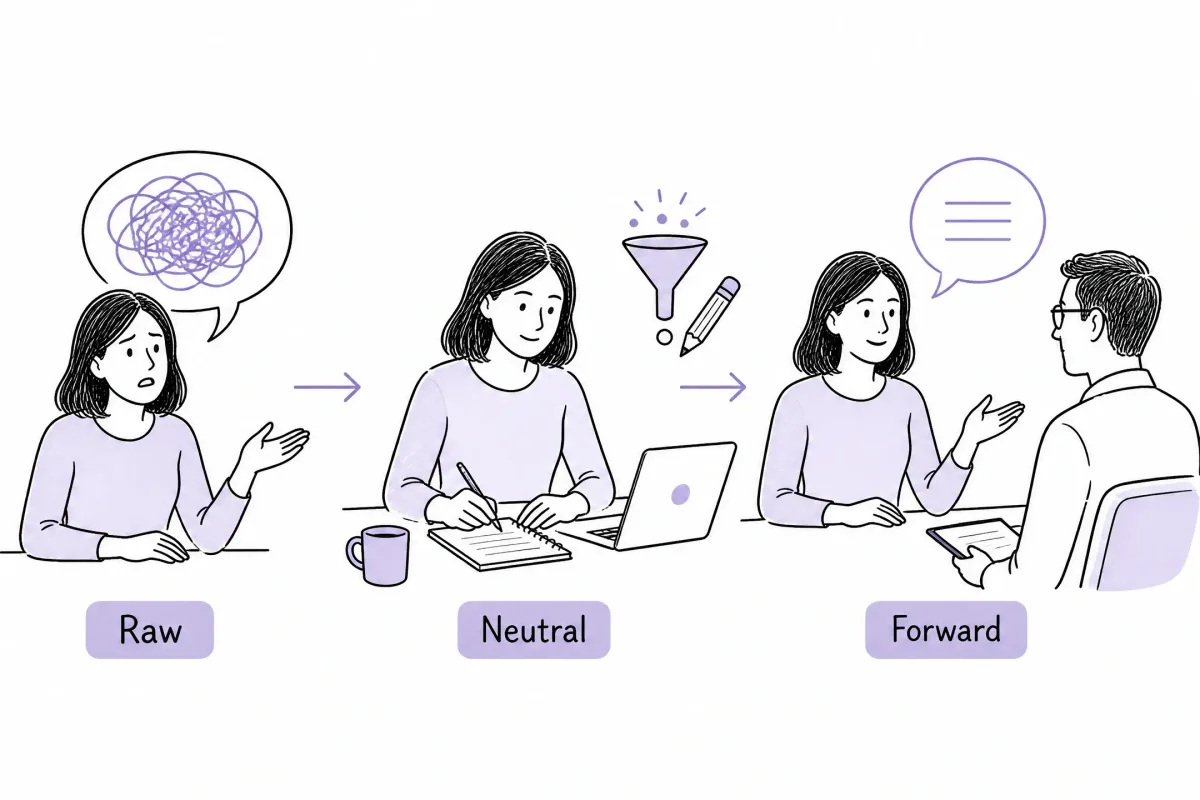
Build Your Own Answer in 10 Minutes
Use this step-by-step worksheet to turn your raw circumstances into a refined 30-second interview answer.
| Item | Detail |
|---|---|
| Step 1 | Write raw reason ➔ Step 2: Remove emotion/blame ➔ Step 3: Identify candidate risk |
| ➔ Step 4 | Pick professional growth driver ➔ Step 5: Match role detail ➔ Step 6: Add metric ➔ Step 7: Edit to 3-4 sentences |
The 10-Minute Answer Builder Worksheet
- Write down your raw, unfiltered reason: (Example: "I hate my manager's constant last-minute changing deadlines.")
- Remove all emotional words, personal attacks, and internal company politics: (Stripped version: "Deadlines change without clear planning, making execution chaotic.")
- Identify what an interviewer might worry about when reading this: (Risk: "Is this candidate flexible? Do they get stressed easily?")
- Choose a positive professional growth driver: (Driver: "Desire for structured project planning and cross-team alignment.")
- Find one specific requirement in the target job description that matches: (Role match: "Job ad highlights organized sprint cycles and clear product roadmaps.")
- Add one concrete skill or result from your past experience as proof: (Proof: "Delivered 12 consecutive quarterly software releases on time.")
- Combine into 3–4 clean sentences and practice out loud: (Final Answer: "I have enjoyed delivering 12 consecutive quarterly software releases in my current role. However, our internal processes frequently pivot without sprint planning, making long-term optimization difficult. I am looking for an organization that values structured sprint management and clear product roadmaps, which is why your engineering culture stood out to me.")
The 5-Point Self-Scoring Checklist
Before heading into your interview, test your answer against these five checks:
- Truthful: Is your answer grounded in actual facts rather than a made-up story?
- Brief: Can you deliver it comfortably in 30 to 45 seconds (under 80 words)?
- Forward-Looking: Does at least 50% of your response focus on what you want to achieve next?
- Role-Specific: Does your reason connect directly to this specific company or job posting?
- Supported by Evidence: Did you mention a concrete skill, project, or result as proof?
Prepare for Follow-Up Questions and Practice Your Delivery
A great initial answer is only half the battle. Interviewers often ask follow-up questions to test whether your initial response was sincere or rehearsed.
Top 5 Interview Follow-Up Questions
| Follow-Up Question | What the Interviewer Is Really Asking | Key Preparation Point |
|---|---|---|
| 1. "What steps did you take to resolve this issue before deciding to leave?" | Did you try to fix the situation, or do you quit at the first sign of difficulty? | Mention 1–2 constructive conversations or proactive initiatives you tried internally. |
| 2. "Why do you believe our company will be different?" | Did you research our company culture, or are you making assumptions? | Cite specific facts about their public workflow, tech stack, or team structure. |
| 3. "What would your current manager say is the reason you are leaving?" | Is your story consistent with your background checks and reference calls? | Ensure your explanation aligns with what your manager or HR department would state. |
| 4. "Why are you making this change right now?" | Is this an impulse decision, or part of a deliberate career plan? | Point to a recent milestone (project completion, annual review, certification) as the natural timing. |
| 5. "What would make you stay in your next position long-term?" | What criteria do you need to remain engaged and retainable? | List 2–3 sustainable cultural or growth factors present in the target role. |
Delivery Best Practices
- Keep your tone calm and neutral: Avoid rising pitch, nervous laughter, or defensive body language.
- Practice key concepts, not scripts: Memorize your core transition points rather than word-for-word sentences so you sound natural.
- Ensure application consistency: Make sure the reason you give in person matches any reason for leaving listed on your job application forms.
Practice Tip: Before important interviews, practice your delivery in realistic mock settings. Tools like GreatOffer AI provide a private, real-time AI interview copilot and structured mock practice. You can test different framings for sensitive questions, receive instant feedback on your tone and structure, and build natural confidence before stepping into the live interview room.
Important: Use interview preparation tools according to the rules of the employer, school, interview platform, or assessment provider. Practice support should help you prepare and communicate your own experience, not replace honest answers or violate interview policies.

Keep Your Answer Honest, Brief, and Forward-Looking
Mastering the reason-for-leaving question comes down to perspective. You do not need to hide your past or fabricate a perfect story; you simply need to organize your real experience through a professional lens.
Use the Past–Gap–Future–Proof Formula to draft your core 30-second answer, run it through the 5-point self-scoring checklist, and prepare for common follow-up questions. The best answer is not the most polished sentence. It is the clearest truthful explanation of what you learned, what you need next, and why this specific opportunity makes sense.