

Why Interviewers Ask “Why Should We Hire You?”
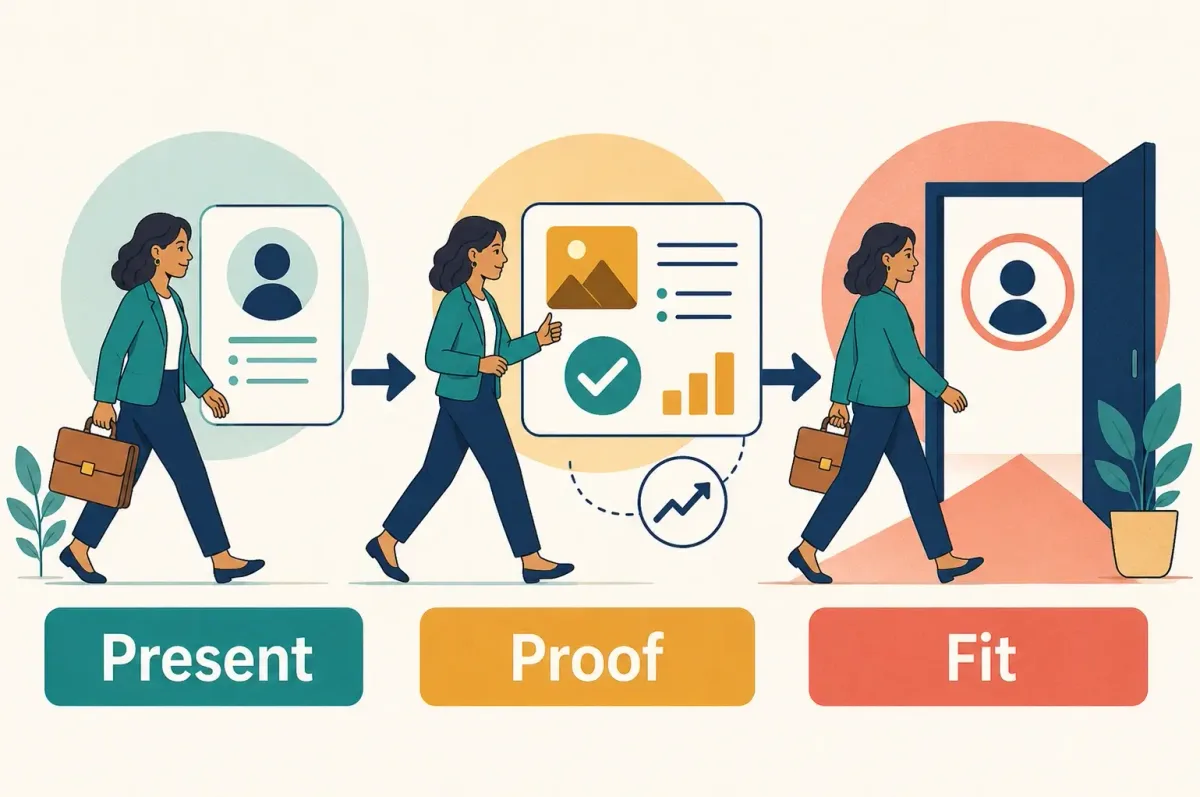
This question is best understood as a value-matching question. The interviewer may be assessing whether you understand the job, can support your claims with evidence, and know how your experience could help the team.
A strong response helps the interviewer answer four practical questions:
- Do you understand what this role needs?
- Have you handled something relevant before?
- What would you bring beyond a generic list of strengths?
- Can you explain your value clearly and realistically?
The question is not an invitation to repeat your résumé from beginning to end. It is also not a request for unsupported adjectives such as “hard-working,” “passionate,” or “motivated.” Those qualities may be useful, but the interviewer cannot evaluate them properly without seeing how they influenced your work.
A better way to interpret the question is: “Can you solve the problem this role was created to solve?” Start with the employer’s need, then connect that need to something you have actually done.
For broader preparation, see our guide on how to prepare for a job interview.
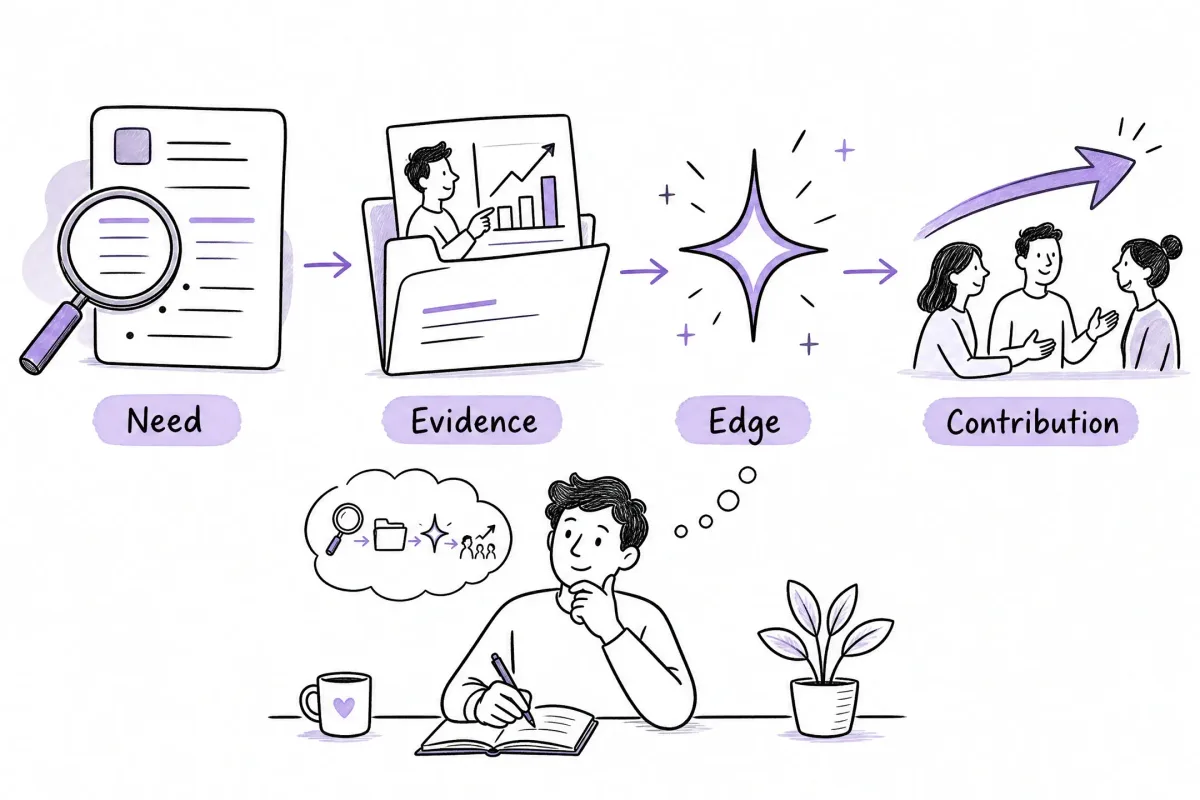
A Four-Part Structure for Your Answer
1. Lead With the Role’s Need
Begin with the employer’s priority rather than a broad statement about yourself. Look for responsibilities or outcomes that appear repeatedly in the job description.
The role may need someone who can:
- Coordinate work across teams.
- Improve customer relationships.
- Handle a high volume of support requests.
- Build reliable software under deadlines.
- Explain complex information clearly.
Your opening should show that you understand the specific position. For example:
“You’re looking for someone who can keep cross-functional projects organized and moving toward their deadlines.”
That is more useful than starting with, “I am a highly motivated professional.”
2. Prove the Match With One Example
Choose one experience that demonstrates the skill or outcome the employer needs. Your evidence can come from a previous job, internship, course project, certification, volunteer role, portfolio, or student organization.
Explain three things:
- The situation or problem.
- What you personally did.
- The result, deliverable, scope, or standard you achieved.
Use a real metric when you have one. If you do not have a metric, describe the number of stakeholders, type of customer, complexity of the work, deadline, frequency, or quality requirement. Do not invent a percentage simply to make the answer sound more impressive.
3. Show What Makes Your Experience Useful
Your advantage should be specific to the role. It might be industry knowledge, cross-functional communication, customer experience, analytical ability, technical ownership, or experience building a process from the ground up.
Instead of saying, “I am a strong project manager,” explain the type of projects you manage and the method you use to keep them on track. Specificity makes the claim easier to trust.
4. Connect Your Experience to a Realistic Contribution
End by showing how you would apply your experience in the new position. Focus on a contribution you can influence, not an outcome you cannot guarantee.
Useful phrases include:
- “I can contribute by…”
- “I would bring…”
- “That experience would help me…”
- “I’m ready to apply that approach to…”
Use this template as a starting point:
“You’re looking for someone who can [role need]. In my previous [role, project, or experience], I [relevant action], which led to [truthful result or evidence]. I would bring [specific edge], and I’m ready to use that experience to [realistic contribution].”
Build Your Answer From the Job Description in Five Minutes
You do not need to analyze every line of the job posting. Use this process to turn the most important requirements into a focused answer.
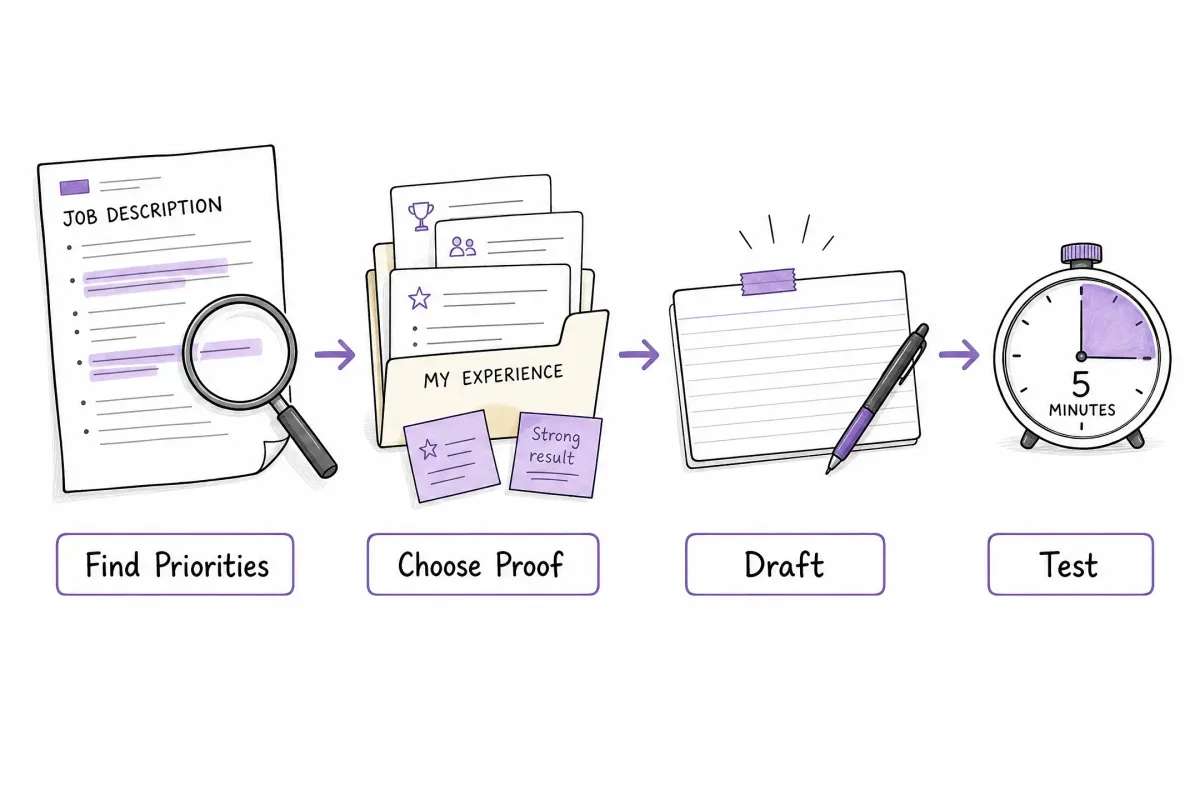
Step 1: Find the Top Three Priorities
Look for responsibilities near the beginning of the posting, skills marked “required” or “must have,” repeated themes, and outcomes implied by the position.
For example, a project coordinator posting may repeatedly emphasize stakeholder communication, deadline management, and risk tracking. Those are more useful answer topics than a minor software preference mentioned once.
Step 2: Select One Matching Proof Point
Review your work history, projects, education, and volunteer experience. Choose an example that is relevant, recent enough to explain clearly, and supported by an actual responsibility or result.
If you have no direct experience, use a transferable example. A class project can show research and presentation skills. Volunteer work can show organization and customer communication. A personal project can show technical practice and follow-through.
Step 3: Complete This Worksheet
| Prompt | Your notes |
|---|---|
| The role needs someone who can… | |
| My strongest proof is… | |
| What makes my approach useful is… | |
| I can contribute by… |
Step 4: Write a 30- to 60-Second Version
A concise answer needs the role requirement, one proof point, and a realistic contribution. A longer version can add context about your actions and results.
Write four or five sentences, say them aloud, and remove anything that does not help prove your fit. Your goal is not to memorize a speech. Your goal is to remember the logic of your answer.
Step 5: Run the Job-Description Test
Read every sentence and ask: “Does this help show that I can succeed in this specific role?”
Remove unrelated achievements, unsupported qualities, and information the interviewer already knows from your résumé. The final answer should sound prepared for this employer, not copied from a general interview template.
“Why Should We Hire You?” Examples by Situation
The examples below are illustrative. Replace the roles, responsibilities, and results with truthful details from your own experience. If an interviewer asks a follow-up question, you should be able to explain every part of your answer.
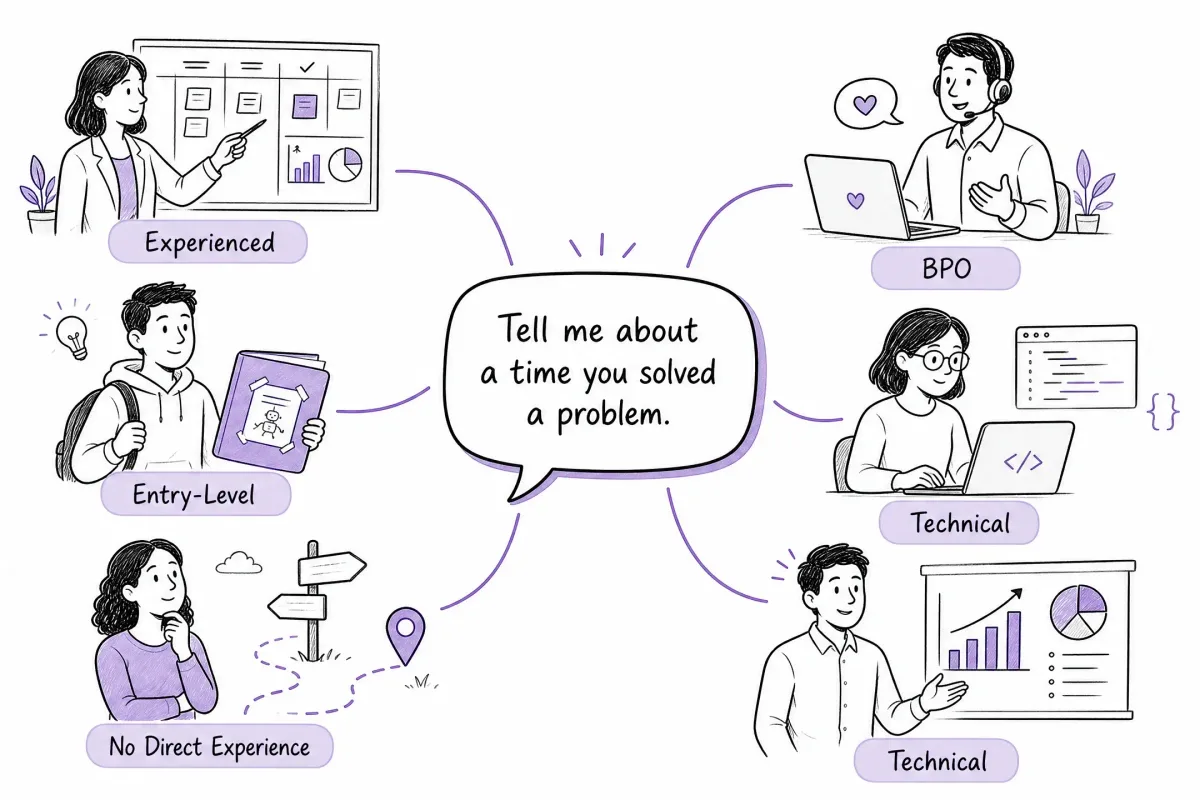
Experienced Professional
“You’re looking for someone who can coordinate complex projects across product, operations, and client teams. In my current role, I led a cross-functional launch that had been delayed by unclear ownership. I introduced a shared delivery plan, clarified decision points, and created a regular risk review that helped the team complete the launch with fewer last-minute changes. I would bring that same structured, collaborative approach to your team.”
This works because it connects one relevant project to the employer’s need without repeating the candidate’s full career history.
Fresher or Entry-Level Candidate
“You’re looking for an entry-level marketing coordinator who can research audiences, organize campaign details, and communicate clearly. In my final-year project, I worked with a local organization to develop a digital campaign plan based on customer interviews and competitor research. I organized the findings, presented our recommendations, and revised the plan after stakeholder feedback. I’m early in my career, but I can bring practical project experience and a strong ability to apply feedback.”
This approach uses a project to prove readiness instead of relying on “I’m eager to learn” without evidence.
Candidate With No Direct Experience
“Although I have not worked in a formal customer success role, my current position requires many of the same skills. I regularly explain complex information, respond to concerns, and coordinate with different departments to resolve problems. That experience has taught me how to listen carefully, set clear expectations, and follow an issue through to completion. I would bring those transferable skills while learning your product and customer processes.”
The candidate addresses the experience gap directly, then translates existing responsibilities into skills the new employer can use.
Career Changer
“You need a project coordinator who can manage stakeholders, organize competing priorities, and keep work moving against deadlines. My background is in teaching, but those responsibilities have been central to my work. I have coordinated school-wide programs, communicated with families and administrators, and adjusted plans when requirements changed. I have also completed project management training. I would bring strong organization, calm communication, and experience guiding different groups toward a shared outcome.”
This answer acknowledges the transition, identifies transferable skills, and shows preparation without apologizing for the career change.
Sales, Customer Service, or BPO Candidate
“You’re looking for someone who can handle a high volume of customer conversations while maintaining trust and service quality. In my previous role, I managed customer questions across phone and email, resolved routine issues independently, and coordinated more complex cases with billing and technical teams. My strength is staying calm, identifying the real concern behind the question, and giving the customer a clear next step. I can bring that consistency and ownership to your support team.”
The answer reflects real service criteria such as volume, escalation, emotional control, clarity, and ownership.
Technical or Software Candidate
“You need an engineer who can deliver reliable features while working closely with product and design. In my current role, I helped rebuild a customer onboarding workflow that had become difficult to maintain. I separated core logic into reusable components, added tests around high-risk paths, and worked with product to clarify edge cases before release. I would bring that combination of technical ownership and cross-functional communication to your engineering team.”
This example connects technical work to team communication instead of listing tools without showing how they were used.
Strong vs. Weak Answers
The difference between a weak and strong answer is usually specificity, not dramatic language.
| Weak approach | Stronger approach | Why it is stronger |
|---|---|---|
| “I’m a hard worker.” | “I took ownership of a delayed handoff and created a clearer process for the teams involved.” | It shows behavior instead of using an unsupported adjective. |
| “I’m better than the other candidates.” | “My combination of customer-facing and analytical experience would help me contribute quickly.” | It explains a relevant advantage without judging unknown candidates. |
| Repeating every previous role | Selecting one experience that matches the current job | It keeps the answer relevant and protects the interviewer’s time. |
| “I can transform the company.” | “I can contribute by improving how the team tracks and communicates project risks.” | It makes a realistic, controllable promise. |
| Listing five strengths | Proving one or two strengths with an example | Evidence is easier to remember and trust. |
Confidence comes from being able to explain what you did, why it mattered, and how it relates to the job. Replace one generic claim with one specific piece of evidence.
Practice and Deliver Your Answer Naturally
Writing the answer is only part of the preparation. You also need to say it naturally when the question arrives in a different form or at an unexpected point in the interview.
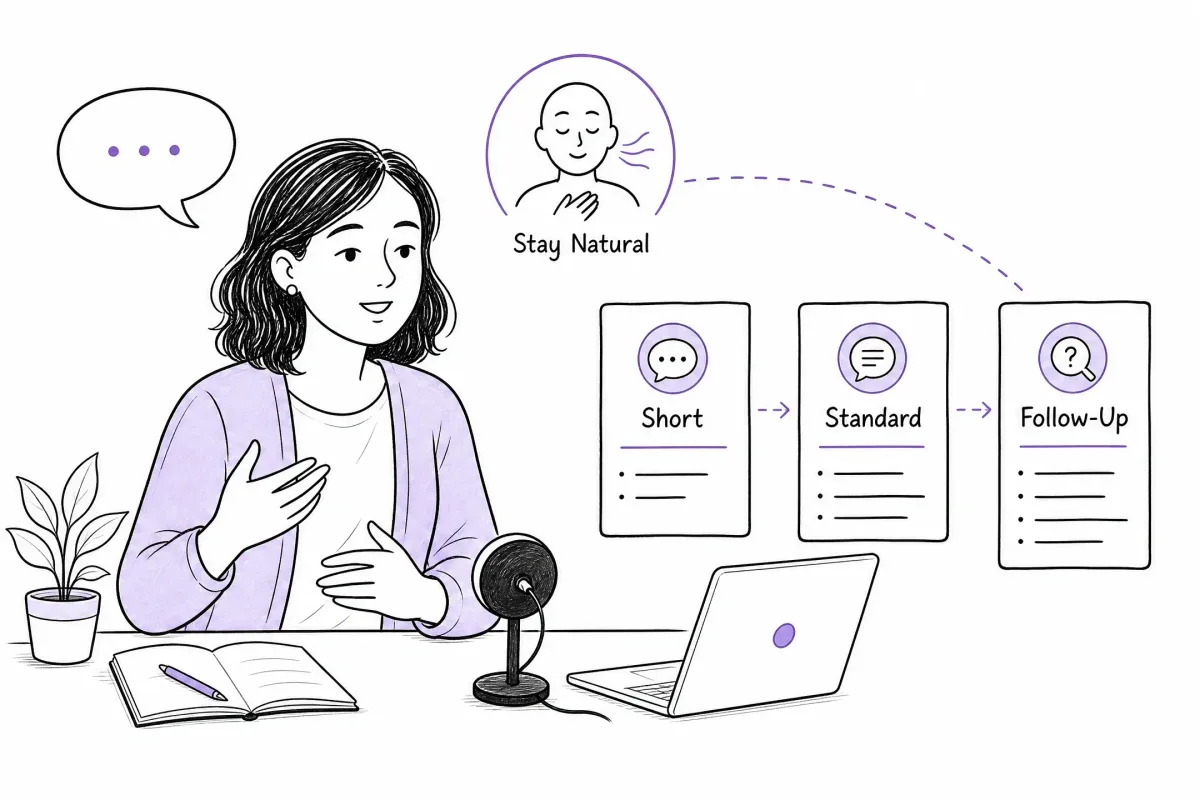
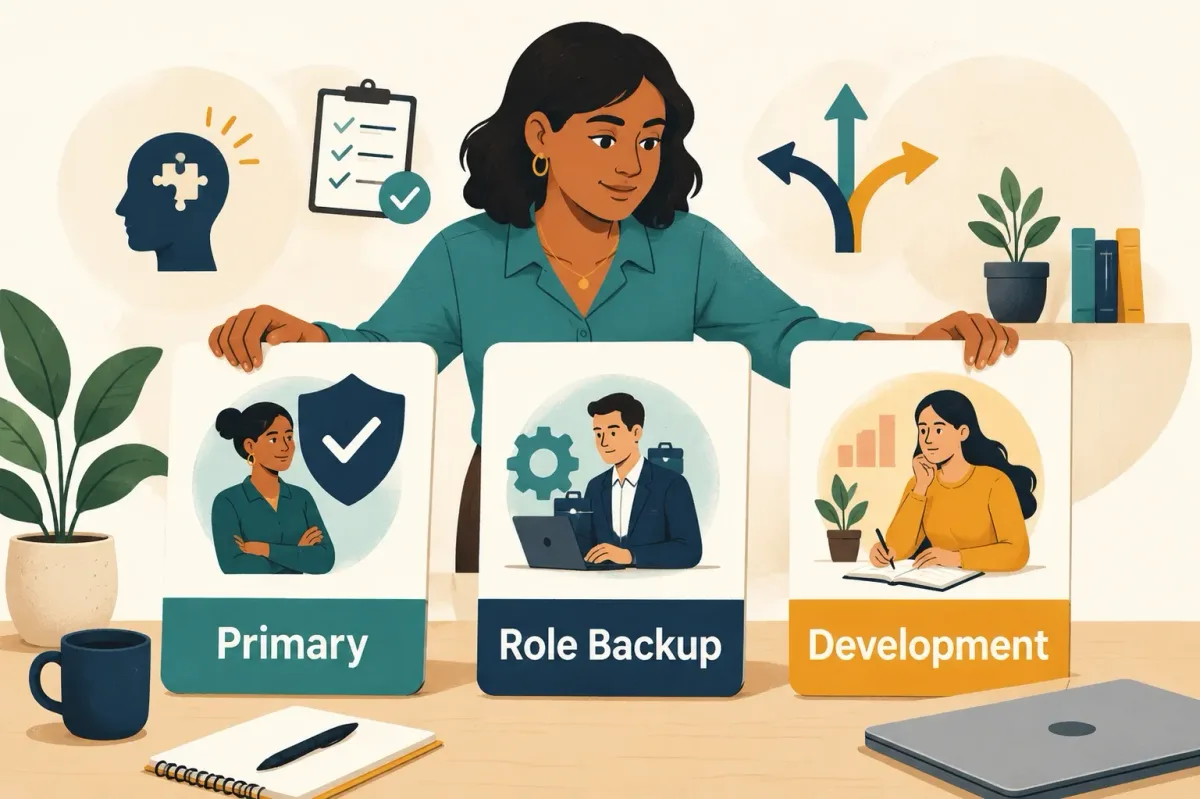
Prepare Three Versions, Not One Script
- Short version: State the need, one proof point, and your contribution.
- Standard version: Add context about your action and result.
- Follow-up version: Be ready to explain the situation, decisions, obstacles, and outcome in more detail.
Practice the same points in slightly different words. Remember the four ideas—need, evidence, edge, and contribution—rather than memorizing every sentence.
Recover If Your Mind Goes Blank
A brief pause is better than filling the silence with unrelated strengths. Take a breath and use a recovery line such as:
“That’s a good question. The example that best shows my fit is…”
Then return to the job’s main need and one proof point.
Use AI Responsibly for Role-Specific Practice
GreatOffer AI can help you rehearse role-specific answers, analyze interview questions, and practice likely follow-ups with context from your background and target role. Use it to test different versions of your answer, not to invent experience or replace your own judgment.
Review every suggestion, replace generic language with your real details, and follow the employer’s, school’s, or interview platform’s rules before using any AI assistance during an interview.
Final Seven-Point Checklist
Before the interview, confirm that your answer passes these checks:
- I named the role’s most important need.
- I used one relevant example.
- I explained what I actually did.
- I included a truthful result, scope, or other form of proof.
- I explained a specific advantage I would bring.
- I connected my experience to the employer’s goals.
- I can say the answer naturally and concisely.
If one item is missing, revise that part of the answer. The checklist is for preparation; it does not predict whether you will be hired.
Turn the Framework Into Your Own Answer
The strongest answer is not the one with the most impressive adjectives. It is the one that makes your value easy to verify.
Open the job description, identify its three most important needs, choose one truthful proof point, and build your response with the four-part structure. Then say it aloud, prepare for one follow-up question, and remove anything vague or exaggerated.