

Disclaimer: This article provides general career information, not legal or financial advice. Salary disclosure and salary-history rules can vary by employer, state, and locality; verify the requirements that apply to you.
The wording of your answer to "what's your desired salary" changes depending on whether you are completing an application field, speaking with a recruiter, or discussing compensation in an interview. Start by identifying whether the employer wants base salary, hourly pay, or total compensation.

What Does “Desired Salary” Mean?
In most U.S. job applications and recruiter conversations, “desired salary” means the gross base pay you want before taxes and deductions. It normally does not include bonuses, commissions, equity, tips, or employer-paid benefits unless the form specifically asks for total compensation.
These terms are related but not interchangeable:
| Term | Usually means | How to handle it |
|---|---|---|
| Base salary | Regular gross pay, stated annually or hourly | Give this figure first when asked for salary |
| Salary expectations | Your target base pay or range for the role | Tie it to role scope, level, and market research |
| Total compensation | Base pay plus bonus, commission, equity, benefits, and other value | Ask which components are included before comparing offers |
| Minimum acceptable salary | Your private walk-away floor | Keep it private; do not use it as your opening target |
If the form says “desired compensation,” “on-target earnings,” or “total package,” clarify whether the employer wants base salary, expected first-year earnings, or the full package. A sales role with commission and a salaried individual-contributor role should not be evaluated using the same pay definition.

What Should You Put for Desired Salary on an Application?
The right entry depends on the field type. Read the label, instructions, and job posting before choosing a response.
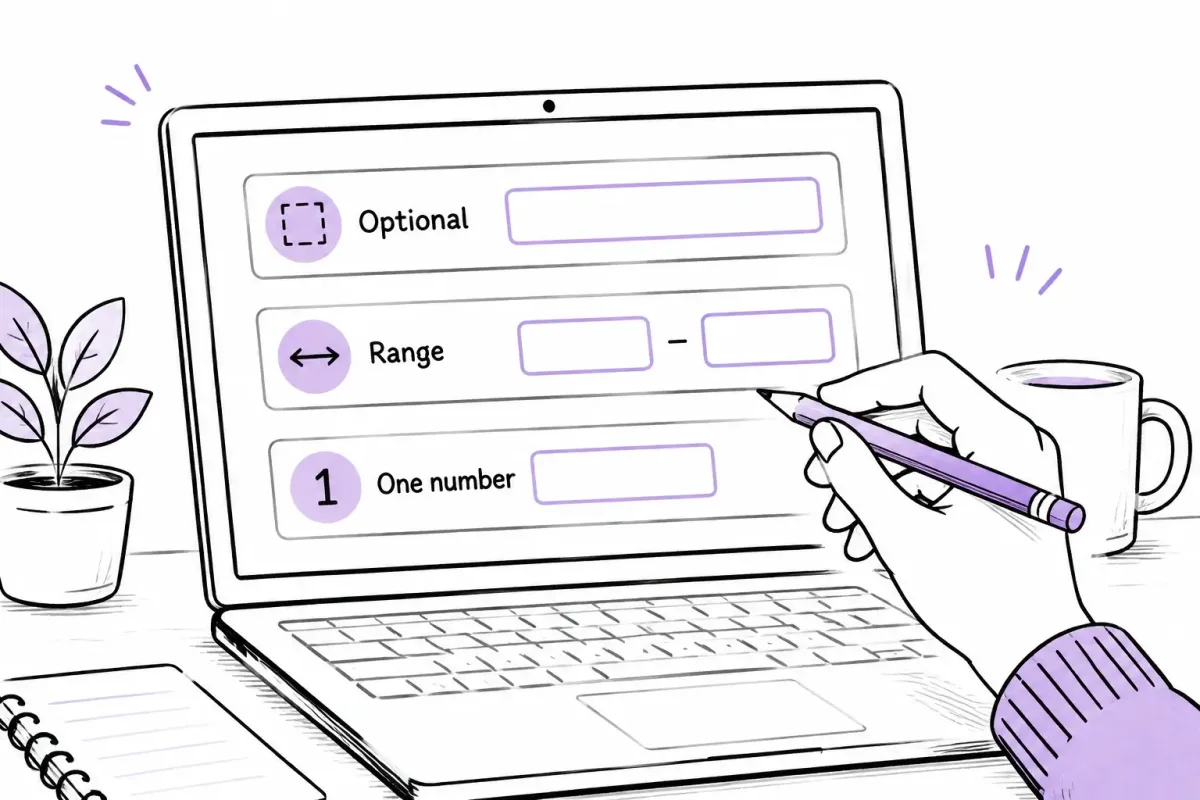
If the field is optional
Leave it blank if the system allows that and you would genuinely prefer to discuss compensation later. If the form accepts text, use a professional response such as:
Negotiable based on the responsibilities of the role and the complete compensation package.
Do not use “negotiable” if the field is numeric-only. The form may reject text or leave the recruiter unsure what you expect.
If the field requires a salary range
Use a range supported by your research and keep it narrow enough to communicate a real expectation. The range should reflect the role’s level, location or remote-pay policy, and the responsibilities described in the posting.
Based on comparable roles and the responsibilities listed, I’m targeting a base salary of
$X–$Y, with flexibility depending on benefits, bonus structure, and the final scope.
If the employer has already posted a range, stay within it unless the job duties clearly differ from the description. You can explain your position later using the qualifications and responsibilities that place you toward the lower, middle, or upper part of that range.
If the field requires one number
Enter a target number—not your absolute minimum and not an artificially high figure. Use the midpoint or another defensible point in the posted range, adjusted for your experience and the job scope.
If the form has a notes field, add:
This figure represents my target base salary and is open to discussion based on the full compensation package and final responsibilities.
Do not enter $0, $1, $999,999, or another placeholder simply to avoid answering. Those entries can create validation problems or communicate an expectation that you do not actually hold.
If the field asks for hourly pay
State the pay basis clearly:
I’m targeting
$X–$Yper hour, depending on the schedule, shift requirements, benefits, and overtime structure.
If the application asks for annual salary but the job is hourly, a basic full-time conversion is:
Annual equivalent = hourly rate × hours per week × weeks per year
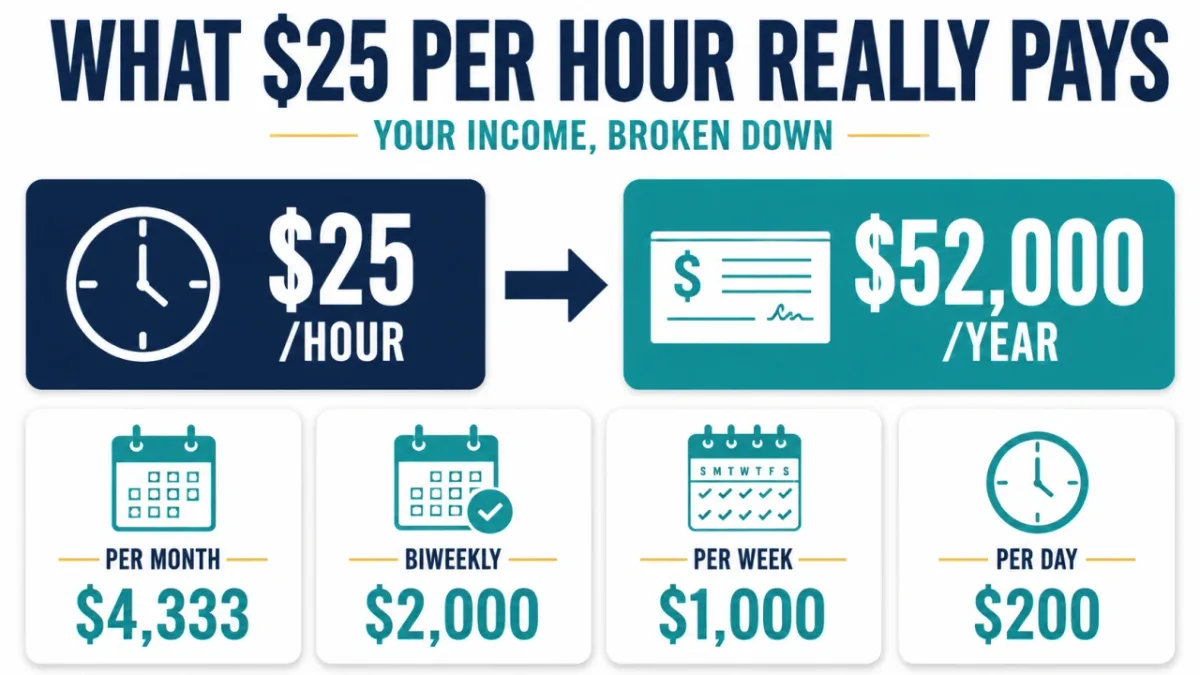
For example, $25 per hour × 40 hours × 52 weeks equals $52,000 before taxes. For a fuller breakdown, see how $25 an hour converts to annual pay. This is only a conversion; it does not account for unpaid time off, overtime, benefits, or differences in scheduled hours.
How to Calculate a Realistic Desired Salary Range
Do not choose a number because it sounds impressive or because it matches your current bills. Build a range you can explain in one or two sentences.
1. Match the role, level, and actual scope
Compare the work—not just the title. Check:
- Core responsibilities and expected outcomes.
- Individual-contributor, lead, or people-manager scope.
- Required tools, certifications, licenses, or domain expertise.
- Travel, on-call work, shift requirements, or client-facing duties.
- Whether the job is fully remote, location-based, or tied to a specific pay market.
The same title can cover very different jobs. A “marketing manager” who owns a small channel is not automatically comparable to one who manages a team, budget, and revenue target.
2. Use more than one salary source
Start with the employer’s posted range when one is available. Then compare it with:
- BLS Occupational Outlook Handbook: useful for occupation definitions, typical duties, median pay, and state or area data.
- CareerOneStop Salary Finder: useful for comparing an occupation by city, state, or ZIP code.
- Comparable job postings: prioritize postings with a stated range, similar responsibilities, and the same seniority level.
- Recruiter or professional-network input: use this as context, not as proof of a universal market rate.
The BLS OOH reports median pay and related occupational information, while CareerOneStop’s Salary Finder uses Department of Labor wage data for national, state, and sub-state regions. Wage figures change, and no national median can determine the correct pay for one specific employer or candidate, so check the data date before quoting a number. Sources: BLS Occupational Outlook Handbook and CareerOneStop Salary Finder
3. Set a private floor, target, and stretch point
Write down three numbers before the interview:
Private minimum:  $[your walk-away floor]
Target:           $[the number you would be happy to accept]
Stretch point:    $[the upper end you can defend]
Stated range:     $[range you are prepared to share]
Your private minimum is for your own decision-making. Your stated range should not start below it, because an employer may treat the lower end as a realistic offer. At the same time, do not set a range so high that you cannot connect it to the role’s responsibilities or your qualifications.
4. Compare the complete package
Base salary is only one part of an offer. Ask what applies to:
- Annual bonus, commission, or other variable pay.
- Equity, stock options, or vesting terms.
- Health insurance premiums, deductibles, and employer contributions.
- Retirement contributions or matching.
- Paid time off, holidays, and sick leave.
- Remote-work policy, schedule, travel, relocation, or equipment.
- Promotion timing, review cycle, and guaranteed versus discretionary increases.
Do not convert benefits into made-up dollar values. Ask for the plan details, then compare offers using the value that is real, guaranteed, and relevant to you. Add compensation and role-scope details to your broader list of questions to ask in an interview.
5. Prepare the reason behind your range
Your explanation should rely on professional evidence:
- Market data for the occupation and location.
- The scope and complexity of the job.
- Relevant experience, skills, certifications, or leadership.
- Specific results you can honestly document, such as revenue, savings, speed, quality, retention, or delivery improvements.
Avoid explaining your number through rent, debt, family expenses, or a personal financial emergency. Those concerns matter to your budget, but they do not establish the market value of the work.

Best Answers to “What Is Your Desired Salary?”
Use these as templates. Replace every bracketed item with information you have actually researched or can verify.
When the employer has not posted a range
Based on my research for
[role]at the[level]level in[location or pay market], I’m targeting a base salary of$[X–Y]. I’m open to discussing the complete package and the final scope of the role.
When the job already lists a range
I saw the posted range of
$[posted low–posted high]. Based on my experience with[relevant responsibility or skill], I’m targeting$[X–Y]within that range. I’d also like to understand how the company structures bonus, equity, and benefits.
When you want the employer’s range first
I’d like to understand the role’s priorities and level before setting a firm number. Could you share the budgeted base-salary range for the position?
This is especially useful in an early screen when the job description is brief or the posting gives no compensation information. You still need your own range ready in case the recruiter asks again.
When the recruiter insists on one number
If the form requires one figure, my target base salary is
$[X], assuming the responsibilities and total compensation are consistent with the job description. I’m open to reviewing the full package.
For an entry-level role
Based on comparable entry-level
[role]positions in[location]and my skills in[relevant skills], I’m targeting$[X–Y]. I’m also evaluating the training, benefits, and growth path that come with the role.
Do not apologize for having limited experience. Anchor your answer to the requirements you can meet and the market information you found.
For an hourly job
I’m targeting
$[X–Y]per hour. The exact rate would depend on the shift schedule, overtime policy, benefits, and the responsibilities assigned to the position.
For a career change or unclear role scope
I’d like to learn more about how this newly created or cross-functional role is scoped. Based on my transferable experience in
[skill area], I’m currently targeting$[X–Y], with flexibility once the responsibilities and total package are clear.
When asked about current or past salary
I prefer to focus on the value and scope of this position rather than my previous compensation. Based on the responsibilities and market research for this role, I’m targeting
$[X–Y]in base salary.
Whether an employer may ask about salary history can depend on the law where the job is located. If you are unsure, check the applicable state or local labor authority before the conversation.
When the offer is below your target
Thank you for sharing the offer. I was targeting
$[X–Y]based on the role’s scope and the market data I reviewed. Is there room to move the base salary? If the base is fixed, could we discuss the bonus, equity, sign-on payment, paid time off, remote flexibility, or timing of the next compensation review?
Only mention alternatives that are genuinely valuable to you, and ask whether they are guaranteed, discretionary, or subject to a vesting or eligibility rule.

Common Desired Salary Mistakes
| Better approach | Avoid | Why it matters |
|---|---|---|
| Research the role, location, and level | Guess from a similar-sounding title | Comparable work may pay differently |
| Keep your floor private | Quote your walk-away minimum as your target | The employer may anchor its offer near that number |
| Give a range you can defend | Use an extremely broad range with no explanation | It can make your expectations look unclear |
| Follow the form’s input rules | Put text in a numeric-only field | The form may reject the entry or create ambiguity |
| Discuss role value and market evidence | Lead with personal bills or debt | Personal expenses do not establish job value |
| Clarify base versus total compensation | Treat bonus or equity as guaranteed cash | You may compare offers using value you will not receive |
| Ask about responsibilities and pay policy | Compare jobs with different scope or locations | Title-only comparisons are often misleading |
| Rehearse a concise answer | Over-explain or sound apologetic | A short, calm answer is easier to understand |
Practice Your Answer Before the Interview
Use this four-part structure for a response that takes about 20 seconds. Pair this rehearsal with the broader steps in how to prepare for a job interview:
- Context: Name the role, level, and market you researched.
- Range: State your target base-salary range.
- Evidence: Mention one relevant skill, responsibility, or documented result.
- Flexibility: Refer to total compensation and final role scope.
Example framework:
Based on my research for
[role]in[location], I’m targeting$[X–Y]in base salary. That reflects my experience with[relevant responsibility]and the scope described in the posting. I’m open to discussing the full compensation package.
Prepare for follow-up questions
“Is the bottom of that range your absolute minimum?”
The lower end reflects the scope and market data I reviewed. I’d want to evaluate the complete offer, including benefits and variable compensation, before deciding.
“How did you calculate that range?”
I compared the posted responsibilities with current occupation and location data, then adjusted for my experience with
[specific skill or responsibility].
“How flexible are you?”
I’m open to a discussion, especially once I understand the full package. I also want to make sure the final base salary reflects the responsibilities of the role.
Record yourself answering once, remove filler words, and practice saying the range without rushing. The goal is not to sound scripted; it is to make sure nerves do not replace preparation.
If you want additional rehearsal, GreatOffer AI's real-time interview copilot can be used as a practice aid. Use live assistance only when it is permitted by the employer and the interview platform.

Sources for Salary Research
- U.S. Bureau of Labor Statistics Occupational Outlook Handbook
- CareerOneStop Salary Finder
- U.S. Department of Labor Interview Tips
Conclusion: Choose a Number You Can Defend
The best answer to “What is your desired salary?” is not the biggest number you can say or the smallest number you think an employer will accept. It is a researched expectation that matches the role, your qualifications, the pay market, and the complete compensation package.
Prepare your private floor, target, and stretch point. Ask for the employer’s range when you need more context. When you do give a number, state it calmly, explain the evidence behind it, and keep the conversation focused on the value and scope of the work.