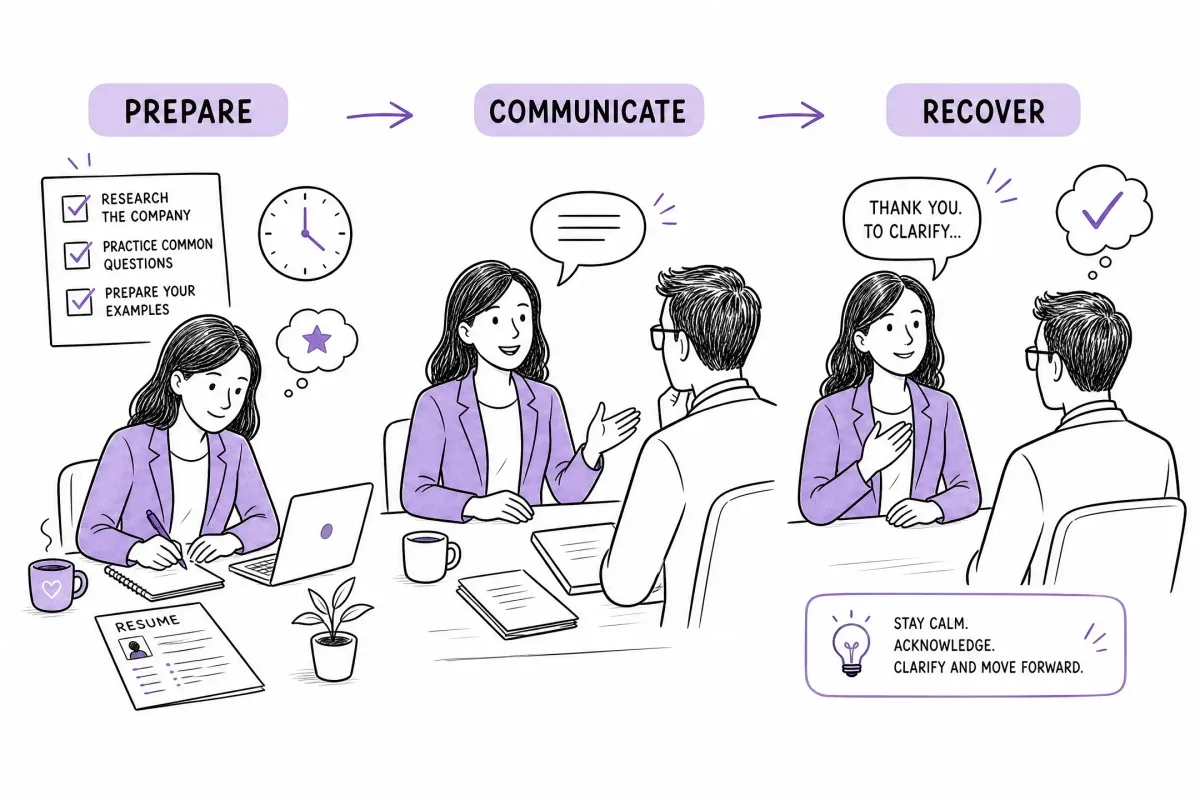


Getting an internship is not simply a matter of sending more applications. You need to choose the right roles, show evidence that you can contribute, search through several channels, and improve your approach based on the results you receive.
You can do this without previous internship experience. Coursework, personal projects, campus activities, volunteering, and part-time jobs can all demonstrate relevant skills when you present them clearly.
1. Choose a Target Role
A clear target makes your resume, project choices, search terms, networking messages, and interview preparation more effective.
Instead of searching for “any internship,” choose one or two related role families, such as:
- Marketing and communications
- Software engineering and data
- Finance and business operations
- UX and graphic design
- Research and public policy
- Human resources and recruiting
You are not choosing your entire career. You are creating a useful starting point for your internship search.
Research the Role Before Applying
Find three to five current internship descriptions for your target role. Record the skills, tools, responsibilities, and qualifications that appear repeatedly.
For example, marketing internship descriptions might repeatedly mention written communication, social media platforms, research, content planning, analytics, and presentation skills.
That list tells you what to demonstrate in your resume, projects, outreach, and interview answers.
Separate Requirements From Preferences
Read each posting carefully. Employers often combine essential eligibility rules with qualifications they would merely prefer.
Check the following first:
- Student or recent-graduate status
- Graduation date
- Location and work schedule
- Work authorization
- Availability during the internship
- Required certifications or licenses
- Explicit GPA or academic requirements
Skills described as “preferred,” “helpful,” or “a plus” may be more flexible. If you meet the essential eligibility requirements and can demonstrate several of the central skills, the internship may still be worth pursuing.
Do not reject yourself because you fail to match every bullet point. However, do not ignore a clearly stated eligibility restriction.
Know What Proof the Role Requires
| Target role | Useful proof |
|---|---|
| Software or data | GitHub project, technical write-up, data analysis |
| Marketing | Campaign plan, content samples, audience research |
| Finance or business | Spreadsheet model, market analysis, process review |
| UX or design | Portfolio case study, prototype, research summary |
| Research or policy | Literature review, research memo, data summary |
| HR or recruiting | Process proposal, event coordination, communication examples |
Choose a role based not only on what interests you, but also on whether you can create or collect relevant evidence.

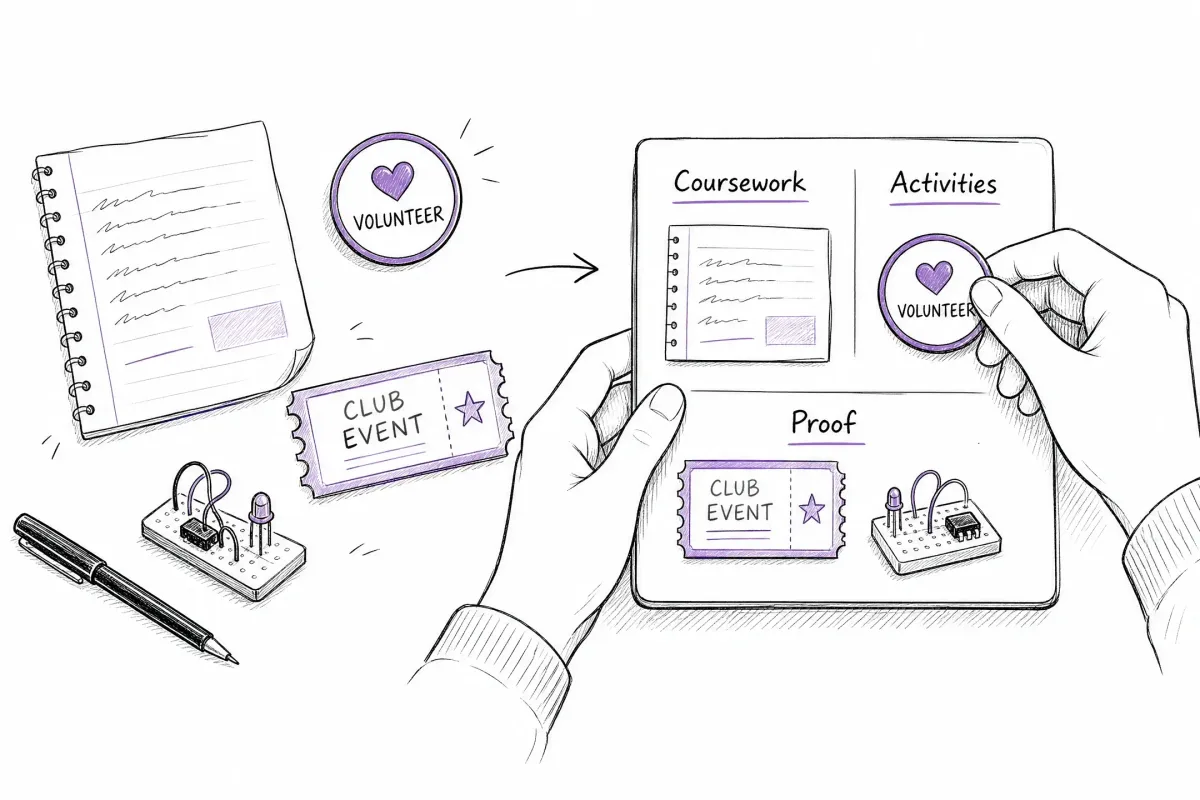
2. Build Evidence That You Can Do the Work
“No experience” usually means that you have not held the exact job title before. It does not mean that you have no relevant skills.
Audit the Experience You Already Have
Review your:
- Coursework and class projects
- Student organizations
- Volunteer activities
- Part-time or seasonal jobs
- Competitions and hackathons
- Independent projects
- Campus leadership
- Research assignments
- Family business responsibilities
For each activity, ask:
- What problem or task did I handle?
- What did I personally do?
- Which skills or tools did I use?
- What did I produce, improve, or learn?
- Can I show or explain the result?
A retail job may demonstrate communication, organization, accuracy, or conflict resolution. A group assignment may demonstrate research, analysis, presentation, or project coordination.
Turn Activities Into Evidence
A weak description lists a responsibility:
Helped manage social media for a student club.
A stronger description explains the scope and process:
Planned a four-week content calendar and created Instagram posts promoting three student events, using platform analytics to identify the topics that generated the most engagement.
Specificity does not always require a percentage or revenue figure. If you did not measure a result, do not invent one. You can still describe:
- The number of deliverables
- The people or teams involved
- The tools you used
- The frequency of the work
- The audience
- The problem you addressed
Create One Small, Relevant Project
If your experience audit reveals an important gap, build a manageable project that addresses it.
You could:
- Analyze a public dataset and summarize the findings.
- Build a simple website or application.
- Create a marketing plan for a local business.
- Redesign a confusing registration process.
- Write a short industry research memo.
- Build a financial model using public information.
- Create a recruitment or onboarding proposal for a student organization.
One complete, well-explained project is more valuable than several unfinished ideas.
For every project, document:
- The problem
- Your goal
- Your process
- The tools you used
- The final deliverable
- What you learned
- What you would improve next time
3. Prepare a Relevant Resume and Application
Your application should help a recruiter answer one question quickly:
Why is this applicant relevant to this internship?
Build a Scannable Internship Resume
Depending on your background, the most useful sections may include:
- Contact information
- Education
- Relevant projects
- Skills
- Work or volunteer experience
- Leadership and activities
- Portfolio or GitHub link
Put your strongest, most relevant evidence near the top. If your projects are more relevant than your part-time job, your projects may deserve greater prominence.
For many students with limited experience, a focused one-page resume is practical. However, relevance and clarity are more important than following an arbitrary length rule.
Use readable fonts, consistent dates, clear headings, and straightforward formatting. Avoid design elements that make important information difficult to scan.
For more examples, see Skills to Put on a Resume: A Proof-First Guide.
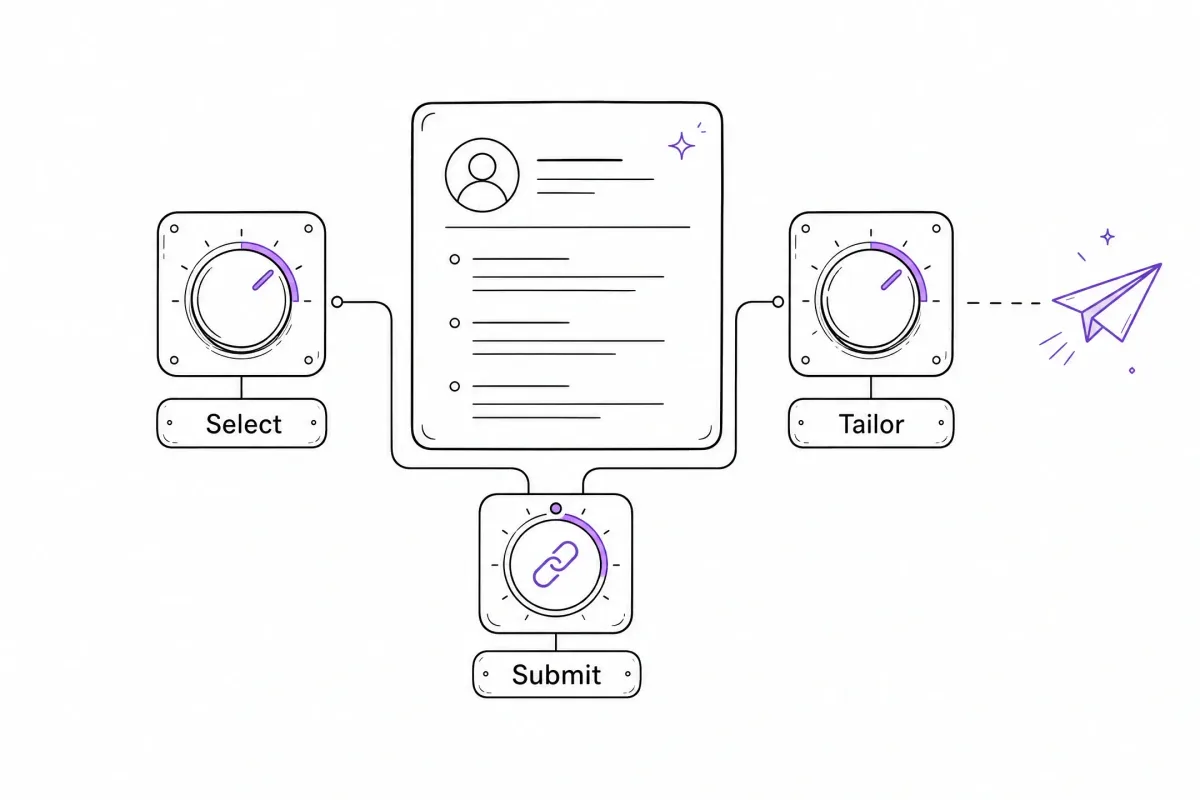
Tailor the Resume to the Posting
You do not need to rewrite your resume from the beginning for every application. Maintain a master resume containing all your relevant experience, then create targeted versions.
For each priority internship:
- Identify the main responsibilities.
- Note the repeated skills and tools.
- Select your strongest evidence for those requirements.
- Move the most relevant evidence higher.
- Revise your wording using accurate industry terminology.
- Remove information that distracts from your fit.
Use language from the posting only when it accurately describes your experience. Copying keywords without supporting evidence may make your application look relevant at first, but it will not help during an interview.
Write Bullets That Prove Skills
A useful resume bullet normally contains:
- An action
- A task or problem
- A method or tool
- A scope or result
Weak:
Responsible for a student organization newsletter.
Stronger:
Wrote and scheduled a weekly newsletter for a 300-member student organization, coordinating event announcements from five committee leads.
The second version gives the recruiter a clearer picture without exaggerating the result.
Prepare Supporting Materials
Not every internship requires a cover letter. When one is requested, use it to explain:
- Why the specific role interests you
- Which experience best demonstrates your fit
- Why the organization’s work matters to you
- What you can contribute
- What you hope to learn
A cover letter should not repeat every resume bullet.
If you include a portfolio, GitHub profile, or writing sample, select only the work most relevant to the internship. Test every link before submitting your application.
Application Checklist
- Correct company and position name
- Relevant resume version
- Accurate contact information
- Working portfolio links
- Clear file names
- Complete application questions
- No unfinished placeholder text
- No exaggerated or invented claims
4. Search Through the Right Internship Channels
Using only one website limits your opportunities. Build a mix of school, public, direct, and relationship-based channels.
| Channel | Best use | Recommended action |
|---|---|---|
| School career center or Handshake | Student-specific opportunities | Attend events, request feedback, and create alerts |
| Company career pages | Verified openings | Search target companies directly |
| LinkedIn and general job boards | Broad discovery | Filter by role, location, date, and experience level |
| Professors and student groups | Research, campus, and niche roles | Ask about labs, projects, newsletters, and alumni |
| Startups and local businesses | Direct outreach and smaller teams | Identify a specific need before contacting them |
| Nonprofits and community groups | Mission-driven and project-based roles | Search organization websites and volunteer networks |
| Government career portals | Public-sector internships | Confirm eligibility and deadlines on official pages |
Treat job boards as discovery tools. When possible, confirm that an opening also appears on the organization’s official website.
Start With School-Specific Resources
If you are a student, check:
- Your career center
- Campus job boards
- Department newsletters
- Professors and research labs
- Alumni directories
- Student organizations
- Career fairs
- Employer information sessions
These channels may include opportunities aimed specifically at students from your school or program.
If your school does not provide these resources, focus on company career pages, local organizations, professional associations, public-sector portals, and direct outreach.
Look Beyond Famous Companies
A recognizable employer can be attractive, but it is not the only path to useful experience.
Smaller companies, nonprofits, research labs, campus departments, and local businesses may offer:
- More direct access to supervisors
- Broader responsibilities
- Projects you can discuss in future interviews
- Opportunities that are not promoted on major job boards
Evaluate the work and supervision, not only the company name.

5. Apply Strategically and Track Your Progress
You do not need to choose between application quality and application volume. You need a process that lets you submit enough relevant applications without becoming careless.
Prioritize Before Applying
Evaluate a role using five factors:
- Eligibility: Can you legally and practically accept it?
- Fit: Can you demonstrate some of the main skills?
- Interest: Would the work help you explore or advance a career direction?
- Freshness: Does the application appear to be active?
- Effort: How much customization does it require?
Spend the most time on roles that combine clear eligibility, strong interest, and reasonable fit.
Do not use someone else’s application count as a universal target. The right pace is one you can sustain while keeping your materials accurate.
Track Every Application
Your tracker should include:
- Company
- Position
- Location
- Source
- Posting URL
- Date submitted
- Resume version
- Contact person
- Current status
- Interview dates
- Follow-up date
- Notes or feedback
Review it once a week. Your tracker should help you determine whether the problem is:
- Finding suitable openings
- Getting application responses
- Passing recruiter screenings
- Reaching final interviews
- Converting interviews into offers
6. Network Without Immediately Asking for a Job
Networking is more useful when it begins with a specific question rather than a request for employment.
Start With People Who Share Context
Build an initial contact list from:
- Professors and teaching assistants
- Current and former classmates
- Alumni
- Student organization members
- Career advisers
- Former supervisors
- Friends or family contacts in relevant fields
Your first goal is to understand the role, company, or application process. A referral may develop later, but it should not be the opening demand.
Send a Context-First Message
A useful message is short, specific, and easy to answer.
Alumni outreach example:
Hi Maya, I’m a second-year economics student at State University exploring business analytics internships. I found your profile through our alumni directory and noticed that you moved from economics into analytics. If you have 15 minutes, I’d appreciate hearing which skills helped you make that transition. Thank you for considering it.
Avoid sending a message such as:
Hi, I need an internship. Can you refer me?
The first message gives the person a reason to respond. The second asks them to use their reputation before they know anything about your work.
Ask Questions That Produce Useful Information
Consider asking:
- What does an intern on your team normally work on?
- Which skills matter most during the first few weeks?
- What makes an internship application easier to evaluate?
- What do students misunderstand about this role?
- Are there adjacent roles I should explore?
- Is there anyone else you recommend I learn from?
After the conversation, send a brief thank-you message and mention one useful point you learned.
Ask About a Referral at the Right Time
A referral request is more appropriate when:
- You have identified a specific opening.
- You meet the essential requirements.
- The person understands your goals or work.
- You have already had a useful conversation.
Make it easy for the person to decline:
I found the marketing operations internship on your company’s career page and believe my campus campaign work aligns with the role. Would you feel comfortable referring me, or would you recommend that I apply directly?
A referral may improve visibility, but it does not replace a relevant application or strong interview.

7. Prepare for Internship Interviews
An internship interview often evaluates your preparation, communication, potential, and ability to learn—not only the number of jobs you have held.
Research the Role and Interview Format
Before the interview, confirm:
- The main responsibilities
- The required skills
- The organization’s work
- The team or department
- The interview format
- Whether behavioral, technical, case, or portfolio questions are likely
Prepare a concise explanation of why this particular internship makes sense for you.
“I need experience” may be honest, but it does not explain why you selected the role or what you could contribute.
Build an Interview Story Bank
Prepare examples covering:
- Working with a team
- Solving a problem
- Taking initiative
- Learning something quickly
- Making or correcting a mistake
- Handling disagreement or feedback
These examples can come from classes, student organizations, part-time jobs, volunteering, sports, personal projects, or research assignments.
Organize each example using a simple structure:
- Situation: What was happening?
- Task: What were you responsible for?
- Action: What did you personally do?
- Result: What happened, and what did you learn?
Do not memorize an entire script. Remember the important facts and practice explaining them naturally.
Replace Claims With Evidence
Instead of saying:
I’m a hardworking team player.
Give the interviewer something concrete:
During a group research project, two members disagreed about the analysis method. I summarized both approaches, proposed testing them on part of the dataset, and helped the group choose a method based on the results.
The second answer demonstrates teamwork and problem-solving rather than merely claiming those qualities.
Practice Before the Interview
Record yourself answering common questions and check whether you:
- State the main point early
- Give a specific example
- Explain your own contribution
- Answer the question asked
- Stop when the answer is complete
For additional practice, GreatOffer is a real-time AI interview copilot designed to help job seekers organize answers and prepare for interview questions. Treat it as a supporting tool, not a substitute for understanding your own experience. During an actual interview, follow the employer’s rules regarding outside tools and assistance.
You can also review common interview mistakes and how to correct them.
Prepare Questions for the Interviewer
Useful questions include:
- What would success look like during the first month?
- What projects have previous interns completed?
- How does the team provide feedback?
- Who would supervise the intern?
- Which skills could I develop in this role?
- What are the next steps in the process?

8. Follow Up and Evaluate the Opportunity
After an interview, send a concise thank-you message.
Hi Jordan, thank you for speaking with me about the product marketing internship. I especially appreciated learning how interns contribute to customer research. The conversation increased my interest in the role, and I would be excited to bring my campus survey and content experience to the team.
If the interviewer gave you a decision timeline, wait until that timeline has passed before checking in. If no timeline was provided, one brief, professional follow-up is reasonable. Avoid repeated messages.
Check the Opportunity Before Accepting
Confirm:
- Responsibilities
- Supervisor
- Working hours
- Work location
- Compensation or academic credit
- Start and end dates
- Required equipment
- Learning objectives
- Offer deadline
Be cautious if a supposed recruiter:
- Asks you to pay for a job
- Sends a check and asks you to return part of the money
- Requests sensitive financial information unusually early
- Communicates only through an unverified personal account
- Offers a role without a credible evaluation process
- Pressures you to make an immediate decision
The Federal Trade Commission’s job scam guidance recommends verifying the employer independently and warns that legitimate employers will not ask candidates to pay to obtain a job.
For unpaid internships at for-profit employers, the U.S. Department of Labor’s internship guidance applies a flexible “primary beneficiary” test based on the circumstances of the relationship. No single factor automatically determines the answer, so consult the current official guidance rather than relying on a universal online rule.
Disclaimer: This article provides general career information, not legal or immigration advice. Confirm eligibility, work authorization, compensation requirements, and internship terms with the employer, your school’s appropriate office, or a qualified professional.
9. Not Getting Results? Diagnose the Bottleneck
If you are applying consistently but not making progress, do not immediately respond by sending more applications. Identify where your internship search stops moving, form one testable explanation, and change that part of the process first.
| If this is happening | Check this first | Test this next |
|---|---|---|
| You apply but receive no responses | Targeting, eligibility, resume evidence, and whether the listing is still active | Narrow your target and strengthen the most relevant resume content |
| You complete screenings but receive no interview | Motivation, availability, communication, and role clarity | Practice a clearer explanation of your fit and interest |
| You interview but receive no offer | Story quality, question understanding, technical or case preparation, and interviewer questions | Review the interview and improve the weakest answer type |
| You cannot find enough relevant openings | Search terms, company types, channels, timing, and location limits | Add adjacent job titles and less obvious employers |

No Responses to Applications
Check whether you are applying for roles that match your actual skills and eligibility. Then review the first half of your resume: does it immediately show relevant evidence, or does the recruiter have to search for it? Confirm that the listing is still active, and test one change—such as stronger project evidence—before changing your entire strategy.
Screenings but No Interviews
If the process stops after an initial recruiter call, review how clearly you explain your motivation, availability, and understanding of the role. Prepare a concise answer connecting one relevant experience to this specific internship. Avoid responses that could apply to any company or position.
Interviews but No Offers
Reaching interviews usually means your basic targeting and application materials are working. Focus on whether your stories are specific, your answers address the question asked, and your own contribution is clear. For technical, case, or portfolio interviews, review the relevant preparation separately. Also evaluate the questions you asked and whether your follow-up was professional.
Record any feedback the employer provides, but do not treat one rejection as proof of a universal weakness. Look for repeated patterns across several interviews.
Not Enough Relevant Openings
Expand the search without abandoning your target. Try adjacent job titles, smaller companies, local organizations, nonprofits, campus departments, research labs, government programs, and project-based roles. Where practical, widen the location or timing range as well.
For example, a marketing student could search for content intern, communications intern, social media intern, growth intern, and marketing operations intern instead of relying on one title.
Common Do’s and Don’ts
| Do | Don’t |
|---|---|
| Track where each application stops progressing | Blame every rejection on an ATS, the market, luck, or your overall ability |
| Customize the most relevant evidence for priority roles | Fabricate skills, metrics, responsibilities, or referrals |
| Follow the employer’s stated timeline before checking in | Send repeated messages when the employer has not replied |
| Test one important change at a time | Change the entire process after one rejection |
| Look for patterns across several applications or interviews | Assume a single result proves that your strategy cannot work |
How to Get an Internship With No Experience: A 30-Day Readiness Plan
This plan does not guarantee an internship within 30 days. It is designed to help you create the essential materials and evidence needed to compete.
| Week | Focus | Deliverable |
|---|---|---|
| Week 1 | Choose and research | One role family, a skills list, and a target-company list |
| Week 2 | Build evidence | One completed or improved role-relevant project |
| Week 3 | Prepare materials | Resume, professional profile, portfolio links, and outreach template |
| Week 4 | Launch and learn | Applications, networking conversations, and interview practice |
Week 1: Choose and Research
Select one primary role family. Analyze several current postings and identify recurring skills. Build a target list that includes both recognizable and less obvious employers.
Week 2: Build Evidence
Complete one manageable project or improve an existing assignment. Document the problem, process, tools, deliverable, and lessons learned.
Week 3: Prepare Your Materials
Create a master resume, one targeted version, a complete professional profile, and a short networking message. Test every public link.
Week 4: Launch and Learn
Begin applying, contacting relevant people, and practicing interview answers. Record the results so you can identify the weakest part of your process.
Adjust the plan to your circumstances:
- High school student: Prioritize school programs, local organizations, nonprofits, community projects, and supervised research.
- College student: Use career centers, professors, alumni, campus recruiting, and student organizations.
- Career changer: Emphasize transferable skills and compare internships with apprenticeships, fellowships, contract projects, and returnships.
Your Next Three Actions
You do not need to complete the entire process today.
Start with these three actions:
- Choose one target role family.
- Identify one project or experience that can prove a relevant skill.
- Create a target-company list and application tracker.
An internship search is an iterative process. Build evidence, apply thoughtfully, study the results, and improve the stage that is limiting your progress.