
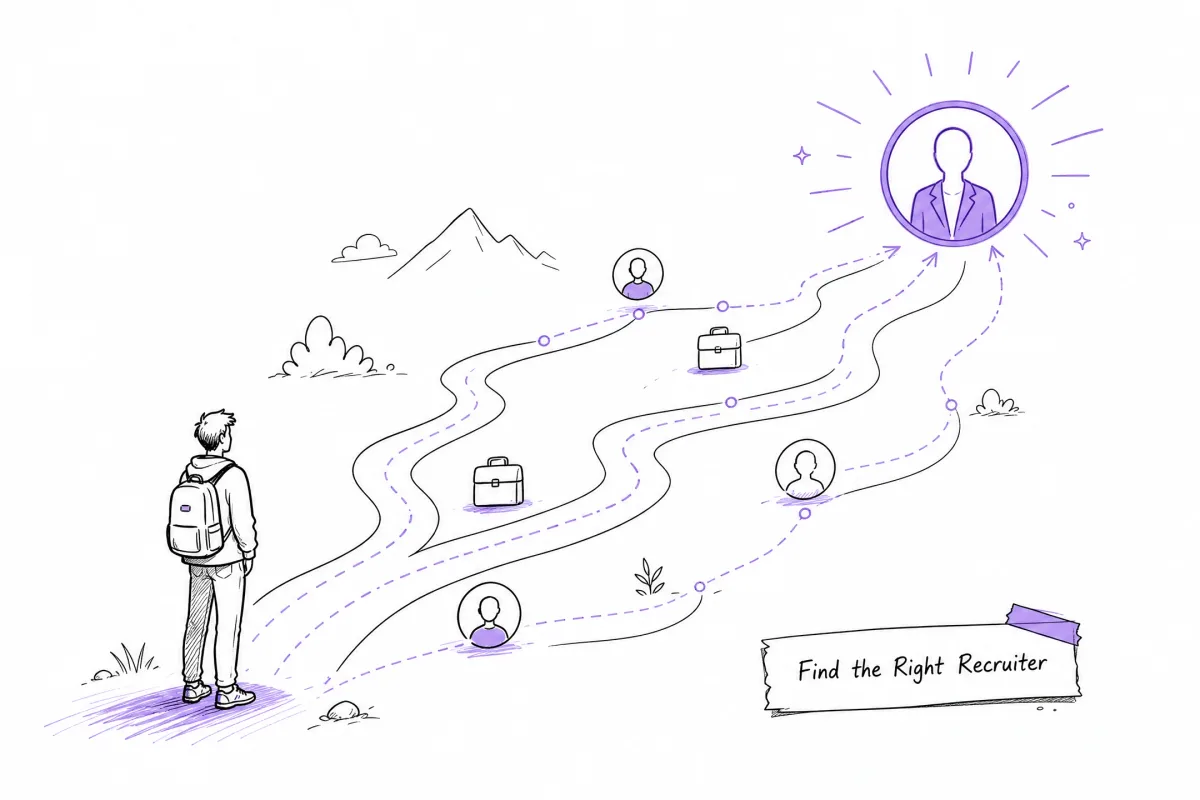
Recruiters are usually hired to fill specific roles for employers. That means they can be a useful channel in your job search, but they are not always personal job-finding services.
The most effective approach is to present yourself as a clear match for the types of roles a recruiter already handles. This guide explains how to choose the right recruiter, where to search, how to evaluate one, what to say in your first message, and how to avoid common mistakes.
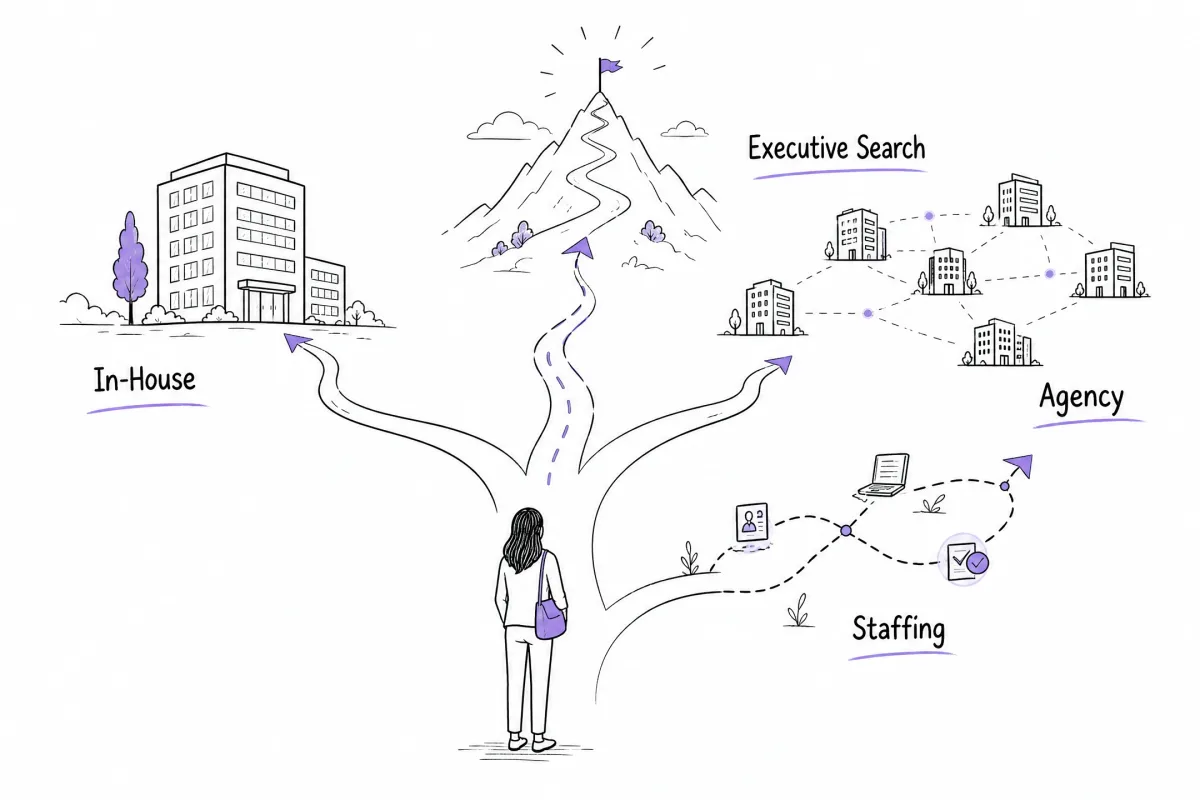
What Recruiters Do—and Which Type You Need
Before you search, identify the type of recruiter most likely to handle your target role.
Recruiter vs. Headhunter vs. Staffing Agency
| Recruiter type | Typical focus | Best fit for |
|---|---|---|
| In-house or corporate recruiter | Hiring for one employer | Candidates targeting a specific company |
| Agency recruiter | Hiring for multiple client companies | Specialized or mid-career roles |
| Executive search consultant | Senior leadership and hard-to-fill positions | Directors, executives, and highly specialized professionals |
| Staffing recruiter | Temporary, contract, or temp-to-hire work | Candidates seeking flexible or project-based roles |
The fee arrangement depends on the recruiting firm and the employer. In many employer-paid arrangements, the hiring company pays the recruiter or agency. If a service asks you to pay, clarify whether it is a separate career service, resume service, or paid placement service before agreeing to anything.
Which Recruiter Fits Your Job Search?
Use this simple match:
- You are targeting one specific company: Look for an in-house recruiter or talent acquisition partner at that company.
- You work in a specialized field: Search for an agency recruiter who focuses on your industry and function.
- You are pursuing an executive or senior leadership role: Look for an executive search firm or specialist headhunter.
- You want contract or temporary work: Search for staffing agencies that place candidates in your field.
- You are entry-level or still exploring your direction: Use staffing agencies, university career services, networking, and direct applications alongside recruiters.
When a Recruiter Can—and Cannot—Help
A recruiter is more likely to help when:
- Your target job title is clear.
- Your experience matches the level of the role.
- Your resume and LinkedIn profile support your target.
- The recruiter has an active or upcoming role that fits your background.
- You can clearly explain your location, work authorization, availability, and compensation expectations.
A recruiter may not be the right resource when you are still deciding what type of work you want, when your target role is extremely broad, or when you expect the recruiter to market your profile to any company without a specific hiring need.
Get Ready Before You Search
A clear profile makes it easier for a recruiter to understand where you fit.
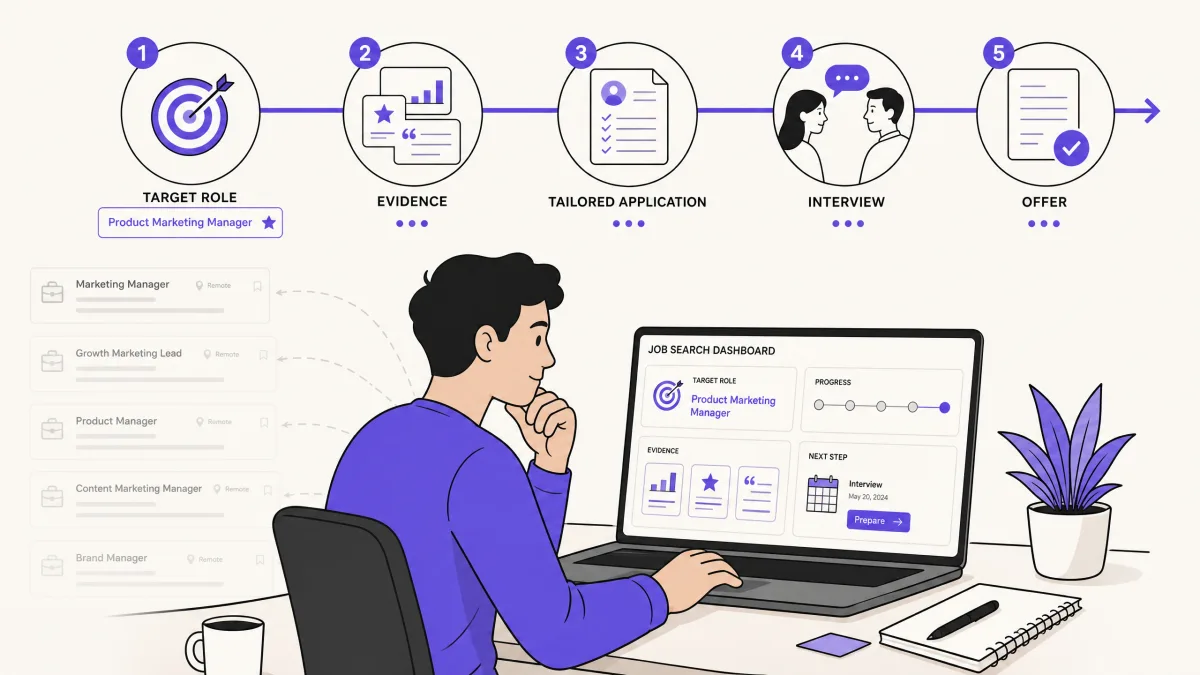
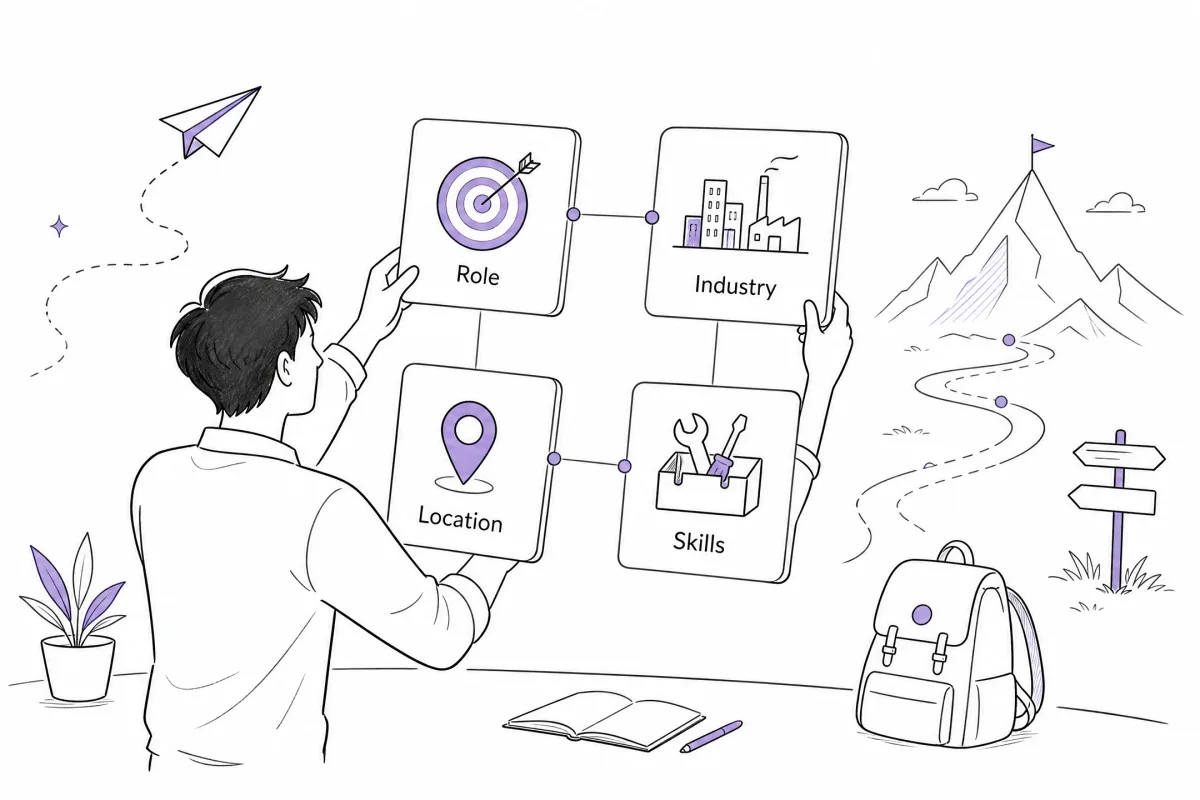
Define Your Target Role
Avoid descriptions such as:
“I’m open to anything in business.”
Use a more specific description:
“I’m targeting Senior Financial Analyst, FP&A Lead, or Finance Business Partner roles in B2B software companies.”
Your target does not need to be limited to one job title. List:
- One primary job title.
- Two or three adjacent titles.
- Your target industry.
- Preferred location or work model.
- Your experience level.
- Two or three skills that appear frequently in relevant job descriptions.
Make Your Profile Recruiter-Ready
Before contacting recruiters, review:
- Headline: Use standard job titles and searchable skills.
- Recent experience: Make your most relevant responsibilities easy to find.
- Achievements: Include specific results only when you can verify them.
- Location: Make your current location and work preferences accurate.
- Skills: Prioritize the skills most relevant to your target roles.
- Contact information: Use a professional email address and an up-to-date LinkedIn profile.
If you use LinkedIn’s recruiter-only Open to Work setting, remember that LinkedIn takes steps to protect your privacy but does not guarantee complete visibility control across every company structure or account. Review the current LinkedIn settings before enabling it.
Set Your Non-Negotiables
Document your core constraints beforehand so you can communicate them efficiently during initial conversations:
| Constraint Parameter | Candidate Preparation Example |
|---|---|
| Target Location & Remote Policy | Hybrid (New York Metro area) or 100% Remote US |
| Compensation Target | $130,000 – $145,000 base salary + bonus |
| Work Authorization | US Citizen / Green Card holder (No sponsorship required) |
| Employment Type | Full-time permanent direct-hire |
=== RECRUITER SEARCH BRIEF TEMPLATE ===
Target Title: Senior Financial Analyst
Adjacent Titles: FP&A Lead, Finance Business Partner
Target Industry: B2B SaaS / Enterprise Software
Location / Work Model: Remote (US-based) or Hybrid (Boston, MA)
Experience Level: 6+ Years (Financial Modeling, SQL, ARR Forecasting)
Work Authorization: US Citizen (No sponsorship needed)
Target Compensation: $125,000 - $140,000 base
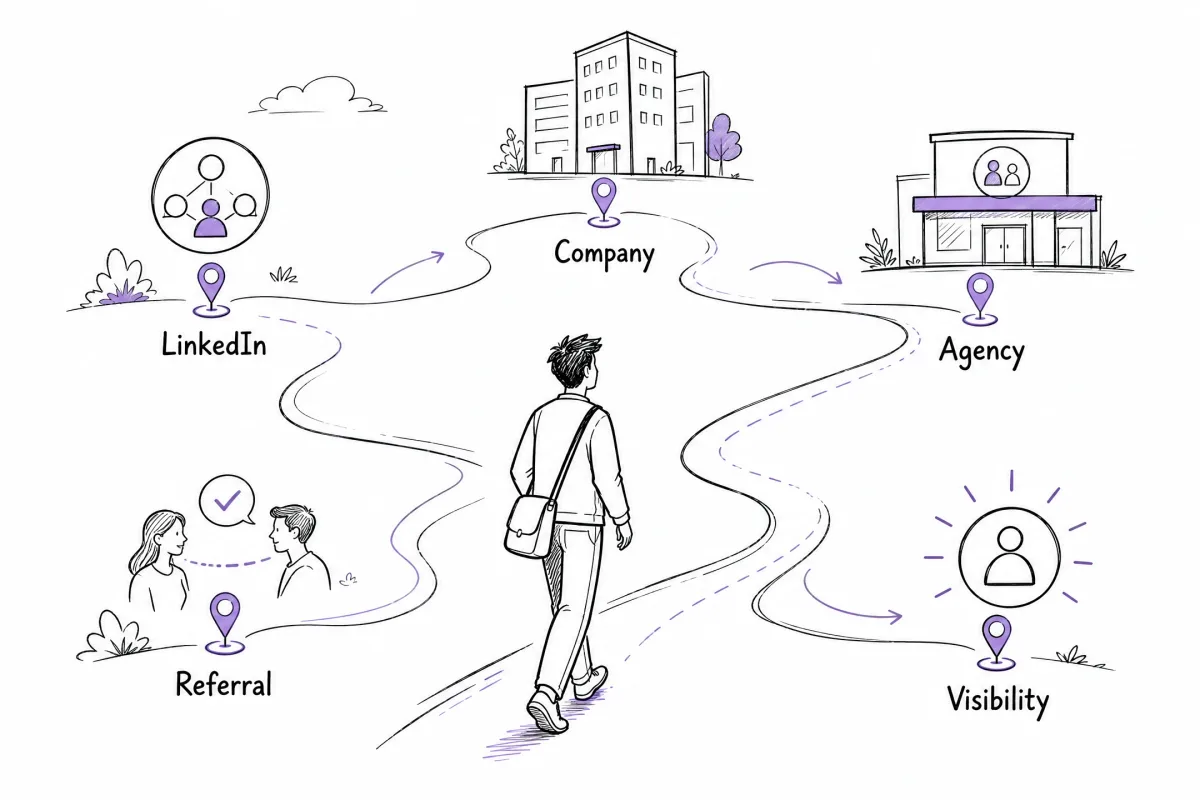
7 Ways to Find the Right Recruiter
The best method depends on whether you are targeting a specific employer, a type of role, or a broader industry.
1. Search LinkedIn by Role and Industry
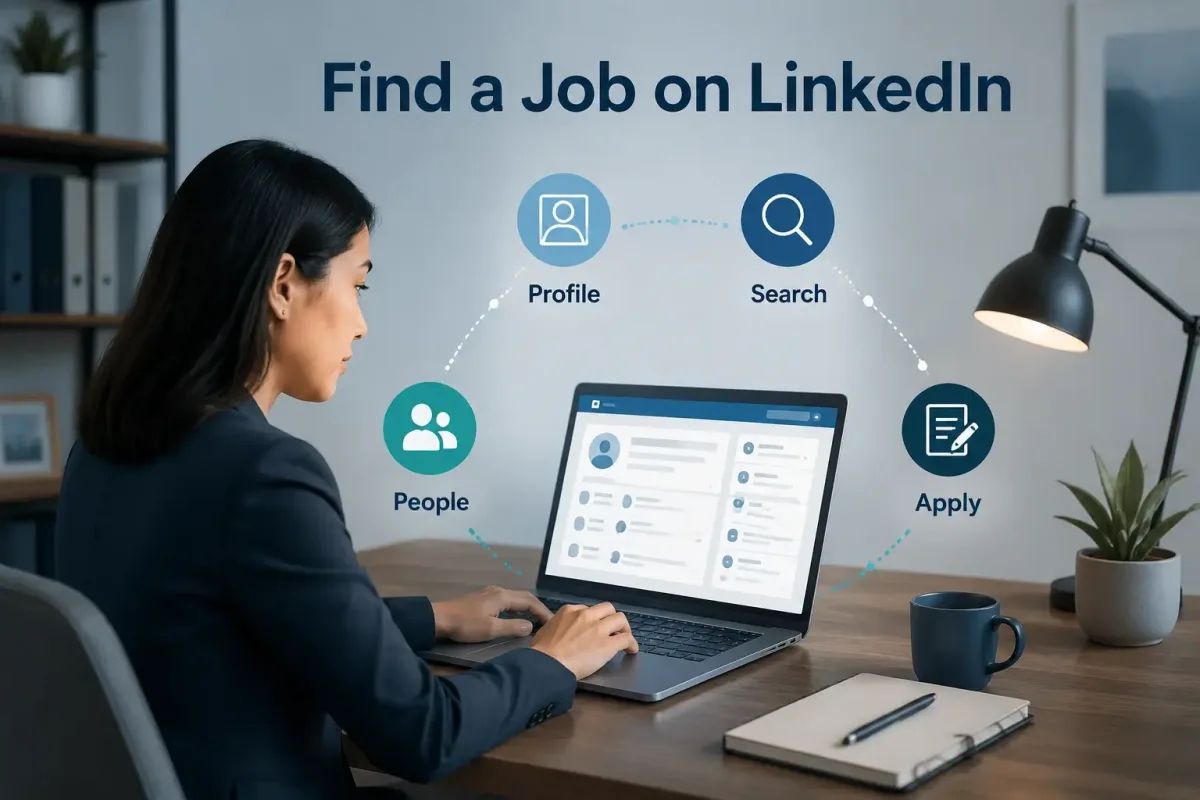
Start with the LinkedIn search bar and use terms that combine the recruiter’s function with your target field.
Try searches such as:
"Technical Recruiter" AND Cybersecurity"Talent Acquisition" AND FinTechRecruiter AND "Product Marketing Manager""Executive Search" AND "Supply Chain"Then use filters such as:
- People
- Location
- Industry
- Current company
- Connections
Review the person’s recent activity and profile before sending a message. A recruiter with a relevant title is not automatically the right person for your target role.
2. Find Recruiters at Your Target Companies
If you already have a list of target employers, search for their internal talent acquisition team.
- Open the company’s official LinkedIn page.
- Go to the People section.
- Search employee keywords such as
Recruiter,Talent Acquisition,Talent Partner, orHead of People. - Filter by location or business function when available.
- Compare the recruiter’s background with the department you want to join.
You can also search Google or LinkedIn using:
"[Company Name]" "Talent Acquisition""[Company Name]" recruiter "[Job Function]"Do not assume that the first person you find owns the role. In your message, ask whether they are the recruiter responsible for the position.
3. Find the Recruiter Connected to a Specific Job Posting
A specific job posting gives you more context than a general cold search.
Look for:
- A named job poster.
- The recruiter listed on the posting.
- Talent acquisition employees who support the relevant department.
- The hiring manager or team lead.
- A job ID that you can mention in your message.
Useful searches include:
"[Company Name]" "[Job Title]" recruitersite:linkedin.com/in "[Company Name]" recruiter "[Function]"If you cannot identify the recruiter, apply through the official job posting when appropriate and contact a relevant talent acquisition professional with the exact job title and posting link.
4. Use Specialized Recruiting and Staffing Firms
Specialist firms may be more useful than generalist agencies when your role requires a specific background.
Try searches such as:
"[Industry]" recruiting firm "[City]""[Job Title]" staffing agency"[Industry]" executive search firmBefore contacting an agency, check whether its website clearly shows:
- The industries it serves.
- The types of roles it fills.
- The locations it covers.
- Whether it handles permanent, contract, or temporary placements.
- Whether its current jobs match your experience level.
Do not rely only on the agency’s marketing language. Compare its public job listings and recruiter profiles with your target.
5. Check Professional Associations and Directories
Professional associations, alumni groups, and staffing directories can help you identify firms that specialize in a particular location or industry.
Possible sources include:
- Industry associations.
- University alumni networks.
- Professional networking groups.
- Local business organizations.
- Established staffing directories, such as the American Staffing Association’s member directory.
Use directories as a starting point, not as automatic proof that a recruiter is the right fit. Verify the firm’s current website, contact details, job listings, and specialization before sharing your resume.
6. Ask for Referrals
A referral can give a recruiter useful context about you before the first conversation.
You can ask a former colleague, manager, classmate, or industry contact:
Hi [Name]—I’m exploring [target role] opportunities in [industry/location]. Do you know a recruiter who regularly works with professionals in this area and would be open to a connection?
Keep the request easy to answer. You are asking for a relevant introduction, not asking the person to find you a job.
7. Make It Easier for Recruiters to Find You
Recruiters often search for candidates by standard job titles and skills. Improve discoverability by:
- Using the job title employers actually use.
- Including relevant technical or functional skills.
- Explaining your current area of expertise.
- Keeping your location and work preferences accurate.
- Making recent experience easy to scan.
- Reviewing your privacy preferences before using Open to Work.
Avoid creative headlines that hide your professional identity. For example, Revenue Ninja is less useful to a recruiter than Senior Account Executive | B2B SaaS.
How to Vet a Recruiter Before You Engage
A recruiter can be relevant and still not be the right person for your search. Use a consistent screening process.
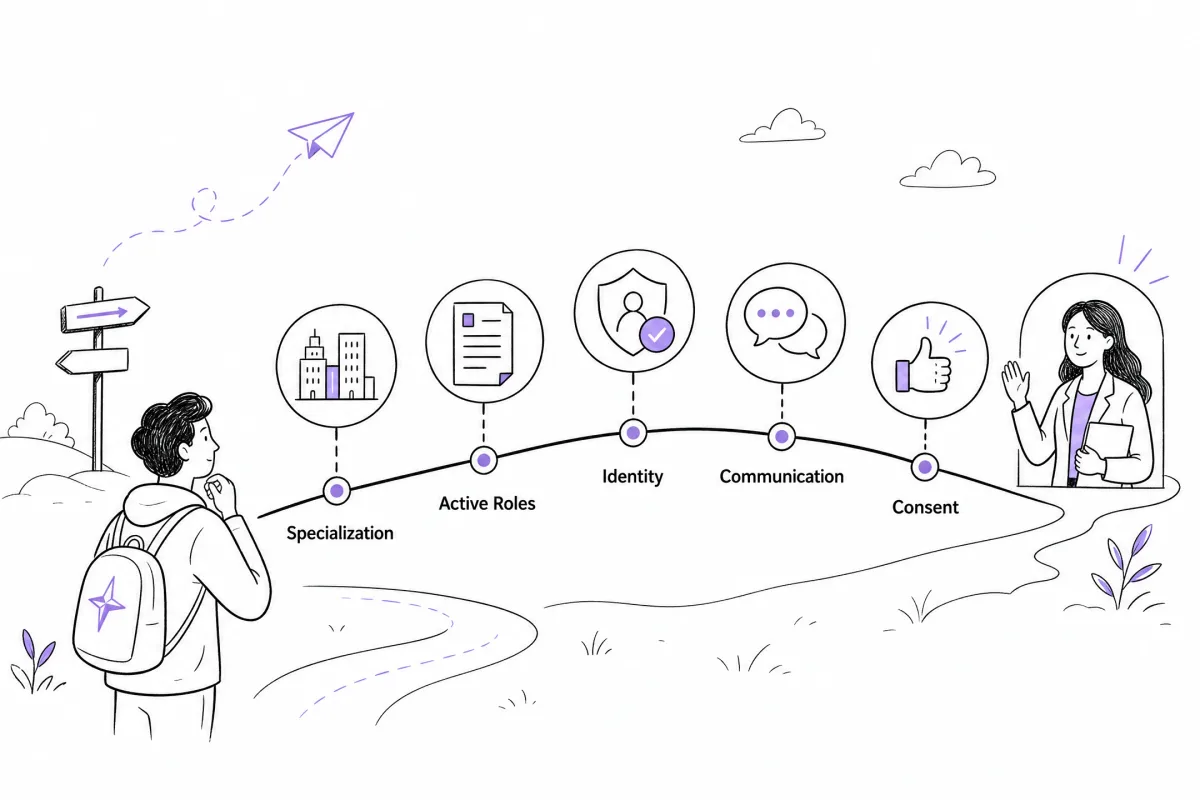
Use the Recruiter Fit Scorecard
Score each recruiter from 0 to 2 on the following dimensions:
- Role and industry specialization: Do they work with your function and sector?
- Relevant opportunities: Do they appear to handle roles at your level?
- Verifiable identity: Can you confirm their employer and professional history?
- Clear communication: Do they explain the role and process clearly?
- Transparent submission process: Will they ask for your approval before submitting your resume?
Use the score as a discussion tool, not as a guarantee:
- 8–10: Strong initial fit.
- 5–7: Ask more questions before sharing additional information.
- 0–4: The match is weak or the process is unclear.
Verify Their Identity and Specialty
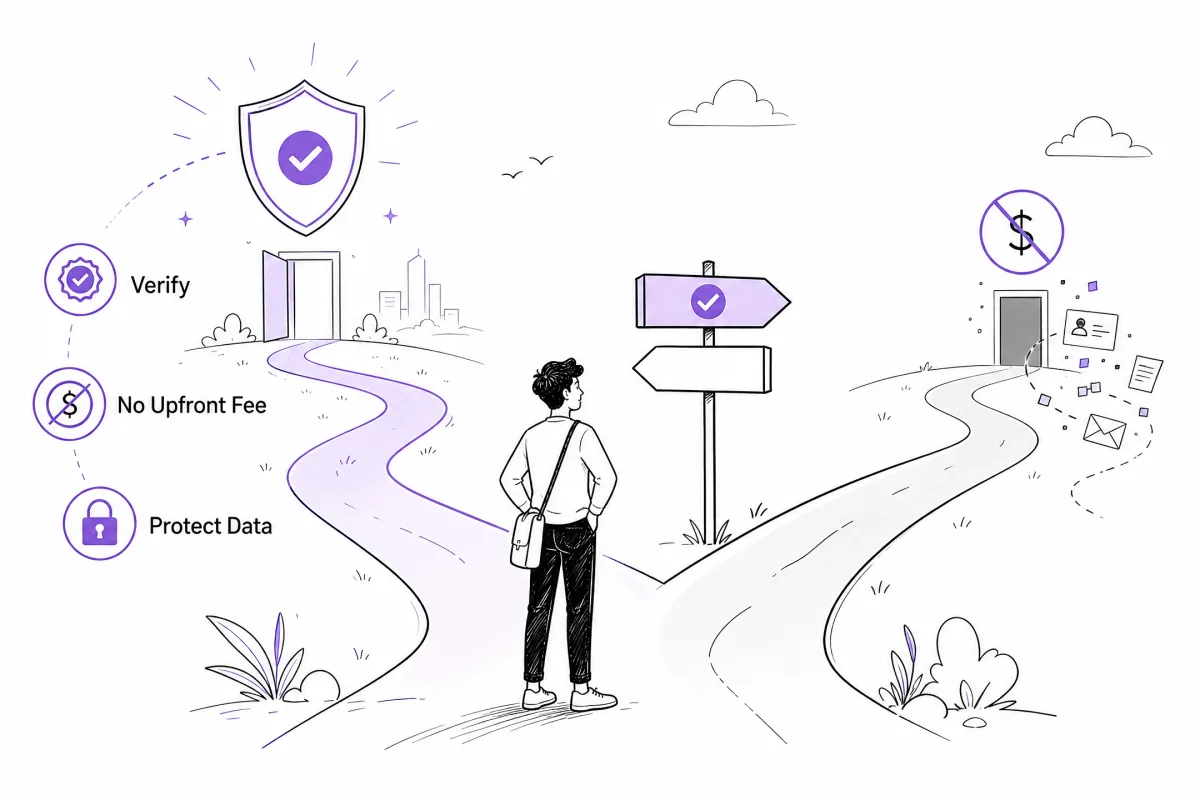
Before sharing your resume:
- Check whether the person appears on the agency or company website.
- Compare their LinkedIn history with the company’s public information.
- Verify that the role exists on an official employer or agency page when possible.
- Confirm that the email domain matches the organization or that the person can explain an independent recruiting arrangement.
- Be cautious if the person creates urgency, refuses to explain the employer, or avoids basic questions.
A personal email address alone does not prove fraud, but it is a reason to verify the person through another channel.
Questions to Ask Before Sharing Your Resume
Ask:
- “Are you the recruiter responsible for this role?”
- “What company and team is hiring?”
- “What are the main qualifications the hiring manager needs?”
- “Will you ask for my approval before submitting my resume?”
- “Has my profile already been submitted to this company for this role?”
- “What are the next steps if I am interested?”
Do not share more personal information than the process requires at this stage.
How to Contact a Recruiter
A good first message is short, specific, and easy to answer.
What to Include in Your First Message
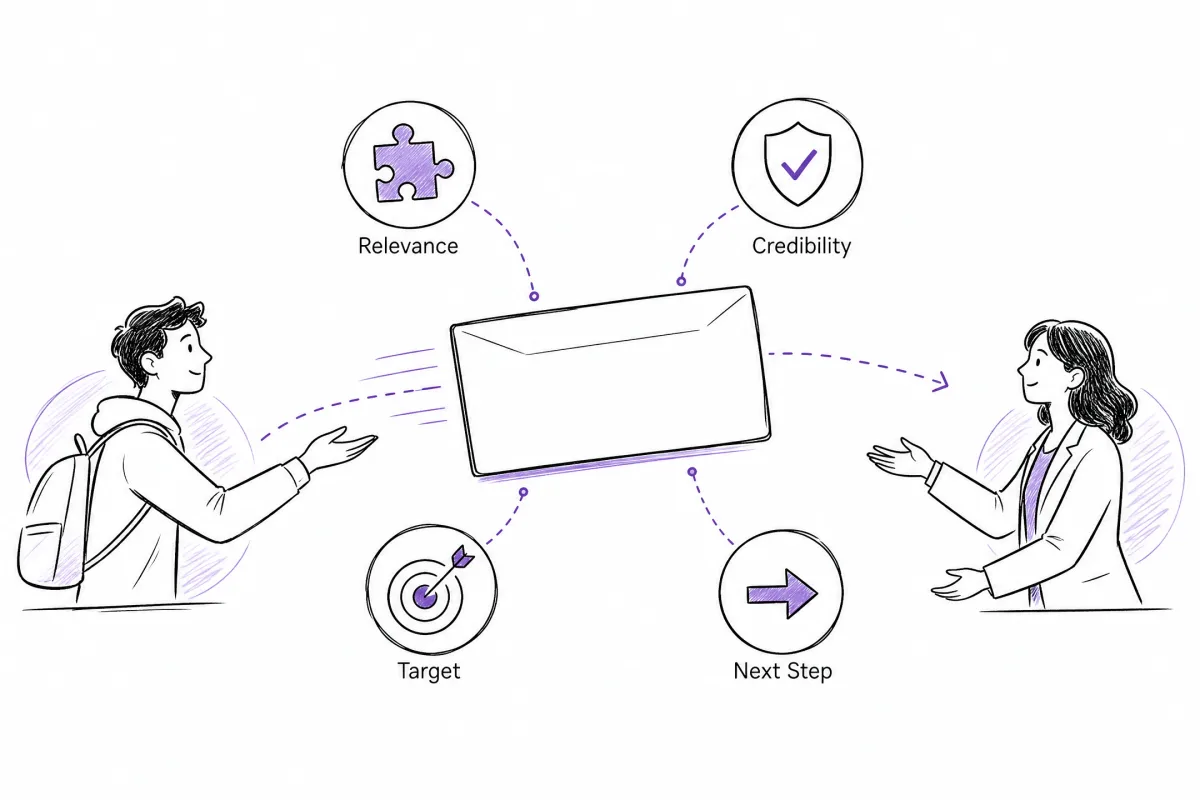
Use this four-part structure:
- Relevance: Explain why you chose this recruiter.
- Credibility: Mention one relevant skill, function, or experience.
- Target: State the type of role and location you want.
- Low-friction request: Ask whether they handle relevant openings.
LinkedIn Message Template
Hi [Recruiter Name]—

I noticed that you work with [industry/function] roles at [Company or Agency Name]. I’m a [target role] with experience in [relevant skill or area], and I’m exploring [target role] opportunities in [location or work model].

Are you currently working on roles that match this background? I’d be happy to share my resume if helpful.

Best,
[Your Name]
[LinkedIn Profile]
Only include achievements that are true and can be verified. If you do not have a quantified result, describe the responsibility or scope accurately instead.
Message for a Specific Job Posting
Subject: [Job Title] — [Your Name]

Hi [Recruiter Name]—

I saw the [Job Title] opening at [Company Name]. My background includes [relevant function or skill], which matches the role’s focus on [specific requirement].

Are you the recruiter managing this position? If so, I would welcome a brief conversation about the role and next steps.

Best,
[Your Name]
[LinkedIn Profile]
When and How to Follow Up
If the recruiter does not respond, wait several business days and send one concise follow-up:
Hi [Recruiter Name]—Following up on my note regarding [Target Role]. I remain interested in relevant opportunities in this area. If you are not the right contact, I would appreciate being pointed in the right direction. Thank you.
If there is still no response, move on to other recruiters, direct applications, referrals, and professional networks. No reply alone does not tell you why the person did not respond.
How to Work With Recruiters Without Losing Control
Recruiters can expand your access to opportunities, but you should remain involved in decisions about your application.
Confirm Before Resume Submission
Before an agency submits your resume, ask for:
- Company name.
- Job title.
- Job ID or posting link.
- Location and work model.
- Compensation information, if available.
- Confirmation that the role matches your background.
- Your written approval to submit.
This reduces the risk of duplicate submissions and prevents your resume from being sent to employers you did not approve.
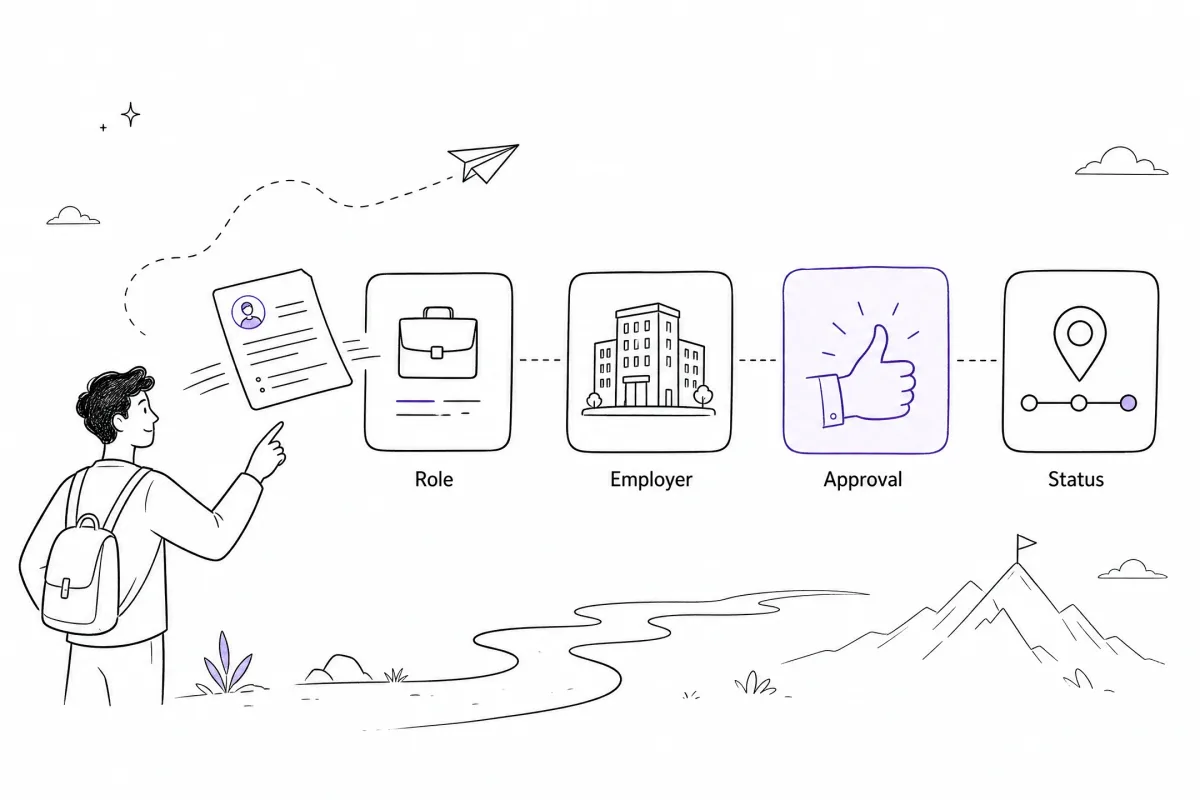
Track Recruiter Conversations
Use a simple spreadsheet:
| Recruiter | Agency or company | Role | Employer | Date contacted | Submission approved? | Status |
|---|---|---|---|---|---|---|
| [Name] | [Company] | [Role] | [Employer] | [Date] | [Yes/No] | [Status] |
Record every role discussed, especially when multiple recruiters are contacting you.
Discuss Constraints Early
Bring up important constraints before spending significant time in the process:
- Salary expectations.
- Remote, hybrid, or onsite requirements.
- Work authorization.
- Sponsorship needs.
- Earliest start date.
- Confidentiality or non-compete concerns.
The goal is not to negotiate every detail in the first message. It is to avoid continuing with a role that cannot meet your basic requirements.
What to Do If Recruiters Don’t Respond
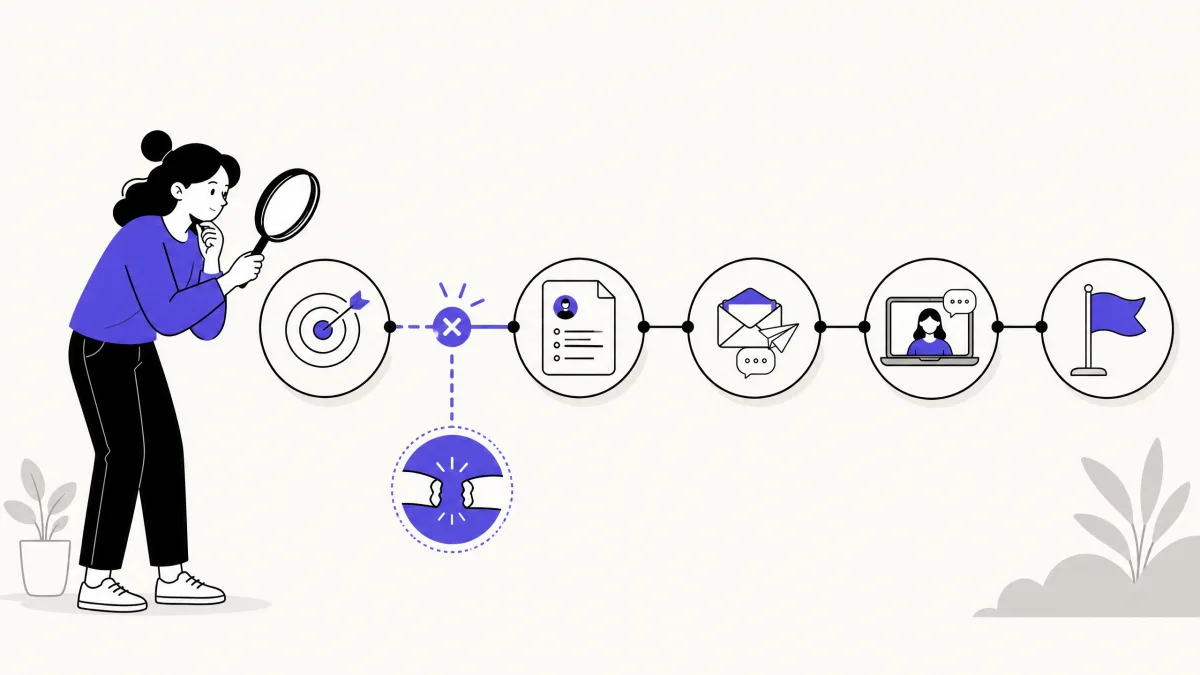
Use this sequence:
1. Target check
   Is this recruiter relevant to my role, industry, and level?

2. Message check
   Did I explain why I contacted this person?

3. Profile check
   Does my LinkedIn headline match my target role?

4. Follow-up
   Did I send one concise follow-up after several business days?

5. Move on
   Have I continued with direct applications and referrals?
Improve a vague headline such as:
Experienced professional looking for exciting new opportunities.
With something clearer:
Senior Product Manager | Enterprise SaaS | Cloud Security | API Platforms
Only use skills and titles that accurately reflect your experience.
A recruiter may not have a current opening that fits you, may support a different business unit, or may simply be managing a high volume of candidates. Keep other job-search channels active instead of waiting on one person.
Prepare for the Recruiter Screen
Once a recruiter schedules an initial call, prepare a concise explanation of:
- Your recent career focus.
- The type of role you want next.
- Two or three relevant skills or accomplishments.
- Why you are exploring a move.
- Your location, availability, compensation expectations, and work authorization.
Ask questions such as:
- “What problem is the hiring manager trying to solve?”
- “What does the interview process look like?”
- “Is this a newly created role or a replacement?”
- “What is the expected timeline?”
- “What would make a candidate stand out?”

If you want structured practice before the conversation, GreatOffer’s real-time AI interview copilot can help you organize concise responses and prepare for likely interview questions. Use any AI assistance only when it is allowed by the interview process and the employer’s policy.
Recruiter Mistakes and Scam Red Flags
Common Job-Search Mistakes
Avoid:
- Telling recruiters you are open to “anything.”
- Sending the same generic message to unrelated recruiters.
- Contacting people who do not recruit for your industry or level.
- Allowing a resume submission without knowing the employer and role.
- Depending only on recruiters instead of continuing direct applications and networking.
- Following up repeatedly after one clear follow-up message.
Scam Red Flags
Be cautious if someone:
- Demands an unexpected upfront placement fee.
- Sends a check and asks you to buy equipment or transfer money.
- Pressures you to act before you can verify the employer.
- Refuses to identify the company or explain the role.
- Uses a lookalike domain or inconsistent contact information.
- Requests sensitive information before a legitimate hiring and onboarding process.
- Asks you to pay for a job, training, or access to an interview.
The FTC advises job seekers to be cautious about fake checks, requests for money, and recruiters or employers who ask for sensitive information before a legitimate hiring process. Verify the company through an official website or independently obtained contact information.
Disclaimer: This article provides general job-search information, not legal or employment advice. Recruiting fees, privacy requirements, and employment rules can vary, so verify the terms directly with the employer or recruiting firm before sharing information or agreeing to a service.
Your Recruiter Search Checklist
- Define your target job title and adjacent titles.
- Identify your industry and preferred location.
- Update your LinkedIn headline and relevant skills.
- Prepare your resume and LinkedIn profile.
- Search LinkedIn using role-specific terms.
- Identify recruiters at target companies.
- Research specialized agencies.
- Score each recruiter for relevance and transparency.
- Ask for employer and role details before submission.
- Send one tailored message.
- Track every recruiter conversation.
- Continue direct applications and networking.
- Prepare for the recruiter screen.
Sources
- Federal Trade Commission: Job Scams
- LinkedIn Help: Open to Work
- American Staffing Association: Member Directory
Start Your Recruiter Search Today
Finding a recruiter is not about contacting as many people as possible. It is about finding someone whose roles, industry, location, and hiring needs match your background.
Choose one target role, run one focused search, verify the most relevant recruiter, and send one tailored message. Keep tracking your outreach and continue using direct applications, referrals, and professional networking at the same time.