
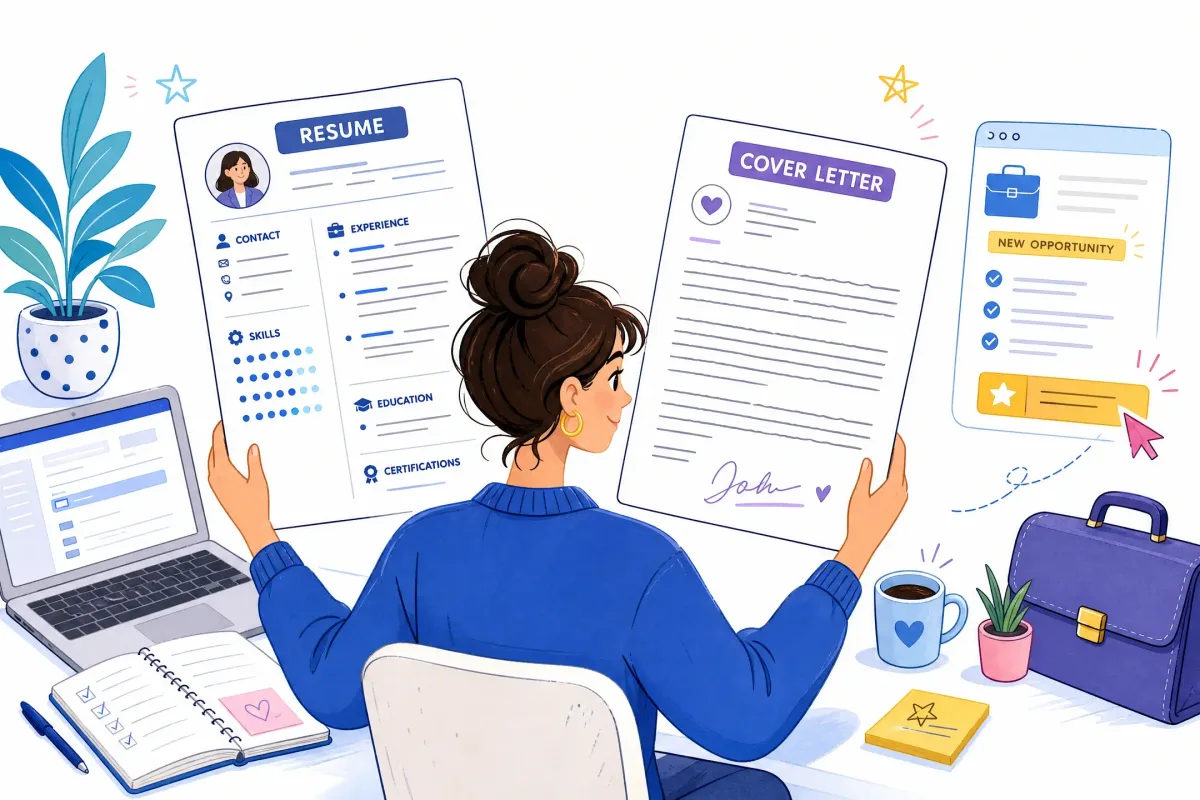
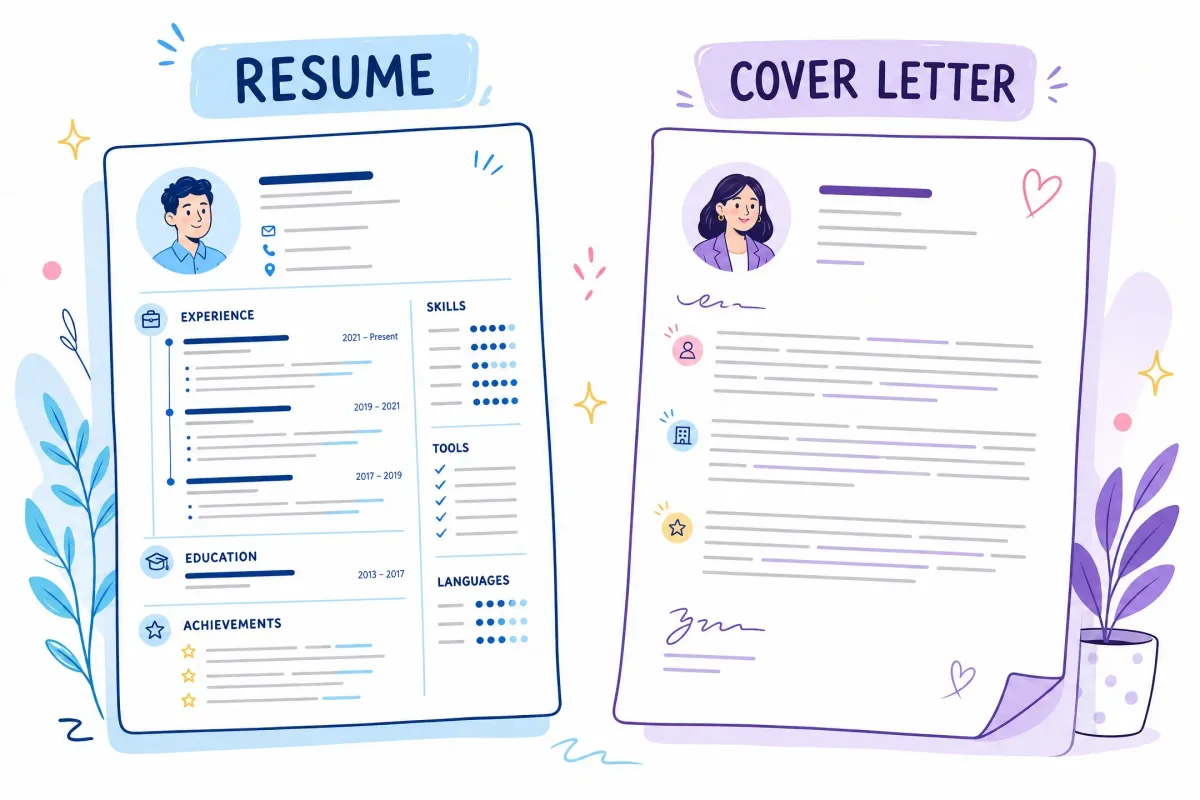
A resume and a cover letter are not the same document.
A resume gives employers a structured overview of your experience, skills, education, and accomplishments. A cover letter explains why you are interested in a specific position and how selected parts of your background relate to that employer's needs.
The resume answers:
What have you done, and what can you do?
The cover letter answers:
Why this role, why this employer, and why are you a relevant candidate?
You do not need to send both for every job. Always follow the job posting and application instructions first. If a cover letter is required, submit one. If it is optional, send one only when you can make a specific, useful argument that your resume cannot make on its own.
What Is a Resume?
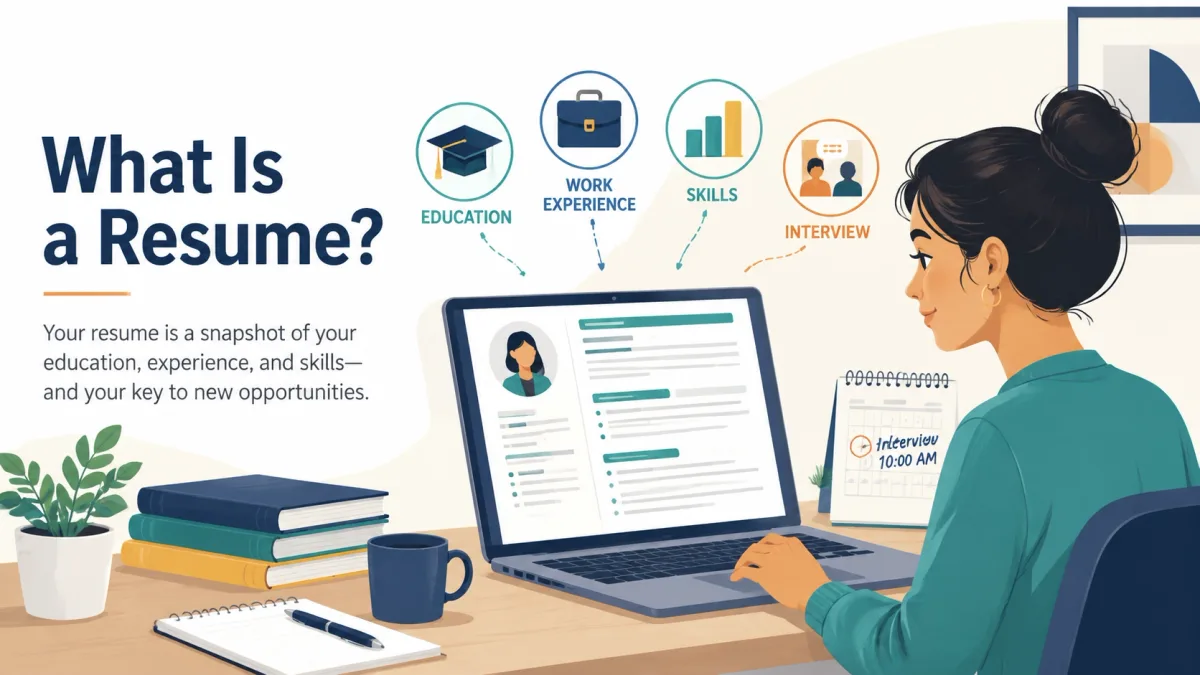
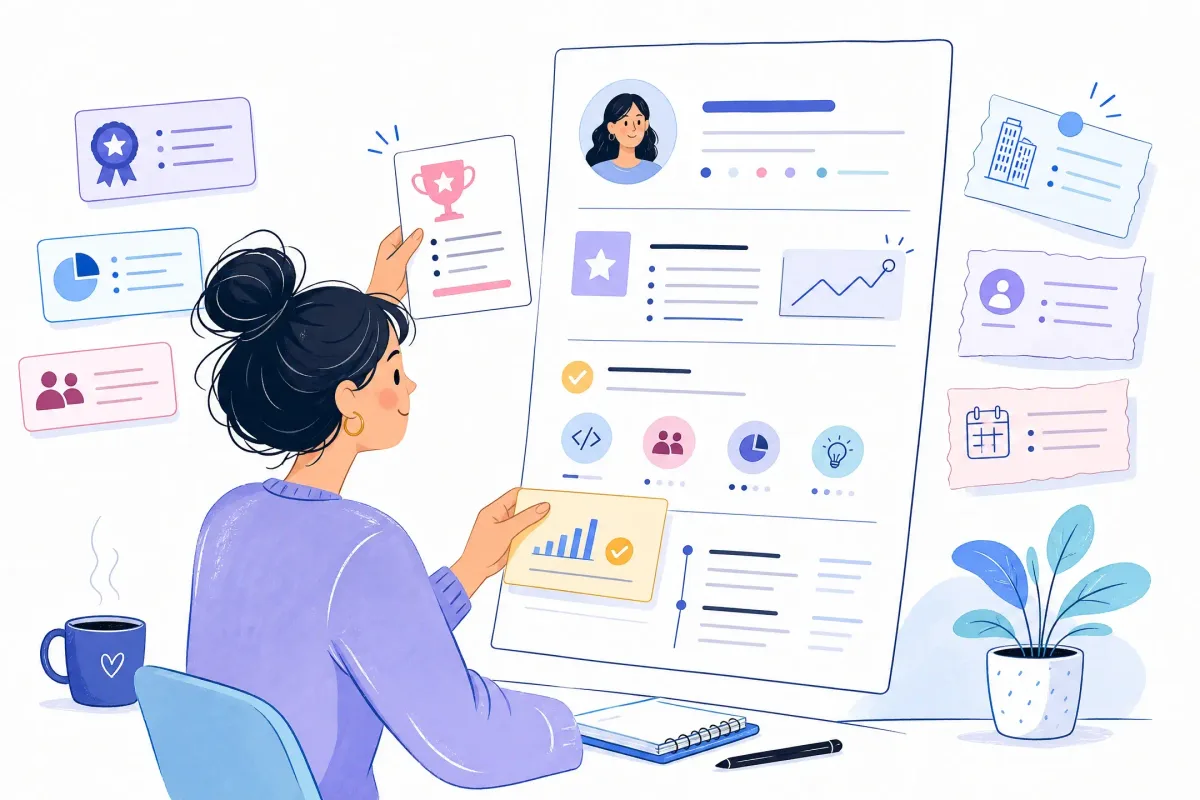
A resume is a concise, structured summary of your professional background. It usually includes your work experience, education, skills, certifications, and relevant accomplishments.
Harvard's career guidance describes a resume as a snapshot of your professional experience that helps employers assess your qualifications. (Harvard FAS Career Services)
Common resume sections include:
- Contact information: Your name, email address, phone number, location, and relevant professional links
- Professional summary: A short overview of your background and target role
- Work experience: Job titles, employers, dates, responsibilities, and results
- Skills: Relevant technical and professional skills
- Education: Degrees, institutions, certifications, and relevant coursework
- Projects or additional sections: Useful when they demonstrate qualifications for the target role
A resume is designed for efficient review. Its headings, bullet points, dates, and accomplishments should make your most relevant qualifications easy to identify.
A strong resume is also selective. It does not need to describe every task from every job you have held. Instead, it should prioritize the experience and results that are most relevant to the position you want.
For more guidance, see what a resume is.
What Is a Cover Letter?
A cover letter is a targeted letter written for a particular job, employer, or opportunity.
It normally explains:
- Why you are applying
- Why you are interested in the organization
- Which qualifications are most relevant
- How your experience connects to the employer's needs
- Any context that may not be obvious from your resume
Harvard describes a cover letter as a way to explain both your qualifications and your interest in the job and organization. (Harvard FAS Career Services)
A typical cover letter includes:
- Opening paragraph: Identify the position and give a specific reason for your interest.
- Evidence paragraphs: Highlight one or two relevant experiences, skills, or accomplishments.
- Closing paragraph: Reinforce your interest and invite the next step.
A cover letter should be written for a specific position rather than reused without meaningful changes. University of Michigan career guidance recommends keeping a cover letter to one page and tailoring it to the role. (University of Michigan Engineering Career Development)
A cover letter can be especially useful when you need to provide context about:
- A career change
- An employment gap
- A referral or networking connection
- A move into a new industry
- Relevant experience that does not fit neatly into your resume
- A specific reason you are interested in the organization
It should not become a second resume. Its value comes from explaining the relevance of selected evidence.

Cover Letter vs Resume: Key Differences
| Difference | Resume | Cover Letter |
|---|---|---|
| Main purpose | Summarize qualifications and experience | Explain interest, fit, and context |
| Format | Sections, headings, and bullet points | Formal letter with paragraphs |
| Main question | What have you done? | Why does your experience matter for this role? |
| Focus | Evidence and professional history | Interpretation and role-specific relevance |
| Tone | Concise and direct | Professional, specific, and persuasive |
| Tailoring | Select relevant experience and keywords | Connect selected evidence to the employer's needs |
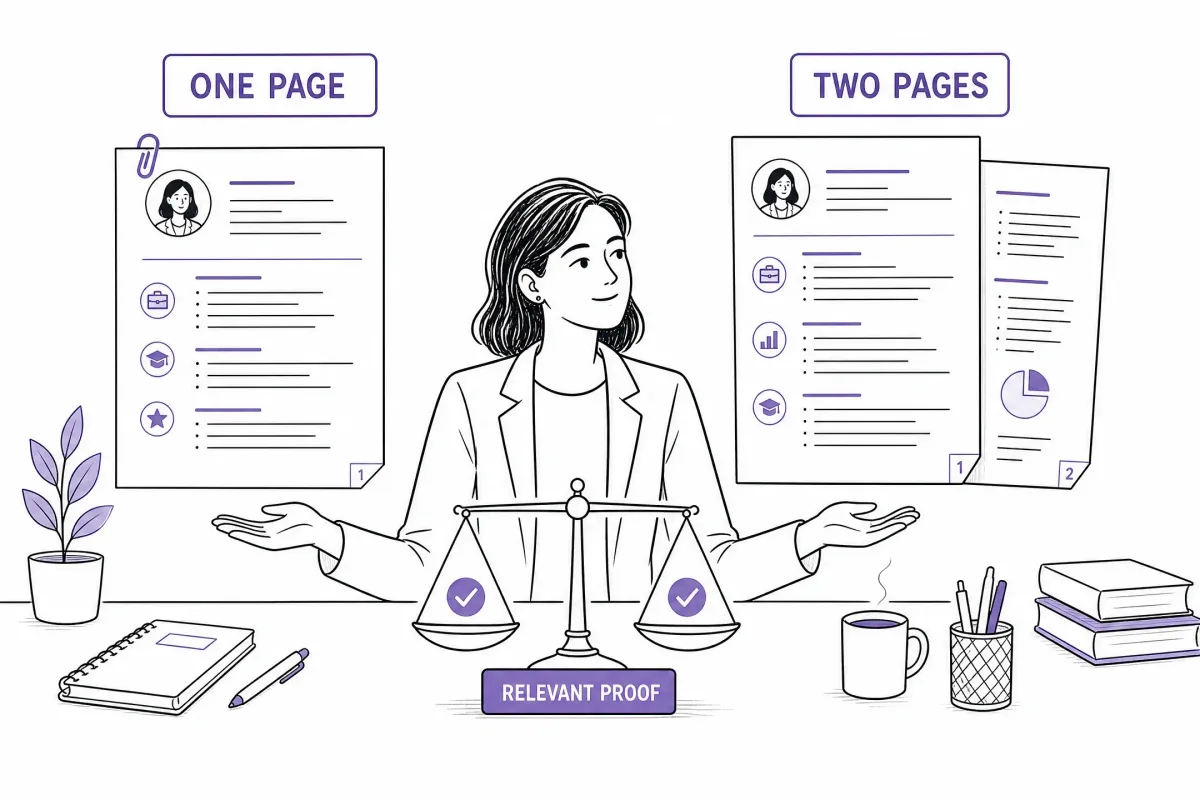
| Length | Often one or two pages, depending on experience and field | Usually one page or less |
| Audience use | Helps readers quickly evaluate your background | Helps readers understand your motivation and fit |
| Submission | Commonly requested in job applications | Submit when required, accepted, or genuinely useful |
| Relationship | Provides the factual foundation | Adds context and a role-specific argument |
The difference is not simply "facts versus personality." Both documents should contain accurate information and reflect your real experience.
The more useful distinction is:
A resume selects the evidence. A cover letter explains the relevance.
Your resume might state that you redesigned a customer support workflow and reduced response time. Your cover letter could explain what problem you identified, how you approached it, and why that experience is relevant to the position you are applying for.
How a Resume and Cover Letter Work Together
When you submit both documents, they should feel like parts of one application.
They should be consistent in:
- Job titles
- Employment dates
- Employer names
- Education details
- Skills
- Metrics
- Overall professional identity
They should not be identical in wording or structure.
Illustrative example
The following example is fictional and is included only to show the difference in format and purpose.
Resume bullet:
Reduced customer response time by 32% by redesigning the support workflow.
Cover letter version:
In my previous support role, I noticed that customer requests were being delayed by a manual routing process. I mapped the workflow, identified where tickets were getting stuck, and helped redesign the routing process. The change reduced response time by 32%. This experience would allow me to contribute to your team's focus on faster, more consistent customer support.
The resume bullet is compact and results-focused. The cover letter adds context and connects the result to the target employer's needs.
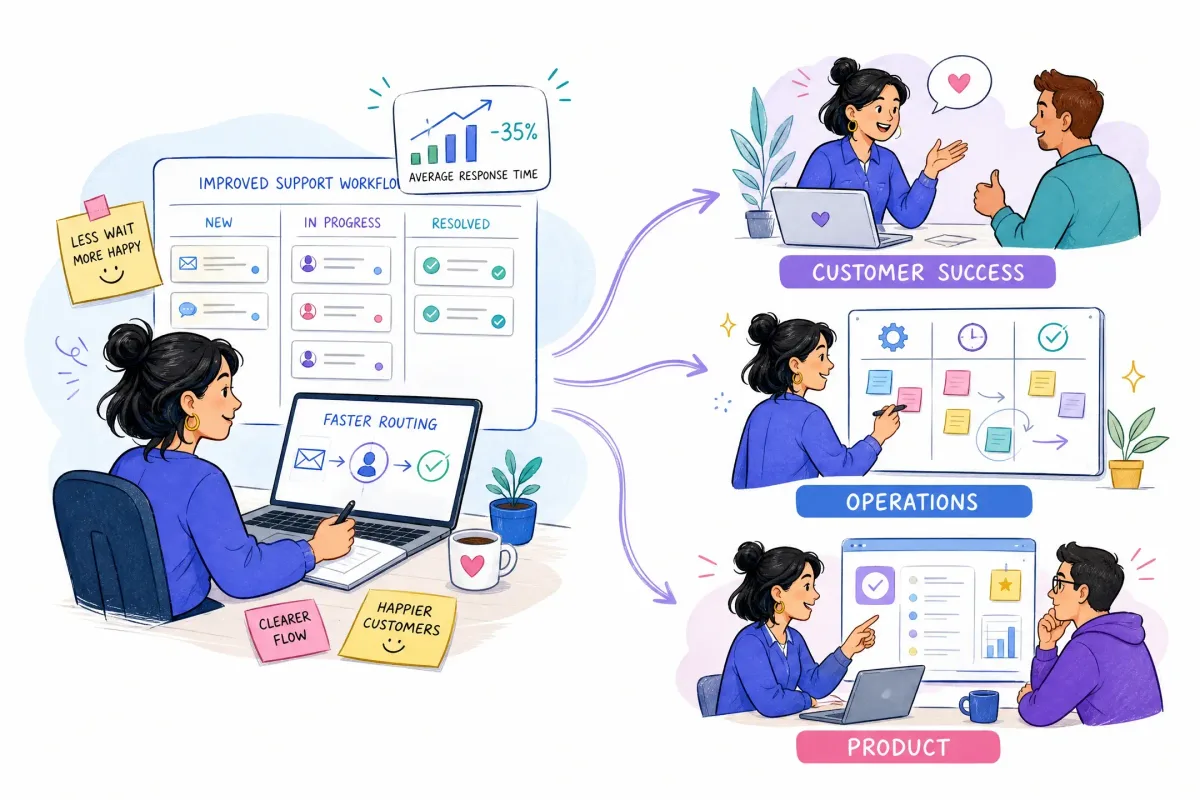
The same experience could be framed differently for different jobs:
- For a customer success role, emphasize customer experience and response quality.
- For an operations role, emphasize workflow design and process improvement.
- For a product role, emphasize identifying recurring user problems and improving systems.
The underlying facts should remain accurate. The emphasis can change based on the position.
When Should You Send a Resume?
Send your resume when:
- The job posting requests a resume
- The application system requires a resume upload
- You are submitting an application through a referral
- A recruiter asks for your background
- You are responding to a networking opportunity
- The employer does not request a cover letter
Your resume is usually the primary document used to review your qualifications. Make sure it is tailored to the role rather than treating it as a complete archive of your career.
Before submitting, check that:
- The most relevant experience appears early
- Your accomplishments are clear
- Dates and job titles are accurate
- The format is easy to read
- The document follows the employer's file and naming instructions
You can also review these suggestions to make your resume stand out.
When Should You Send a Cover Letter?
Send a cover letter when:
- The job posting requires one
- The application portal specifically requests one
- The employer says it is optional and you have a strong, tailored reason to include it
- You need to explain a career change or employment gap
- A referral or connection gives you meaningful context to discuss
- Your motivation for the organization is especially relevant to the role
CareerOneStop recommends using a cover letter when the employer requests it. It also identifies situations where a letter can help highlight your match, explain an employment gap, or describe a specific interest in the position. (CareerOneStop)
A cover letter is less useful when:
- It repeats your resume line by line
- It is addressed to the wrong employer
- It uses generic language that could apply to any job
- The employer says not to include one
- The application system does not accept one and gives no alternative
- You cannot make a specific connection between your background and the position
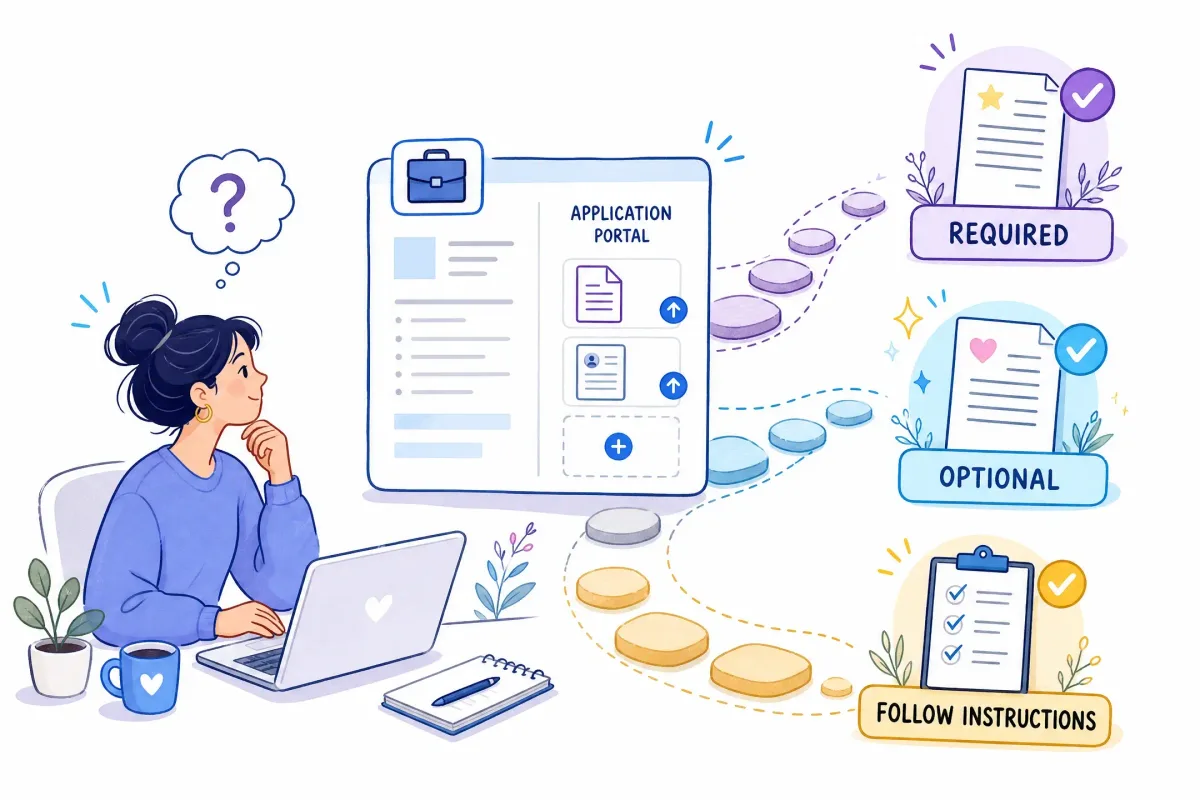
What if the cover letter is optional?
Use this decision process:
- Read the complete job posting. Look for instructions about required documents.
- Check the application portal. Confirm whether a cover letter can be uploaded or pasted.
- Identify the value it would add. Can you explain something important that the resume does not show clearly?
- Tailor it to the role. Mention the position, organization, and specific reasons for your interest.
- Skip it if it would be generic. An extra document is not automatically a better application.
Optional does not mean "always include it." It means you should decide based on the employer's instructions and the usefulness of the letter.
Resume vs Cover Letter: Which One Is More Important?
Neither document is universally more important.
The answer depends on the application requirements:
- If only a resume is requested, focus on producing a strong, relevant resume.
- If both are required, each document should perform a different function.
- If a cover letter is optional, include it only when it adds specific value.
- If the employer says not to submit one, follow that instruction.
A polished cover letter cannot compensate for an inaccurate or poorly structured resume. Likewise, a strong resume may not explain your motivation or a non-linear career path as effectively as a targeted letter.
The best application materials are aligned, accurate, and easy to review.
How to Keep Both Documents Consistent Without Repeating Yourself
Use these checks before submitting both:
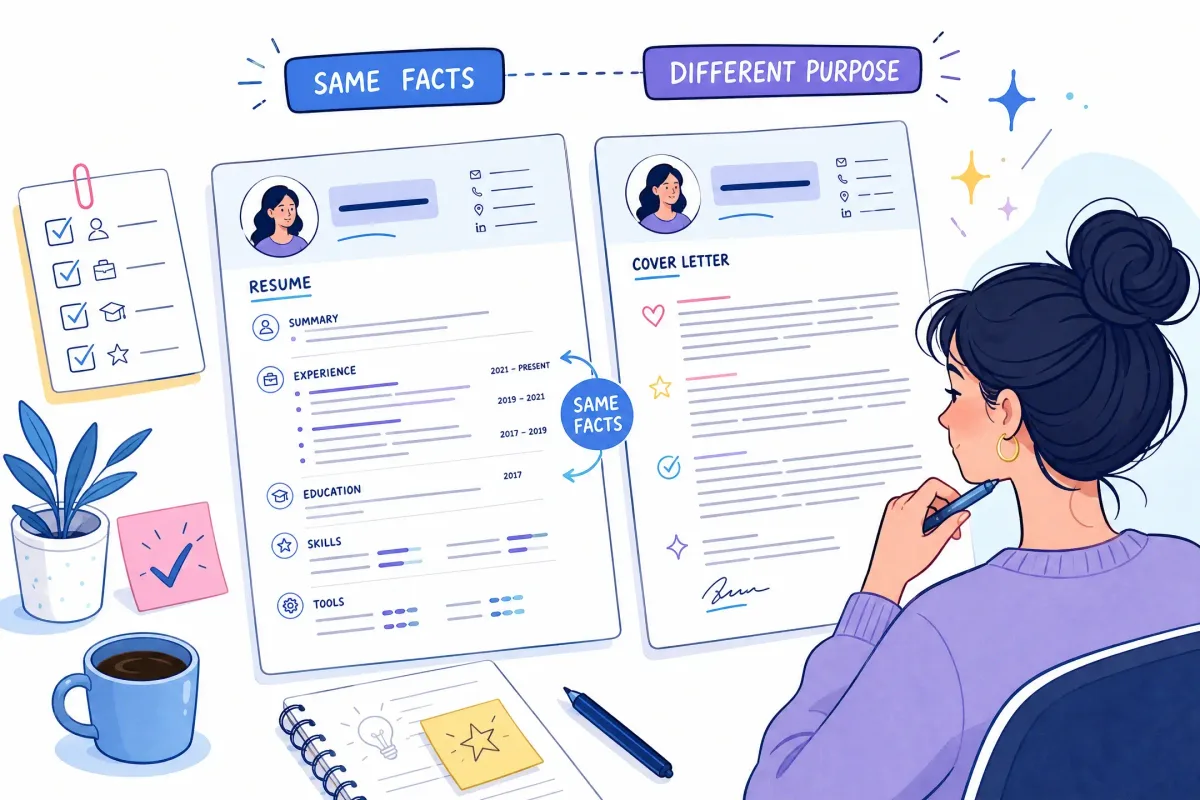
Keep the facts identical
Use the same:
- Job titles
- Company names
- Dates
- Degree information
- Performance metrics
- Professional credentials
A discrepancy can create unnecessary questions.
Use the cover letter to explain selected evidence
Do not mention every resume section. Choose one or two experiences that directly connect to the position.
Match the basic visual identity
When practical, use similar:
- Name and contact information
- Font choices
- Spacing
- File naming conventions
- General visual style
The documents do not need to be identical, but they should look like they belong to the same application.
Avoid unsupported claims
Do not introduce a result, responsibility, certification, or skill in the cover letter that you cannot explain or verify.
Read both documents aloud
This can help you find:
- Repeated phrases
- Awkward wording
- Claims that sound unlike you
- Inconsistent dates or details
- Sentences that would be difficult to explain in an interview
Common Mistakes to Avoid
-
Treating the cover letter as a second resume
Use it to interpret the most relevant evidence rather than repeat your entire work history.
-
Sending the same generic letter everywhere
A useful cover letter should reflect the position and organization.
-
Ignoring application instructions
Requirements about documents, file types, and submission methods take priority.
-
Adding unsupported achievements
Every claim should be accurate and consistent with your actual background.
-
Writing too much background information
Focus on the context that helps the employer understand your fit.
-
Over-designing the documents
Readability and clear organization matter more than decorative formatting.
-
Using language you would not say yourself
Your materials should sound professional but still reflect your real voice.
-
Mentioning AI-generated content you cannot verify
Review every AI-assisted suggestion carefully and remove anything inaccurate or exaggerated.
Final Checklist
Before you submit, ask:
- Did I follow the job posting's instructions?
- Is my resume tailored to this role?
- Does my cover letter add information rather than repeat my resume?
- Are all dates, titles, metrics, and claims accurate?
- Does the cover letter name the correct position and employer?
- Are both documents readable and professionally formatted?
- Can I explain every important statement in an interview?
- Did I use the requested file type and file name?
Once your application documents are ready, prepare to explain the experiences and results you highlighted. Great Offer AI can help you practice role-specific interview questions based on your background and target role.
Important: Employer instructions always take priority. This article provides general career guidance and does not guarantee an interview, offer, or hiring outcome.