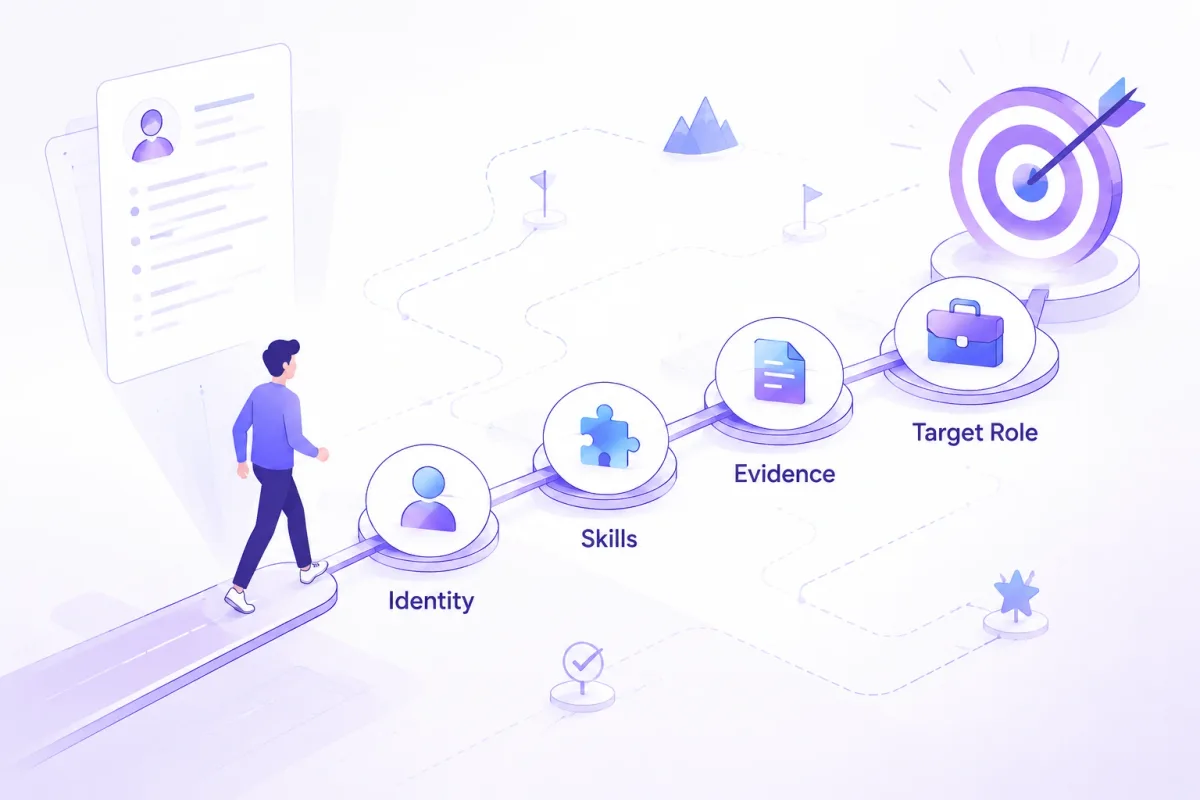

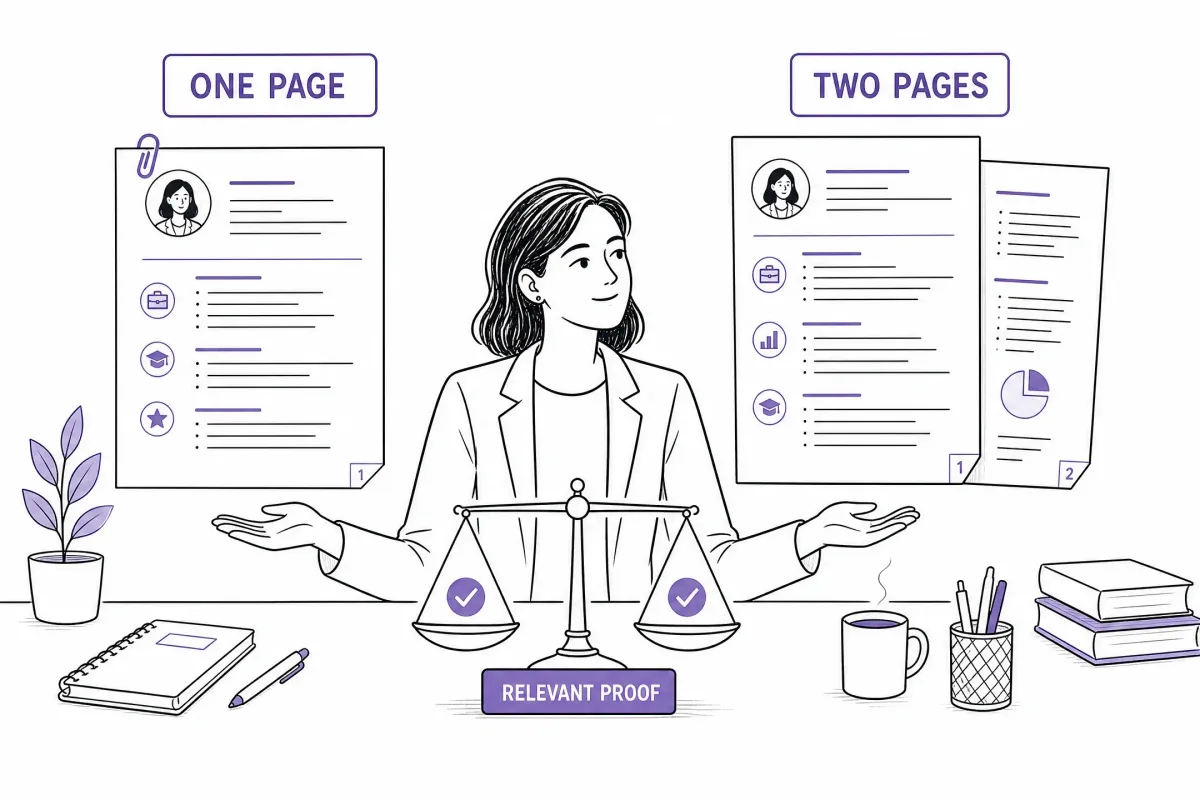
The best resume is not automatically the shortest one. It is the shortest version that preserves the evidence a recruiter needs to understand why you fit the role.
Career guidance from UC Davis and Purdue OWL generally treats one page as a strong starting point for students and early-career applicants, while allowing additional pages when relevant professional, technical, scientific, or leadership experience requires more space. In other words, experience length is a useful clue—not a universal cutoff.
When a One-Page Resume Is the Better Choice
A one-page resume is usually the better starting point when you can present your strongest qualifications without crowding the page or removing evidence required by the target job.
Consider one page when:
- You are a student or recent graduate with limited professional experience.
- You are early in your career and your relevant experience fits comfortably on one page.
- You are changing careers and only part of your previous experience supports the new role.
- Your older positions add little evidence for the job you want now.
- The employer, career fair, school, or application system specifically requests one page.
- A second page would contain only a few isolated lines or low-value details.
UC Davis advises most recent graduates to keep a resume to one page, while recognizing that applicants with extensive work history may need two. Purdue similarly notes that an entry-level candidate should usually remain concise, but that audience, field and relevant qualifications ultimately determine length.
What Belongs on a Strong One-Page Resume?
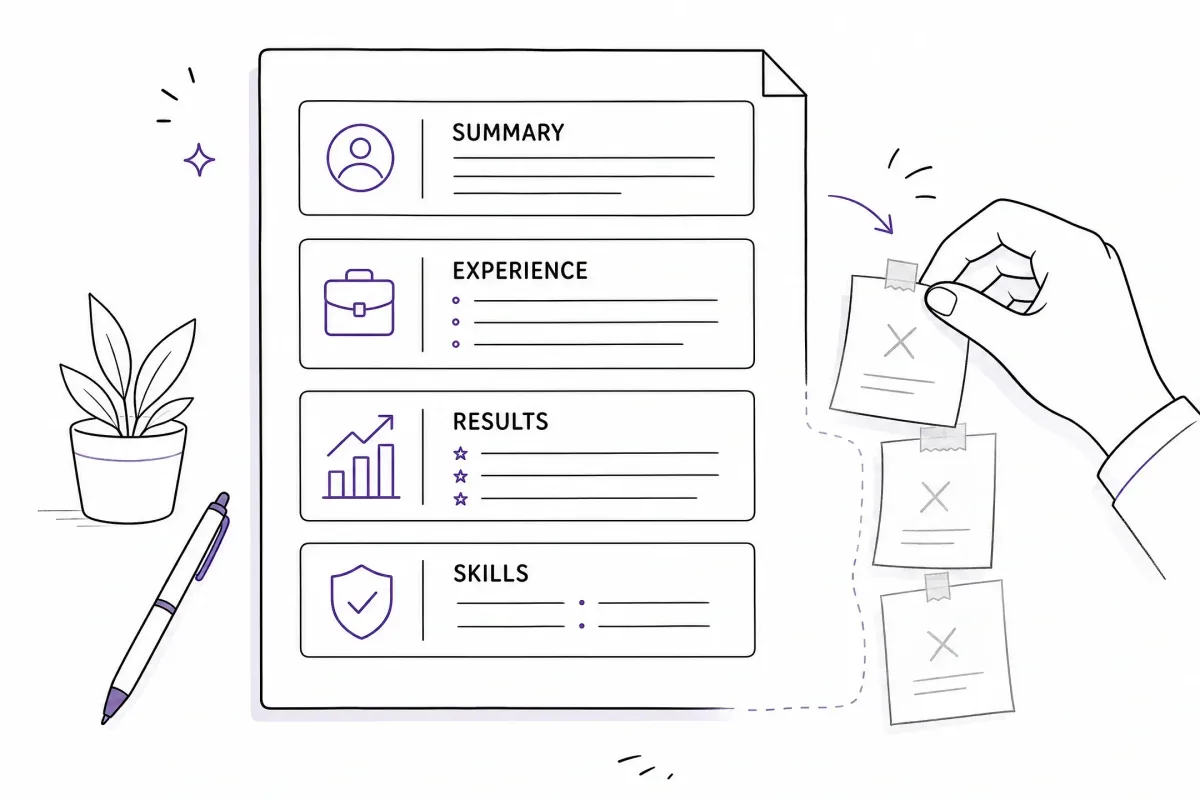
A one-page resume should prioritize:
- A clear target title or professional summary when it adds context.
- Recent and relevant work experience.
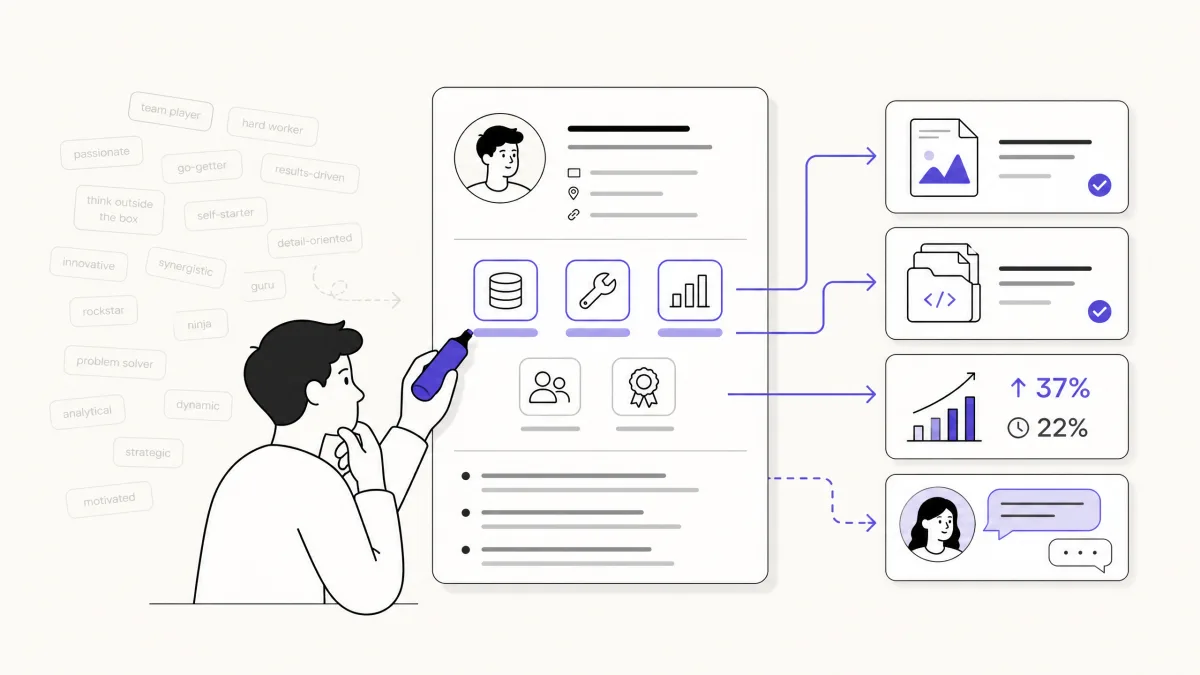
- Accomplishments that demonstrate results, not just routine duties.
- Education, projects or certifications relevant to the position.
- Skills supported by your experience.
Do not keep unrelated details simply to show that you have been busy. A focused resume is more useful than a complete history of every job, class and responsibility you have ever had.
When a Two-Page Resume Is the Better Choice
A two-page resume can be appropriate when page two adds meaningful evidence rather than repetition.
Consider two pages when:
- You have several relevant positions showing clear career progression.
- You are applying for a senior, leadership or management role.
- Your work involves complex technical projects, research or specialized credentials.
- Removing page two would eliminate recent accomplishments required by the job description.
- You need space to explain the scale, outcome or complexity of relevant work.
- Both pages remain organized and easy to scan.
Purdue’s guidance emphasizes that resume length depends on purpose, audience and the amount of supporting information required. It specifically recognizes that applicants in scientific, technical and professional fields may need an additional page to communicate their qualifications effectively. The U.S. Department of Labor’s 2026 resume guidance likewise presents one or two pages as acceptable, depending on the applicant’s relevant qualifications and experience.
Page Two Must Add Proof
Page two should do at least one of the following:
- Add relevant accomplishments from an earlier role.
- Show technical or project depth that the target position requires.
- Demonstrate leadership scope, business impact or career progression.
- Include necessary education, licenses or specialized certifications.
- Provide evidence that would materially strengthen your application.
It should not exist only to hold old responsibilities, repeated skills, references or a long list of unrelated tools.
One Page vs. Two Pages: A Practical Decision Table
| Candidate profile | Best starting point | Why | When to reconsider |
|---|---|---|---|
| Student or recent graduate | One page | Most applicants have limited relevant professional evidence | Consider two pages only when substantial relevant research, internships or projects genuinely require it |
| Early-career applicant | Usually one page | A focused page is normally enough to present recent experience and skills | Consider two pages if the position requires several directly relevant technical or project examples |
| Career changer | One focused page | Relevance matters more than total years worked | Use two pages only when substantial transferable achievements or new-field projects support the target role |
| Mid-career professional | One or two pages | The right length depends on relevant achievement density | Use two pages when shortening the resume would remove important recent results |
| Senior or leadership candidate | Often two pages | Leadership scope and career progression may require more explanation | A focused one-page version can still work for a narrowly defined role |
| Technical, research or project-heavy candidate | One or two pages | Complex, relevant work may need additional context | Remove technical detail that does not support the target position |
| Graduate school applicant | Follow program instructions | A resume and an academic CV serve different purposes | Use the format and length specifically requested by the program |
The table provides a starting point, not a rule. A candidate with 12 years of unrelated experience may need only one focused page, while someone with fewer years but several highly relevant technical projects may reasonably need two.
The Four-Question Resume Length Test
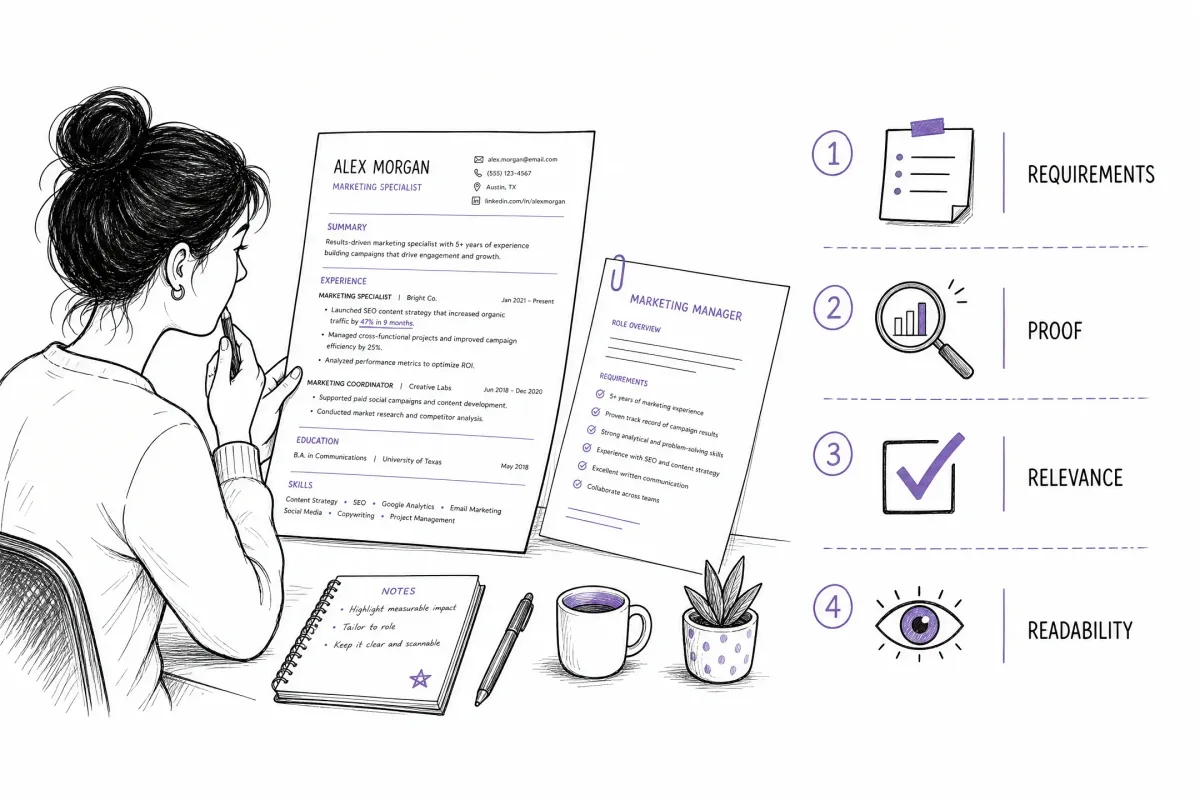
Use these questions before deciding:
1. Does the Application Set a Page or File Requirement?
Check the job posting, application portal, career fair instructions or graduate program requirements.
If the organization requests a one-page resume, follow that direction. Explicit instructions take priority over general advice.
2. Would Removing Page Two Eliminate Important Evidence?
Temporarily hide the second page and reread the first.
Ask whether a recruiter would still see the experience, projects, certifications and results required by the job description. If the answer is yes, one page may be enough. If important proof disappears, two pages may be more useful.
3. Does Page Two Add New, Relevant Information?
Page two should not repeat the same duties, tools or soft skills already shown on page one.
Every section should help answer one question:
Why is this candidate qualified for this specific role?
If the information cannot answer that question, shorten or remove it.
4. Can You Preserve Readability?
Do not solve a length problem by making the document difficult to read.
Avoid:
- Extremely small type.
- Crowded lines with little white space.
- Long paragraphs.
- Dense skill blocks.
- Multiple columns that create an unclear reading order.
- Inconsistent headings or date formats.
If one page requires cramped formatting, a clear two-page resume is usually the better document.
How to Make a Resume Shorter Without Making It Weaker
Start with content, not font size or margins.
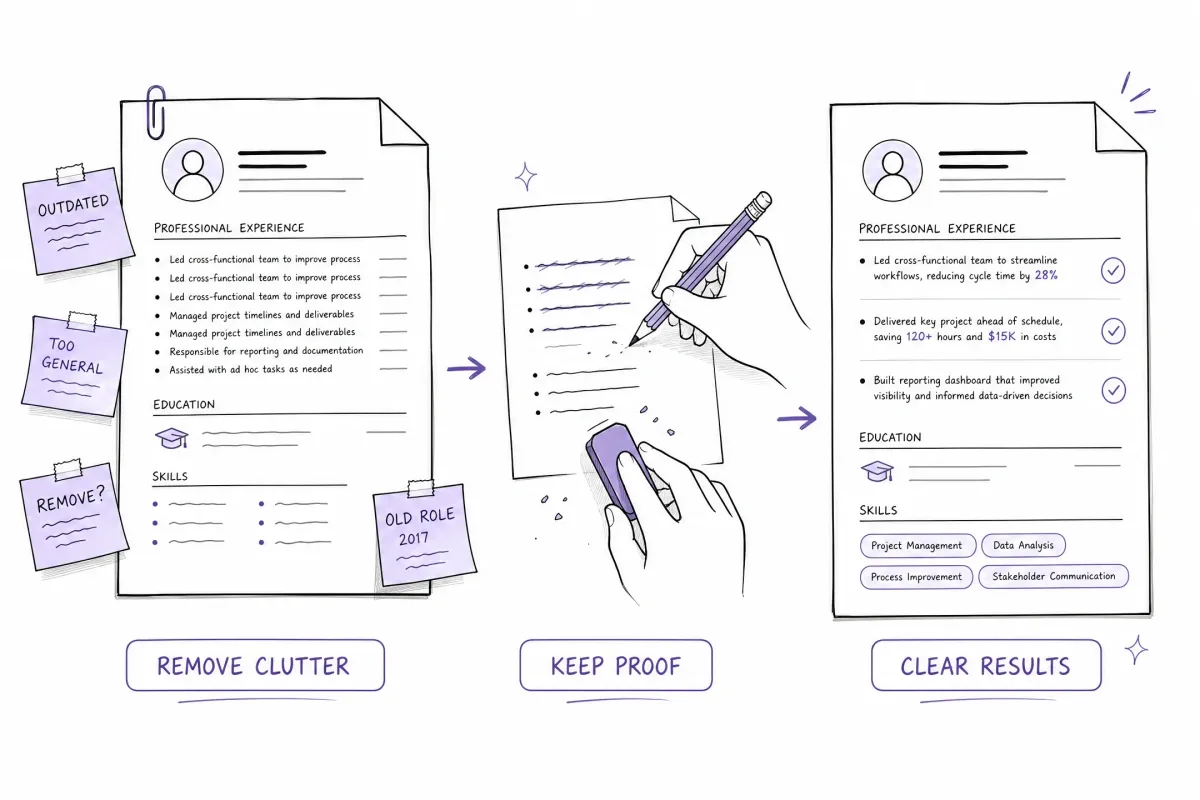
1. Filter Every Section Through the Target Job
Compare each bullet with the responsibilities and qualifications in the job posting.
Keep content that proves a required skill, outcome or level of responsibility. Condense or remove content that does not support the application.
2. Remove Repeated Responsibilities
If several jobs include similar administrative, customer service or project coordination duties, you do not need to describe them in the same detail each time.
Use the space to show progression or different results.
3. Replace Duties With Evidence
A duty explains what you were assigned. An accomplishment explains what changed because of your work.
Instead of:
Responsible for coordinating weekly project meetings.
Use a specific result when you have one:
Coordinated weekly cross-functional meetings that kept project decisions, owners and deadlines visible to stakeholders.
Do not invent metrics. If you do not have a verified number, describe the observable outcome accurately.
4. Condense Older or Less Relevant Roles
Older jobs may still demonstrate progression, but they rarely need the same detail as recent, relevant positions.
Depending on their value, you can:
- Reduce them to one or two bullets.
- Group related roles.
- List only the title, employer and dates.
- Remove them when they add no relevant evidence.
5. Remove Low-Value Sections
Review whether you still need:
- An objective that only states you want the advertised job.
- “References available upon request.”
- High school information after completing higher education.
- Long lists of unsupported soft skills.
- Outdated or irrelevant certifications.
- Basic software skills that the role assumes.
For additional editing ideas, see GreatOffer’s guide on how to make a resume stand out.
How to Format a Two-Page Resume
A two-page resume should feel like one intentional document, not a one-page resume with overflow.
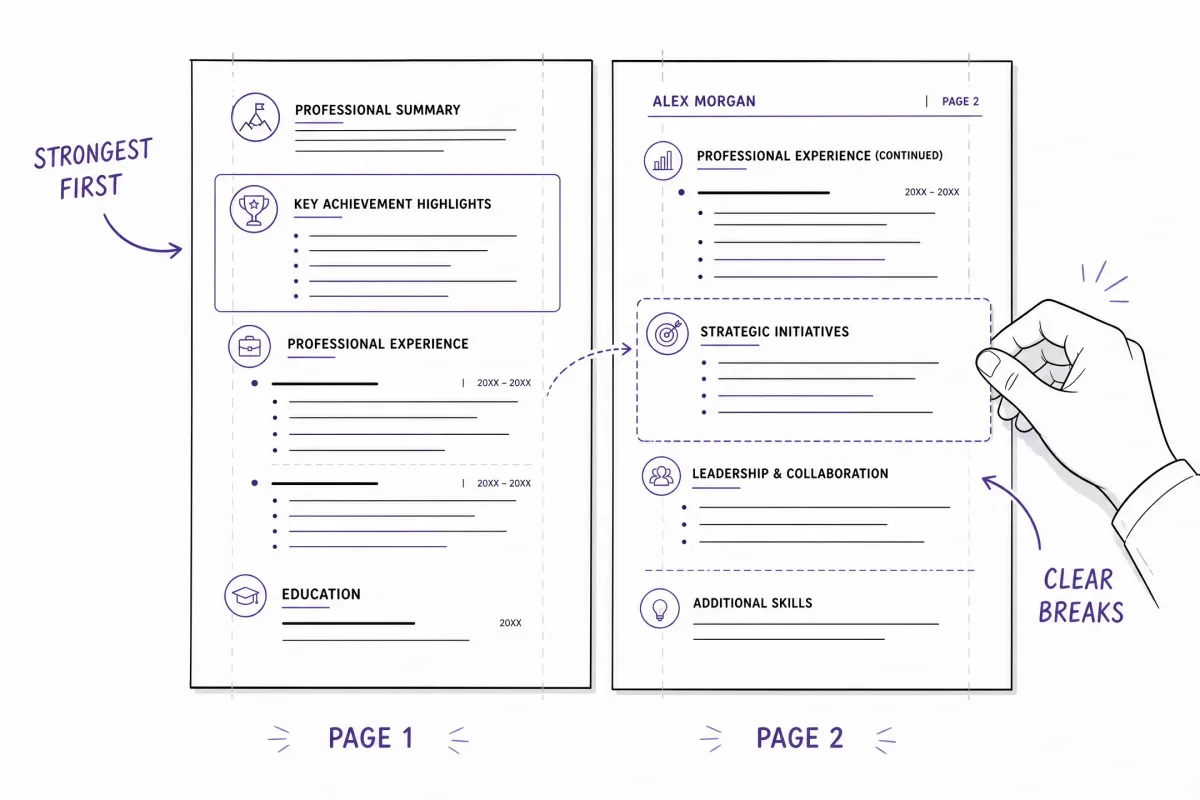
Put the Strongest Evidence on Page One
Page one should normally contain:
- Your contact information.
- Your target title or relevant summary.
- Your most important skills.
- Your current or most recent relevant role.
- The achievements most closely connected to the job.
Do not save your strongest qualification for the bottom of page two.
Keep Page Two Identifiable
Include your name and a page indicator near the top of page two. If ATS compatibility is a concern, do not rely only on a decorative header or footer; important text may not be handled consistently by every system.
Purdue recommends identifying and numbering additional pages, while CareerOneStop advises keeping important information out of headers and footers when preparing an ATS-friendly document. A visible line at the top of page two can satisfy both concerns.
Avoid Awkward Page Breaks
Do not leave:
- A section heading alone at the bottom of page one.
- A job title on page one with all its bullets on page two.
- A single bullet separated from the rest of its position.
- A second page containing only a few lines.
Move complete sections or job entries together when possible.
Keep the Layout Simple
CareerOneStop and Department of Labor guidance favor clear, consistent formatting, familiar section headings and a straightforward reading order. A simple one-column structure is generally easier for people and application systems to interpret than a highly designed layout.
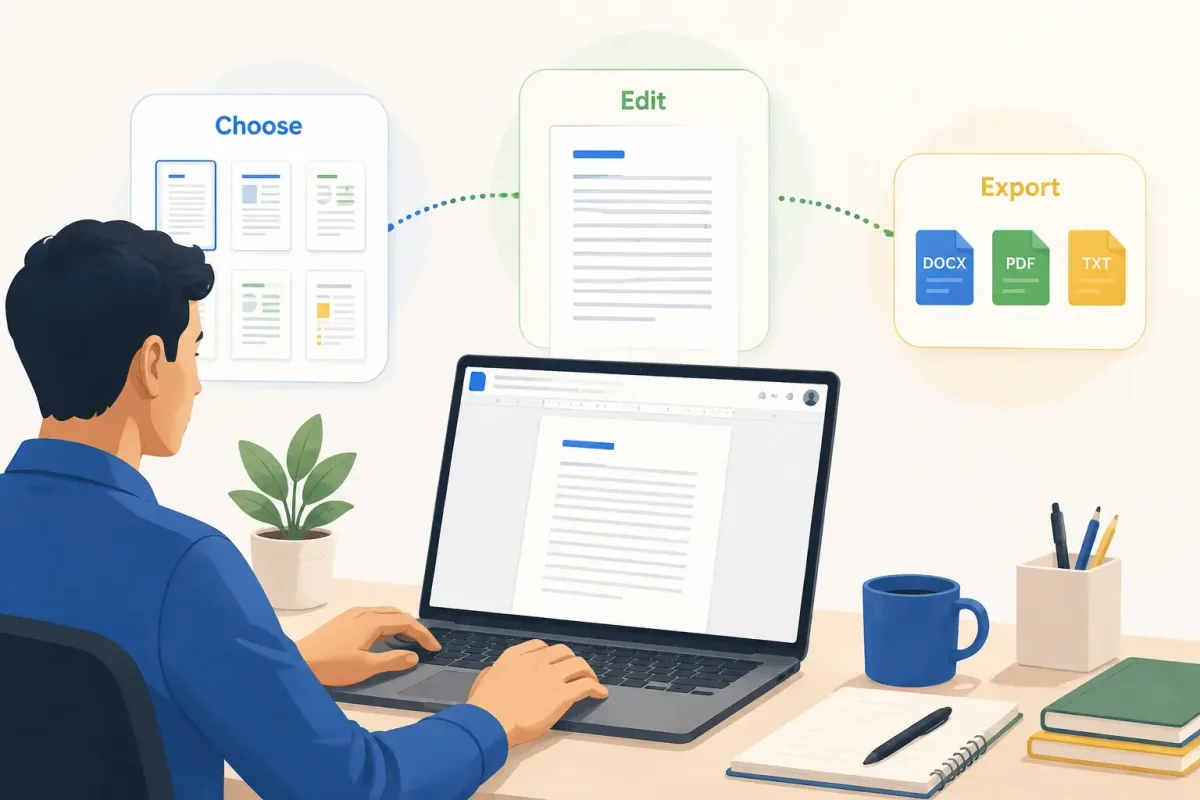
Follow the Requested File Format
The safest answer is to follow the application instructions exactly.
When no format is specified:
- PDF preserves spacing and page breaks.
- DOCX may offer broader compatibility with older application systems.
- Keep both versions available.
- Confirm that text can be selected and copied.
- Review the uploaded preview before submitting.
Official guidance is not fully uniform on PDF versus DOCX, which is another reason to prioritize the employer’s instructions rather than treating one format as universally correct.
What About a One-and-a-Half-Page Resume?
A resume ending halfway down page two is not automatically unprofessional, but it is a signal to review the content again.
Try to reduce it to one page when page two contains:
- Repeated duties.
- Old or unrelated experience.
- A long skills list.
- Unnecessary sections.
- Only a few isolated bullets.
Keep two pages when the remaining content includes a coherent block of relevant work, such as a complete earlier position, a significant technical project or qualifications specifically requested by the employer.
Do not add filler simply to make page two look fuller, and do not damage readability simply to return to one page.
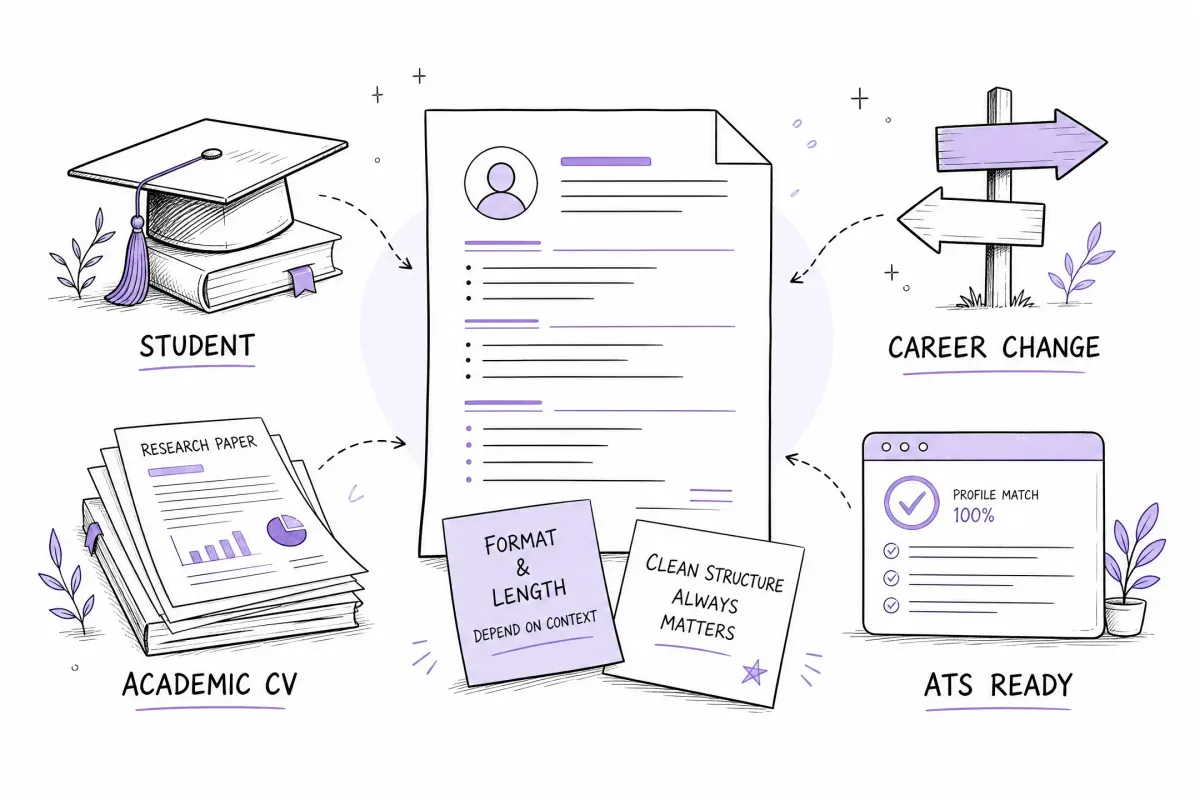
Special Cases
Students and Recent Graduates
One page is normally the most useful starting point. Prioritize relevant education, internships, projects, leadership and work experience.
A student may use two pages when substantial, directly relevant research, internships, publications or project work genuinely requires the space. A second page should not be used to make limited experience appear more extensive.
Graduate School Applications
Check the program’s requirements before deciding.
A professional resume is a selective summary. An academic CV may include research, publications, presentations, teaching, awards and other academic work, making it longer by design.
Do not assume that a corporate one-page resume rule applies to an academic CV.
Career Changers
A career changer does not automatically need more space to explain every previous role.
Focus on:
- Transferable accomplishments.
- Relevant projects.
- Training or certifications connected to the new field.
- A concise summary that explains the target direction.
- Evidence showing how previous experience supports the new role.
A reverse-chronological structure with targeted project highlights is generally clearer than replacing employment history with a vague skills-only resume.
ATS and Resume Length
There is no single ATS rule stating that every resume must be one page.
Application systems are more likely to be affected by document structure, file compatibility and parsing quality than by page count alone. Use familiar headings, selectable text, a clear reading order and the file type requested by the employer. Review the application preview whenever the platform provides one.
What Recruiters and Job Seekers Disagree About
Online discussions show why a single universal answer is difficult.
In the Reddit discussion “How important is a one page resume?”, contributors describe receiving different page-length recommendations from different recruiters. Another discussion, “Your resume doesn’t need to be one page. Stop forcing it,”, argues that forcing substantial relevant experience into a cramped layout can reduce readability.
These discussions are useful because they reveal real applicant concerns, but they are anecdotal. They do not establish what every recruiter or employer prefers.
Professional guidance is also not identical, but sources including UC Davis, Purdue, Adobe, CareerOneStop and the U.S. Department of Labor generally point toward the same practical approach:
- Start concisely.
- Prioritize relevant evidence.
- Protect readability.
- Use additional space only when it improves the application.
- Follow explicit application instructions.
Important: Resume expectations vary by employer, profession, application system and academic program. Follow explicit application instructions before general guidance. When using interview technology or assistance tools, also follow the employer’s and interview platform’s rules.
Choose the Shortest Length That Preserves Proof
A one-page resume is the right choice when it communicates your fit clearly and completely. A two-page resume is the right choice when the second page adds relevant evidence that would weaken your application if removed.
Before submitting, ask:
- Does every section support the target job?
- Can a reader find the most important evidence quickly?
- Does page two add new proof?
- Did I protect readability instead of forcing a page limit?
- Did I follow the application instructions?
Once your resume is ready, practice explaining the achievements it contains. GreatOffer AI is a real-time AI interview copilot that can help you rehearse how to turn resume bullets into clear, structured interview answers.
Sources
- UC Davis Career Center: Resumes
- Purdue OWL: Using Two Pages or More
- CareerOneStop: Resume Formatting
- U.S. Department of Labor: Resume Essentials Participant Guide
- Adobe Acrobat: Should a Resume Be One Page?
- Reddit community discussion: How Important Is a One-Page Resume?
- Reddit community discussion: Your Resume Doesn’t Need to Be One Page